
Specialty Courts (Drug, Family, Juvenile) in Hartford
Hartford specialty courts offer structured, rehabilitative, and protective legal dockets for family matters, juvenile justice, and substance diversion. These specialized divisions emphasize restorative intervention, family stability, and individualized support under Connecticut law. Browse our directory below to access docket locations, clerk hours, and support agency contact details.
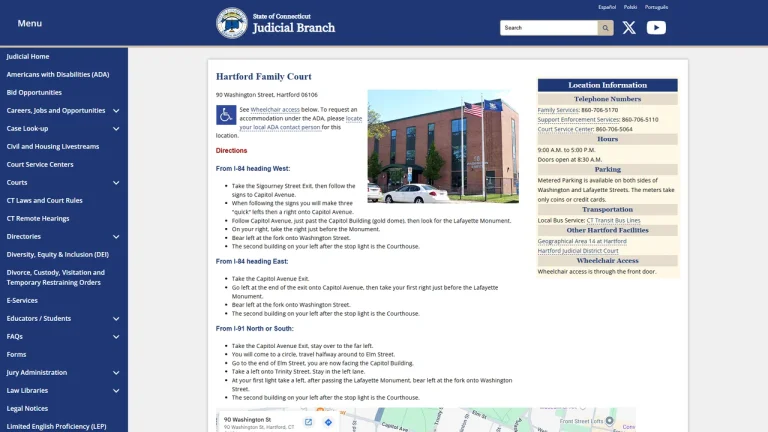
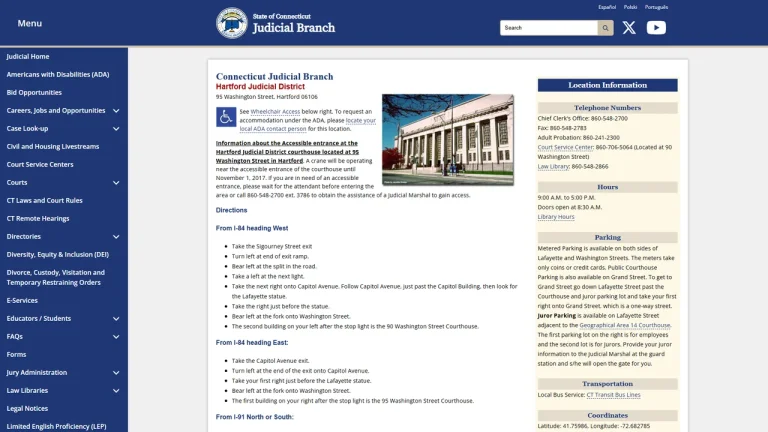
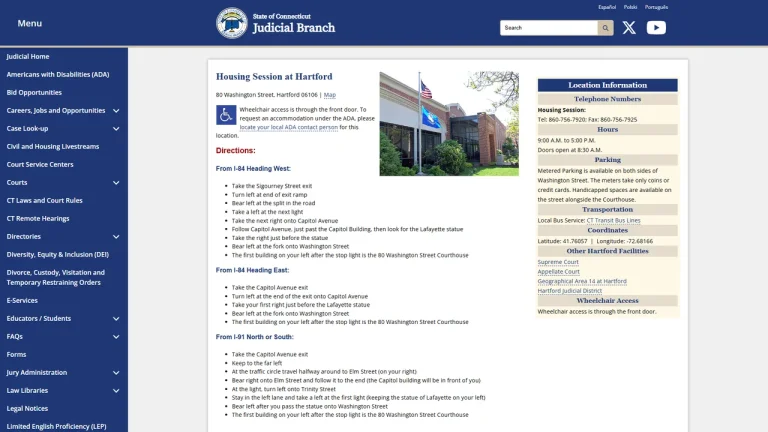
Hartford Specialty Courts: Dedicated Dockets & Community Justice
Within the Capitol Region, the Connecticut Judicial Branch operates dedicated court sessions structured to address distinct legal and therapeutic needs outside conventional adversarial trial dockets. In Hartford, these specialty courts encompass family relations sessions, juvenile matters, the Hartford Community Court, and specialized drug diversion programs serving Hartford and surrounding municipalities.
Family relations dockets-including child custody disputes, divorce actions, and visitation determinations-are managed through the Family Division of the Hartford Superior Court at 95 Washington Street. Juvenile delinquency matters and child protection proceedings involving the Connecticut Department of Children and Families (DCF) are heard exclusively at the Hartford Juvenile Court facility located at 920 Broad Street. Quality-of-life offenses and neighborhood-level diversion are handled through the Hartford Community Court at 80 Washington Street.
These problem-solving judicial forums focus on accountability, rehabilitation, and long-term resolution. Multi-disciplinary teams composed of presiding judges, family relations counselors, probation officers, and licensed treatment providers collaborate to manage structured interventions designed to avoid incarceration and preserve family stability.
Specialty Court Dockets, Requirements & Timelines
| Service / Matter | Required Documents / Prerequisites | Statutory Fee (USD) | Processing Timeline |
|---|---|---|---|
| Pretrial Drug Education & Treatment Program | Application under state drug diversion statute, statutory fee, intake evaluation | $100.00 application fee + $350.00-$500.00 program fee | 10 to 15-week evaluation; 1-year diversion term |
| Juvenile Delinquency Appearance & Review | Summons, mandatory parent/guardian appearance, youth identification | $0.00 statutory fee | Initial appearance within 10 to 14 days of summons |
| DCF Child Protection & Neglect Petitions | Verified state neglect petition, child welfare report, financial affidavit | $0.00 statutory entry fee | 10-day preliminary hearing; 30-day case status review |
| Family Relations Custody Mediation Intake | Form JD-FM-101, sworn financial affidavits, parenting course confirmation | Included in initial $360.00 civil filing entry fee | Mediation orientation scheduled within 30 to 45 days |
Critical Legal Deadlines & Statutes in Connecticut Specialty Sessions
Specialty sessions enforce statutory timeframes designed to protect vulnerable individuals and ensure rapid intervention. Adult diversionary programs, such as the Pretrial Drug Education and Community Service Program governed by Conn. Gen. Stat. § 54-56i, require eligible participants to complete court-mandated educational classes or intervention sessions within a period not to exceed one year to achieve a full dismissal of criminal charges.
Juvenile proceedings operate under strict privacy mandates. Under Conn. Gen. Stat. § 46b-124, juvenile court records and delinquency hearings are strictly confidential and completely barred from public inspection. In contested family cases involving minor children, Conn. Gen. Stat. § 46b-69b mandates that both parents complete an approved parenting education course within 60 days of the return day. Furthermore, standard marital dissolution proceedings require a mandatory 90-day waiting period from the return date under Conn. Gen. Stat. § 46b-67 before a final decree can be issued.
Administrative Agency Collaboration vs. Legal Representation
Participants in specialty courts interact directly with various social services and administrative court personnel, such as Family Relations Counselors who facilitate custody mediation and conduct home assessments. While self-represented individuals may participate in routine mediation conferences or voluntary diversion orientations, formal legal representation remains indispensable in contested legal proceedings.
When juvenile delinquency charges threaten placement, or when DCF initiates petitions for termination of parental rights, parents and minors have a statutory right to legal counsel under Conn. Gen. Stat. § 46b-135, including court-appointed public defenders for qualifying indigent parties. In drug diversion dockets, experienced criminal defense attorneys evaluate whether program admission or constitutional suppression motions represent the safest strategy for protecting the client's record.
Protective Safeguards & Warning Signs in Specialty Proceedings
- Never purchase certificates from unauthorized online parenting courses that lack official approval from the Connecticut Judicial Branch Family Division.
- Avoid sharing juvenile case details, summonses, or records on public social networks, as doing so can violate state confidentiality orders and court protective measures.
- Do not enter guilty pleas or sign voluntary agreements in specialty dockets without prior consultation with licensed defense counsel or an appointed public defender.
- Strictly follow court-ordered drug screenings, clinical appointments, and community service hours, as unexcused absences trigger immediate program termination and bench warrants.
Frequently Asked Questions
Where is the Hartford Juvenile Court located?
Juvenile matters for the Hartford region, including child protection and juvenile delinquency dockets, are heard at the dedicated juvenile court building located at 920 Broad Street in Hartford.
Who qualifies for drug diversion programs in Hartford?
Eligibility for pretrial drug education programs under Connecticut law generally requires that the individual has not previously used certain statutory diversionary programs and faces non-violent drug possession charges rather than distribution offenses.
Are juvenile court hearings open to the public in Connecticut?
No. Under Connecticut statutory law, juvenile court proceedings and records are strictly confidential. Only the juvenile, parents or legal guardians, counsel of record, and authorized court personnel are permitted inside the courtroom.
What is the purpose of the Hartford Community Court?
The Hartford Community Court, located at 80 Washington Street, handles misdemeanor, infraction, and municipal ordinance matters by assigning community service hours and supportive social services rather than traditional jail sentences.
Can parents receive a public defender in DCF child neglect cases?
Yes. Connecticut law provides indigent parents with the right to court-appointed legal representation in child protection and neglect matters initiated by the Department of Children and Families, subject to income verification.