
Legal Resources in the United States
Navigating public legal resources across the United States requires an understanding of federal, state, and municipal administrative frameworks. Public transparency laws and open records statutes ensure citizens maintain lawful access to judicial records, vital archives, and governmental filings. Search our national legal resources directory below to locate verified courts, agencies, and custodial offices.

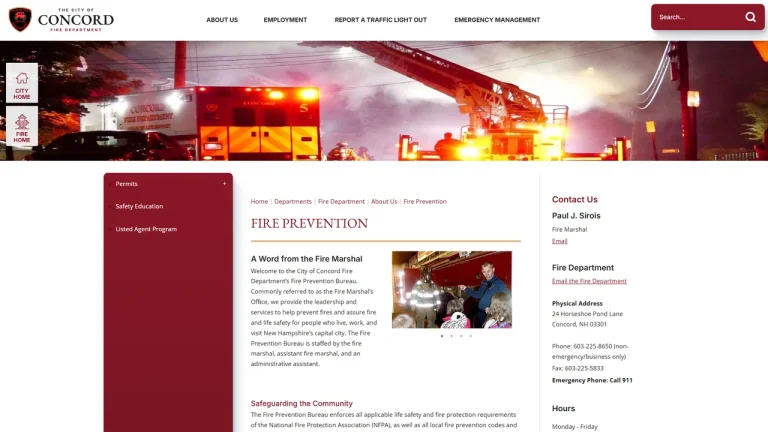
Concord Fire Department Prevention Bureau - Concord, NH

Social Security Administration - Trenton Field Office






The American Public Legal Framework & Institutional Jurisdictions
The public legal infrastructure of the United States is distributed across three distinct levels of governance: federal administrative and judicial agencies, state executive departments and courts, and municipal or county civic offices. Each tier exercises distinct statutory responsibilities established by the United States Constitution and state legislative enactments.
Federal resources encompass nationwide administrative departments, the federal court system governed by the Administrative Office of the U.S. Courts, and regulatory agencies such as the Department of Justice and the Social Security Administration. State systems manage trial and appellate courts, departments of corrections, bureaus of vital statistics, and state motor vehicle divisions.
At the local level, more than three thousand counties and thousands of incorporated municipalities operate county courthouses, sheriff departments, registers of deeds, and city clerks. These frontline repositories ensure transparent access to property conveyances, vital statistics, civil dockets, and public filings.
Standard Public Legal Services, Prerequisites & Timelines
| Service / Matter | Required Documents / Prerequisites | Statutory Fee (USD) | Processing Timeline |
|---|---|---|---|
| Federal Freedom of Information Act Request | Formal written request, specific agency record description, requester category | $0 base fee (statutory search/duplication fees apply) | 20 to 30 working days |
| State Certified Vital Record Copy | Valid government-issued photo ID, proof of direct relation, application form | $12 - $35 statutory state fee | Same day to 3 business weeks |
| County Real Property Deed Recording | Original notarized instrument, legal description, state transfer declaration | $30 - $130 base statutory fee | Same day to 3 business days |
| Federal Court Electronic Docket Retrieval | Registered PACER user account, case docket number or party legal name | $0.10 per page ($3.00 cap per document) | Instantaneous electronic download |
Critical Legal Deadlines & Statutes in the United States
Engaging with public legal resources requires strict adherence to statutory deadlines. Under the federal Freedom of Information Act, codified at 5 U.S. Code § 552, federal agencies have strictly 20 working days to make an initial determination regarding public records requests, with a narrow 10-day extension authorized for unusual circumstances.
When filing administrative damage claims against federal bodies, claimants must adhere to the Federal Tort Claims Act under 28 U.S. Code § 2401(b), requiring written notice on Standard Form 95 within 2 years of the accrual of the claim. If the administrative claim is denied, claimants have strictly 6 months from the date of denial to initiate litigation in federal district court.
At the state and municipal levels, government tort claims acts commonly enforce strict administrative notice requirements ranging from 90 days to 1 year before a civil lawsuit can be maintained. Furthermore, under the federal Privacy Act, 5 U.S. Code § 552a, individuals possess statutory rights to access, inspect, and request corrections to records maintained by federal agencies that concern their individual identities.
Direct Public Agency Access vs. Retaining Legal Counsel
Citizens can directly access many public legal services without retaining an attorney. Individuals can independently search federal court records via the PACER platform, request certified copies of vital statistics from state health departments, file standard deeds with county recording offices, or submit public records inquiries under state sunshine laws.
However, when administrative interactions become adversarial or involve formal administrative rulemaking, legal counsel becomes essential. Retaining an attorney admitted to the relevant state or federal jurisdiction is critical when responding to formal agency enforcement investigations, defending against professional licensing citations before state administrative boards, navigating complex corporate restructuring, appealing administrative denials in court, or managing criminal bond proceedings.
Public Resource Red Flags & Consumer Safety Warnings
- Commercial copycat websites charging $40 to $100 for standard government forms (such as passport renewals, FOIA forms, or vital record applications) that are distributed completely free by agencies.
- Unofficial third-party portals charging unauthorized processing fees to schedule appointments at motor vehicle departments or federal service centers.
- Fraudulent phone and text communications masquerading as federal or state law enforcement agencies demanding immediate payments for manufactured arrest warrants.
- Unlicensed non-attorney document preparers offering unauthorized legal guidance regarding state court filings, bankruptcy petitions, or immigration proceedings.
Frequently Asked Questions
What types of public institutions are indexed in this directory?
This directory catalogs verified federal, state, and county legal resources, including federal district courts, state trial courts, county clerks, registers of deeds, law enforcement departments, and correctional institutions.
How do I submit a public records request to a federal agency?
You must submit a written Freedom of Information Act (FOIA) request directly to the designated FOIA officer of the specific federal agency, describing the desired records with reasonable specificity.
What is the difference between federal, state, and county legal resources?
Federal resources manage national statutory and constitutional matters, state resources govern state civil and criminal laws, and county resources handle local court filings, property recording, and local detention.
Do I need a lawyer to record a property deed or obtain public records?
No, members of the public can independently record standard property deeds at the county recorder's office and submit public records requests to state or federal custodians without an attorney.
Where can I find federal court dockets online?
Federal court dockets, judicial orders, and case filings across all United States District Courts, Bankruptcy Courts, and Appellate Courts are accessed electronically through the official PACER system.