
State & Local Courts in Hartford
Accessing state and local courts in Hartford connects individuals and businesses with official civil, criminal, and appellate judicial services across Connecticut. Residents can inspect public records, attend scheduled dockets, and file pleadings within the Hartford Judicial District. Explore our verified court directory below to find physical addresses, clerk contacts, and jurisdictional guidelines.


Navigating the Hartford Judicial District & Local Court System
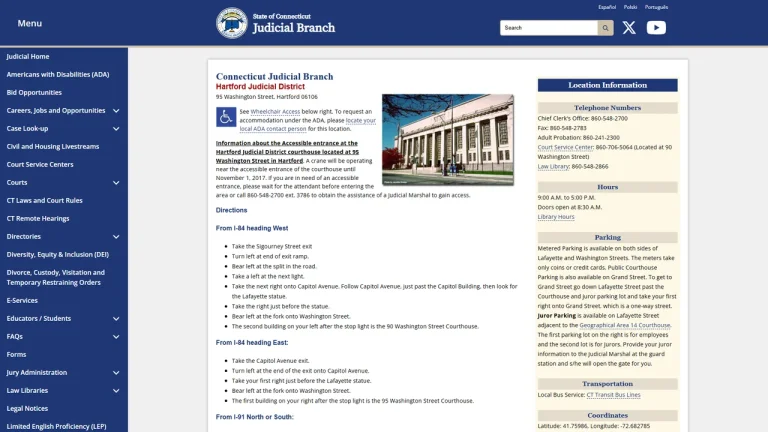
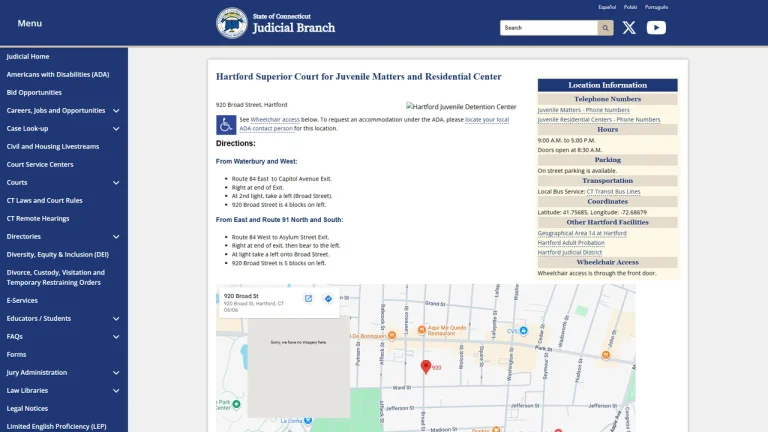
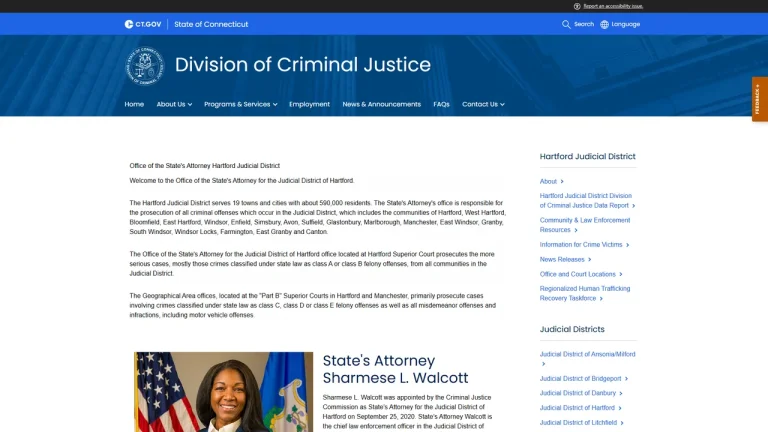
Connecticut operates a unified state court system in which trial dockets are organized by judicial districts and geographic areas rather than independent municipal court benches. For individuals and entities in Hartford and surrounding communities-including West Hartford, East Hartford, Bloomfield, and Wethersfield-judicial administration is anchored within the Hartford Judicial District and Geographical Area 14 (GA 14).
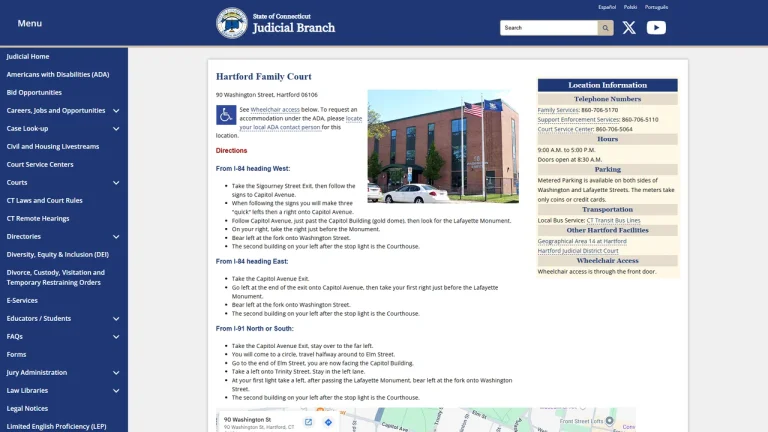
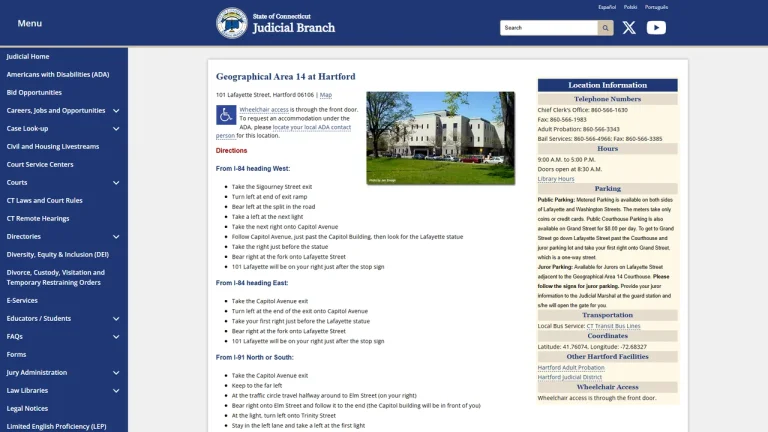
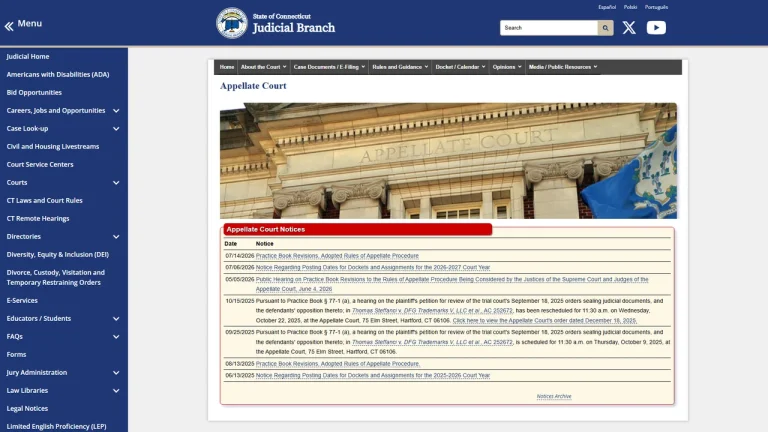
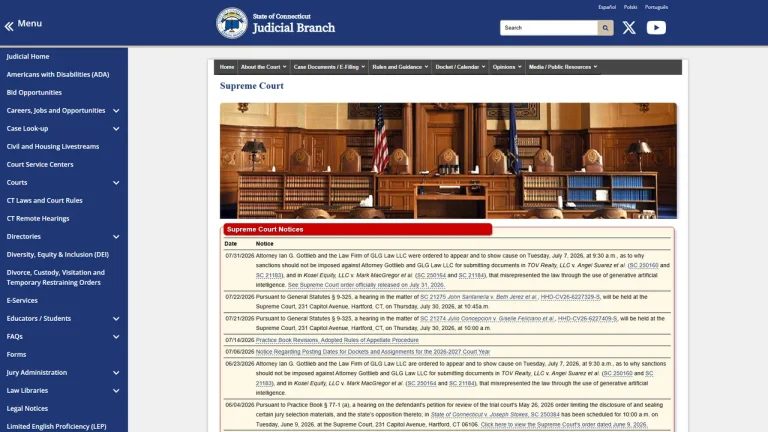
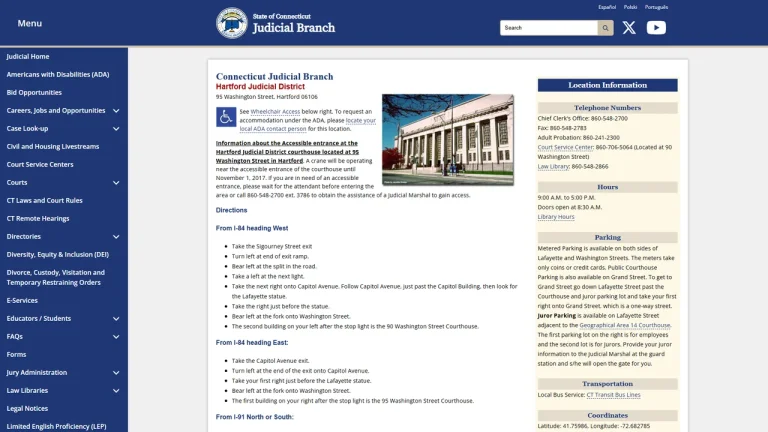
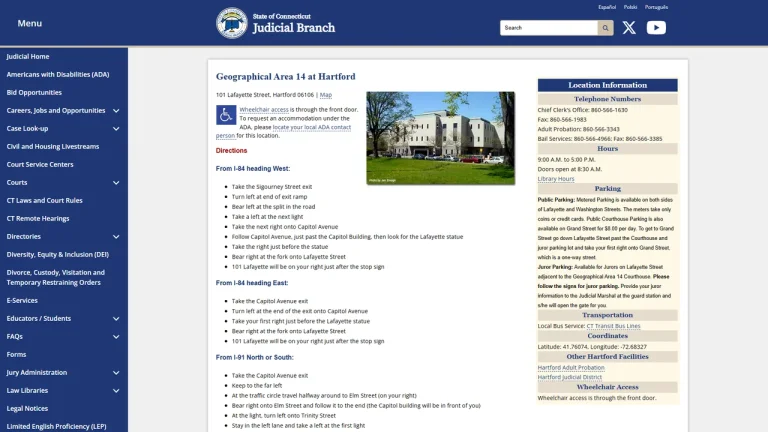
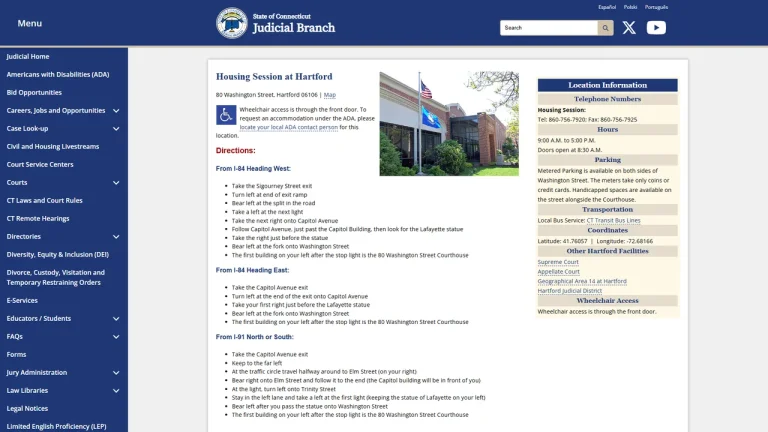
Major civil lawsuits, administrative appeals, and domestic relations proceedings are headquartered at the Hartford Superior Courthouse at 95 Washington Street. Criminal arraignments, misdemeanor trials, and motor vehicle violations are managed at the Geographical Area 14 courthouse at 101 Lafayette Street, while specialized housing disputes are resolved at 80 Washington Street. The Connecticut Supreme Court and Appellate Court also reside within the capital district along Capitol Avenue.
Court operations throughout Hartford are integrated through the Connecticut Judicial Branch E-Services platform, which handles electronic pleadings, official case docket tracking, and short calendar assignments. Navigating these regional courts requires strict conformity with the statewide Connecticut Practice Book, local courtroom standing orders, and established clerk intake hours.
Common Court Filings, Statutory Fees & Processing Timelines
| Service / Matter | Required Documents / Prerequisites | Statutory Fee (USD) | Processing Timeline |
|---|---|---|---|
| Civil Complaint Filing (Superior Court Unlimited) | Form JD-CV-1 (Summons), Complaint, Marshal Return of Service | $360.00 statutory entry fee | Return day set 2 to 6 weeks following service |
| Small Claims Writ & Notice of Suit | Form JD-CV-40, itemized statement of claim, military service affidavit | $95.00 entry fee | 30 to 60 days to magistrate review or answer |
| Certified Judgment or Decree Copies | Written record request, valid case docket number, photo ID | $25.00 certification fee + $1.00/page | 3 to 7 business days via clerk's office |
| Application for Fee Waiver (In Forma Pauperis) | Form JD-CV-120 with verified financial statement | $0.00 (Fee waived upon approval) | 1 to 5 business days for judicial determination |
Critical Legal Deadlines & Statutes in Connecticut
Procedural timelines in Hartford courts are governed by state law and strict judicial rules. In civil actions, the statute of limitations for personal injury and property damage resulting from negligence is set at two years from discovery under Conn. Gen. Stat. § 52-584, with a mandatory three-year repose bar. Contract disputes involving executed written agreements are governed by a six-year limitations window pursuant to Conn. Gen. Stat. § 52-576.
Summary process eviction matters move on an expedited track under Conn. Gen. Stat. § 47a-26, requiring a defendant tenant to file an appearance and responsive pleading within two days following the designated return day. For parties seeking to challenge a final judgment, Conn. R. App. P. § 63-1 enforces a strict 20-day deadline following the issuance of notice to file an appeal with the appellate clerk.
Self-Representation vs. Mandatory Legal Counsel
Individuals possessing legal capacity retain the right to appear pro se in civil and small claims actions across Connecticut courts. Small claims dockets, which adjudicate disputes up to a statutory ceiling of $5,000 under Conn. Gen. Stat. § 51-15, utilize streamlined procedures that accommodate unrepresented filers resolving minor debt collections or security deposit conflicts.
However, when litigation involves catastrophic personal injuries, contested family estates, complex commercial liabilities, or criminal charges at the Lafayette Street courthouse, retained counsel is critical. Furthermore, under the Connecticut Practice Book, business entities including limited liability companies and corporations cannot appear pro se and must be represented by an attorney admitted to practice before the Connecticut bar.
Red Flags & Operational Warnings for Court Filers
- Beware of unauthorized online third-party sites demanding payment for standard Connecticut Judicial Branch forms or electronic case records, which are provided free through the state portal.
- Do not attempt service of process through standard mail when Connecticut law requires formal personal or abode service executed by an authorized State Marshal.
- Avoid non-attorney legal document preparation services that offer advice on strategy, as non-lawyer pleading preparation violates state legal practice regulations.
- Never disregard designated Return Days, as failure to file mandatory appearances and responsive pleadings by these milestone dates triggers default judgments under court rules.
Frequently Asked Questions
Where are criminal and civil matters heard in Hartford?
Civil and domestic family cases are heard at the Hartford Judicial District Courthouse at 95 Washington Street. Criminal arraignments, motor vehicle infractions, and GA 14 trials are conducted at 101 Lafayette Street, while housing sessions are held at 80 Washington Street.
How do I search for active court cases in the Hartford Judicial District?
Case lookups are conducted electronically through the Connecticut Judicial Branch E-Services website. Users can search civil, family, housing, and criminal dockets by party name, attorney juris number, or court docket number.
Can a corporation or LLC represent itself in Hartford Superior Court?
No. Under Connecticut Practice Book rules, legal entities such as corporations, partnerships, and limited liability companies must appear through an attorney licensed to practice in Connecticut and cannot be represented pro se by non-lawyer owners or officers.
What is the financial limit for Small Claims cases in Hartford?
Under state statute, small claims matters are limited to money damages up to $5,000. Claims exceeding this statutory ceiling must be filed as regular civil actions in the Superior Court.
How do I file court documents if I cannot afford statutory filing fees?
Indigent litigants can file an Application for Waiver of Fees (Form JD-CV-120). A Superior Court judge reviews the submitted financial disclosures to determine whether statutory entry and marshal service fees can be officially waived.