
Jails, Prisons & Detention Centers in Connecticut
Connecticut operates a unified correctional system where all pretrial detention centers and state prisons are managed under the Connecticut Department of Correction. Public access for inmate lookups, visiting schedules, and bail processing must comply with centralized state correctional guidelines. Use our statewide directory below to access verified institutional details, facility locations, and official intake resources.


Unified Correctional Structure and Jurisdiction in Connecticut
Connecticut maintains a distinctive unified correctional model, serving as one of only a small number of states where all adult correctional centers and long-term prisons fall under a single executive agency: the Connecticut Department of Correction (CT DOC). Because county government was abolished in Connecticut decades ago, there are no independent county sheriff's departments operating local county jails. Instead, pretrial arrestees unable to post bail and convicted sentenced offenders are housed within facilities operated, secured, and administered directly by the state correctional system headquartered in Wethersfield.
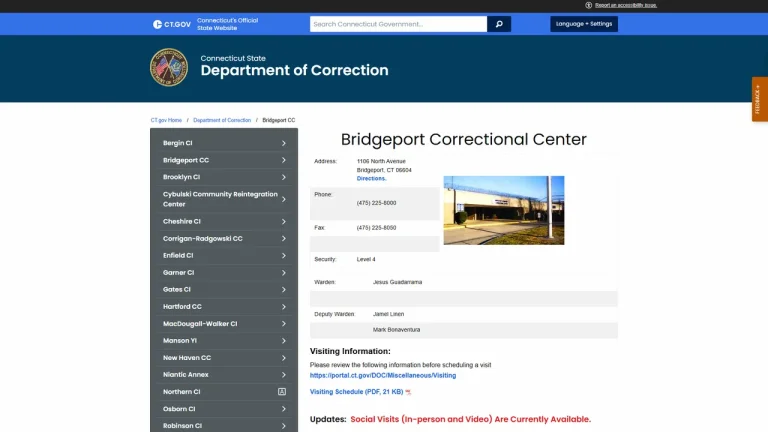
Pretrial detainees awaiting trial in the Connecticut Judicial Branch's Superior Courts are primarily admitted into regional Community Correctional Centers. Key pretrial intake hubs include the Hartford Correctional Center, the New Haven Correctional Center, and the Bridgeport Correctional Center. Long-term post-conviction institutions house classified inmates based on security risk levels, including high-security facilities like MacDougall-Walker Correctional Institution in South Windsor, Cheshire Correctional Institution, and Osborn Correctional Institution in Somers. The York Correctional Institution in Niantic serves as Connecticut's sole consolidated facility for pretrial and sentenced female offenders.
Navigating the CT DOC infrastructure requires understanding this centralized jurisdiction. Intake procedures, bail release processing, inmate trust accounts, phone systems, and visiting approvals are coordinated under uniform statewide directives. When individuals are arrested by local police departments or state troopers, they are transferred promptly from local municipal holding cells into the custody of the Department of Correction upon initial court presentment.
Correctional Facility Procedures and Statutory Public Services
| Service / Matter | Required Documents / Prerequisites | Statutory Fee (USD) | Processing Timeline |
|---|---|---|---|
| Inmate Pretrial Bail Posting | Valid state photo ID, cash or cashier check, or licensed surety bond agent | $0.00 filing fee | 2 to 6 hours after delivery |
| In-Person / Video Visiting Application | CT DOC Visiting Application form, government photo ID, background check | $0.00 application fee | 2 to 3 weeks approval |
| Inmate Trust Account Deposit | Inmate DOC number, sender identification, approved electronic portal or money order | $0.00 DOC fee (portal fees apply) | 24 to 48 business hours |
| Inmate Record & Time Calculation Verification | Written request to Offender Records Unit, inmate release authorization | $0.25 per page | 10 to 30 business days |
Critical Legal Deadlines & Statutes in Connecticut
Detention, confinement, and administrative procedures within Connecticut correctional facilities are governed by codified state statutes. Under Conn. Gen. Stat. § 18-81, the Commissioner of Correction exercises full statutory authority over the custody, care, and disciplinary oversight of all confined individuals. Inmates challenging unlawful conditions of confinement, calculation of risk reduction earned credits, or unlawful detention must initiate a petition for a writ of habeas corpus pursuant to Conn. Gen. Stat. § 52-466, which must be filed in the Judicial District of Tolland at Rockville, where specialized habeas dockets are adjudicated.
Pretrial release rules are codified under Conn. Gen. Stat. § 54-64a, requiring court officials and bail commissioners to apply the least restrictive conditions necessary to ensure court appearance and public safety. When an individual is held on bond at a Community Correctional Center, bail review motions may be submitted to the presiding Superior Court judge during pretrial dockets. For public records, while the state Freedom of Information Act applies under Conn. Gen. Stat. § 1-210, specific security records, inmate medical files, and correctional safety plans are statutorily exempt from public disclosure to protect institutional order.
Direct Agency Access vs. Legal Counsel
Family members and the public can directly manage standard administrative connections with Connecticut correctional facilities. Locating an inmate using the public CT DOC Inmate Information search tool, depositing money into an inmate commissary account, registering for privileged video visits through approved third-party vendors, or sending permitted postal correspondence require no legal intervention and follow standard agency guidelines.
However, securing an inmate's prompt release from custody, arguing for bond modifications, or addressing institutional disciplinary issues necessitates representation by licensed legal counsel. A defense attorney can appear before the Connecticut Superior Court to argue for non-financial release, motion for sentence modification under state statutes, represent inmates before the Board of Pardons and Paroles, or contest administrative segregation. When constitutional rights violations or medical neglect occur within state facilities, legal counsel is indispensable for navigating complex administrative remedy exhaustion prior to litigation.
Agency Navigation Red Flags & Scam Warnings
- Watch out for predatory non-licensed bail facilitators operating near courthouses or online who charge illegal surcharges or non-refundable consultation fees above statutory surety premium caps.
- Beware of fraudulent telephone calls demanding electronic debit or cryptocurrency payments under the guise of paying immediate bail or medical discharge fees for an incarcerated relative.
- Avoid third-party unofficial search services that require payment to locate inmates in Connecticut; the CT DOC provides a free, live online inmate lookup database.
- Refuse unauthorized vendors claiming to sell unmonitored cell phones, tablets, or unapproved communication channels into correctional facilities, which constitutes a felony under Connecticut law.
Frequently Asked Questions
Why are there no county jails in Connecticut?
Connecticut abolished county government in 1960. As a result, there are no independent county sheriff departments managing county jails. Instead, Connecticut operates a unified state correctional system where all pretrial detention facilities and long-term prisons are managed centrally by the Connecticut Department of Correction.
How can I locate an inmate held in a Connecticut correctional center?
You can locate any person held within the Connecticut correctional system using the CT DOC Offender Information Search available on the state department website. Inquiries can be completed using the individual's DOC inmate number or their full legal name and date of birth.
What is the difference between a correctional center and a correctional institution?
In Connecticut, Community Correctional Centers (such as those in Hartford, New Haven, and Bridgeport) function primarily as pretrial intake facilities housing arrestees awaiting court proceedings. Correctional Institutions (such as MacDougall-Walker, Osborn, or Cheshire) house individuals who have been tried, convicted, and sentenced to periods of confinement.
How do I post bail for someone detained at a Connecticut facility?
Bail can be posted either at the local police department prior to court presentment, at the Superior Court clerk's office during business hours, or directly at the Community Correctional Center where the individual is held. Bail may be posted via cash, bank check, or through a state-licensed surety bail bondsman.
Where are female inmates housed in Connecticut?
All female pretrial detainees and sentenced female offenders in Connecticut are housed at the York Correctional Institution located in Niantic. It is a consolidated institution providing intake, medical care, programs, and general custody for women within the state correctional system.