
Specialty Courts (Drug, Family, Juvenile) in Connecticut
Explore Connecticut specialty courts including adult drug intervention dockets, juvenile matters, and dedicated family court divisions across the state. These problem-solving sessions combine rehabilitative community treatment, child protection oversight, and structured diversion protocols within the Superior Court system. Browse our verified registry below to contact specialty court coordinators, family relations offices, and juvenile clerk staff.
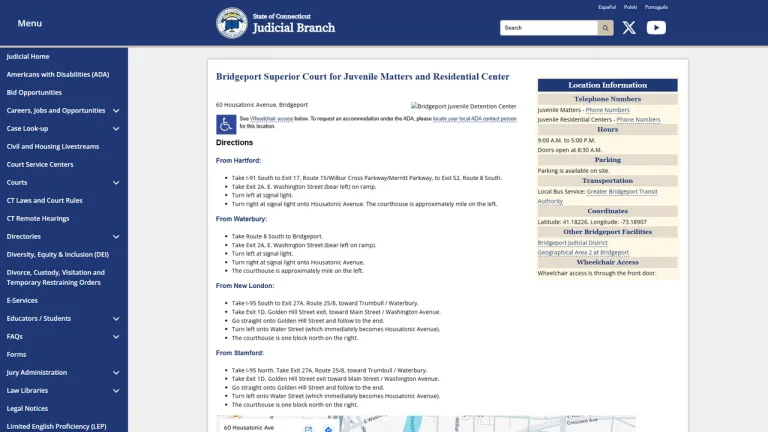
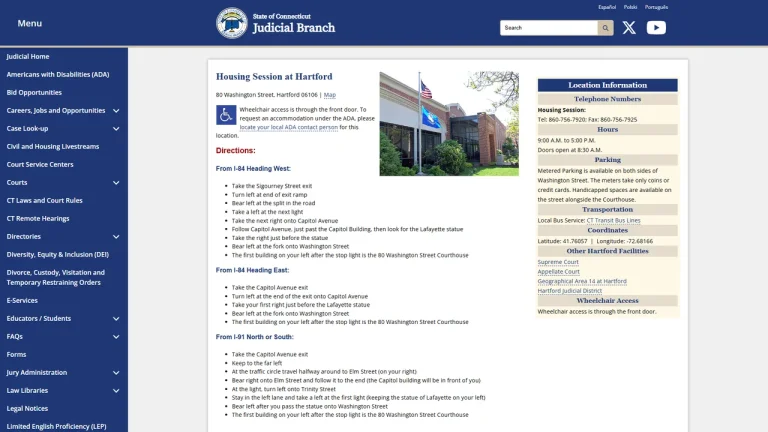
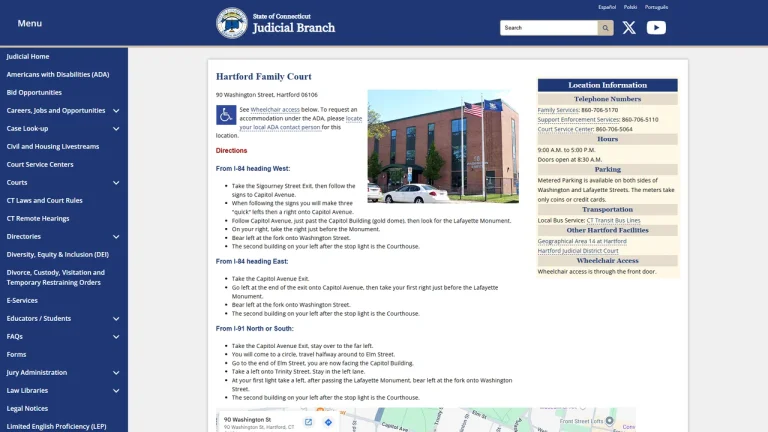

Problem-Solving & Specialty Court Jurisdictions in Connecticut
Connecticut has pioneered specialized judicial dockets designed to address root behavioral issues rather than relying solely on traditional punitive sentencing. Operating within the Connecticut Superior Court framework, these problem-solving courts include Adult Drug Intervention Courts, Behavioral Health Dockets, Veteran Recovery Sessions, the Superior Court for Juvenile Matters, and dedicated Family Relations divisions.
Adult Drug Intervention Courts-operating in major judicial centers such as New Haven, Bridgeport, Danielson, and Waterbury-target non-violent criminal offenders whose legal infractions stem from chronic substance dependence. Through comprehensive clinical treatment, intensive judicial monitoring, and mandatory drug testing authorized under Conn. Gen. Stat. § 54-56i, participants who successfully complete diversionary programs frequently achieve full dismissal of pending criminal charges.
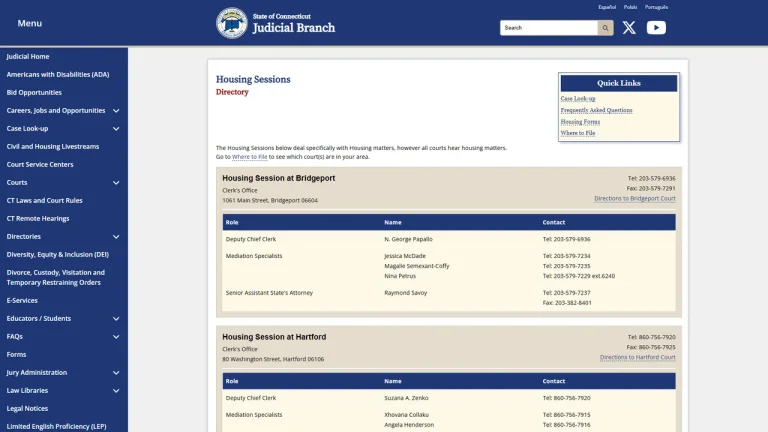
Juvenile and family sessions maintain specialized civil jurisdictions. The Superior Court for Juvenile Matters exercises exclusive authority over delinquency dockets, youth in crisis petitions, and child welfare or neglect proceedings coordinated with the Connecticut Department of Children and Families (DCF) pursuant to Conn. Gen. Stat. § 46b-121. Dedicated Child Protection Sessions in Middletown and regional Housing Sessions further streamline high-stakes domestic and housing litigation.
Specialty Court Programs, Entry Requirements & Timelines
| Service / Matter | Required Documents / Prerequisites | Statutory Fee (USD) | Processing Timeline |
|---|---|---|---|
| Pretrial Drug Education Program | Application form JD-CR-45, clean record verification, clinical evaluation | $100 application fee plus $350-$600 program fee | Screening within 30 days; 10- to 15-week class completion |
| Emergency Restraining Order | Application form JD-FM-137, supporting affidavit alleging domestic threat | $0 (no filing fee for domestic protection) | Ex parte review same day; full hearing within 14 days |
| Juvenile Delinquency Petition | Police summons or referral, juvenile probation intake assessment | $0 (juvenile administrative proceedings) | Initial court appearance within 10-14 business days |
| Family Relations Custody Study | Judicial referral order, parent questionnaires, home environment check | $0 (court-annexed state family services) | Evaluation report filed within 60 to 90 days |
Critical Statutory Deadlines in Connecticut Specialty Dockets
Procedural timelines in Connecticut problem-solving and domestic courts are governed by specialized sections of the General Statutes of Connecticut and the Connecticut Practice Book:
- Ex Parte Protection Order Hearings: Under Conn. Gen. Stat. § 46b-15, when an ex parte domestic relief order is issued, a full evidentiary hearing must be scheduled within 14 days of the application.
- Pretrial Intervention Application: An individual charged with an eligible misdemeanor or non-violent felony must file for statutory diversion before the entry of a plea or within deadlines designated by the presiding judge under Conn. Gen. Stat. § 54-56e.
- Juvenile Transfer Deadlines: Under Conn. Gen. Stat. § 46b-127, the state may seek transfer of designated felony charges involving a juvenile aged fifteen or older to the adult criminal regular docket within statutory arraignment windows.
- DCF Order of Temporary Custody (OTC): Following the emergency removal of a child by DCF, a preliminary hearing must be conducted within 10 days of the ex parte custody order pursuant to Conn. Gen. Stat. § 46b-129.
- Juvenile Appeal Period: Appeals from final juvenile court decisions, including termination of parental rights, must be taken within 20 days under Conn. Practice Book § 35a-21.
Direct Access & Support Services vs. Legal Representation
Participants in Connecticut specialty courts have access to direct state-funded support mechanisms. In juvenile and family matters, court-annexed Family Relations Counselors offer mediation and dispute resolution services at no cost to help parents resolve custody and visitation plans amicably. Similarly, individuals applying for civil restraining orders under Conn. Gen. Stat. § 46b-15 can receive free procedural guidance from court advocates located at Court Service Centers and local domestic violence liaison desks.
Nevertheless, the legal consequences in specialty courts are severe and often permanent. In juvenile delinquency proceedings, minors face potential commitment to state facilities, making court-appointed or private juvenile defense counsel legally mandatory under Connecticut law. In child welfare proceedings where DCF seeks termination of parental rights, or in contested drug court hearings where termination from the diversion program results in immediate felony sentencing, retaining an experienced defense attorney or child protection advocate is vital to safeguarding constitutional rights.
Red Flags & Diversionary Program Scams
Navigating specialty dockets and family courts requires vigilance against predatory operators and regulatory violations:
- Unaccredited Rehabilitation Facilities: Private substance treatment clinics charging thousands of dollars while falsely claiming that their attendance certificates are accepted by Connecticut Drug Courts without state Department of Mental Health and Addiction Services (DMHAS) certification.
- Pay-for-Protection Document Scams: Unscrupulous services promising guaranteed civil protection orders or charging fees to prepare standardized Judicial Branch domestic violence forms that are available for free at all courthouses.
- Unauthorized Family Court Mediators: Non-certified parenting coordinators who lack state mediation credentials promising legally binding custody adjustments without Superior Court judicial approval.
- Unlicensed Juvenile Advisors: Commercial coaching firms claiming they can seal or expunge Connecticut juvenile police records outside of official juvenile court statutory channels under Conn. Gen. Stat. § 46b-146.
Frequently Asked Questions
What happens after graduating from a Connecticut Adult Drug Court?
Successful completion of an Adult Drug Court diversion program, in full compliance with treatment requirements and drug screening, typically results in the dismissal of all underlying criminal charges by the presiding judge under Conn. Gen. Stat. § 54-56i.
Are juvenile court hearings and records confidential in Connecticut?
Yes, proceedings and files in the Superior Court for Juvenile Matters are confidential and strictly closed to the general public under Conn. Gen. Stat. § 46b-124, with access restricted to the juvenile, parents, legal counsel, and authorized state agencies.
Does a child get a lawyer in Connecticut juvenile court proceedings?
Yes. Under Connecticut law, minors involved in juvenile delinquency matters and child protection proceedings are entitled to legal counsel, and the court will appoint a public defender or private assigned attorney if the family cannot afford representation.
What is the role of Family Relations Counselors in Connecticut family courts?
Family Relations Counselors are court employees who conduct mediation sessions, evaluations, and custody assessments to assist parents in resolving conflicts and provide judges with objective recommendations regarding the best interests of children.
How does an applicant qualify for the Pretrial Alcohol Education Program?
Eligible individuals charged with operating under the influence may apply for the statutory Pretrial Alcohol Education Program under Conn. Gen. Stat. § 54-56g, provided they have no disqualifying commercial driver's license status or prior convictions within the statutory look-back timeframe.