
Jails, Prisons & Detention Centers in Illinois
Correctional facilities across Illinois are managed through a bifurcated system of county detention centers and state correctional institutions. Under Illinois law, pretrial detention is governed by statutory risk assessments rather than cash bail, requiring formal court hearings for release determinations. Explore our directory below to locate verified county jails, state prisons, and institutional visiting guidelines.
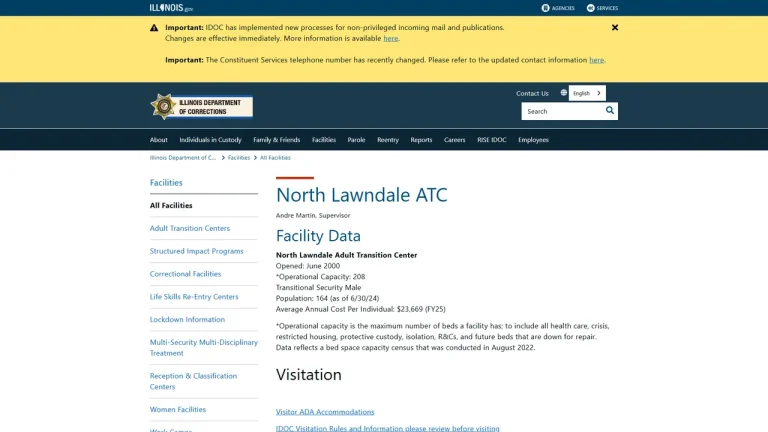


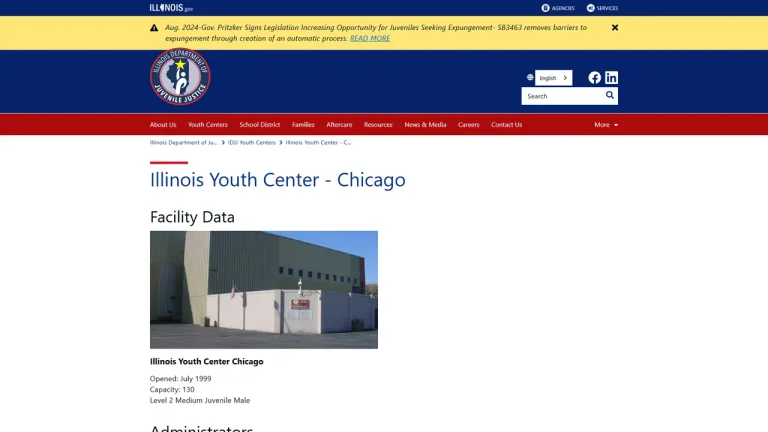
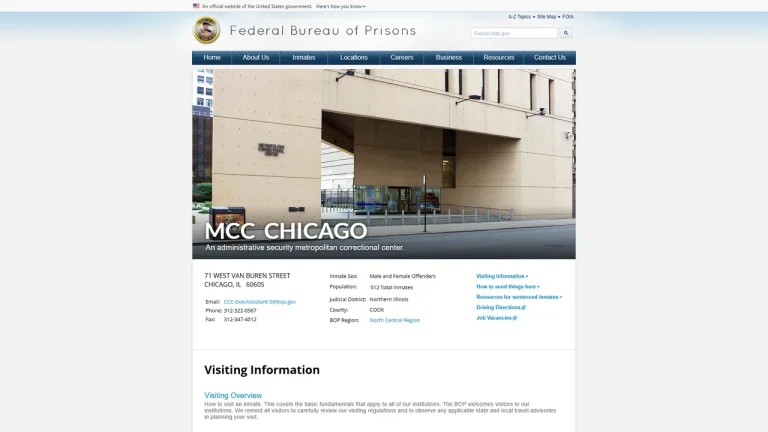
Federal Bureau of Prisons Community Corrections Office - Chicago, IL

Correctional Structure and Jurisdiction Across Illinois
The correctional infrastructure in Illinois is divided into two distinct operational tiers: county adult detention facilities administered by elected county sheriffs, and state correctional centers managed by the Illinois Department of Corrections (IDOC). Pretrial detainees and individuals serving misdemeanor sentences of less than one year are held within county jail facilities across the state's 102 counties. The Cook County Department of Corrections in Chicago represents the largest single-site county pre-detention facility in the state, operating alongside major regional county facilities including the DuPage County Correctional Center in Wheaton, the Lake County Adult Correctional Division in Waukegan, the Will County Adult Detention Facility in Joliet, and the Kane County Adult Justice Center in St. Charles.
State prisons house individuals convicted of felony offenses sentenced to terms of imprisonment exceeding one year. The Illinois Department of Corrections, headquartered in Springfield, oversees maximum, medium, and minimum-security adult institutions across the state. Significant operational institutions include Stateville Correctional Center in Crest Hill, Menard Correctional Center in Chester, Pontiac Correctional Center, and Logan Correctional Center in Lincoln, which serves as the primary multi-custody facility for female offenders. Juvenile rehabilitative custody is administered independently by the Illinois Department of Juvenile Justice (IDJJ).
A defining hallmark of the Illinois correctional environment is the landmark elimination of monetary bail under the Pretrial Fairness Act component of the SAFE-T Act. Individuals detained in county jails cannot be held or released based on financial status. Instead, detainees remain in custody only if the circuit court grants a verified petition for pretrial detention following a formal adversary hearing, transforming intake and release operations throughout all county detention centers statewide.
Correctional Intake, Visitation, and Record Procedures
| Service / Matter | Required Documents / Prerequisites | Statutory Fee (USD) | Processing Timeline |
|---|---|---|---|
| Institutional Visiting Application (IDOC) | Prospective Visitor Interview form, valid government photo ID, background check | $0.00 statutory fee | 7 to 21 business days |
| Inmate Trust Account Fund Deposit | Inmate IDOC number or county booking ID, sender identification | $0.00 state fee | 24 to 48 hours |
| Pretrial Detention Hearing Presentment | State petition for pretrial detention, verified complaint, arrest report | $0.00 court fee | Within 24 to 48 hours of arrest |
| Correctional Master File FOIA Request | Formal written FOIA letter, inmate written waiver and release authorization | $0.15 per page after 50 pages | 5 business days |
Critical Legal Deadlines & Statutes in Illinois
Procedural rights and detention standards within Illinois correctional centers are codified in the Illinois Compiled Statutes. Under the Pretrial Fairness Act codified at 725 ILCS 5/110-6.1, individuals arrested and held in county custody must receive a prompt pretrial release hearing. If the state seeks continued detention, it must file a verified petition immediately, and the court must hold a detention hearing within twenty-four to forty-eight hours of the initial appearance. Pretrial detention can only be ordered if the state proves by clear and convincing evidence that the defendant poses a real and present threat or high flight risk.
Operational standards for county facilities are established under the County Jail Act at 730 ILCS 125/1, mandating that the elected sheriff maintain safe and humane conditions subject to regular inspection by IDOC jail detention standards units. State prison governance and sentence calculations fall under the Unified Code of Corrections at 730 ILCS 5/3-2-2. Confined persons contesting the constitutionality of their detention or challenging sentencing credit allocations must seek relief under the Illinois Habeas Corpus Act codified at 735 ILCS 5/10-101. For public inquiries, records custodians must comply with the Illinois Freedom of Information Act under 5 ILCS 140/3 within five business days, though sensitive correctional security records remain exempt under 5 ILCS 140/7.
Direct Facility Access vs. Legal Counsel
Families and members of the public can independently complete many administrative interactions with Illinois correctional centers. Locating an incarcerated individual via the online IDOC Offender Search or the Cook County Jail inmate locator, applying for visiting list authorization, scheduling non-contact or video visitation sessions, and depositing money into an inmate commissary account are routine self-directed administrative workflows that do not require legal representation.
Conversely, securing an individual's release from jail, challenging institutional disciplinary sanctions, or litigating constitutional claims requires retained criminal defense counsel. Because Illinois eliminated cash bail, securing release from county jail requires an attorney to vigorously contest the prosecution's detention petition at the 725 ILCS 5/110-6.1 hearing, presenting witness testimony, rehabilitation plans, and alternatives to confinement. Furthermore, defense counsel is essential when asserting medical neglect claims, preparing executive clemency petitions before the Illinois Prisoner Review Board, or filing post-conviction relief petitions in the circuit court.
Facility Navigation Red Flags & Scam Warnings
- Beware of fraudulent telephone calls or online solicitations demanding cash bail or money transfers to release someone from an Illinois county jail; Illinois abolished cash bail, and anyone claiming you must pay cash for release is running a scam.
- Avoid third-party commercial inmate lookup platforms that charge recurring monthly fees to find detainees; official IDOC and county jail inmate lookups are free of charge.
- Do not work with unregulated private prison consultants or bond agents claiming to possess inside influence over IDOC security classifications or institutional transfers.
- Reject services promising guaranteed early release or sentence reductions without filing formal statutory petitions through the Illinois Judicial Branch.
Frequently Asked Questions
Does Illinois still use cash bail to release inmates from county jails?
No. Under the Pretrial Fairness Act provisions of the SAFE-T Act, Illinois became the first state to completely eliminate cash bail. Arrestees are evaluated by a judge based on public safety risk and flight criteria rather than ability to post monetary bond.
How do I find someone incarcerated in an Illinois state prison?
You can locate an individual held in state prison by using the free IDOC Offender 360 search tool on the official Illinois Department of Corrections website. You will need the person's legal name, birth date, or state IDOC identification number.
What is the difference between Cook County Jail and an IDOC correctional center?
Cook County Jail is a county detention facility in Chicago operated by the Cook County Sheriff housing pretrial detainees and short-term misdemeanor offenders. IDOC correctional centers are state-run prisons housing individuals convicted of felonies who have been sentenced to more than one year of incarceration.
How long can an arrestee be held in county custody before a detention hearing?
Under Illinois statutory standards, an arrested person must be brought before a judicial officer within forty-eight hours. If the state files a petition seeking continued pretrial detention, a formal hearing must be conducted within that initial appearance window or within forty-eight hours thereafter.
What are the rules for visiting an inmate in an Illinois state prison?
Prospective visitors must complete an IDOC Visiting Application, undergo a criminal background screening, and be officially added to the inmate's approved visiting list before scheduling a visit. Visitors must present valid government photo identification upon arrival and adhere strictly to facility dress codes.