
Debt Relief Lawyers in Huntsville
Retaining an experienced Huntsville debt relief attorney safeguards your personal assets and halts creditor harassment under federal bankruptcy laws and Alabama statutes. Skilled legal counsel can negotiate structured out-of-court settlements or file protective petitions, stopping garnishments without prolonged trial stress. Browse our directory below to consult an established Madison County debt attorney.

Tracy A. Marion, P.C. - Huntsville, AL

Robin Carter Wolfe, Attorney at Law - Huntsville, AL

Huntsville Bankruptcy Help - Huntsville, AL
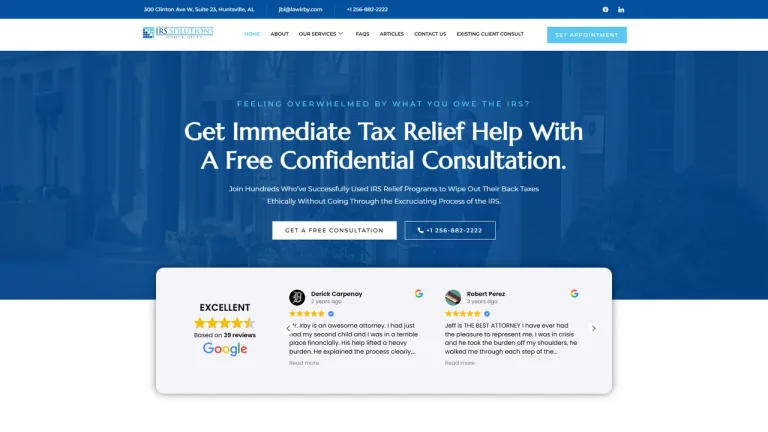
Jeffrey B. Irby, P.C. - Huntsville, AL

Law Office of C. Eric Law - Huntsville, AL
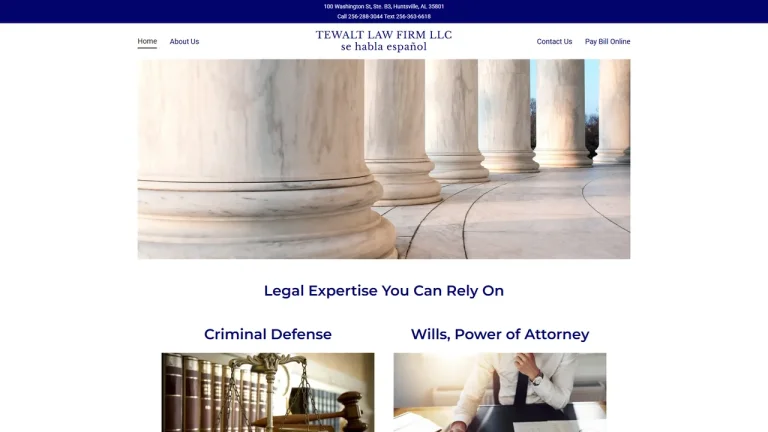
Tewalt Law Firm LLC - Huntsville, AL

Conwell & Conwell LLC - Huntsville, AL

Uhrig Law Firm - Huntsville, AL

Aldridge Law Firm, P.C. - Huntsville, AL
Legal Services Alabama - Huntsville, AL
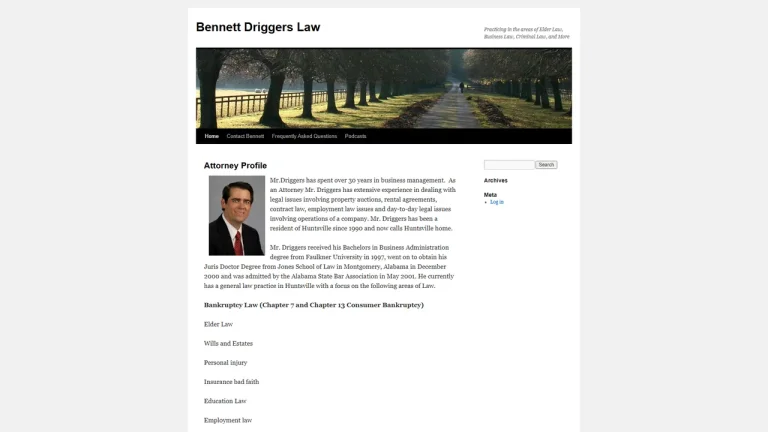
Bennett R. Driggers Sr. - Driggers Law - Huntsville, AL
Julian Stephens, III, Bankruptcy Attorney - Huntsville, AL
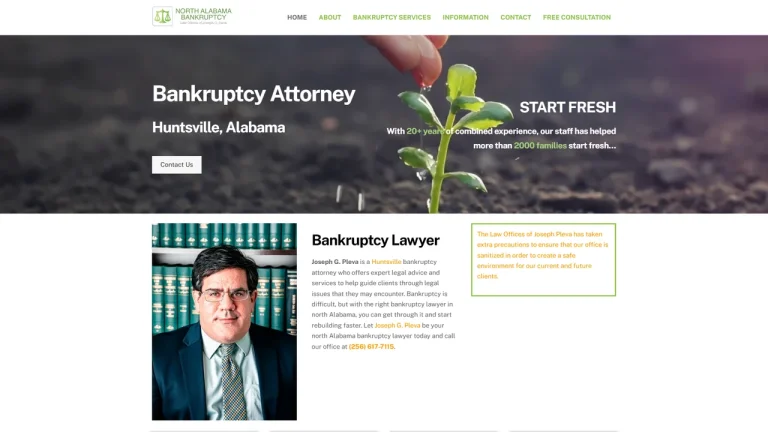
Bankruptcy Law Offices of Joseph G. Pleva - Huntsville, AL
Paseur Law Firm, PLLC - Huntsville, AL
Bond and Botes Law Offices - Huntsville, AL
Wake Law Firm, LLC - Huntsville, AL
Alison, James C - Huntsville, AL
Ron Sykstus - Bond, Botes, Sykstus and Tanner, P.C. - Huntsville, AL

Beach Law Practice - Huntsville, AL
Dezenberg and Smith, Attorneys at Law - Huntsville, AL

Brent Hieronymi Law Office - Huntsville, AL
Paulus Law Firm, P.C. - Huntsville, AL
Waldrop & Associates, P.C. - Huntsville, AL
Strategic Debt Relief in Huntsville and Madison County
Navigating significant consumer or business debt in Huntsville demands a comprehensive understanding of both federal bankruptcy protections and local Alabama debt collection practices. Residents facing collections frequently interact with the Madison County District and Circuit Courts, located at the Madison County Courthouse on Northside Square in downtown Huntsville. Creditor lawsuits filed within the 23rd Judicial Circuit of Alabama can escalate quickly into wage garnishments or bank account freezes if left unanswered.
For individuals seeking federal statutory intervention, bankruptcy matters for Huntsville, Madison, and neighboring communities like Hampton Cove and Research Park are adjudicated under the U.S. Bankruptcy Court for the Northern District of Alabama, Northern Division. Initiating formal debt relief proceedings triggers immediate statutory barriers against collection actions, giving distressed debtors the breathing room needed to reorganize or eliminate qualifying balances under judicial supervision.
A qualified Madison County debt relief attorney analyzes whether non-bankruptcy settlement workouts or structured judicial relief through Chapter 7 or Chapter 13 offer the best path forward. Engaging counsel early allows debtors to protect vital assets-such as family homes, vehicles, and retirement savings-while developing an enforceable strategy against aggressive debt purchasers and collection agencies.
Huntsville Debt Relief Legal Fee Structures
| Case Scenario | Fee Structure | Estimated Cost (USD) | Key Cost Determinants |
|---|---|---|---|
| Uncontested Chapter 7 Liquidation | Flat Fee | $1,200 - $2,200 | Means test complexity, total unsecured creditor volume, and state exemption asset analysis. |
| Chapter 13 Debt Reorganization | Court-Approved Standard Fee | $3,500 - $4,500 | Secured arrears (mortgages/vehicles), disposable income calculations, and plan duration. |
| Out-of-Court Debt Settlement | Contingency or Hourly | 15% - 25% of saved debt (or $250 - $400/hr) | Total account volume, creditor litigation status, and debtor access to lump-sum settlement funds. |
| Creditor Harassment & FDCPA Defense | Contingency or Fee Shift | $0 out-of-pocket (or $1,000 - $2,500 retainer) | Frequency of documented collection violations, statutory damages, and pre-trial settlement posture. |
Critical Legal Deadlines & Debt Statutes in Alabama
Understanding statutory timeframes is critical when managing overdue debt or responding to collection lawsuits in Madison County. Under Ala. Code § 6-2-34, the statute of limitations for actions founded on written contracts, promissory notes, and loan defaults is six years. Conversely, claims based on open accounts, such as typical revolving credit cards, are governed by a three-year statute of limitations under Ala. Code § 6-2-37. Once these periods expire, creditors lose the lawful authority to secure a judgment in Alabama courts, making the statute of limitations an absolute affirmative defense.
When a creditor files a civil collection complaint in the Madison County District Court, the debtor must file a formal written response within 14 days of being served. In the Madison County Circuit Court, the responsive pleading deadline is 30 days. Ignoring these summonses results in an immediate default judgment, authorizing judgment creditors to garnish up to 25% of disposable earnings under Alabama garnishment rules.
Federal intervention provides powerful statutory relief. Filing a bankruptcy petition triggers the automatic stay under 11 U.S. Code § 362, instantly freezing collection lawsuits, repossession efforts, and wage withholdings. Debtors must also pass the statutory means test set forth in 11 U.S. Code § 707 to qualify for Chapter 7 liquidation, while protecting exempt personal property under Ala. Code § 6-10-6 and residential equity under Ala. Code § 6-10-2.
Madison County Small Claims vs. Professional Debt Representation
Under Ala. Code § 12-12-31, the Small Claims Division of the Madison County District Court handles civil money disputes where the amount in controversy does not exceed $6,000. For claims ranging between $6,000 and $20,000, jurisdiction belongs to the regular District Court civil docket pursuant to Ala. Code § 12-12-30. While self-representation is legally permissible in small claims matters involving modest, single-creditor disputes, facing professional collection law firms without counsel carries significant legal hazards.
Institutional debt collectors routinely leverage procedural rules to secure uncontested judgments, leading to post-judgment discovery, bank levies, and property liens. Retaining a debt relief lawyer becomes essential when managing multiple delinquent balances, disputed interest charges, or instances where a consumer has viable cross-claims under 15 U.S. Code § 1692 for unlawful harassment. Legal counsel can challenge questionable chain-of-title assignments frequently utilized by third-party debt buyers and negotiate lump-sum settlements with binding mutual releases.
Red Flags When Hiring a Huntsville Debt Relief Lawyer
- Out-of-state debt settlement mills that instruct you to stop communicating with creditors while depositing money into unregulated escrow accounts without attorney oversight.
- Guarantees of absolute debt elimination or promises to eradicate tax liens and student loans without performing an individualized Alabama means test analysis.
- Law firms lacking active licensure with the Alabama State Bar or admission to practice before the U.S. Bankruptcy Court for the Northern District of Alabama.
- Practitioners who demand substantial upfront fees without providing a written contract specifying hourly rates, flat retainer scopes, and court filing expenses.
Frequently Asked Questions
Can a Huntsville debt relief attorney immediately stop wage garnishment?
Yes. Filing a bankruptcy petition under federal law invokes the automatic stay under 11 U.S. Code § 362, which legally halts ongoing garnishments issued by Madison County courts. Additionally, an attorney can contest improper garnishments by filing an affidavit of exempt property under Alabama exemption laws.
What is the difference between Chapter 7 and Chapter 13 debt relief in Alabama?
Chapter 7 liquidates eligible unsecured debt-such as medical bills and credit cards-in three to four months, provided the debtor meets income limits. Chapter 13 establishes a three- to five-year court-supervised repayment plan under 11 U.S. Code § 1322, allowing homeowners to cure mortgage arrears and protect non-exempt assets from liquidation.
How does the Alabama statute of limitations affect older credit card balances?
Under Ala. Code § 6-2-37, open accounts carry a three-year limitations period from the date of default. If a collector sues after this statutory period has lapsed, a debt defense lawyer can raise the statute of limitations to seek a dismissal of the lawsuit with prejudice.
Can creditors take my home in Madison County to satisfy unpaid credit card debt?
Unsecured creditors cannot seize real property without first obtaining a civil judgment in court. Once recorded in Madison County probate records, a judgment creates a lien on real estate; however, Alabama debtors are entitled to protect statutory home equity under the homestead exemption in Ala. Code § 6-10-2.
What happens if I fail to answer a debt collection lawsuit in Huntsville?
Failing to file an answer within 14 days in Madison County District Court results in an entry of default judgment. The creditor can then garnish your wages, execute bank account levies, and assess post-judgment interest at statutory rates.