
Divorce & Family Law Lawyers in Alaska
Connect with top-rated Alaska divorce and family law lawyers to protect your assets and parental rights. Experienced family attorneys frequently resolve complex disputes over custody and property division through collaborative negotiation and mediation, avoiding contentious court trials. Explore our verified statewide directory below to consult an attorney for your family law case.

Law Offices of Blake Fulton Quackenbush - Anchorage, AK

Deborah A. Holbrook, Attorney at Law - Juneau, AK

Alaska Public Defender Agency - Anchorage, AK

Alaska Legal Services Corporation Juneau Office - Juneau, AK

Law Office of Maurice N. Ellis - Anchorage, AK
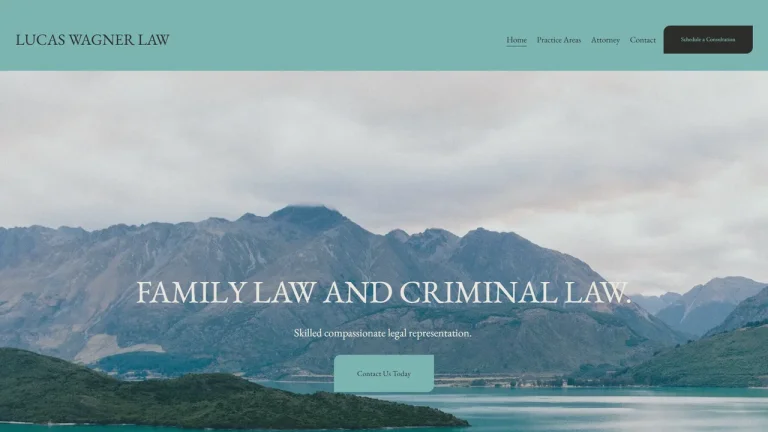
Lucas Wagner Law LLC - Anchorage, AK

Houston and Houston PC - Anchorage, AK
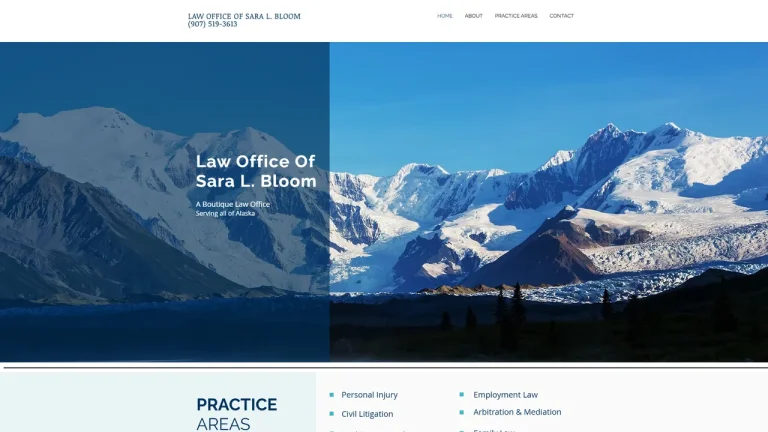
Law Office of Sara L. Bloom - Anchorage, AK
Law Offices of Dan Allan and Associates - Anchorage, AK

Buchholdt Jon - Anchorage, AK
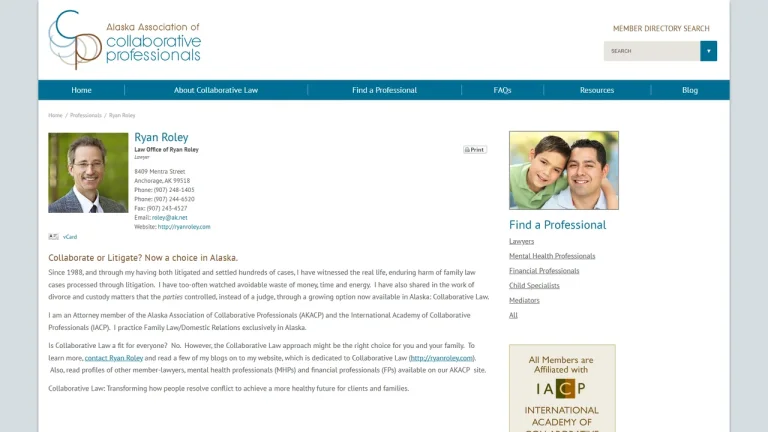
Family Law Office of Ryan R Roley - Anchorage, AK

Aglietti, Offret & Woofter - Anchorage, AK
The Law Office of Jennifer Messick - Anchorage, AK
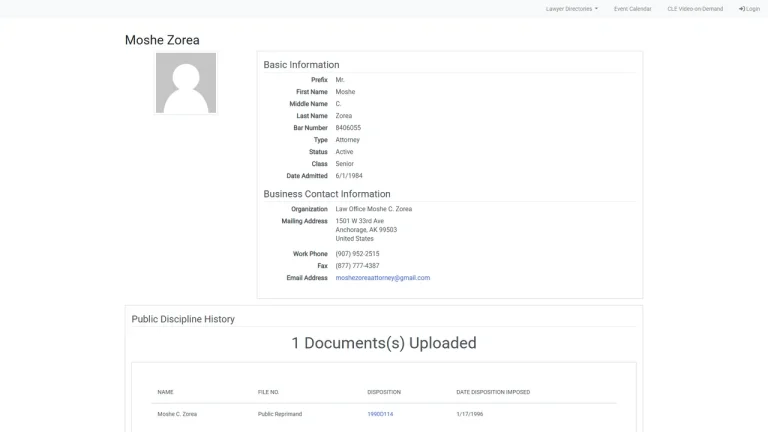
Moshe C. Zorea, Attorney at Law - Anchorage, AK

Law Office of J. Mitchell Joyner - Anchorage, AK
Henshaw Law - Anchorage, AK

Alaska Legal Services Corporation - Anchorage, AK
Law Office of Dattan Scott Dattan - Anchorage, AK
James A. Farr, Attorney at Law - Anchorage, AK

Law Office of Leigh Ann Bauer - Anchorage, AK

Juneau Mediation Center - Juneau, AK

Sherman Law Office, LLC - Anchorage, AK

Family Law Center for Men - Anchorage, AK

Navigating Divorce and Family Law Proceedings in Alaska
Domestic relations cases in Alaska involve unique personal and financial dynamics, ranging from complex child custody arrangements to the equitable division of distinct regional assets. Family law proceedings are under the exclusive jurisdiction of the Alaska Court System and are litigated in the Alaska Superior Court. Whether filing in the Third Judicial District in Anchorage or the Matanuska-Susitna Valley, the Fourth Judicial District in Fairbanks, or the First Judicial District in Juneau, retaining experienced local counsel is crucial.
Alaska family attorneys are licensed by the Alaska Bar Association and adhere to ethics rules regulated by the Alaska Supreme Court. Practicing in Alaska's domestic relations courts demands detailed familiarity with state statutory guidelines, the Alaska Child Support Services Division (CSSD), and local standing domestic orders governing parental conduct during litigation.
A dedicated family law attorney helps spouses defuse emotional tension and resolve disputes outside the courtroom whenever possible. Through formal mediation and settlement conferences, skilled attorneys protect parental rights and structure sound marital settlement agreements, preserving family stability while avoiding the significant financial and emotional toll of a trial.
Legal Fee Structures for Alaska Family Law Matters
| Case Scenario | Fee Structure | Estimated Cost (USD) | Key Cost Determinants |
|---|---|---|---|
| Uncontested Dissolution of Marriage | Flat Fee | $1,500 - $3,500 | Mutual agreement on all parenting terms, full asset transparency, joint petition filing. |
| Contested Divorce & Asset Division | Hourly Rate | $275 - $500 / hr ($5,000 - $20,000 retainer) | Business equity valuation, retirement accounts, commercial fishing permits, discovery motions. |
| Child Custody & Relocation Disputes | Hourly Rate | $300 - $525 / hr ($4,500 - $18,000 retainer) | Custody investigation reports, parental fitness evaluations, inter-district or interstate relocation issues. |
| Post-Decree Modifications & Enforcement | Flat Fee or Hourly | $2,000 - $6,000 | Substantial change in financial circumstances, Alaska CSSD adjustments, parenting plan revisions. |
Critical Legal Deadlines & Statutes in Alaska Family Law
Parties navigating family law actions must observe strict statutory rules established under Title 25 of the Alaska Statutes. Unlike many jurisdictions with lengthy waiting periods, a person may file for divorce in Alaska as long as they are a bona fide resident of the state at the time of commencement pursuant to Alaska Stat. § 25.24.020. If both spouses agree on all property distribution, custody, and support terms, they may file an expedited petition for dissolution of marriage under Alaska Stat. § 25.24.200.
In contested proceedings, marital property is divided according to the equitable distribution doctrine outlined in Alaska Stat. § 25.24.160, requiring the court to consider the earning capacities, age, health, and economic circumstances of each spouse. Alaska courts regularly allocate unique state assets, including military pensions, commercial fishing limited entry permits, and accrued Alaska Permanent Fund Dividends (PFDs). For custody determinations, judges apply the mandatory best-interests factors codified at Alaska Stat. § 25.24.150, while modifications of existing custody orders require a showing of a substantial change in circumstances under Alaska Stat. § 25.20.110.
Small Claims Court vs. Professional Family Representation in Alaska
The Small Claims Division of the Alaska District Court handles monetary disagreements up to $10,000 under Alaska Stat. § 22.15.040. However, small claims courts possess absolutely zero jurisdiction over family law matters. The Alaska Superior Court maintains exclusive authority over divorce, marriage dissolution, paternity, child custody, spousal maintenance, and property division.
Although self-represented litigants may attempt to file uncontested dissolution forms with the court clerk, proceeding pro se in contested divorces poses substantial financial hazards. Overlooking qualified domestic relations orders (QDROs) for pension divisions, miscalculating gross income under the Alaska Civil Rule 90.3 child support formula, or improperly waiving rights to business equity can cause irreversible financial harm. An experienced family attorney ensures that rights to marital property and fair parenting schedules are legally safeguarded.
Red Flags & Safeguards When Selecting Alaska Family Counsel
- Promising guaranteed custody or support outcomes: Under the Alaska Rules of Professional Conduct, lawyers are strictly prohibited from guaranteeing specific child custody schedules or financial maintenance awards.
- Inflaming conflict to inflate billable hours: Beware of attorneys who escalate minor disputes into costly motion battles rather than prioritizing constructive mediation and negotiated resolution.
- Lack of familiarity with Alaska-specific assets: Ensure your attorney has demonstrable experience dividing state-specific assets, such as commercial fishing permits, Alaska Native Claims Settlement Act (ANCSA) interests, and military benefits.
- Vague retainer terms: Avoid legal firms that do not provide clear written engagement contracts detailing billing increments, associate rates, and trust account procedures.
Frequently Asked Questions
What is the residency requirement to file for divorce in Alaska?
Under Alaska Stat. § 25.24.020, a person may file for divorce in Alaska if they are a bona fide resident of the state at the time the action begins, with no lengthy durational waiting period required.
What is the difference between a divorce and a dissolution in Alaska?
A dissolution under Alaska Stat. § 25.24.200 is a mutual, uncontested petition filed jointly when spouses agree completely on property, debt, and custody. A divorce is filed when either party disputes terms or requires judicial intervention.
How is property divided in an Alaska divorce?
Under Alaska Stat. § 25.24.160, Alaska follows the rule of equitable distribution, dividing marital property and debt fairly based on factors such as marriage length, earning capacity, and individual needs, rather than an automatic 50/50 split.
How does Alaska calculate child support obligations?
Child support in Alaska is determined using a percentage-of-income model regulated by Alaska Civil Rule 90.3 and administered by the Child Support Services Division pursuant to Alaska Stat. § 25.27.020.
When can a child custody order be modified in Alaska?
Under Alaska Stat. § 25.20.110, a court may modify a custody or visitation decree only when there has been a substantial and material change in circumstances affecting the best interests of the child.