
Divorce Lawyers in Alaska
Find top-rated Alaska divorce lawyers to protect assets, resolve marital property, and navigate uncontested dissolutions or complex court trials statewide. Skilled legal representation helps spouses reach equitable settlement agreements through negotiation and mediation while avoiding protracted judicial disputes. Explore our verified statewide directory below to consult an experienced Alaska family law attorney.

The Law Office of Jennifer Messick - Anchorage, AK
Law Offices of Dan Allan and Associates - Anchorage, AK

Law Office of Maurice N. Ellis - Anchorage, AK
Family Law Office of Ryan R Roley - Anchorage, AK

Heritage Law Firm, LLC - Anchorage, AK

Juneau Mediation Center - Juneau, AK

The Law Offices of Herbert M. Pearce - Anchorage, AK
Thompson Law Group - Anchorage, AK
Deborah A. Holbrook - Juneau, AK
Law Office of Evan Barrickman, P.C. - Anchorage, AK
Henshaw Law - Anchorage, AK

Otterson Law & Mediation, P.C. - Anchorage, AK

Sherman Law Office, LLC - Anchorage, AK

Baxter Bruce and Sullivan P.C. - Juneau, AK

Alaska Legal Services Corporation - Anchorage, AK

Kalamarides & Lambert - Anchorage, AK

Houston and Houston PC - Anchorage, AK
Chrystal Brand, Attorney at Law - Juneau, AK

Law Offices of Peggy A. Roston - Anchorage, AK
Bookman & Helm, LLP - Anchorage, AK

Law Office of Steven J. Priddle - Anchorage, AK
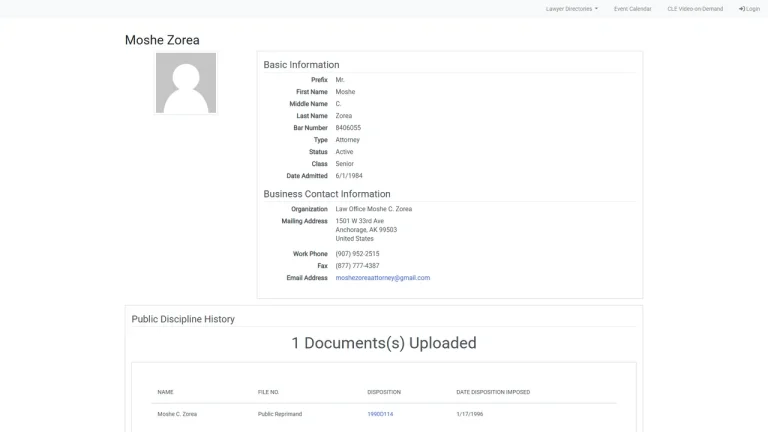
Moshe C. Zorea, Attorney at Law - Anchorage, AK

The Law Office of Andy Miller - Juneau, AK

Navigating Marital Dissolution Across Alaska Judicial Districts
Divorce and marital dissolution proceedings in Alaska fall under the exclusive trial jurisdiction of the Alaska Superior Court pursuant to Alaska Stat. § 22.10.020. The Supreme Court of Alaska establishes statewide domestic relations doctrine, while professional conduct and ethical representation are governed through the Alaska Bar Association.
Domestic relations cases are distributed across four regional judicial districts: the Third Judicial District encompassing Anchorage, Palmer, and the Kenai Peninsula; the Fourth Judicial District serving Fairbanks and Bethel; the First Judicial District including Juneau, Sitka, and Ketchikan; and the Second Judicial District managing rural northern communities such as Nome and Kotzebue. Superior Court judges in these venues handle asset distribution, spousal maintenance, and property characterization.
Alaska divorce litigation frequently involves complex, state-specific property questions. These include the valuation of Alaska Commercial Fisheries Entry Commission (CFEC) permits and individual fishing quotas (IFQs), division of military retirement benefits linked to Joint Base Elmendorf-Richardson and Fort Wainwright, Alaska Permanent Fund Dividends (PFDs), and unique statutory restrictions surrounding Alaska Native Claims Settlement Act (ANCSA) corporate stock. Navigating these regional complexities requires an attorney licensed in Alaska with extensive Superior Court trial experience.
Divorce Fee Framework & Settlement Costs in Alaska
| Case Scenario | Fee Structure | Estimated Cost (USD) | Key Cost Determinants |
|---|---|---|---|
| Uncontested Summary Dissolution (No Minor Children) | Flat Fee | $1,500 - $3,500 | Comprehensive marital agreement drafting, waiver of appearance hearings, and full financial disclosure coordination. |
| Contested Divorce with Real Estate & Asset Division | Hourly with Advance Retainer | $275 - $475 / hr ($3,500 - $7,500 retainer) | Real property appraisals, business valuations, discovery motions, and mediation sessions. |
| High-Net-Worth / Military & Fishing Quota Division | Hourly with Advance Retainer | $350 - $550 / hr ($7,500 - $15,000+ retainer) | Forensic accounting, CFEC fishing quota valuation, ANCSA share restrictions, and military pension orders. |
| Spousal Maintenance (Alimony) Litigation | Hourly with Advance Retainer | $4,000 - $15,000 | Vocational expert testimony, length of marriage, rehabilitative educational plans, and earning capacity disparities. |
Critical Legal Deadlines & Statutes in Alaska
Alaska provides two legal avenues for terminating a marriage: an uncontested dissolution of marriage under Alaska Stat. § 25.24.200, or a formal contested complaint for divorce under Alaska Stat. § 25.24.010. Unlike many jurisdictions with lengthy waiting periods, an action for divorce may be filed under Alaska Stat. § 25.24.030 as long as the plaintiff is a bona fide resident of Alaska at the time of filing. For uncontested dissolutions, Alaska Stat. § 25.24.220 imposes a mandatory 30-day statutory waiting period between filing and the final decree hearing.
Under Alaska Stat. § 25.24.050, the primary no-fault ground for divorce is an incompatibility of temperament. Property division is governed by Alaska Stat. § 25.24.160, which mandates the equitable distribution of marital assets and liabilities based on the statutory Wanberg factors, including the duration of the marriage, economic circumstances of each spouse, and contributions to marital property accumulation.
Small Claims Limits vs. Professional Representation in Alaska
Under Alaska Stat. § 22.15.040, the Alaska District Court Small Claims Division resolves basic monetary claims up to $10,000. However, small claims courts possess zero jurisdiction over domestic relations actions, equitable property division, or spousal maintenance determinations.
Because all marital actions reside within the exclusive jurisdiction of the Alaska Superior Court, proceeding without legal representation creates profound risks. Pro se litigants frequently misapply equitable distribution rules, neglect Qualified Domestic Relations Orders (QDROs) for pension divisions, or mischaracterize premarital assets. Retaining an experienced Alaska divorce lawyer ensures comprehensive asset discovery, accurate pension division, and enforceable property settlement agreements.
Red Flags & Vetting Standards for Alaska Divorce Lawyers
- Unfamiliarity with specialized Alaska assets such as CFEC commercial fishing permits, PFD garnishments, or ANCSA native shares.
- Encouraging protracted, adversarial litigation when an uncontested dissolution under Alaska Stat. § 25.24.200 could achieve equitable outcomes.
- Refusing to provide a written fee contract outlining hourly rates, retainer replenishment terms, and outside appraisal expenses.
- Attorneys who lack trial experience before Superior Court judges in your specific judicial district.
Frequently Asked Questions
What is the difference between a divorce and a dissolution in Alaska?
A dissolution under Alaska Stat. § 25.24.200 is a mutual, uncontested petition where spouses agree on all terms, whereas a divorce under Alaska Stat. § 25.24.010 is a contested lawsuit requiring court adjudication.
How is property divided in an Alaska divorce?
Under Alaska Stat. § 25.24.160, Alaska courts divide marital property equitably rather than automatically equally, considering factors such as marriage length, earning capacity, and health.
Is there a residency requirement to file for divorce in Alaska?
Under Alaska Stat. § 25.24.030, there is no durational residency waiting period, provided the filing spouse is a bona fide resident of Alaska at the time the complaint is filed.
How are military pensions divided during an Alaska divorce?
Military pensions earned during the marriage are considered marital property and are divided through court-issued military pension division orders in compliance with state equitable distribution rules.
What happens to Alaska Native Corporation shares during a divorce?
ANCSA corporate stock is subject to strict federal and state transfer limitations and generally cannot be transferred to non-Native spouses, requiring creative asset offsets during property division.