
Wrongful Termination Lawyers in Los Angeles
Retaining an experienced Los Angeles wrongful termination lawyer is critical to protecting your rights after an unlawful firing or retaliatory workplace dismissal. Skilled employment attorneys frequently secure significant severance packages or out-of-court settlements through strategic negotiation, avoiding drawn-out courtroom battles. Explore our directory below to schedule a case review with trusted local professionals.
Shegerian & Associates - Los Angeles, CA
Eldessouky Law - Los Angeles, CA
Ghozland Law Firm - Los Angeles, CA
Blair & Ramirez LLP - Los Angeles, CA
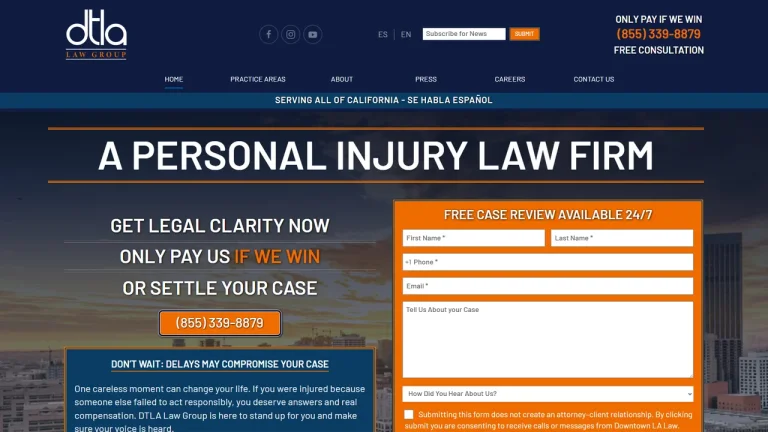
Downtown L.A. Law Group - Los Angeles, CA
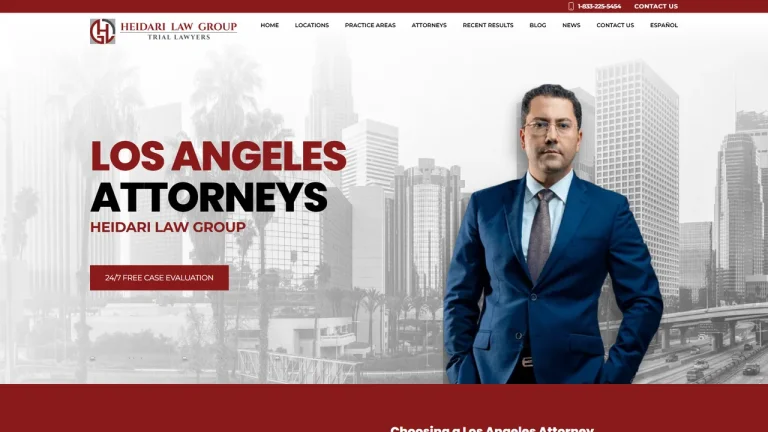
Heidari Law Group - Los Angeles, CA
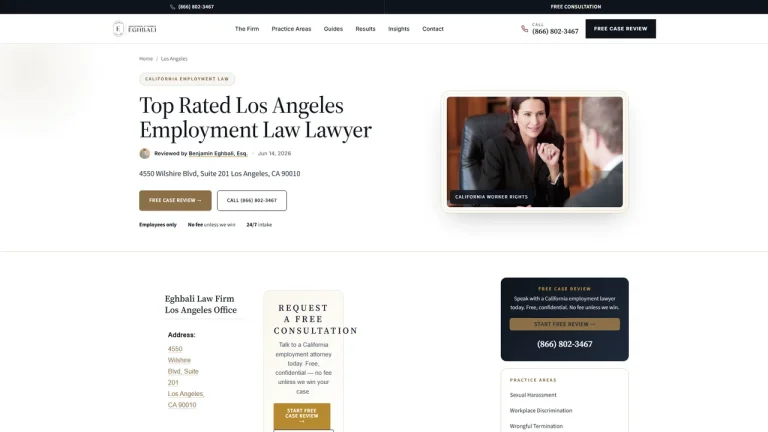
Eghbali Law Firm - Los Angeles, CA
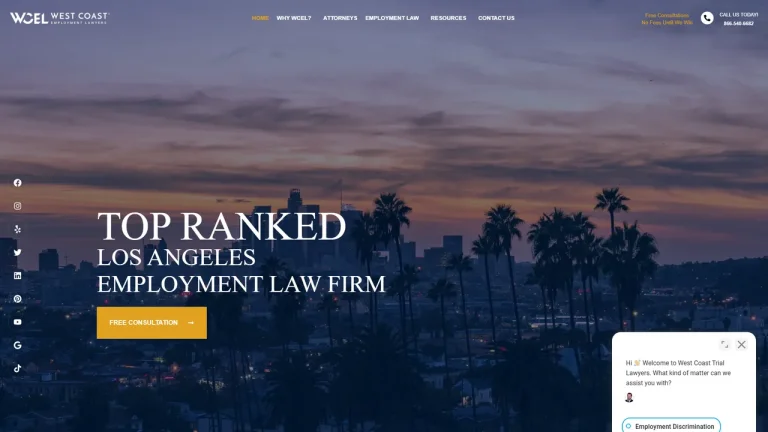
West Coast Employment Lawyers - Los Angeles, CA
Law Office of David Pourati (Pourati Law Firm) - Los Angeles, CA
Kokozian Law Firm, APC - Los Angeles, CA
Miracle Mile Law Group - Los Angeles, CA
Greenberg Gross LLP - Los Angeles, CA
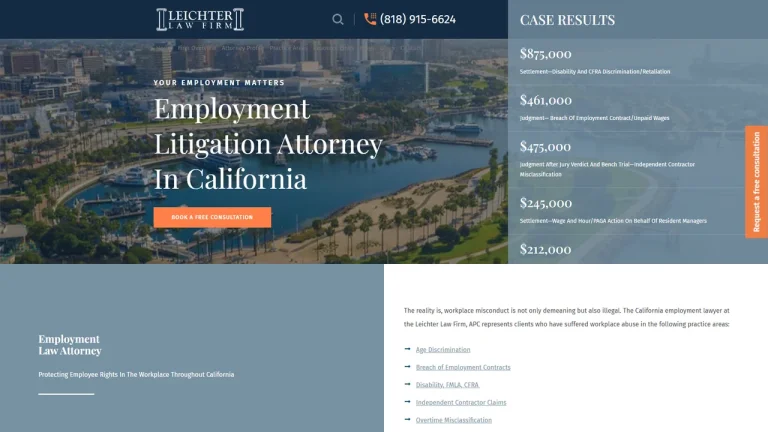
Leichter Law Firm, APC - Los Angeles, CA
Sexual Harassment Law Firm CA - Los Angeles, CA
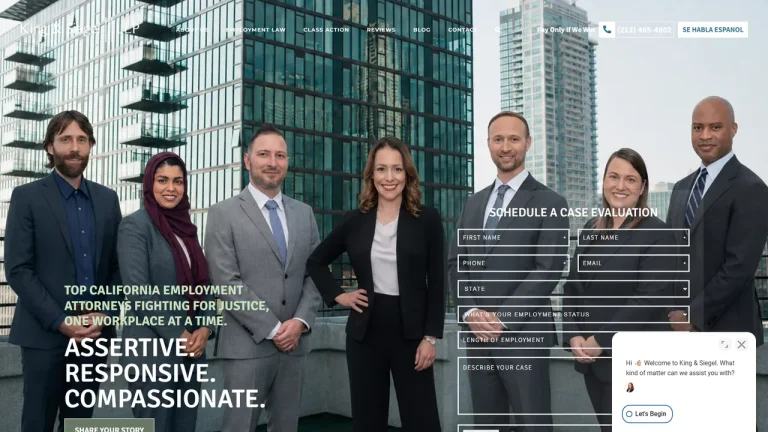
King & Siegel LLP - Los Angeles, CA

West Coast Trial Lawyers - Los Angeles, CA
Golden Coast Trial Attorneys, P.C. - Los Angeles, CA
Smith Law - Los Angeles, CA
Broslavsky & Weinman, LLP - Los Angeles, CA
MSD Lawyers - Los Angeles, CA
Haeggquist & Eck, LLP - Los Angeles, CA
Sexual Harassment Attorney Law Firm - Los Angeles, CA
The Spivak Law Firm - Los Angeles, CA
Wrongful Termination and Employment Rights in Los Angeles
California is an at-will employment state pursuant to Cal. Lab. Code § 2922, meaning employers generally retain the discretion to discharge workers without stating a specific cause. However, this rule is strictly limited by statutory protections prohibiting terminations based on unlawful discrimination, retaliation for reporting labor violations, or breaches of fundamental public policy.
Employment litigation in Los Angeles County spans major corporate sectors from Downtown Los Angeles and Century City to Santa Monica, Glendale, and Long Beach. Unlimited civil lawsuits are primarily filed and litigated in the Los Angeles County Superior Court, with central proceedings held at the Stanley Mosk Courthouse in Downtown Los Angeles. Regional branches such as the Santa Monica Courthouse and the Van Nuys Courthouse also manage civil employment disputes.
Successfully holding an employer accountable requires navigating California Civil Rights Department administrative procedures, conducting rigorous document discovery, and adhering to Los Angeles Superior Court local rules via approved Odyssey eFileCA portals. Retaining an established Los Angeles wrongful termination attorney provides the strategic representation required to obtain fair financial compensation and hold employers responsible.
Fee Structures for Los Angeles Wrongful Termination Claims
| Case Scenario | Fee Structure | Estimated Cost (USD) | Key Cost Determinants |
|---|---|---|---|
| Severance Review & Separation Negotiation | Flat Fee / Hourly | $750 - $3,500 | Executive seniority, release terms, non-disparagement scope, severance multiplier. |
| CRD Administrative Filing & Case Investigation | Contingency / Hybrid | $1,500 - $5,000 (or 30% - 33%) | Witness interviews, personnel file reviews, immediate Right-to-Sue issuance vs. agency mediation. |
| Superior Court Litigation Through Discovery | Contingency | 33.3% - 40% of Recovery | Number of depositions, defense summary judgment motions, electronic discovery volume. |
| Jury Trial in Los Angeles County Superior Court | Contingency | 40% - 45% of Recovery | Trial duration at Stanley Mosk Courthouse, vocational and economic experts, punitive damages phase. |
Critical Legal Deadlines & Statutes in California
Employees in California must adhere to strict statutory deadlines to preserve their legal claims. For wrongful terminations motivated by discrimination, harassment, or retaliation under the Fair Employment and Housing Act (FEHA), an employee must file a verified administrative complaint with the California Civil Rights Department (CRD) pursuant to Cal. Gov. Code § 12960(e) within three years of the unlawful discharge. After the CRD issues an official Right-to-Sue notice, the worker has exactly one year to initiate a civil lawsuit under Cal. Gov. Code § 12965.
For whistleblower retaliation claims under Cal. Lab. Code § 1102.5, the statute of limitations is three years pursuant to Cal. Civ. Proc. Code § 338(a). Common law tort claims for wrongful termination in violation of public policy carry a two-year limitation period under Cal. Civ. Proc. Code § 335.1. If the employer is a local public agency, city municipality, or county department in Los Angeles County, the California Government Claims Act under Cal. Gov. Code § 911.2 mandates presenting an administrative claim within six months of termination.
Small Claims Limits vs. Professional Representation
California Small Claims Court operates under Cal. Civ. Proc. Code § 116.220 with an individual claim threshold of $12,500 ($6,250 for corporate entities). Under Cal. Civ. Proc. Code § 116.530, attorneys are strictly barred from representing litigants during small claims trial hearings.
While an unrepresented employee may utilize small claims to recover straightforward unpaid wages or statutory waiting-time penalties under Cal. Lab. Code § 203, small claims court is fundamentally incapable of managing wrongful termination lawsuits. Wrongful discharge actions involve complex legal theories, emotional distress damages, lost front pay, and fee shifting under Cal. Gov. Code § 12965(c)(6). Professional legal representation in unlimited civil court is necessary to compel deposition testimony from corporate management and withstand aggressive defense summary judgment motions.
Red Flags to Avoid When Hiring an Employment Lawyer
- Firms requiring high upfront hourly retainer payments for statutory FEHA claims where contingency fee representation is the industry norm.
- Attorneys who promise guaranteed monetary recoveries or multi-million dollar jury awards during an initial consultation without reviewing employer documentation.
- Volume settlement mills that immediately encourage accepting low initial severance offers rather than preparing the matter for trial in Los Angeles County Superior Court.
- Counsel who fail to obtain the required Right-to-Sue notice from the California Civil Rights Department prior to filing a lawsuit in court.
Frequently Asked Questions
Can I sue for wrongful termination if I signed an at-will employment agreement?
Yes. Even with an at-will contract under Cal. Lab. Code § 2922, employers cannot fire an employee for unlawful discriminatory reasons, for refusing to participate in illegal conduct, or in retaliation for exercising protected statutory rights.
What is a Right-to-Sue notice from the California Civil Rights Department?
A Right-to-Sue notice is a statutory certificate issued by the California Civil Rights Department under Cal. Gov. Code § 12965 confirming that an employee has exhausted administrative remedies and is authorized to file a civil lawsuit in court within one year.
What damages are available in a California wrongful termination case?
Remedies may include past lost wages (back pay), future loss of earnings (front pay), compensation for emotional distress, statutory attorney fees under Cal. Gov. Code § 12965, and punitive damages under Cal. Civ. Code § 3294 in cases involving malice or fraud.
How does California protect employees who blow the whistle on illegal actions?
Under Cal. Lab. Code § 1102.5, employers are prohibited from retaliating against an employee who discloses information to a government agency or supervisor regarding suspected violations of state, local, or federal laws.
Can an employer fire a worker for taking medical leave in California?
No. Under the California Family Rights Act pursuant to Cal. Gov. Code § 12945.2, eligible employees are entitled to up to 12 weeks of job-protected leave for serious medical conditions or family care, and terminating a worker for taking leave is unlawful.