
Bankruptcy Lawyers in Sacramento
Retaining an experienced Sacramento bankruptcy lawyer halts creditor collection through the federal automatic stay while protecting essential personal property. Local counsel guides individuals and businesses through Chapter 7 or Chapter 13 filings while optimizing California statutory exemptions. Explore our verified directory below to schedule a confidential debt relief evaluation in Sacramento County.
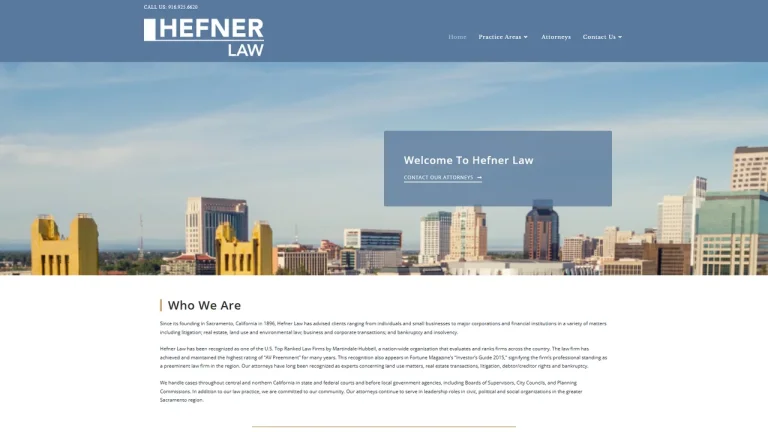
Hefner Stark and Marois, Sacramento, CA
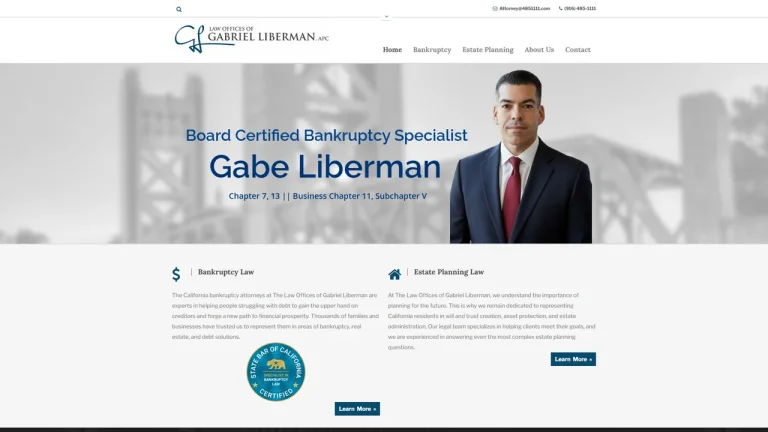
Law Offices of Gabriel Liberman, APC - Sacramento, CA

The Law Office of Marc A. Caraska - Sacramento, CA

Attorney Debt Reset Inc - Sacramento, CA
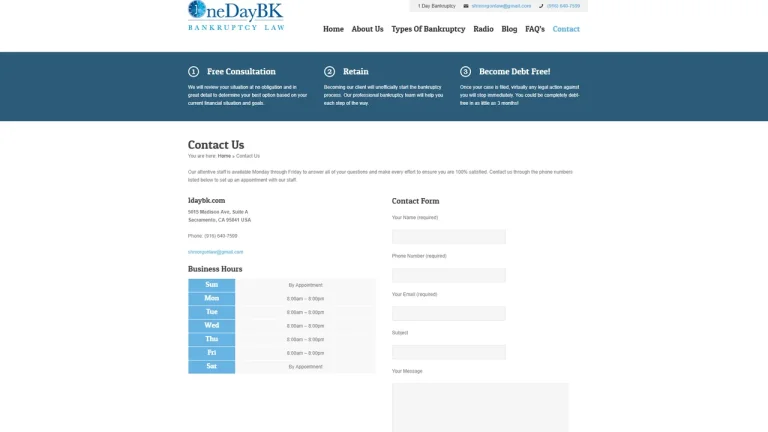
Law Offices of Mark Shmorgon - Sacramento, CA

Law Office of James L. Keenan - Sacramento, CA

Carlos Andres Ramos Attorney at Law - Sacramento, CA

Sacramento Bankruptcy Lawyer - Sacramento, CA

Richard Jare Sacramento Bankruptcy Lawyer - Sacramento, CA

Abdallah Law Group P.C. - Sacramento, CA

Sacramento Bankruptcy Center - Sacramento, CA
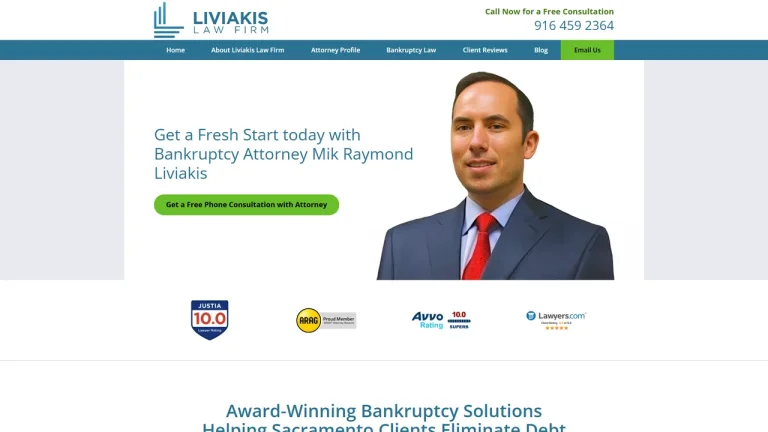
Liviakis Law Firm - Sacramento, CA

Macey Bankruptcy Law - Sacramento Bankruptcy - Sacramento, CA

Stutz Law Office, Sacramento, CA

Scott Shumaker - Sacramento, CA

Law Offices of Matthew D. Roy, Sacramento, CA

Capital Pro Bono - Sacramento, CA
Sacramento Law Group LLP - Sacramento, CA

Law Office of Rick Morin - Sacramento, CA

Law Office of Lisa K. McKee - Sacramento, CA

Avan Law Office Bankruptcy Attorneys - Sacramento, CA
Foxx Thanh T. - Sacramento, CA
Barry H Spitzer Law Office - Sacramento, CA

Federal Bankruptcy Practice in the Sacramento Division
Financial distress can unexpectedly impact households and business owners throughout Sacramento, from Downtown commercial operations to suburban neighborhoods in Citrus Heights and Elk Grove. Retaining an experienced bankruptcy lawyer provides an immediate shield against home foreclosures, vehicle repossessions, and bank levies. Legal guidance ensures your filing complies with both federal rules and local court customs.
All bankruptcy proceedings originating in Sacramento County fall under the exclusive jurisdiction of the United States Bankruptcy Court for the Eastern District of California, located at the Robert T. Matsui Courthouse on 501 I Street. Section 341 Meetings of Creditors are administered under the oversight of the Office of the United States Trustee for Region 17.
California maintains two distinct asset exemption frameworks that govern which property debtors may retain during proceedings. Local Sacramento attorneys evaluate household income, property equity, and personal assets to select the optimal statutory scheme, shielding maximum equity from liquidation by the bankruptcy trustee.
Legal Fee Structures for Bankruptcy Representation
| Case Scenario | Fee Structure | Estimated Cost (USD) | Key Cost Determinants |
|---|---|---|---|
| Chapter 7 Individual Liquidation | Flat Fee ($1,500 - $3,000 + $338 court fee) | $1,500 - $3,000 | Means test qualification, number of creditors, and personal asset complexity. |
| Chapter 13 Debt Reorganization Plan | Court-Approved / Staged Plan Fee | $3,500 - $5,500 | Mortgage arrears, priority tax debts, and calculated disposable monthly income. |
| Chapter 11 Subchapter V Small Business Filing | Retainer / Hourly ($375 - $650/hr) | $15,000 - $45,000+ | Cash collateral motions, restructuring plan drafting, and creditor negotiations. |
| Adversary Proceeding Defense | Hourly ($350 - $600/hr) | $5,000 - $20,000+ | Dischargeability disputes, preferential transfer defense, and discovery scope. |
Critical Legal Deadlines & Statutes in California
Filing a voluntary bankruptcy petition initiates the automatic stay under 11 U.S. Code § 362, halting pending civil lawsuits, wage garnishments, and foreclosure actions statewide. Prior to filing, debtors must complete an approved credit counseling course within the 180-day window preceding the petition date pursuant to 11 U.S. Code § 109(h).
Determining eligibility for Chapter 7 discharge requires passing the Means Test under 11 U.S. Code § 707(b), which compares average monthly gross income from the previous 6 months against median benchmarks in California. California filers must elect between two exemption systems: the wildcard exemption system under Cal. Civ. Proc. Code § 703.140(b) or the homestead exemption under Cal. Civ. Proc. Code § 704.730, which protects home equity based on local county median sales prices.
Following filing, the court schedules the Section 341 Meeting of Creditors, typically held within 20 to 40 days. Creditors have exactly 60 days following the first date set for this meeting to file an adversary complaint contesting debt dischargeability under 11 U.S. Code § 523(c). For Chapter 13 debtors, the proposed repayment plan must be filed within 14 days of filing the petition, with plan payments commencing within 30 days pursuant to 11 U.S. Code § 1326(a).
Small Claims Limits vs. Federal Bankruptcy Jurisdiction
The Small Claims Division of the Sacramento County Superior Court (at the Carol Miller Justice Center) manages civil actions capped at $12,500 for individuals and $6,250 for business entities under Cal. Civ. Proc. Code § 116.221. Per Cal. Civ. Proc. Code § 116.530, attorneys are prohibited from appearing on behalf of parties in small claims trials.
However, small claims court is legally powerless to provide debt discharge or stay widespread collection actions. Defending multiple lawsuits in small claims can lead to separate money judgments, wage garnishments, and bank liens. Conversely, federal bankruptcy proceedings in the Eastern District of California consolidate all debts into a unified judicial proceeding. Under federal bankruptcy jurisdiction, an attorney can permanently extinguish qualifying debts and obtain enforceable court orders barring creditors from future contact.
Red Flags to Avoid When Selecting Bankruptcy Counsel
- High-volume petition mills that delegate petition drafting and exemption planning entirely to clerical staff without attorney oversight.
- Non-attorney bankruptcy petition preparers who cannot give legal advice, represent you before trustees, or defend exemption choices.
- Practitioners who fail to evaluate California homestead exemption thresholds under Cal. Civ. Proc. Code § 704.730 against Sacramento County property records.
- Attorneys promising complete debt elimination without checking whether student loans, domestic support obligations, or recent tax liabilities are legally dischargeable.
Frequently Asked Questions
Where is the bankruptcy court located for Sacramento residents?
Sacramento County cases are handled at the United States Bankruptcy Court for the Eastern District of California, located inside the Robert T. Matsui United States Courthouse at 501 I Street, Suite 3-200, in Downtown Sacramento.
What is the difference between Chapter 7 and Chapter 13 bankruptcy?
Chapter 7 discharges qualifying unsecured debts without repayment, typically completing within four to six months for qualifying lower-income filers. Chapter 13 creates a court-supervised three-to-five-year repayment plan, allowing debtors to catch up on delinquent mortgage payments and keep non-exempt assets.
Can filing bankruptcy stop a scheduled home foreclosure in Sacramento?
Yes. The automatic stay goes into effect immediately upon filing the bankruptcy petition, legally barring mortgage servicers from continuing foreclosure actions, trustee sales, or eviction proceedings while the case is active.
How does California protect home equity in bankruptcy?
Under California Civil Procedure Code § 704.730, debtors can claim a homestead exemption tied to the county median home sale price, providing substantial protection for principal residences in Sacramento County from being liquidated by the bankruptcy trustee.
Will I be required to appear in court before a bankruptcy judge?
In most consumer cases, you will not appear before a judge. You are required to attend a Section 341 Meeting of Creditors overseen by a bankruptcy trustee, which is frequently conducted remotely or at the federal courthouse in Sacramento with your attorney present.