
Employment & Labor Lawyers in Sacramento
Engaging an experienced Sacramento employment lawyer ensures your workplace rights are defended under robust California labor and fair employment statutes. Skilled legal advocates assist workers with wrongful termination, unpaid overtime, and state civil service personnel disputes. Explore our directory below to connect with verified Sacramento employment and labor law attorneys.
Aecus Law Workplace Investigations - Sacramento, CA
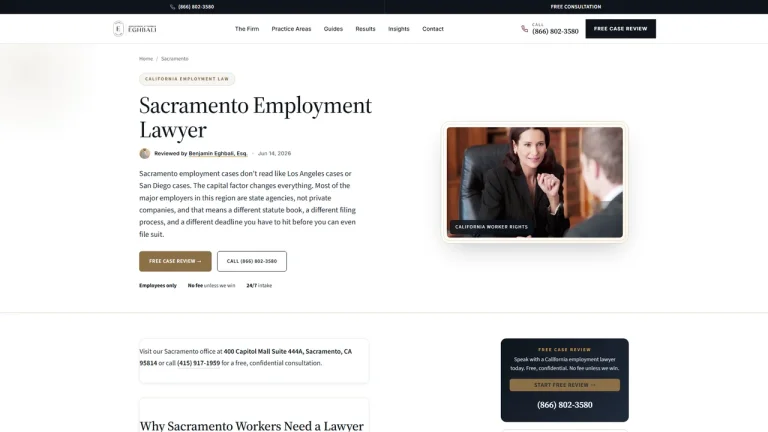
Eghbali Law Firm - Sacramento, CA

Seyfarth Shaw LLP - Sacramento, CA

Buchalter - Sacramento, CA
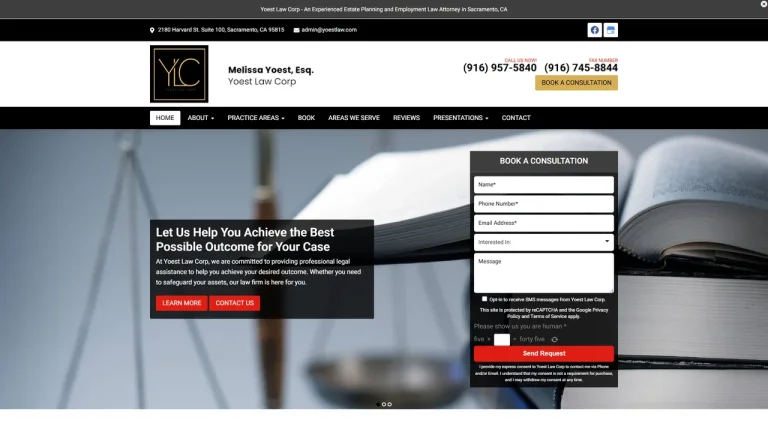
Yoest Law Corp, Sacramento, CA

Capital Pro Bono - Sacramento, CA

Rana Law Corp. Sacramento, CA
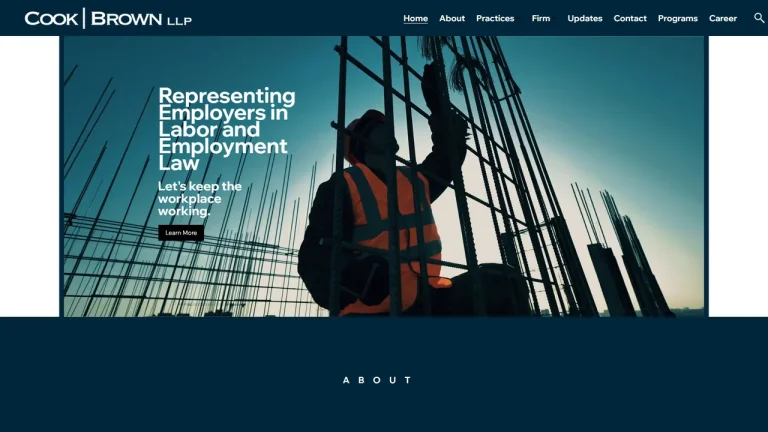
Cook Brown LLP - Sacramento, CA
Ben Crump Law PLLC Sacramento, CA
Greenberg Traurig, LLP - Sacramento, CA
CDF Labor Law LLP - Sacramento, CA
Legal Services of Northern California - Sacramento, CA
King & Siegel LLP - Sacramento, CA
Falakassa Law P.C. - Sacramento, CA
Law Office of Arkady Itkin - Sacramento, CA
Weintraub Tobin - Sacramento, CA

Asbill Law Group, APLC - Sacramento, CA
The Law Offices of Doug Moreno - Sacramento, CA
Tong Law - Sacramento, CA
CAL LAW APC - Sacramento, CA

George F. Allen, Attorney at Law, Sacramento, CA
Law Office of Barbara M. Jacobson - Sacramento, CA

Smith McDowell & Powell, A Law Corporation - Sacramento, CA

Employment & Labor Law Enforcement Across Sacramento
As the political capital of California, Sacramento maintains a unique labor market combining vast public-sector civil service workforces with rapidly expanding private industries. Thousands of professionals are employed across state administrative agencies, municipal departments, major healthcare systems including UC Davis Health and Sutter Health, agricultural logistics hubs, and regional technology firms. Workplace disputes arising in Downtown Sacramento, Natomas, Rancho Cordova, or Elk Grove require comprehensive knowledge of both private-sector corporate employment law and specialized civil service administrative rules.
Employment litigation in Sacramento is primarily heard in the Sacramento County Superior Court at the Gordon D. Schaber Courthouse for state civil claims, or the United States District Court for the Eastern District of California for federal claims. In addition to judicial courts, Sacramento houses key administrative bodies that enforce worker protections. These include the California Civil Rights Department (CRD), which oversees workplace harassment and discrimination complaints; the California Labor Commissioner's Office (Division of Labor Standards Enforcement, DLSE) on Howe Avenue, which adjudicates wage-and-hour violations; and the California State Personnel Board (SPB), which hears appeals from state civil service employees facing adverse disciplinary actions.
Whether pursuing an individual wrongful termination lawsuit or initiating a representative action under California labor statutes, retaining dedicated local counsel ensures strict compliance with mandatory administrative exhaustion prerequisites. Experienced Sacramento labor attorneys possess the insight needed to depose corporate supervisors, audit electronic payroll records, and counter retaliation claims within both state agency bureaucracies and private corporate enterprises.
Sacramento Employment Legal Fees and Representation Costs
| Case Scenario | Fee Structure | Estimated Cost (USD) | Key Cost Determinants |
|---|---|---|---|
| Wage & Hour, Unpaid Overtime, or Missed Break Claim | Contingency Fee (Administrative or Civil) | 33.3% - 40% of recovery | Payroll auditing complexity, statutory premium penalties under Cal. Lab. Code § 226.7, employer compliance history. |
| Workplace Discrimination, Harassment, or Retaliation | Contingency Fee (Pre-Trial through Trial) | 35% - 40% of gross recovery | CRD right-to-sue issuance, corroborating electronic communications, emotional distress evaluations, lost future earnings. |
| Executive Severance Negotiation & Non-Compete Review | Hourly or Fixed Consultation | $400 - $700 / hr ($1,500 - $5,000 flat) | Executive equity packages, restrictive covenant invalidity under Cal. Bus. & Prof. Code § 16600, release waiver terms. |
| State Civil Service Disciplinary Appeal (SPB Hearing) | Hourly Retainer / Staged Flat Fee | $5,000 - $15,000+ | Notice of Adverse Action severity, administrative discovery motions, formal evidentiary hearing representation before an SPB ALJ. |
Critical California Employment Deadlines and Statutory Timelines
California enforces comprehensive labor codes with strict filing deadlines. Missing these statutory windows bars an employee from recovering unpaid wages or obtaining civil damages:
- CRD Discrimination and Harassment Administrative Filings: Under Cal. Gov't Code § 12960, employees subjected to discrimination or harassment under the Fair Employment and Housing Act (FEHA) must file an administrative complaint with the California Civil Rights Department within three years of the unlawful conduct.
- Statute of Limitations for Civil FEHA Lawsuits: Once the CRD issues an official Right-to-Sue notice, the employee has exactly one year from the date of the notice to file a civil lawsuit in Sacramento County Superior Court pursuant to Cal. Gov't Code § 12965.
- Wage and Hour Statutory Claims: Lawsuits for unpaid minimum wages, overtime, and meal break premiums must be commenced within three years under Cal. Civ. Proc. Code § 338, extendable to four years under unfair competition claims pursuant to Cal. Bus. & Prof. Code § 17208.
- State Civil Service Adverse Action Appeals: Pursuant to Cal. Gov't Code § 19575, a permanent state civil service employee in Sacramento who receives a Notice of Adverse Action has only 30 calendar days to file a formal written appeal with the California State Personnel Board.
- Whistleblower Retaliation Protections: Employees fired or demoted for reporting statutory labor or safety non-compliance are protected under Cal. Lab. Code § 1102.5, which provides statutory civil penalties and reinstatement remedies.
Small Claims Court Limits vs. Professional Employment Litigation
The Small Claims division of the Sacramento County Superior Court manages disputes up to $12,500 for natural persons under Cal. Civ. Proc. Code § 116.221. While an employee could theoretically file an action in small claims for a withheld final paycheck or uncompensated travel stipend, resolving employment disputes in this setting presents major tactical drawbacks.
Under Cal. Civ. Proc. Code § 116.530, legal counsel is prohibited from representing parties at small claims hearings. Major employers defend wage or termination disputes vigorously using internal human resource directors and corporate documentation. Pursuing a case pro se in small claims waives access to statutory attorney fee-shifting remedies available under the California Labor Code, such as Cal. Lab. Code § 218.5. Retaining an employment lawyer allows workers to file in the Sacramento County Superior Court, pursue class or representative relief under the Private Attorneys General Act (Cal. Lab. Code § 2699), and compel full corporate financial transparency.
Red Flags to Avoid When Selecting a Sacramento Employment Lawyer
- Guarantees of Massive Financial Settlements: Distrust attorneys who promise specific multi-million-dollar recoveries during an initial consultation before reviewing employer policies, personnel files, and contemporaneous communications.
- Unfamiliarity with State Civil Service Procedures: For public sector employees, avoid law firms that handle only general corporate claims and lack specific experience before the California State Personnel Board or CalHR.
- Demanding Upfront Fees on Clear Wage-and-Hour Cases: Established California plaintiff employment attorneys handle statutory wage theft and wrongful termination matters on a contingency fee arrangement without demanding out-of-pocket retainers.
- Ignoring Administrative Exhaustion Requirements: Steer clear of counsel who files a civil discrimination complaint in court without properly securing an administrative Right-to-Sue notice from the California Civil Rights Department.
Frequently Asked Questions
What is the process for appealing a state civil service disciplinary action in Sacramento?
When a state employee receives a formal Notice of Adverse Action (such as a dismissal, suspension, or salary reduction), they have 30 calendar days to file an appeal with the State Personnel Board under Cal. Gov't Code § 19575. The appeal initiates pre-hearing settlement conferences and, if unresolved, a formal evidentiary hearing before an Administrative Law Judge who issues a proposed decision to the full board.
What are California's mandatory meal and rest break requirements?
Under Cal. Lab. Code § 512, non-exempt employees working more than five hours are entitled to an uninterrupted 30-minute meal break, and a second meal break for shifts over ten hours. Under Cal. Lab. Code § 226.7, employers must also authorize a paid 10-minute rest break for every four hours worked. Failure to provide compliant breaks requires the employer to pay one additional hour of regular pay per missed break type per workday.
Are non-compete agreements enforceable in Sacramento, California?
No. California enforces one of the strictest bans on non-compete clauses. Under Cal. Bus. & Prof. Code § 16600 and subsequent statutory amendments, post-employment non-compete covenants are void and unlawful regardless of where or when the contract was signed, granting employees the freedom to move to competing businesses.
What remedies are available for workplace retaliation in Sacramento?
Employees retaliated against for reporting unlawful activities or safety violations under Cal. Lab. Code § 1102.5 may recover reinstatement to their prior position, back pay with interest, compensation for lost benefits, civil penalties up to $10,000 per violation, and reimbursement of reasonable attorney fees incurred during litigation.
What is the Private Attorneys General Act (PAGA)?
Codified under Cal. Lab. Code § 2699, PAGA allows aggrieved employees to file lawsuits on behalf of themselves and other current or former employees to recover civil penalties for Labor Code violations that were historically enforceable only by state regulatory agencies, with recovered penalties shared between employees and the state.