
Drug Crime Defense Lawyers in Idaho
Retaining an experienced Idaho drug crime defense lawyer protects your constitutional rights against severe statutory mandatory minimums. Qualified defense attorneys challenge illegal traffic stops, contest forensic laboratory results, and negotiate for diversion or withheld judgments. Explore our verified directory below to schedule a confidential consultation with a trusted local advocate.

R Wade Curtis, Attorney at Law Boise, ID

Bartlett Law, PLLC - Boise, ID
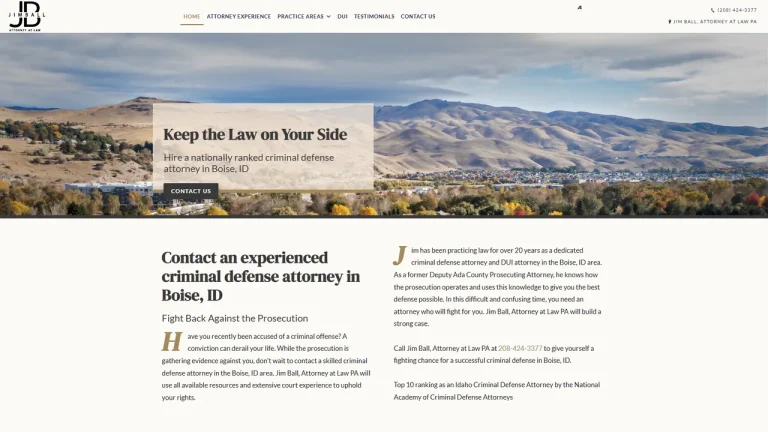
Jim Ball, Attorney at Law PA - Boise, ID
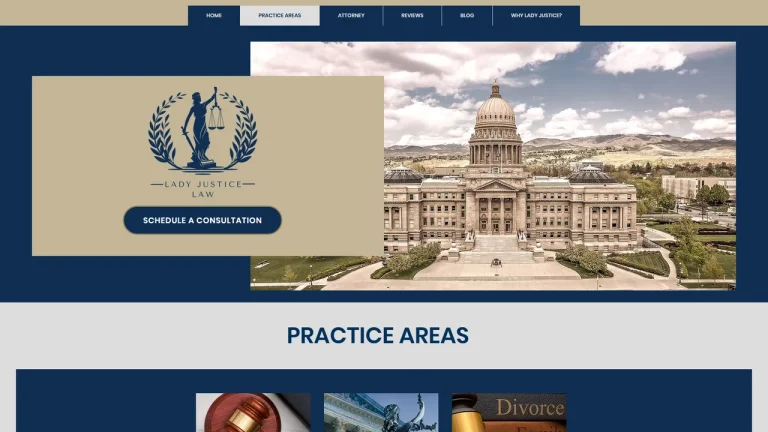
Lady Justice Law - Meridian, ID

Wellman Law & Mediation - Nampa, ID

Boise DUI Law - Boise, ID
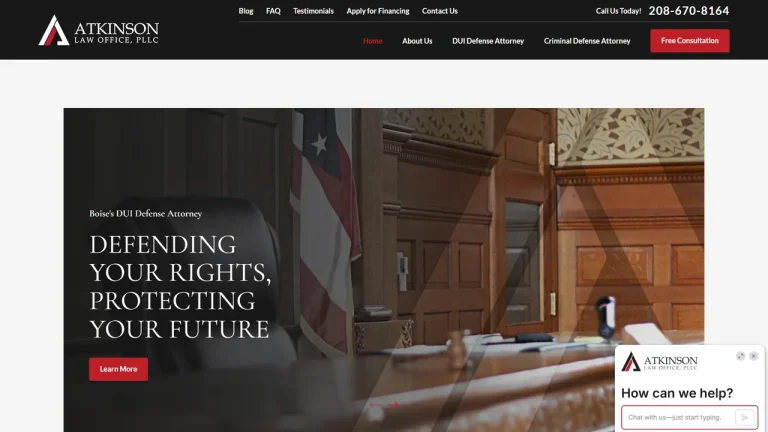
Atkinson Law Office - Boise, ID

Tatum Wysocki Law, P.C. - Boise, ID

Federal Defenders of Idaho Boise, ID
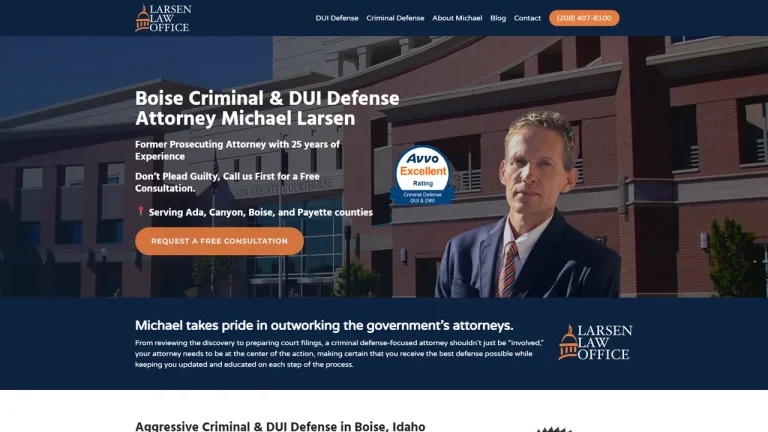
Larsen Law Office - Boise, ID

Tilley Law Office - Nampa, ID

Breen, Ball & Marelius, PLLC - Boise, ID

Ramirez-Smith Law - Nampa, ID
Crafts Law Inc. - Boise, ID
Barnum Law PLLC - Boise, ID
Idaho Legal Justice - Boise, ID
Lovell Law, PLLC - Nampa, ID
Matthew B. Hanson Law - Nampa, ID
Blender Law Office Pc - Boise, ID

Bublitz Law, P.C. - Boise, ID
Ada County Public Defender - Boise, ID
DUI Attorney Jared W. Sommer - Boise, ID

Nampa Advocate - DUI Lawyers - ID
Navigating Idaho Drug Crime Defense Across State Judicial Districts
Facing controlled substance charges in Idaho exposes individuals to an uncompromising criminal justice system characterized by rigorous enforcement and statutory mandatory minimum sentences. From misdemeanor paraphernalia citations to high-level interstate trafficking indictments, navigating these allegations requires an assertive defense grounded in constitutional law and statutory knowledge.
Criminal drug prosecutions originate in the Magistrate Division of Idaho's District Courts across the state's seven judicial districts. Misdemeanor trials and felony preliminary hearings are conducted locally in high-volume venues including Ada County (Boise) and Canyon County (Caldwell) in southwestern Idaho, Kootenai County (Coeur d'Alene) in the north, and Bonneville County (Idaho Falls) and Bannock County (Pocatello) in eastern Idaho. If a magistrate judge finds probable cause at a preliminary examination, the felony case binds over to the District Court for trial.
Appellate review proceeds through the Idaho Court of Appeals and the Idaho Supreme Court. The statewide iCourt Odyssey system manages electronic case dockets and filings. Securing legal counsel licensed by the Idaho State Bar is vital to challenging unlawful vehicle stops along Interstate 84 or Interstate 15, filing Fourth Amendment suppression motions, and exploring specialized diversion programs such as county Drug Courts.
Idaho Drug Crime Defense Fee Structures and Cost Benchmarks
| Case Scenario | Fee Structure | Estimated Cost (USD) | Key Cost Determinants |
|---|---|---|---|
| Misdemeanor Possession / Paraphernalia | Flat Fee | $1,500 - $4,000 | First-time offender eligibility, participation in county drug court diversion, and negotiation of withheld judgments. |
| Felony Controlled Substance Possession | Retainer + Hourly Rate ($300 - $550/hr) | $4,500 - $12,500 | Legality of traffic stops or search warrants, quantity of Schedule I or II substances, and preliminary hearing litigation. |
| Drug Trafficking with Mandatory Minimums | Structured Retainer + Trial Per Diem | $15,000 - $45,000+ | Statutory mandatory minimum thresholds, inter-agency task force involvement, independent laboratory chemical testing, and jury trial duration. |
| Manufacturing or Prescription Fraud Conspiracy | Retainer + Hourly Billing | $10,000 - $30,000 | Volume of digital surveillance and medical records, multi-defendant coordination, and expert forensic witness testimony. |
Critical Legal Deadlines & Statutes in Idaho
Defendants accused of drug offenses in Idaho must navigate strict statutory deadlines governing their defense. Pursuant to Idaho Code § 19-3501, individuals charged with a felony possess a statutory right to a speedy trial within six months after the information or indictment is filed, unless good cause is demonstrated or the defendant waives this right. Furthermore, under the Idaho Criminal Rules, a preliminary hearing must be held within fourteen days if the accused is detained in custody, or within twenty-one days if released on bond.
Substantive drug charges in Idaho are governed by the Idaho Uniform Controlled Substances Act under Idaho Code § 37-2732, while mandatory minimum prison terms and non-negotiable statutory fines for trafficking quantities are strictly codified under Idaho Code § 37-2732B. Paraphernalia charges are prosecuted under Idaho Code § 37-2734A. The statute of limitations for prosecuting felony drug offenses is five years pursuant to Idaho Code § 19-402, whereas misdemeanor charges must be brought within one year under Idaho Code § 19-403.
Small Claims Court Restrictions vs. District Court Criminal Defense
In Idaho, the Small Claims Department of the Magistrate Division possesses a $5,000 jurisdictional ceiling under Idaho Code § 1-2301. However, small claims courts are strictly civil bodies established for monetary recovery and have absolutely zero authority to hear criminal matters. Penal prosecutions are handled exclusively in the formal Magistrate and District Courts by county prosecuting attorneys.
Attempting to handle a drug charge without qualified legal representation exposes defendants to severe legal jeopardy, including mandatory state prison sentences, driver's license suspensions, and permanent criminal records. Experienced criminal defense counsel can identify constitutional violations under Article I, Section 17 of the Idaho Constitution, challenge the chain of custody for chemical evidence, and negotiate alternative resolutions such as withheld judgments under Idaho Code § 19-2601.
Red Flags When Selecting an Idaho Drug Defense Attorney
- Guarantees of an outright dismissal or automatic admission into Drug Court before examining the police narrative, dashcam footage, and laboratory analysis.
- Attorneys who pressure clients to plead guilty at the initial arraignment without conducting a rigorous review of search warrant validity.
- Practitioners lacking active standing before the Idaho State Bar or courtroom trial experience in the local county judicial district.
- Failure to explain hidden statutory penalties, such as mandatory minimum sentences and non-dischargeable fines under Idaho Code § 37-2732B.
Frequently Asked Questions
What are the mandatory minimum penalties for drug trafficking in Idaho?
Under Idaho Code § 37-2732B, trafficking offenses carry mandatory minimum prison sentences ranging from one to ten years and non-waivable statutory fines ranging from $5,000 to $100,000 depending on the weight of the substance seized.
Can a drug charge be dismissed if police conducted an illegal vehicle search?
Yes. If law enforcement extended a traffic stop unlawfully or searched a vehicle without probable cause or a valid warrant, counsel can file a motion to suppress evidence under the Fourth Amendment and Article I, Section 17 of the Idaho Constitution. If granted, suppressed evidence cannot be used at trial, frequently leading to dismissed charges.
What is a withheld judgment in an Idaho drug case?
Authorized under Idaho Code § 19-2601, a withheld judgment allows a judge to withhold the entry of a conviction while placing the defendant on probation. Upon successful completion of probation, the defendant may petition the court to dismiss the case, avoiding a permanent conviction.
How does felony Drug Court work in Idaho?
Idaho Drug Courts offer intensive judicially supervised treatment, regular drug testing, and community support as an alternative to prison for eligible non-violent offenders. Successful completion typically results in reduced charges or avoided incarceration.
What is the difference between drug possession and drug trafficking in Idaho?
Simple possession is charged under Idaho Code § 37-2732 and focuses on personal use. When the quantity of a controlled substance exceeds specific statutory weight thresholds defined in Idaho Code § 37-2732B, the charge automatically elevates to trafficking regardless of whether there was evidence of intent to sell.