
Financial & IP Lawyers in Indiana
Retaining an experienced Indiana financial and IP lawyer safeguards your proprietary assets, commercial contracts, and technology investments under state law. Strategic corporate counsel resolves trade secret conflicts and licensing transactions through structured negotiations, avoiding contentious commercial litigation. Review our statewide directory to connect with a trusted Indiana financial and intellectual property attorney.

The Law Office of Mary L. Kohn, P.C. - South Bend, IN

Steven J. Halbert, Attorney At Law - Indianapolis, IN

James C. Todderud, Attorney at Law - Fishers, IN

Samuel J. Talarico, Jr. - Fort Wayne, IN

MBCB Attorneys (Indianapolis) - Indianapolis, IN

Mercho Strzynski LLP - Indianapolis, IN

The Law Office of Carman L. Malone - Indianapolis, IN

John Steinkamp and Associates - Indianapolis, IN

Kainrath Law Firm - Indianapolis, IN

Three Rivers Bankruptcy - Fort Wayne, IN

Michael H. Michmerhuizen - Fort Wayne, IN
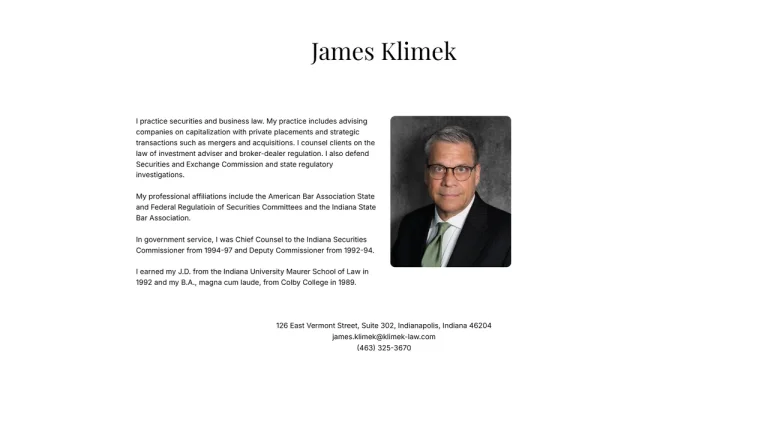
James A. Klimek - Indianapolis, IN

Tom Scott & Associates, P.C. - Indianapolis, IN

Barrett McNagny LLP: Justin T. Molitoris - Fort Wayne, IN

Indiana Consumer Law Group - Fishers, IN
Hahn Walz, P.C. - South Bend, IN
The Morgan Law Firm - South Bend, IN

Howard Green Law Office PC - Indianapolis, IN
Kelli Young Attorney at Law - Indianapolis, IN

Walton Legal Services - Indianapolis, IN
Jackson Kelly PLLC - Evansville, IN
Adolf Law Office - Fort Wayne, IN

Indiana Legal Services, Inc. - South Bend, IN

Commercial Innovation & Intellectual Property Jurisdictions in Indiana
Indiana serves as a vital Midwest hub for life sciences, advanced manufacturing, agricultural technology, and financial services. Protecting proprietary technologies, software assets, and commercial financing structures demands an in-depth understanding of state business codes and federal intellectual property frameworks. From corporate headquarters and research incubators in Indianapolis and West Lafayette to manufacturing centers in Fort Wayne, Elkhart, and Evansville, enterprises face sophisticated legal requirements when securing capital and safeguarding trade assets.
Complex commercial disputes and financial litigation in the state are increasingly adjudicated within the specialized Indiana Commercial Courts. Established across major judicial centers-including Marion Superior Court, Allen Superior Court, Hamilton Superior Court, and Lake Superior Court-these designated business courts provide expedited management for high-stakes corporate actions. Intellectual property filings, commercial security agreements, and financial pleadings are managed digitally through the Indiana E-Filing System (IEFS). Furthermore, trademark registrations and Uniform Commercial Code (UCC) financing statements are processed statewide via the Indiana Secretary of State INBiz electronic portal.
Whether drafting software licensing agreements, defending proprietary formulas under trade secret statutes, or structuring secured credit facilities under Article 9 of the Uniform Commercial Code, retaining counsel admitted to the Indiana State Bar Association is essential. Skilled financial and IP attorneys ensure your enterprise remains compliant with Indiana Department of Financial Institutions (DFI) lending rules while rigorously shielding intellectual capital from competitive infringement.
Indiana Financial & Intellectual Property Legal Fee Structures
| Case Scenario | Fee Structure | Estimated Cost (USD) | Key Cost Determinants |
|---|---|---|---|
| State Trademark Registration & INBiz Filings | Flat Legal Fee | $1,000 - $2,500 | Trademark clearance search, classification of commercial goods, Secretary of State review. |
| Commercial IP Licensing & Technology Transfer | Flat Fee / Hourly Hybrid | $3,500 - $8,500 | Cross-licensing terms, international royalty structures, proprietary source code escrow provisions. |
| UCC Article 9 Commercial Lending & Security Filing | Flat Legal Fee | $2,500 - $6,000 | Collateral asset valuation, drafting security agreements, filing UCC-1 financing statements with INBiz. |
| Trade Secret & Commercial Court Litigation | Hourly Retainer Model | $15,000 - $60,000+ | Emergency injunction hearings, forensic data discovery, expert witness testimony, jury trial prep. |
Critical Legal Deadlines & Statutes in Indiana
Financial and intellectual property matters in Indiana are subject to strict statutory deadlines that govern enforcement rights and security priority. Trade secret misappropriation claims are governed by the Indiana Uniform Trade Secrets Act, codified at Ind. Code § 24-2-3-1. Pursuant to Ind. Code § 24-2-3-7, an action for misappropriation must be brought within three years after the misappropriation is discovered or, by the exercise of reasonable diligence, should have been discovered. Failing to initiate action within this three-year period permanently bars relief.
Secured transactions and commercial financing priority are regulated under Article 9 of the Indiana Uniform Commercial Code at Ind. Code § 26-1-9.1-101. Under Ind. Code § 26-1-9.1-515, a filed UCC-1 financing statement remains effective for exactly five years from the date of filing with the Indiana Secretary of State. A continuation statement must be filed within the six-month window prior to the expiration of the five-year period; failing to file a continuation statement causes the security interest to lapse, resulting in loss of perfected priority over competing creditors.
For state trademark protections registered under Ind. Code § 23-15-1-1, registrations remain effective for a period of five years under Ind. Code § 23-15-1-4 and must be renewed within six months prior to expiration. On the regulatory financing side, commercial and consumer lending entities operating in the state must adhere to statutory licensing and disclosure requirements overseen by the Indiana Department of Financial Institutions pursuant to the Uniform Consumer Credit Code under Ind. Code § 24-4.5-1-101.
Indiana Small Claims Limitations vs. Commercial Court Litigation
Under Ind. Code § 33-28-3-4, the monetary threshold for Small Claims dockets in Indiana Circuit and Superior Courts is limited to $10,000. While small claims courts provide a practical venue for collecting small, undisputed vendor invoices, they lack the jurisdictional authority and procedural tools to manage intellectual property or complex corporate finance disputes. Small claims divisions cannot enter permanent injunctions to halt the unauthorized use of proprietary trade secrets or enforce complex licensing carve-outs.
When an enterprise faces patent infringement, industrial espionage, software theft, or multi-million dollar loan covenant breaches, proceedings belong in the Indiana Commercial Courts or the federal district court. Litigating in these venues enables counsel to seek preliminary injunctions under Indiana Trial Rule 65, obtain protective orders for confidential data, and depose corporate officers. Retaining experienced Indiana commercial counsel ensures that proprietary enterprise value is vigorously protected against predatory market practices.
Red Flags When Retaining an Indiana Financial & IP Lawyer
- Generic Non-Disclosure Agreements (NDAs): Be cautious of attorneys using boilerplate NDAs that fail to define protectable trade secrets under Ind. Code § 24-2-3-1, which can render confidentiality terms unenforceable.
- Failing to Monitor UCC Continuation Deadlines: Counsel handling secured transactions must actively track the five-year continuation deadline under Ind. Code § 26-1-9.1-515 to prevent loss of creditor priority.
- Lack of Commercial Court Experience: The Indiana Commercial Court program features distinct judicial guidelines and mandatory initial disclosures; inexperienced litigators can face swift procedural penalties.
- Non-Registered Patent Counsel Handling Patent Filings: Patent prosecution before the USPTO requires registration with the federal patent bar; verify that your attorney possesses the requisite scientific and technical credentials.
Frequently Asked Questions
What qualifies as a trade secret under Indiana state law?
Under Ind. Code § 24-2-3-2, a trade secret is information, including a formula, pattern, compilation, or program, that derives independent economic value from not being generally known and is subject to reasonable efforts to maintain secrecy.
What is the jurisdiction of the Indiana Commercial Courts?
Indiana Commercial Courts resolve complex business-to-business disputes, including corporate governance, trade secret claims, intellectual property licensing, commercial financing, and UCC transactions without handling consumer or family matters.
How long is a UCC financing statement valid in Indiana?
Pursuant to Ind. Code § 26-1-9.1-515, a UCC-1 financing statement filed with the Indiana Secretary of State is effective for five years. It must be renewed within the six months before its expiration date to maintain priority.
Can I protect a trademark solely through the Indiana Secretary of State?
Registering under Ind. Code § 23-15-1-1 via INBiz protects your trade mark within the State of Indiana. For nationwide protection against interstate commerce infringement, you must register through the United States Patent and Trademark Office.
What is the statute of limitations for trade secret theft in Indiana?
Under Ind. Code § 24-2-3-7, an action for trade secret misappropriation must be filed within three years of when the misappropriation was discovered or reasonably should have been discovered.