
Financial & IP Lawyers in Indianapolis
Retaining a premier Indianapolis financial and intellectual property lawyer protects your company's proprietary innovations, trademarks, and capital transactions. Experienced attorneys navigate patent prosecution, corporate debt structures, and infringement disputes through assertive negotiation and commercial litigation. Review our verified directory below to consult leading IP and corporate finance lawyers in Marion County.

Chugh, LLP - Indianapolis, IN

Kainrath Law Firm - Indianapolis, IN

Rubin & Levin - Indianapolis, IN
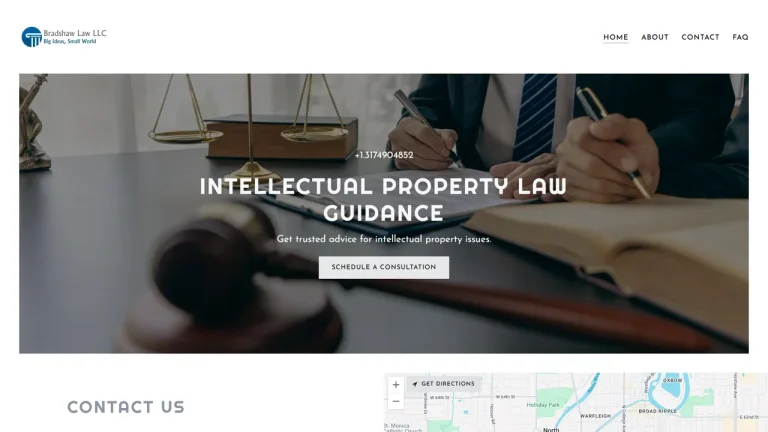
Bradshaw Law LLC - Indianapolis, IN

Roberts Litigation Group - Indianapolis, IN
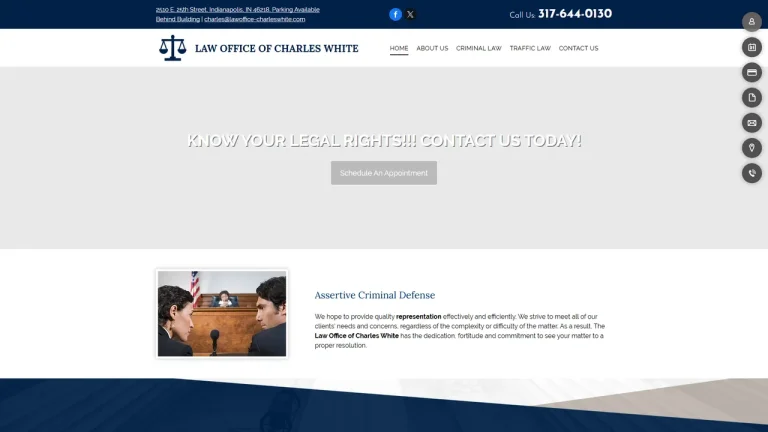
Law Office of Charles White - Indianapolis, IN

Law Office of Steven Lovern - Indianapolis, IN

Orfanos and Alvarado Attorneys at Law - Indianapolis, IN

Tom Scott and Associates Riedman Hubert J - Indianapolis, IN

Indiana Legal Services, Inc. - Indianapolis, IN

Rochelle McCullough LLP - Indianapolis, IN

Perez & Perez Bankruptcy - Indianapolis, IN
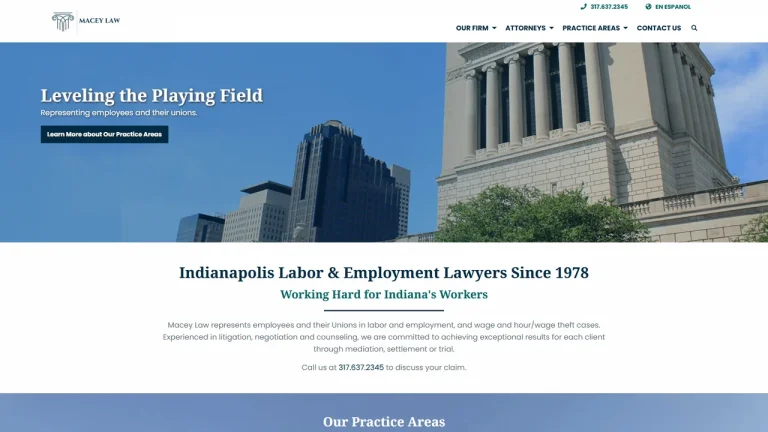
Macey Swanson Hicks & Sauer - Indianapolis, IN
Kelli Young Attorney at Law - Indianapolis, IN

Peter Francis Geraci Law L.L.C. - Indianapolis, IN

Maginot, Moore and Beck LLP - Indianapolis, IN

Jerry E. Smith - Indianapolis, IN

Abraham Murphy Atty At Law LLC - Indianapolis, IN

Saeed & Little LLP - Indianapolis, IN

Whitford & Neuhauser PLLC - Indianapolis, IN

Lewis Legal Services - Indianapolis, IN

Law Office of Mark S. Zuckerberg - Indianapolis, IN
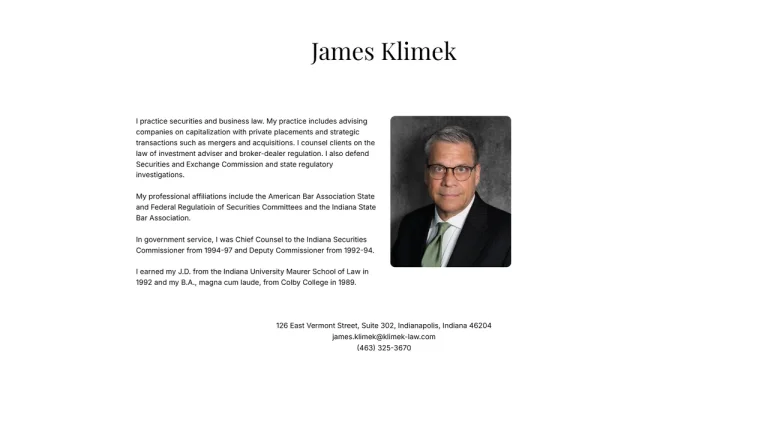
James A. Klimek - Indianapolis, IN

Safeguarding Commercial Capital and Intellectual Assets in Indianapolis
Indianapolis has emerged as a thriving Midwestern center for technology, life sciences, logistics, and advanced manufacturing. Commercial ventures across Downtown Indianapolis, the 16 Tech Innovation District, Keystone at the Crossing, and the broader Marion County corporate corridor depend on sophisticated legal counsel to manage corporate debt, negotiate equity investments, register intellectual property portfolios, and defend trade secrets from unlawful appropriation.
Litigation over intellectual property and financial instruments traverses specialized state and federal forums in Indianapolis. Patent prosecution and federal trademark registrations fall under the jurisdiction of the United States Patent and Trademark Office (USPTO). In contrast, patent infringement and federal copyright litigation must be initiated in the United States District Court for the Southern District of Indiana, located at the Birch Bayh Federal Building and U.S. Courthouse on East Ohio Street. At the state level, complex financial disputes, trade secret misappropriation claims, and shareholder controversies are assigned to the Commercial Court division of the Marion County Superior Court or reviewed by the Indiana Secretary of State Securities Division.
Partnering with a skilled Indianapolis financial and IP lawyer ensures that financing instruments and patent filings comply with rigorous statutory standards. Local counsel assists enterprises with capital fundraising rounds, enforces licensing agreements, and provides aggressive trial representation when proprietary rights are compromised.
Financial & IP Legal Fee Benchmarks in Indianapolis
| Case Scenario | Fee Structure | Estimated Cost (USD) | Key Cost Determinants |
|---|---|---|---|
| Federal Trademark Clearance & USPTO Registration | Flat Fee | $1,000 - $3,000 | Number of classes, common law clearance complexity, and substantive office action responses. |
| Non-Provisional Utility Patent Drafting & Prosecution | Flat Fee or Hourly | $6,500 - $16,000 | Technical complexity of software or engineering schematics, claim breadth, and examiner interviews. |
| Commercial Finance Structuring & Venture Capital | Hourly with Retainer | $4,500 - $18,000+ Retainer ($400 - $700/hr) | Capitalization table complexity, convertible debt instruments, and Indiana securities law filings. |
| Patent Infringement or Trade Secret Litigation | Hourly or Hybrid Retainer | $30,000 - $100,000+ Retainer ($450 - $800/hr) | Preliminary injunction motions, claim construction (Markman) hearings, and technical expert witnesses. |
Critical Legal Deadlines & Statutes in Indiana
Enforcing intellectual property rights and financial contracts in Indiana requires strict compliance with statutory time limitations. Under the federal America Invents Act (AIA), 35 U.S. Code § 102 establishes a 1-year statutory bar; an inventor must file a provisional or non-provisional patent application within 1 year of any public disclosure, commercial offer for sale, or public use, or the invention becomes unpatentable public property.
For trade secret protection, the Indiana Uniform Trade Secrets Act (IUTSA) dictates that an action for misappropriation must be commenced within 3 years after the misappropriation was discovered or should have been discovered through reasonable diligence pursuant to Ind. Code § 24-2-3-7. Federal copyright infringement claims are governed by a 3-year statute of limitations under 17 U.S. Code § 507. In securities transactions, lawsuits brought under the Indiana Uniform Securities Act must be filed within 3 years of the violation under Ind. Code § 23-19-5-9. Actions involving promissory notes, negotiable instruments, and written commercial financing contracts must be brought within 6 years pursuant to Ind. Code § 34-11-2-9.
Small Claims Disqualification vs. Commercial Court Representation
The Small Claims Courts of Marion County are restricted to monetary disputes capped at $10,000 pursuant to Ind. Code § 33-34-3-2. While a basic unpaid vendor invoice below $10,000 may be handled in township court, small claims courts are completely barred from entertaining patent, copyright, or complex financial disputes.
Under 28 U.S. Code § 1338, federal courts hold exclusive original jurisdiction over patent and copyright actions, precluding any state court review. Furthermore, corporate trade secret claims and major commercial debt disputes often require immediate equitable relief-such as preliminary injunctions and asset freezes-which can only be granted by the Marion County Superior Court Commercial Court division. Representing a business pro se in commercial or intellectual property litigation creates severe exposure, risking the loss of trade secrets, forfeiture of patent priority, or entry of default judgments.
Red Flags to Avoid When Selecting Financial and IP Counsel
- Patent attorneys who are not formally registered to practice before the United States Patent and Trademark Office (USPTO) Patent Bar.
- Invention promotion companies that charge heavy upfront fees for marketing services without providing licensed patent attorney review or clearance searches.
- Lawyers who offer guarantees that a patent or trademark application will be approved without first completing a comprehensive prior art or clearance search.
- Firms that fail to implement robust conflict-of-interest checks across competing technology startups and established enterprises in Central Indiana.
Frequently Asked Questions
What is the difference between a patent lawyer and a commercial IP lawyer in Indianapolis?
While general IP attorneys handle trademark registration, copyright filings, trade secret agreements, and commercial licensing, only patent attorneys who possess recognized technical or scientific degrees and have passed the USPTO Patent Bar examination are legally authorized to prepare, file, and prosecute patent applications before the USPTO.
How does Indiana law protect corporate trade secrets?
Trade secrets in Indiana are protected under the Indiana Uniform Trade Secrets Act (Ind. Code § 24-2-3-1). Information such as technical formulas, customer lists, and manufacturing techniques qualify as trade secrets if they derive independent economic value from not being generally known and are subject to reasonable efforts to maintain secrecy, such as confidentiality agreements and internal access controls.
Should I register a trademark in Indiana or with the USPTO?
An Indiana state trademark registered through the Secretary of State under Ind. Code § 24-2-1-1 protects your brand only within Indiana borders. If your business operates across state lines, engages in e-commerce, or plans regional expansion, filing for federal trademark registration with the USPTO under 15 U.S. Code § 1051 grants nationwide priority and protection.
What is the Marion County Superior Court Commercial Court?
The Commercial Court is a specialized division within the Marion County Superior Court established to resolve complex business, finance, and corporate governance disputes efficiently. Commercial Court judges employ specialized case management procedures to expedite discovery, hearings, and resolutions for corporate litigants.
Which court handles patent and copyright infringement lawsuits in Indianapolis?
Patent and copyright infringement lawsuits arising in Indianapolis are litigated exclusively in federal court at the United States District Court for the Southern District of Indiana, located at the Birch Bayh Federal Building in Downtown Indianapolis under 28 U.S. Code § 1338.