
Workplace Discrimination Lawyers in Indianapolis
Partnering with an experienced workplace discrimination lawyer in Indianapolis ensures your civil rights are vigorously defended under state and federal law. Qualified legal counsel can frequently resolve complex disputes through negotiation and mediation, avoiding prolonged court battles. Explore our directory below to schedule a case review with trusted local professionals.
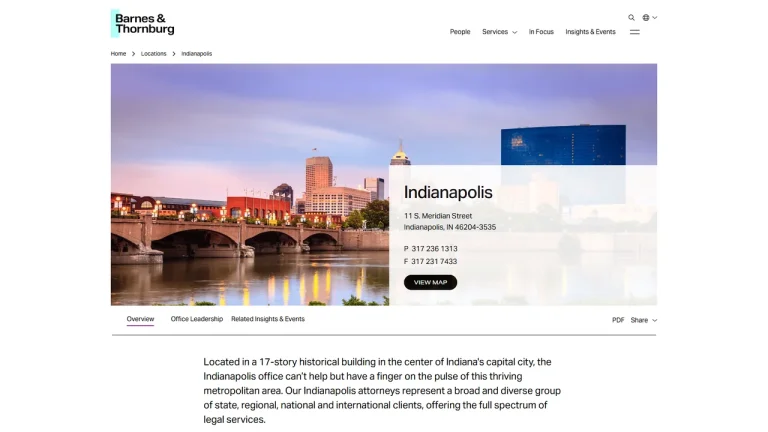
Barnes and Thornburg LLP - Indianapolis, IN

Littler Mendelson P.C. - Indianapolis, IN

The Wolcott Law Firm LLC - Indianapolis, IN

Ice Miller LLP - Indianapolis, IN

Goodin Abernathy LLP - Indianapolis, IN

O'Ryan Law Firm - Indianapolis, IN

Ogletree Deakins - Indianapolis, IN

HKM Employment Attorneys LLP - Indianapolis, IN

The DeBrota Law Firm LLC - Indianapolis, IN

Alvarez Legal - Indianapolis, IN

Sniderman Law - Indianapolis, IN
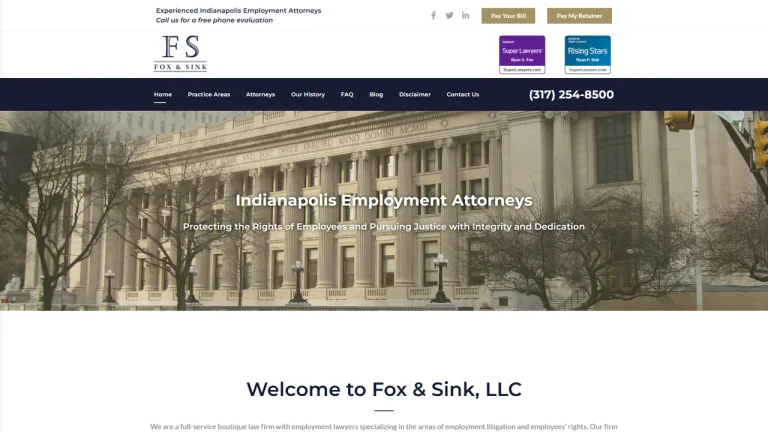
Fox & Sink, LLC - Indianapolis, IN

Lewis Brisbois Bisgaard & Smith, LLP - Indianapolis, IN

Stephanie Jane Hahn, Attorney at Law - Indianapolis, IN

Amber Boyd Attorney at Law - Indianapolis, IN

Blanck Legal, P.C. - Indianapolis, IN

Betz and Blevins - Indianapolis, IN
Mark Waterfill, Attorney at Law - Indianapolis, IN

Vlink Law Firm - Indianapolis, IN

Hayes Young Law, LLC - Indianapolis, IN

Wooden McLaughlin (Dinsmore) - Indianapolis, IN
Moore & Associates PC - Indianapolis, IN

Lewis Wagner & Trimble LLP - Indianapolis, IN

Workplace Discrimination Enforcement in Indianapolis and Marion County
Workplace discrimination harms professional advancement, personal well-being, and financial security. In Indianapolis, a diverse workforce spanning advanced manufacturing, life sciences, logistics, healthcare, and state governance is shielded against discriminatory practices. When employees face disparate treatment, denial of accommodations, pay disparities, or hostile work environments, skilled legal representation is crucial to vindicate their statutory rights.
Under Indiana state law, employment protections are established in the Indiana Civil Rights Law, codified at Ind. Code § 22-9-1-2, which prohibits discrimination based on race, religion, color, sex, disability, national origin, or ancestry. These state protections operate alongside federal civil rights statutes, including Title VII of the Civil Rights Act of 1964 (42 U.S. Code § 2000e-2), the Americans with Disabilities Act (42 U.S. Code § 12112), and the Age Discrimination in Employment Act (29 U.S. Code § 623).
Enforcement proceedings begin through formal administrative filings with the Indiana Civil Rights Commission (ICRC), headquartered on North Senate Avenue, or the Equal Employment Opportunity Commission (EEOC) Indianapolis District Office on West Ohio Street. If administrative conciliation fails, litigation moves to the Marion County Superior Court or the Birch Bayh Federal Building and United States Courthouse. An experienced Indianapolis workplace discrimination lawyer guides employees through every stage of administrative exhaustion and courtroom litigation.
Indianapolis Workplace Discrimination Legal Fee Structures
| Case Scenario | Fee Structure | Estimated Cost (USD) | Key Cost Determinants |
|---|---|---|---|
| Administrative Charge Drafting & Dual-Filing (EEOC / ICRC) | Flat Fee / Hourly | $750 - $2,500 | Factual narrative complexity, comparator employee evidence, agency dual-filing coordination |
| Agency Conciliation & Pre-Suit Mediation Settlement | Contingency (25% - 33.3%) | $0 upfront (Contingency) | Employer settlement posture, back-pay calculations, mitigation efforts, non-monetary policy changes |
| Hostile Work Environment Superior Court Lawsuit | Contingency (33.3% - 40%) | $0 upfront (Contingency + court costs) | Supervisor depositions, corporate email discovery, medical expert evaluations, trial length |
| Complex Systemic Pattern-or-Practice Discrimination Action | Contingency / Hybrid Retainer | 35% - 40% Contingency or $350 - $650/hr | Statistical workforce audits, multiple plaintiffs, class certification motions, Southern District litigation |
Critical Legal Deadlines & Statutes in Indiana
Administrative exhaustion is a mandatory statutory prerequisite before a workplace discrimination lawsuit can be filed in court. Under Ind. Code § 22-9-1-3, an aggrieved individual must file a formal complaint with the Indiana Civil Rights Commission within 180 days of the discriminatory occurrence.
Under federal law (42 U.S. Code § 2000e-5(e)(1)), because Indiana is a deferral state with its own enforcement agency and worksharing agreement, claimants have up to 300 days to dual-file a charge with the EEOC. Once the administrative investigation concludes and a Notice of Right to Sue is issued, the claimant faces an unforgiving 90-day deadline to file a civil lawsuit in federal or state court. General tort claims associated with workplace harassment carry a 2-year statute of limitations under Ind. Code § 34-11-2-4. Missing these administrative filing windows permanently forfeits your legal right to pursue financial remedies.
Administrative Agency Self-Filing vs. Legal Representation
Workers have the right to initiate an initial inquiry directly through the EEOC portal or submit an online intake questionnaire to the Indiana Civil Rights Commission. Furthermore, Marion County Small Claims Township Courts adjudicate claims up to $10,000 under Ind. Code § 33-34-3-2. However, small claims courts lack jurisdiction to award equitable employment remedies or adjudicate complex statutory discrimination actions.
Filing administrative charges without legal representation often results in narrowly drafted claims that inadvertently omit critical allegations, such as ongoing retaliation or constructive discharge. Discrimination claims require establishing complex burden-shifting evidentiary standards, calculating back pay, front pay, emotional distress damages, and statutory attorney fee awards. Partnering with an Indianapolis employment attorney ensures your administrative filings are legally complete and provides experienced representation in Marion County Superior Court or federal court.
Red Flags When Hiring an Indianapolis Workplace Discrimination Attorney
- Demanding high non-refundable consultation fees before conducting an initial assessment of the adverse employment action and timelines.
- Guaranteeing specific financial recoveries without examining performance appraisals, internal complaints, or comparative disciplinary records.
- Failing to dual-file the administrative charge with both the EEOC Indianapolis District Office and the ICRC.
- Pressuring you into an early lowball settlement before completing discovery or deposing key decision-makers.
Frequently Asked Questions
What forms of workplace discrimination are unlawful in Indianapolis?
Under Ind. Code § 22-9-1-2 and federal law, employers cannot discriminate in hiring, compensation, promotion, discipline, or discharge based on race, color, religion, sex (including pregnancy), disability, national origin, ancestry, or age (40 and older).
What is the deadline to file a discrimination charge in Indianapolis?
You have 180 days from the discriminatory act to file an administrative complaint with the Indiana Civil Rights Commission (ICRC), or up to 300 days to file with the EEOC under federal worksharing rules. Missing both deadlines bars your claim.
Can my employer retaliate against me for reporting discrimination?
No. Both Indiana law and Title VII strictly prohibit employers from retaliating against employees who report discrimination, participate in an investigation, or file an administrative charge. Retaliation is actionable even if the underlying discrimination claim is not proven.
What compensation can I recover in a workplace discrimination lawsuit?
Remedies may include back pay (lost wages), front pay (future earnings), compensation for emotional distress, court costs, and reasonable attorney fees. In federal claims involving intentional discrimination, punitive damages may also be available subject to statutory limits.
Where is the federal EEOC office located in Indianapolis?
The Equal Employment Opportunity Commission (EEOC) Indianapolis District Office is located at 101 West Ohio Street, Suite 1900, in Downtown Indianapolis, serving claimants throughout Indiana.