
Trusts Lawyers in Wichita
Connect with experienced trusts lawyers in Wichita, KS. Protect your estate, avoid Sedgwick County probate, and maintain private wealth distribution for heirs. Retaining knowledgeable local counsel ensures proper trust funding, real estate deed recording, and adherence to the Kansas Uniform Trust Code without judicial delays. Browse our verified directory below to schedule an initial consultation with a leading Wichita trust attorney.

Martin Law - Wichita, KS
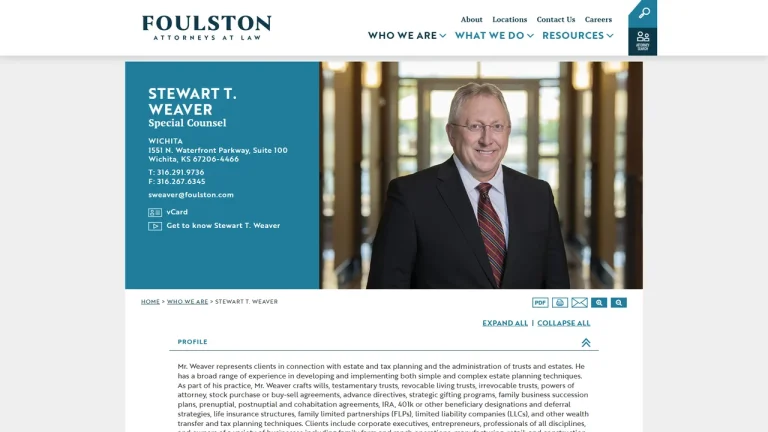
Stewart T. Weaver - Wichita, KS

Coultis Law, LLC - Wichita, KS
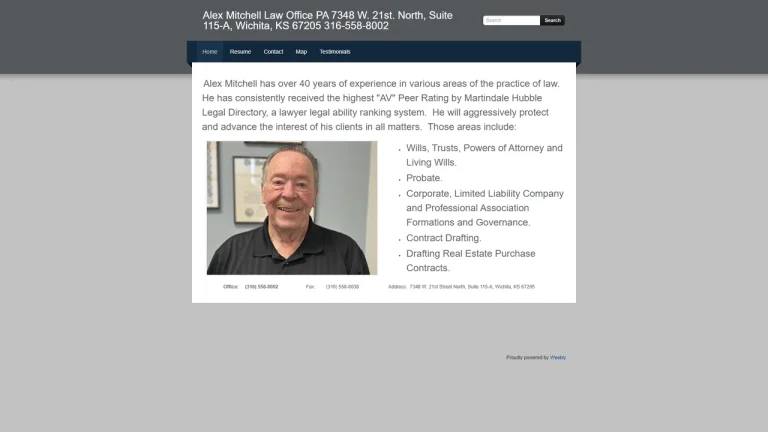
Alex Mitchell Law Office - Wichita, KS

The Law Office of Andrew Rowe - Wichita, KS

Legacy Legal, LLC - Wichita, KS

Clinkscales Elder Law Practice, P.A. - Wichita, KS

Timothy P. O'Sullivan - Wichita, KS

Eidelman Law Firm - Wichita, KS

Larson, Brown & Ebert, PA - Wichita, KS

Trust Creation and Wealth Preservation in Wichita and Sedgwick County
Establishing a comprehensive trust in Wichita is one of the most effective strategies for preserving family wealth, maintaining financial privacy, and bypassing probate court. The 18th Judicial District Court, located at the Sedgwick County Courthouse on North Main Street, manages formal probate administration. Because probate records are entirely public, establishing a revocable living trust allows Wichita families to transfer real estate and financial holdings directly to beneficiaries without court intervention.
Wichita's economic base includes aviation executives, healthcare professionals, business owners, and multi-generational families in College Hill, Riverside, Delano, and surrounding communities like Derby and Maize. Trusts provide flexible solutions for diverse planning needs, ranging from revocable living trusts to irrevocable asset protection trusts and special needs trusts. Local attorneys draft custom trust agreements that protect assets from unnecessary taxation and creditor claims.
A critical phase of trust planning is funding the trust. Experienced Wichita trust lawyers assist clients in preparing and recording warranty deeds with the Sedgwick County Register of Deeds and updating financial accounts. Proper funding ensures that your trust functions seamlessly upon incapacity or death, resolving potential heirship disputes through private administration rather than contentious courtroom litigation.
Trust Structuring Fees and Legal Representation Costs
| Case Scenario | Fee Structure | Estimated Cost (USD) | Key Cost Determinants |
|---|---|---|---|
| Revocable Living Trust (Individual or Joint) | Flat Legal Fee | $1,500 - $3,800 | Asset funding instructions, pour-over will drafting, real estate deed transfers |
| Irrevocable Asset Protection or Special Needs Trust | Flat Fee or Hourly | $3,000 - $7,500 | Medicaid benefit preservation, spendthrift provisions, tax structuring complexity |
| Trust Administration & Successor Trustee Advisory | Hourly Rate ($225 - $450/hr) | $2,000 - $6,500 | Notice to qualified beneficiaries, formal trust accounting, tax filings |
| Contested Trust Accounting & Trustee Removal Action | Hourly Billing with Retainer | $6,000 - $25,000+ | Forensic financial tracing, 18th Judicial District Court hearings, surcharge motions |
Critical Kansas Trust Statutes & Administration Deadlines
Trust governance in Kansas is controlled by the Kansas Uniform Trust Code, codified under Kan. Stat. Ann. § 58a-101. Statutory rules for creating an enforceable trust are set forth in Kan. Stat. Ann. § 58a-401, while the presumption of revocability and modification powers are governed by Kan. Stat. Ann. § 58a-602.
Trustees hold strict fiduciary obligations under Kansas law. A trustee must keep qualified beneficiaries reasonably informed and provide annual accountings pursuant to Kan. Stat. Ann. § 58a-813. Under Kan. Stat. Ann. § 58a-1005, a beneficiary must initiate a proceeding against a trustee for breach of trust within one year after receiving a report adequately disclosing the existence of a potential claim. Furthermore, real estate transfers to a trust must be properly recorded with the Sedgwick County Register of Deeds under Kan. Stat. Ann. § 58-2209 to maintain legal priority against subsequent claimants.
Small Claims Limitations vs. Formal Trust Administration
The Kansas Small Claims Procedure Act, codified at Kan. Stat. Ann. § 61-2701, limits recovery to $4,000 under Kan. Stat. Ann. § 61-2703. Small claims dockets have no jurisdiction to resolve trust disputes, interpret fiduciary terms, or compel trustee accountings.
Trust litigation and complex fiduciary oversight fall exclusively within the jurisdiction of the 18th Judicial District Court under Chapter 58a of Kansas Statutes. Attempting to draft a trust without professional counsel often results in unfunded trusts, where assets remain in individual names and must still undergo probate. Retaining an accomplished Wichita trust attorney ensures that your trust is legally sound, fully funded, and capable of executing private distributions without court interference.
Red Flags to Avoid When Selecting a Wichita Trust Lawyer
- Unfunded trust packages: Avoid firms that draft trust agreements but fail to assist with re-titling real estate deeds with the Sedgwick County Register of Deeds.
- High-pressure trust seminars: Steer clear of sales pitches offering generic living trusts without evaluating your specific tax, family, and asset profiles.
- Omission of spendthrift clauses: Trusts lacking robust spendthrift protections expose beneficiary inheritances to future creditor claims.
- Vague administrative fees: Ensure your engagement agreement clearly separates document drafting fees from future successor trustee administrative support.
Frequently Asked Questions
How does a revocable living trust avoid probate in Sedgwick County?
Assets titled in the name of the trust are legally owned by the trust entity; upon your death, your successor trustee distributes them directly to beneficiaries without probate court oversight.
What happens if I create a trust but forget to deed my home into it?
Real estate left outside the trust remains subject to Kansas probate proceedings in the 18th Judicial District Court, requiring an executor to transfer it via a pour-over will.
What are the legal duties of a successor trustee in Kansas?
A successor trustee must notify beneficiaries, inventory assets, pay outstanding debts and taxes, provide annual accountings, and distribute assets according to the trust terms.
Can a revocable living trust be amended after it is signed?
Yes, as long as the grantor has mental capacity, they can amend, restate, or completely revoke a revocable living trust at any time under Kansas law.