
Copyright Lawyers in Massachusetts
Retaining an experienced Massachusetts copyright lawyer protects your proprietary software code, creative content, and brand assets against unauthorized use. Dedicated intellectual property attorneys regularly negotiate pre-litigation settlements, manage DMCA takedowns, and resolve infringement disputes before formal federal trials. Explore our verified statewide directory below to connect with qualified Massachusetts copyright counsel.
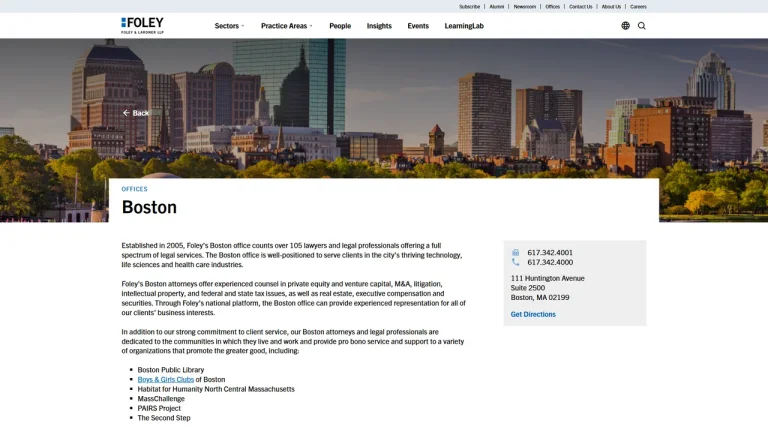
Foley & Lardner LLP - Boston, MA
Hsuanyeh Law Group, PC - Boston, MA

McInnes IP Law, LLC - Worcester, MA
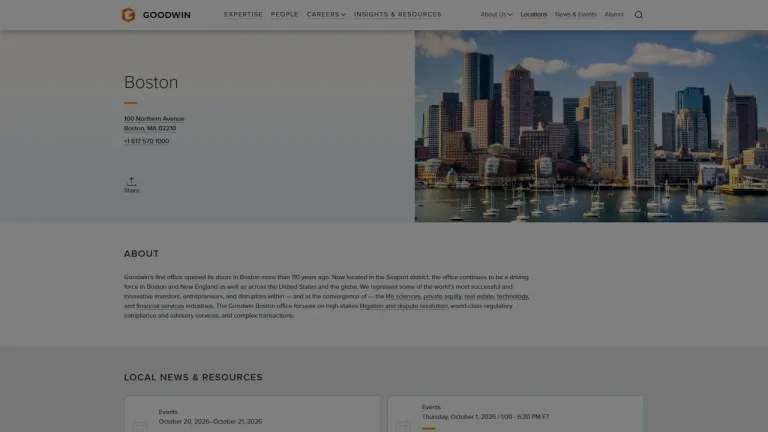
Goodwin Procter LLP - Boston, MA
Fletcher Tilton PC - Boston, MA
Morgan, Lewis & Bockius LLP - Boston, MA
Rich May, P.C. - Boston, MA
Finnegan, Henderson, Farabow, Garrett & Dunner, LLP - Boston, MA
Milligan Rona Duran & King LLC - Boston, MA
Womble Bond Dickinson (US) LLP - Boston, MA
Clyde & Co - Boston, MA
Barnes & Thornburg LLP - Boston, MA
Burns & Levinson LLP - Boston, MA
McDermott Will & Emery LLP - Boston, MA

DURSO LAW - Boston, MA

Rotondo Law Offices, LLC - Fall River, MA

Blueshift IP, LLC - Cambridge, MA
The Law Office of Andrew Lynn - Somerville, MA

Partridge Snow & Hahn LLP - Boston, MA
Cohn Legal, PLLC - Somerville, MA
Libenzon & Associates - Boston, MA
Romano Law - Boston, MA
Devine Millimet | Attorneys at Law - Boston, MA

Navigating Copyright Protection Across the Massachusetts Innovation Economy
Massachusetts is a premier global center for software engineering, biotechnology innovation, academic publishing, digital media, and robotic design centered in Cambridge, Boston, Waltham, and Worcester. Safeguarding original works of authorship-from proprietary computer source code and algorithmic architectures to educational textbooks and creative audiovisual media-requires sophisticated intellectual property counsel.
An experienced copyright lawyer assists creators and tech enterprises with proactive registration, licensing agreements, and aggressive infringement enforcement. When unauthorized copying occurs, counsel initiates formal DMCA takedown demands, investigates electronic distribution footprints, and negotiates statutory licensing terms to secure financial compensation without drawn-out court battles.
Because copyright law is governed exclusively by federal statute, civil infringement actions cannot be filed in state courts. Lawsuits in Massachusetts proceed before the United States District Court for the District of Massachusetts at the John Joseph Moakley U.S. Courthouse in Boston, or federal courthouses in Worcester and Springfield, with appellate jurisdiction resting with the United States Court of Appeals for the First Circuit in Boston.
Typical Fee Structures in Massachusetts Copyright Cases
| Case Scenario | Fee Structure | Estimated Cost (USD) | Key Cost Determinants |
|---|---|---|---|
| Copyright Registration & Portfolio Audits | Flat Fee | $600 - $1,800 | Number of creative works, single vs. group registration, and expedited processing needs. |
| DMCA Takedown & Cease-and-Desist Demands | Flat Fee or Hourly | $1,200 - $3,500 | Online platform responsiveness, counter-notice rebuttals, and scope of unauthorized redistribution. |
| Commercial Licensing & Work-for-Hire Agreements | Hourly or Flat Fee | $1,500 - $4,500 | Royalty tier structuring, sublicensing rights, and IP transfer indemnification clauses. |
| Federal Copyright Infringement Litigation | Hourly Retainer or Contingency | $25,000 - $150,000+ | Pretrial discovery scope, preliminary injunction hearings, and statutory damages eligibility under federal law. |
Critical Legal Deadlines & Statutes in Massachusetts Copyright Law
Federal copyright protection is anchored in Title 17 of the United States Code. Under 17 U.S. Code § 102, original works of authorship fixed in any tangible medium of expression receive immediate protection. However, under 17 U.S. Code § 411, a copyright owner must obtain a registration decision from the United States Copyright Office prior to filing a civil lawsuit in federal court.
Timing of registration is critical for financial recovery. Under 17 U.S. Code § 412, statutory damages and attorney fee recovery are barred unless the copyright was registered within three months of publication or prior to the commencement of the infringement. Timely registration unlocks remedies under 17 U.S. Code § 504, authorizing statutory damages up to $150,000 per work for willful infringement, alongside discretionary attorney fee awards under 17 U.S. Code § 505.
Civil infringement actions must satisfy the strict statute of limitations set forth in 17 U.S. Code § 507(b), which requires claims to be commenced within three years after the claim accrued. For online infringement, 17 U.S. Code § 512 establishes the statutory framework for Digital Millennium Copyright Act (DMCA) notice-and-takedown procedures, offering content owners an expedited tool to compel service providers to remove infringing media.
Small Claims Limits vs. Professional Representation in Massachusetts
Under M.G.L. c. 218 § 21, Massachusetts small claims sessions in the Boston Municipal Court and District Court department are limited to monetary claims not exceeding $7,000. However, Massachusetts state small claims courts have zero legal jurisdiction over copyright infringement claims due to exclusive federal jurisdiction under 28 U.S. Code § 1338.
For smaller infringement controversies with damages capped at $30,000, creators can access the Copyright Claims Board (CCB), an administrative tribunal established within the U.S. Copyright Office. While the CCB provides an alternative to federal court, sophisticated infringers frequently exercise their statutory right to opt out, forcing disputes into federal court. Retaining an intellectual property attorney ensures digital evidence is forensically preserved, handles First Circuit procedural motions, and positions claims for maximum statutory recoveries in federal court.
Red Flags When Hiring a Massachusetts Copyright Attorney
- General practice attorneys who mistakenly claim they can litigate copyright infringement claims in Massachusetts District or Superior Courts instead of federal court.
- Online document filing services offering registration assistance without advising on the critical timing windows required for statutory damages under 17 U.S. Code § 412.
- Lawyers who guarantee multi-thousand dollar statutory recoveries before confirming whether the work was registered prior to the infringement.
- Practitioners who fail to provide transparent hourly fee agreements or refuse to consider contingency options for clear-cut willful infringement claims.
Frequently Asked Questions
What is the deadline to file a copyright infringement lawsuit in Massachusetts?
Under federal statute, you have three years from the date the infringement was discovered or reasonably should have been discovered to file a formal civil copyright lawsuit in the United States District Court for the District of Massachusetts.
Can I file a copyright infringement lawsuit before my registration certificate is issued?
No. Under federal copyright statutes and binding precedent, you must have an issued copyright registration certificate or an official refusal from the U.S. Copyright Office before you can formally file an infringement complaint in federal court.
What are statutory damages under federal copyright law?
Statutory damages are pre-established financial awards authorized by federal statute, ranging from $750 to $30,000 per work, and up to $150,000 for willful infringement, allowing copyright owners to recover substantial compensation without proving actual lost profits.
Can Massachusetts state courts handle copyright disputes?
No. Federal courts have exclusive subject-matter jurisdiction over copyright infringement lawsuits. Massachusetts state courts can only adjudicate related contract claims, such as disputes involving breach of a copyright licensing agreement.
What is the Copyright Claims Board (CCB)?
The Copyright Claims Board is a voluntary, alternative administrative tribunal operated by the U.S. Copyright Office designed to resolve smaller copyright infringement claims with damages capped at $30,000 through streamlined, cost-effective procedures.