
Wrongful Termination Lawyers in Worcester
Being wrongfully terminated from your job in Worcester requires swift legal advocacy to protect your career, reputational standing, and financial recovery. Skilled Worcester employment lawyers evaluate public policy exceptions to at-will employment, negotiate substantial severance packages, and pursue litigation against corporate retaliation. Review our directory below to consult an experienced Worcester County wrongful termination attorney.
Worcester Personal Injury Attorney at Law, Brandon J Broderick - Worcester, MA
Bowditch & Dewey - Worcester, MA
Fletcher Tilton PC - Worcester, MA
BourgeoisWhite, LLP - Worcester, MA
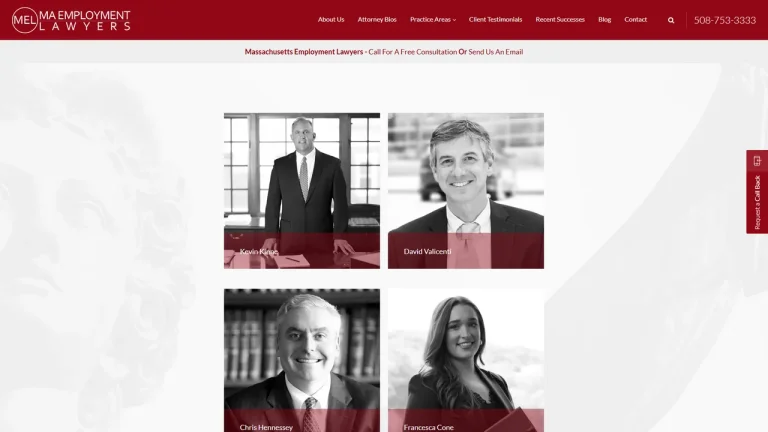
MA Employment Lawyers | Worcester Employment Lawyers - Worcester, MA

Gordie Daniels Law Office - Worcester, MA

Mirick, O'Connell, DeMallie & Lougee, LLP - Worcester, MA

Law Offices of CVShea III - Worcester, MA
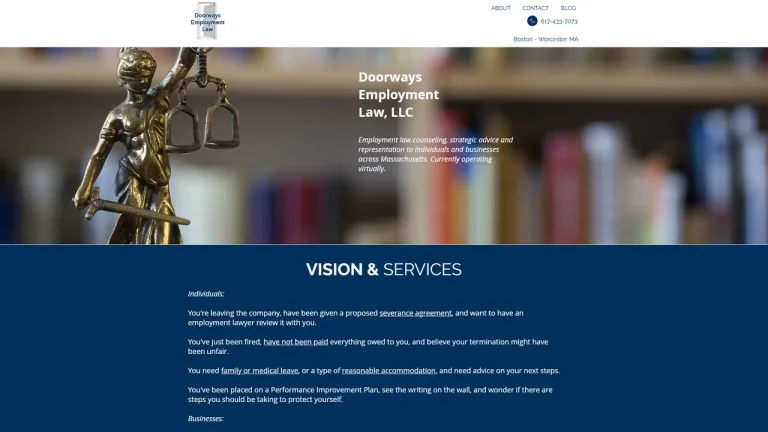
Doorways Employment Law, LLC - Worcester, MA
Steffans Legal - The Employment Law Firm - Worcester, MA
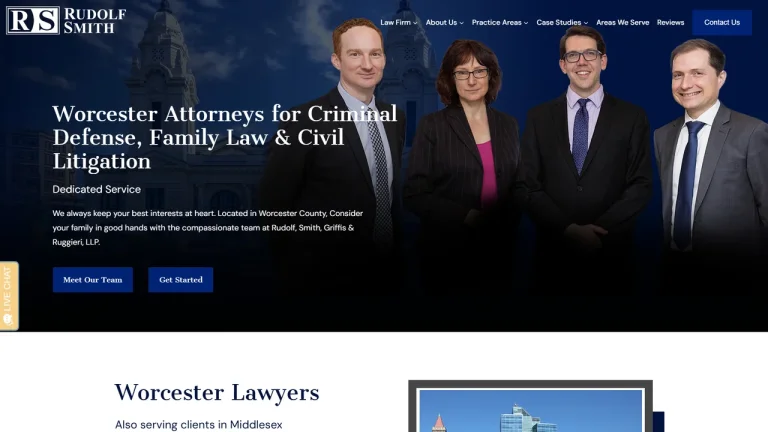
Rudolf, Smith, Griffis & Ruggieri, LLP - Worcester, MA

Morrison Mahoney LLP - Worcester, MA
Worcester Employment Law and Wrongful Discharge Remedies
While Massachusetts is an employment-at-will Commonwealth, corporate employers across Worcester do not possess unlimited license to discharge employees for unlawful or retaliatory reasons. As Central Massachusetts’ economic anchor, Worcester hosts major employers in healthcare systems like UMass Memorial Health and Saint Vincent Hospital, manufacturing plants in the Canal District, biotechnology ventures at Gateway Park, and regional academic institutions. Discharges that breach statutory protections or violate well-established public policy constitute actionable wrongful terminations.
Wrongful termination litigation in Worcester is primarily adjudicated in the Worcester County Superior Court, situated at 225 Main Street in Downtown Worcester. When federal labor standards, Title VII of the Civil Rights Act, or the Family and Medical Leave Act (FMLA) are implicated, cases may proceed in the United States District Court for the District of Massachusetts, Central Division, located at the Harold D. Donohue Federal Building on Main Street. Administrative complaints alleging retaliatory dismissal also pass through the Worcester Regional Office of the Massachusetts Commission Against Discrimination (MCAD) at 484 Main Street.
Engaging a dedicated Worcester wrongful termination lawyer ensures your employment records, performance reviews, and internal communications are preserved before spoliation occurs. Experienced local counsel evaluates potential claims for breach of the implied covenant of good faith and fair dealing, wage retaliation, and public policy violations, positioning your case for maximum financial recovery.
Worcester Wrongful Termination Legal Representation Fee Structures
| Case Scenario | Fee Structure | Estimated Cost (USD) | Key Cost Determinants |
|---|---|---|---|
| Severance Agreement Review & Negotiation | Flat Fee / Hourly ($350 - $550/hr) | $1,500 - $4,500 | Executive compensation structures, equity vesting schedules, non-compete waivers, and non-disclosure releases. |
| Whistleblower & Retaliatory Discharge Claim | Contingency Fee (33.3% - 40%) | $0 Upfront (Contingency) | Documented complaints of illegal conduct, OSHA/workplace safety reports, and healthcare compliance issues. |
| Massachusetts Wage Act Retaliation Lawsuit | Contingency Fee (Statutory Treble Damages) | $0 Upfront (Contingency) | Unpaid commissions, overtime withholdings, mandatory treble damages, and statutory attorney fee awards. |
| Worcester Superior Court Civil Jury Trial | Contingency Fee (40% of recovery) | $0 Upfront ($10,000 - $35,000+ advanced costs) | Pre-trial deposition volume, vocational economic experts, emotional distress damages, and trial duration at 225 Main Street. |
Critical Legal Deadlines & Statutes in Massachusetts
Wrongful termination actions in Worcester are subject to strict statutory filing deadlines that vary depending on the legal theory asserted. If the termination was retaliatory following an employee’s opposition to discriminatory practices, the claim must be formally filed with the Massachusetts Commission Against Discrimination pursuant to Mass. Gen. Laws ch. 151B § 5 within exactly 300 calendar days of the termination notice. Missing this 300-day window permanently extinguishes state discrimination claims.
Under Mass. Gen. Laws ch. 151B § 9, a complainant may remove their claim from the MCAD to the Worcester County Superior Court after ninety days have elapsed, provided the civil complaint is filed within three years of the unlawful discharge. Terminations involving retaliation for demanding earned wages or commissions fall under the Massachusetts Wage Act, codified at Mass. Gen. Laws ch. 149 § 148, which provides a three-year statute of limitations under Mass. Gen. Laws ch. 149 § 150 and mandates triple damages and mandatory attorney fees upon establishing employer liability.
Discharges that violate public policy-such as firing an employee for filing a workers’ compensation claim under Mass. Gen. Laws ch. 152 § 75B or for performing jury duty-are governed by Massachusetts common law tort doctrines established in landmark decisions like DeRose v. Putnam Management Co., which carry a three-year personal injury statute of limitations under Mass. Gen. Laws ch. 260 § 2A.
Small Claims Limits vs. Superior Court Litigation
The Worcester District Court at 225 Main Street handles civil small claims matters capped at $7,000 under Mass. Gen. Laws ch. 218 § 21. While an employee might theoretically consider small claims to recoup an unpaid final paycheck under $7,000, filing a wrongful termination claim in small claims is legally counterproductive.
Small claims sessions lack equitable jurisdiction to reinstate employment, void restrictive covenants, or award statutory punitive damages. Wrongful termination disputes routinely involve complex evidentiary discovery, including corporate email forensic searches, supervisory depositions, and expert economic testimony regarding lost back pay and front pay benefits. Retaining professional employment litigation counsel ensures your case is properly prosecuted in the Worcester County Superior Court or federal court, where full statutory remedies, including emotional distress damages and mandatory attorney fees, can be recovered.
Red Flags When Hiring a Worcester Wrongful Termination Lawyer
- Demanding substantial non-refundable upfront cash retainers for straightforward retaliatory discharge cases that reputable plaintiff attorneys handle on contingency.
- Failing to identify and track the strict 300-day administrative exhaustion deadline required by the Massachusetts Commission Against Discrimination.
- Promising specific monetary payouts or immediate multi-million-dollar jury verdicts before reviewing your personnel file and corporate separation paperwork.
- Attorneys who lack trial experience in the Worcester County Superior Court or the federal Central Division courthouse on Main Street.
Frequently Asked Questions
What is the public policy exception to at-will employment in Massachusetts?
Under Massachusetts common law, an employer cannot terminate an at-will employee for reasons that violate public policy, such as refusing to break a law, filing a workers’ compensation claim, performing statutory jury service, or blowing the whistle on illegal workplace conduct.
What damages can I recover in a Worcester wrongful termination lawsuit?
Remedies may include back pay (lost wages from discharge to trial), front pay (future lost compensation), emotional distress damages, punitive damages in egregious cases, and the reimbursement of reasonable attorney fees and litigation costs.
Do I have to file with the MCAD before going to court in Worcester?
Yes, if your termination involved unlawful discrimination, sexual harassment, or retaliation for complaining about discrimination. You must file a charge with the MCAD within 300 days of the termination before you can file a lawsuit in Superior Court.
Can an employer fire me to avoid paying my earned commissions in Massachusetts?
No. Under the Massachusetts implied covenant of good faith and fair dealing, employers cannot terminate an employee to avoid paying earned bonuses, sales commissions, or other vested compensation resulting from past labor.
Should I sign a severance release agreement without consulting an attorney?
No. Signing a severance agreement waives your legal right to sue the employer for wrongful termination, unpaid wages, or retaliation. A lawyer can evaluate whether your potential legal claims exceed the severance package value and negotiate better separation terms.