
Business Formation Lawyers in Michigan
Consult top Michigan business formation lawyers to structure LLCs, corporations, and partnerships while ensuring compliance with state regulatory requirements. Experienced corporate attorneys draft customized operating agreements, file Articles of Organization with LARA, and establish strong liability protection for founders. Explore our verified statewide directory to consult trusted Michigan business counsel today.

Schnelker, Rassi & McConnell PLC - Grand Rapids, MI

Kreis Enderle - Grand Rapids, MI
Wilder Legal Group PLC - Detroit, MI
Coulson P.C. - Detroit, MI

Schenk Boncher & Rypma - Grand Rapids, MI

Varnum LLP - Ann Arbor, MI
The Covert Law Firm, PLLC - Lansing, MI

T R Perkins Law Office - Detroit, MI

Attisha Law PLC - Detroit, MI
Saba Law, PLLC - Dearborn, MI
Shaheen Jacobs & Ross - Detroit, MI

Traverse Legal, PLC - Detroit, MI
Warner Norcross & Judd LLP - Sterling Heights, MI
HNH Law Group - Dearborn, MI

The Britt Law Group PC - Grand Rapids, MI
Theodore W. Seitz - Lansing, MI
Kerry Law, PLLC - Ann Arbor, MI
Caruso Law, PLLC - Detroit, MI
Foster Swift Collins & Smith, P.C. - Detroit, MI

Duff Law PLLC - Grand Rapids, MI
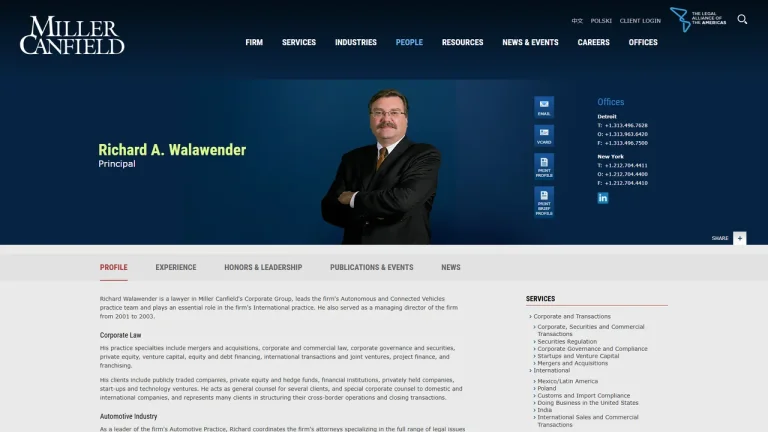
Richard A. Walawender - Miller Canfield - Detroit, MI

Upton Law, PLLC - Detroit, MI

Miller Canfield PLC - Lansing, MI
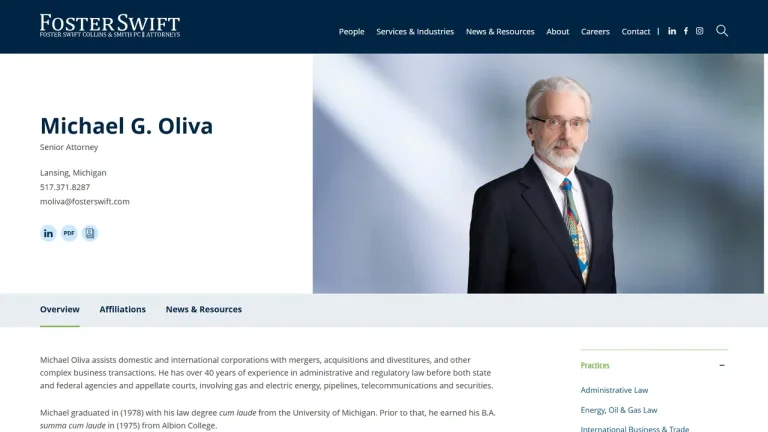
Navigating Entity Formation Across Michigan
Forming a business entity in Michigan requires strategic legal planning to shield personal assets, optimize tax treatment, and establish clear corporate governance. Entity creation is administered through the Michigan Department of Licensing and Regulatory Affairs (LARA) Corporations, Securities & Commercial Licensing Bureau in Lansing. Whether establishing a venture in Wayne, Oakland, Macomb, Kent, or Ingham County, selecting the proper structure is foundational to long-term success.
Entrepreneurs must choose between limited liability companies (LLCs), C-corporations, S-corporations, limited partnerships, and professional limited liability companies (PLLCs). A knowledgeable Michigan business attorney ensures that entity selection reflects ownership dynamics, capital investment needs, and industry-specific regulations, preventing structural defects that can jeopardize corporate veil protections.
Retaining local business counsel provides invaluable guidance during document drafting. Beyond filing basic organizational forms, an attorney crafts bespoke operating agreements, shareholder agreements, and buy-sell provisions that address member buyouts, voting thresholds, and dispute mechanisms, positioning your business for sustainable growth throughout Michigan.
Michigan Business Formation Legal Fee Estimates
| Case Scenario | Fee Structure | Estimated Cost (USD) | Key Cost Determinants |
|---|---|---|---|
| Single-Member LLC Formation Package | Flat Fee | $750 - $1,800 | Articles of Organization filing with LARA, standard operating agreement, EIN acquisition, banking resolution. |
| Multi-Member LLC with Customized Operating Agreement | Flat Fee / Retainer | $1,500 - $3,800 | Bespoke capital contribution terms, transfer restrictions, voting rights, drag-along and tag-along rights. |
| Corporation Formation (C-Corp or S-Corp) | Flat Fee / Retainer | $2,000 - $4,500 | Articles of Incorporation, corporate bylaws, initial board resolutions, share issuance, IRS Form 2553 election. |
| Professional Service Entity (PLLC / PC) | Flat Fee / Retainer | $1,200 - $3,000 | Professional licensing verification under LARA rules, regulatory compliance for medical or legal practices. |
Critical Legal Deadlines & Statutes in Michigan
Limited liability companies in Michigan are governed by the Michigan Limited Liability Company Act, codified at MCL § 450.4101 et seq. Legal existence begins upon filing the Articles of Organization with LARA pursuant to MCL § 450.4202. Every Michigan entity must continuously maintain a registered office and resident agent within the state under MCL § 450.4207.
Corporate compliance involves strict annual deadlines. Under MCL § 450.4207a, domestic LLCs must submit an Annual Statement to LARA by February 15 of each year. Professional Limited Liability Companies (PLLCs) must also file by February 15 certifying that all members remain licensed under MCL § 450.4909. Corporations are governed by the Business Corporation Act and must file their annual report by May 15 pursuant to MCL § 450.1911.
Failure to submit annual filings for two consecutive years results in the entity losing good standing under MCL § 450.4801. When an entity is neglected, its name becomes available to other registrants, and the business loses its statutory authority to conduct business in Michigan until formal certificate of restoration proceedings are completed.
Small Claims Ineligibility vs. Business Formation Counsel
The Michigan District Court small claims division is strictly capped at $7,000 under MCL § 600.8401 and is designed exclusively for minor monetary recoveries. Small claims courts have zero legal jurisdiction to form corporate entities, reform organizational agreements, or adjudicate structural governance issues.
Utilizing generic online document filing mills frequently leads to defective entity structures. Automated services provide one-size-fits-all operating agreements that fail to account for tax allocations, transfer restrictions, or deadlock resolutions under MCL § 450.4102. A Michigan business formation attorney ensures that corporate formalities are properly established, shielding business owners from personal liability claims and veil-piercing lawsuits.
Red Flags When Hiring a Michigan Business Formation Lawyer
- Law firms or online filing services that provide generic boilerplate operating agreements without tailoring governance rules to the specific business venture.
- Failing to advise founders on mandatory state regulatory filings, such as annual statement requirements and resident agent obligations with LARA.
- Omitting critical buy-sell agreements or deadlock-breaking provisions in multi-member entities, creating potential deadlock litigation if partners disagree.
- Neglecting to document initial capital contributions, member units, or corporate resolutions, which weakens liability shielding in court.
Frequently Asked Questions
What is the annual reporting deadline for LLCs in Michigan?
Under MCL § 450.4207a, all domestic Michigan limited liability companies must file an Annual Statement with the Department of Licensing and Regulatory Affairs (LARA) on or before February 15 of each year following the year of organization.
Is an Operating Agreement legally required for a Michigan LLC?
While MCL § 450.4102 recognizes that an operating agreement may be written or oral, executing a comprehensive written agreement is essential. A written operating agreement establishes ownership percentages, management structure, and dispute procedures, and is universally required by financial institutions to open commercial bank accounts.
What is the difference between an LLC and a PLLC in Michigan?
Under MCL § 450.4901, a Professional Limited Liability Company (PLLC) is mandatory for businesses providing licensed professional services, such as physicians, dentists, certified public accountants, and attorneys. All members and managers of a PLLC must hold active, valid professional licenses within the state of Michigan.
What happens if a Michigan business fails to file its annual report with LARA?
If an entity fails to file its annual report and fee for two consecutive years, it ceases to be in good standing under MCL § 450.4801. The entity name becomes available for others to register, and the owners must pay late fees and file a certificate of restoration to reinstate active legal status.