
Deportation Defense Lawyers in Detroit
Facing removal proceedings in Detroit requires immediate, strategic defense to protect your family and right to remain in the United States. Experienced immigration attorneys represent clients before the Detroit Immigration Court, fight for release on bond, and pursue relief from deportation. Browse our directory below to consult an assertive Detroit deportation defense lawyer today.

Meghan Kennedy Riordan - Detroit, MI
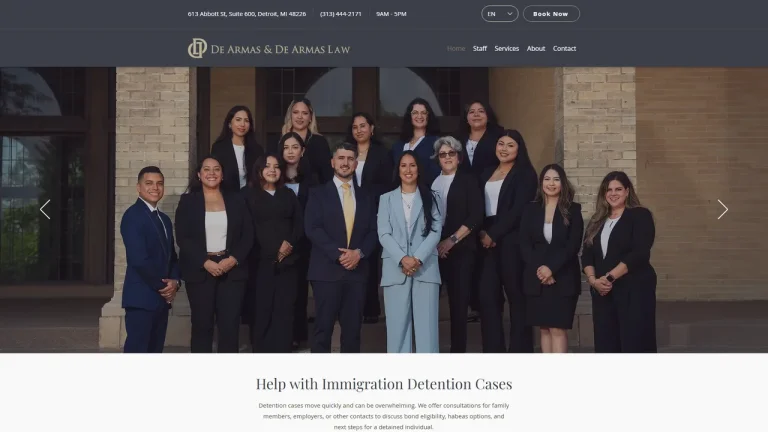
De Armas and De Armas Law - Detroit, MI
Bajoka Law Group PLLC - Detroit, MI

American Immigration Law Center - Detroit, MI
You Are Home Immigration Law Firm - Detroit, MI

Ayad Law, PLLC - Detroit, MI

Blumenau Law, PLLC - Detroit, MI

Caruso Law, PLLC - Detroit, MI

Southwest Legal Clinic - Detroit, MI
Miles and Miles PLC - Detroit, MI

J. Pernas Law, PLC - Detroit, MI
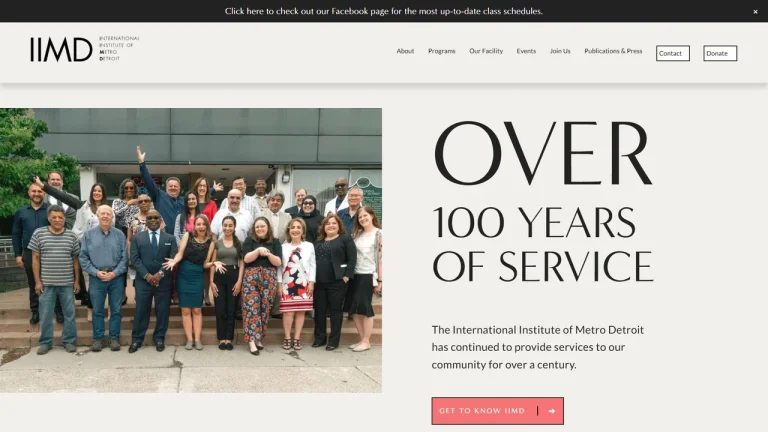
International Institute of Metropolitan Detroit - Detroit, MI

Law Office of Carine Saleh - Detroit, MI
Walker & Associates - Detroit, MI
Law Office of Rachel Glogowski, PC - Detroit, MI
McCarthy Law Office - Detroit, MI

Scopelitis Garvin Light Hanson - Detroit, MI

Khan Law PLLC - Detroit, MI

Hispanic Legal Center PLLC - Detroit, MI
Robert Birach Law Office - Detroit, MI

Removal Defense in Detroit Immigration Court
Facing deportation proceedings in Detroit places an individual's future, family unity, and legal status in severe jeopardy. Removal actions across Southeast Michigan are initiated following arrests by U.S. Immigration and Customs Enforcement (ICE), border detentions, or referrals after denied affirmative applications. In Wayne County, individuals from vibrant cultural enclaves including Mexicantown, Southwest Detroit, Corktown, and neighboring communities face expedited scrutiny when placed under formal deportation proceedings.
All removal hearings for Michigan residents are conducted by the Executive Office for Immigration Review (EOIR) at the Detroit Immigration Court, located inside the Patrick V. McNamara Federal Building at 477 Michigan Avenue in downtown Detroit. When an immigrant is detained, custody determinations and bond redetermination motions are argued before local Immigration Judges, while ICE Enforcement and Removal Operations (ERO) maintains custody at regional facilities. Furthermore, criminal cases in local courts-such as Detroit's 36th District Court on Madison Avenue or the Wayne County 3rd Judicial Circuit Court-can trigger immediate deportation proceedings due to the harsh intersection of state convictions and federal immigration law.
Securing legal representation before your initial Master Calendar Hearing is critical to developing an effective defense theory. An experienced Detroit deportation defense attorney examines the Notice to Appear (NTA) for procedural defects, contests removability charges, files applications for discretionary relief such as asylum or cancellation of removal, and advocates vigorously to keep families together.
Detroit Deportation Defense Legal Fees & Representation Tiers
Legal fees for removal defense before the Detroit Immigration Court reflect the complexity of the case, the respondent's custody status, and the volume of evidentiary documentation required. The table below outlines representative legal fee structures in Wayne County.
| Case Scenario | Fee Structure | Estimated Cost (USD) | Key Cost Determinants |
|---|---|---|---|
| Immigration Bond Hearing & Master Calendar Appearance | Flat Fee | $2,500 - $5,500 | Criminal background history, community ties in Wayne County, flight risk rebuttals, detention center logistics |
| Asylum, Withholding & Convention Against Torture (CAT) | Flat Fee / Retainer | $5,000 - $11,000 | Form I-589 evidentiary corroboration, country conditions reports, expert psychological evaluations |
| Cancellation of Removal for Non-Permanent Residents (42B) | Flat Fee / Retainer | $6,000 - $12,500 | 10-year physical presence documentation, exceptional and extremely unusual hardship to U.S. citizen relatives |
| Board of Immigration Appeals (BIA) Administrative Appeal | Hourly / Flat ($325 - $550/hr) | $5,500 - $15,000 | Transcript legal analysis, brief drafting, preservation of issues for Sixth Circuit federal appellate review |
Critical Legal Deadlines & Statutes in Michigan
Removal proceedings are prosecuted under federal immigration statutes set forth in Title 8 of the United States Code. Grounds of deportability applicable to individuals already within the country are codified under 8 U.S. Code § 1227, encompassing crimes involving moral turpitude, controlled substance violations, and aggravated felonies. Inadmissibility grounds governing uninspected entrants or status seekers fall under 8 U.S. Code § 1182.
Strict statutory timeframes govern removal defenses. Under 8 U.S. Code § 1158, an application for asylum must be filed within strictly 1 year of the applicant's arrival in the United States, absent proven changed country conditions or extraordinary circumstances. Relief through cancellation of removal for non-permanent residents requires establishing at least 10 continuous years of physical presence under 8 U.S. Code § 1229b. If an Immigration Judge issues an adverse removal order at the Detroit Immigration Court, the respondent has strictly 30 calendar days from the date of the decision for a Notice of Appeal (Form EOIR-26) to be physically received by the Board of Immigration Appeals (BIA) in Virginia. Following a final BIA dismissal, a petition for review must be submitted to the U.S. Court of Appeals for the Sixth Circuit within 30 days under 8 U.S. Code § 1252.
Small Claims Limits vs. Professional Legal Defense
Under Michigan law, small claims recovery is capped at $7,000 pursuant to Mich. Comp. Laws § 600.8401. By legislative mandate under Mich. Comp. Laws § 600.8408, legal representation is not permitted in the Small Claims Division of Detroit's 36th District Court. That municipal venue is designed exclusively for self-represented parties litigating minor financial disputes.
Small claims courts have zero legal jurisdiction over federal deportation, immigration detention, or deportation orders. Removal proceedings are adversarial federal administrative trials conducted before federal judges, where respondents face government prosecutors from the Department of Homeland Security. Under 8 U.S. Code § 1362, respondents possess a statutory privilege to be represented by counsel, but at no expense to the government. Attempting self-representation in Immigration Court or hiring unlicensed notarios frequently leads to orders of removal in absentia, immediate detention, and long-term bars to re-entry. A licensed deportation defense lawyer files an appearance (Form EOIR-28), asserts constitutional defenses, and protects your right to remain in the United States.
Red Flags When Hiring a Detroit Deportation Defense Lawyer
- Non-attorney "notarios" or community consultants offering immigration services who cannot legally appear inside the Detroit Immigration Court.
- Attorneys who guarantee an immigration bond release or cancellation of removal approval before reviewing criminal records and court dockets.
- Lawyers who fail to appear personally at the Patrick V. McNamara Federal Building and send substitute appearance counsel without proper case briefings.
- Firms that do not analyze local Wayne County criminal conviction records to evaluate crimmigration consequences before taking pleas or admitting charges.
Frequently Asked Questions
Where is the Detroit Immigration Court located?
The Detroit Immigration Court is located inside the Patrick V. McNamara Federal Building at 477 Michigan Avenue, Suite 400, in downtown Detroit. All formal removal hearings for individuals living in Michigan are held at this federal location.
What is the one-year filing deadline for asylum?
Pursuant to 8 U.S. Code § 1158, an individual must file their application for asylum (Form I-589) within 1 year of arriving in the United States. Failure to meet this deadline bars asylum eligibility unless you can prove extraordinary circumstances or changed conditions in your home country.
Can a criminal conviction in Wayne County result in deportation?
Yes. Under 8 U.S. Code § 1227, convictions for crimes involving moral turpitude, controlled substance violations, firearm offenses, or aggravated felonies can render a non-citizen immediately deportable, even if they hold lawful permanent resident status.
What is cancellation of removal for non-permanent residents?
Codified under 8 U.S. Code § 1229b, this form of relief allows eligible undocumented individuals to avoid deportation and obtain a green card if they prove 10 years of continuous physical presence, good moral character, no disqualifying convictions, and that deportation would cause exceptional and extremely unusual hardship to a U.S. citizen or permanent resident spouse, parent, or child.
How long do I have to appeal an Immigration Judge's deportation order?
You have strictly 30 calendar days from the date the Immigration Judge issues the decision for your Notice of Appeal to be received by the Board of Immigration Appeals (BIA). Missing this deadline forfeits your administrative appeal rights.