
Trademark Lawyers in Michigan
Retaining an experienced Michigan trademark lawyer safeguards your brand identity, business name, and market goodwill across state and national markets. Dedicated intellectual property attorneys conduct thorough clearance searches, manage USPTO registrations, and resolve infringement disputes before formal litigation arises. Explore our verified statewide directory below to connect with qualified Michigan trademark counsel.

Butzel Long - Grand Rapids, MI

Hude Legal Services, PLLC - Lansing, MI

Schnelker, Rassi & McConnell PLC - Grand Rapids, MI

Dickinson Wright - Ann Arbor, MI

ZVMLaw - Ann Arbor, MI

Origami Legal - Detroit, MI

Price Heneveld LLP - Grand Rapids, MI
Scutch Law, PLC - Grand Rapids, MI
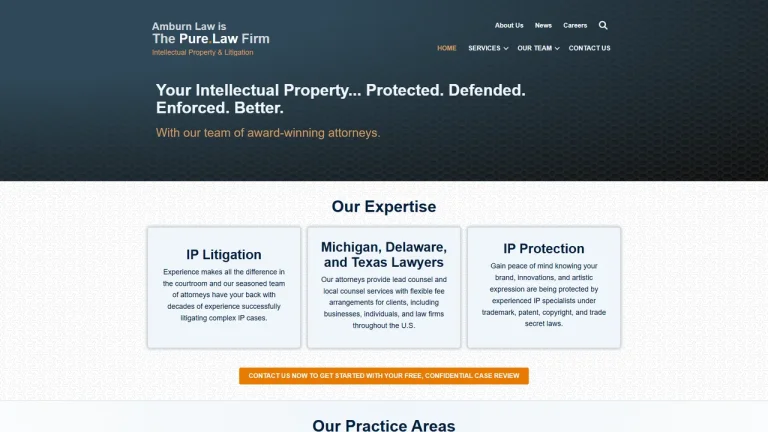
Amburn Law PLLC - Detroit, MI

Grand Law - Grand Rapids, MI
Michigan Patent - Ann Arbor, MI
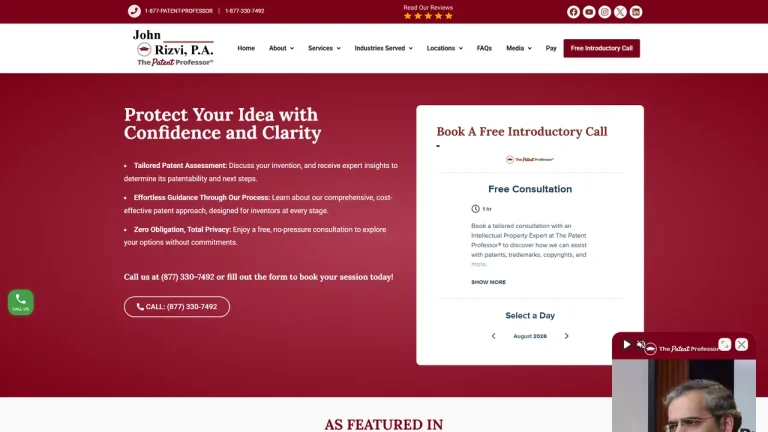
John Rizvi P.A. - The Idea Attorneys - Detroit, MI

Bodman PLC - Grand Rapids, MI
Traverse Legal, PLC - Detroit, MI

Miller Canfield PLC - Grand Rapids, MI
Sadek Law PLC - Grand Rapids, MI
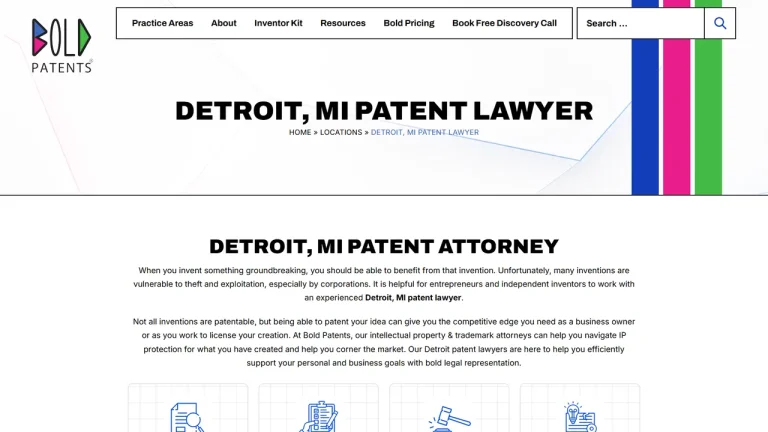
Bold Patents Law Firm - Detroit, MI
JD Law, PLLC - Attorney Jenna D. Hajhassan - Dearborn, MI
Lee, Lee & Associates, P.C. - Ann Arbor, MI
Gardner, Linn, Burkhart & Ondersma, LLP - Grand Rapids, MI
Mitchell Intellectual Property Law, PLLC - Grand Rapids, MI
Barnes & Thornburg LLP - Grand Rapids, MI
Butzel Long - Ann Arbor, MI
Protecting Brand Identity and Commercial Goodwill Across Michigan
Michigan is home to a diverse commercial landscape, spanning automotive aftermarket brands, advanced software companies in Ann Arbor, renowned craft breweries and distilleries in Grand Rapids and Kalamazoo, and thriving agricultural and consumer enterprises in Metro Detroit. Protecting distinctive brand names, logos, product designs, and trade dress is critical to preserving commercial goodwill and preventing customer confusion.
Brand protection operates under dual statutory layers: federal registration with the United States Patent and Trademark Office (USPTO) under the Lanham Act, and state-level trademark registration through the Michigan Department of Licensing and Regulatory Affairs (LARA) Corporations, Securities & Commercial Licensing Bureau in Lansing. An experienced trademark attorney evaluates brand reach and structures an intellectual property portfolio that shields your company from infringement.
When trademark disputes emerge, litigation occurs in both state and federal courts. State common law and statutory unfair competition actions are heard in Michigan Circuit Courts, such as the 3rd Judicial Circuit in Wayne County, the 6th Judicial Circuit in Oakland County, and the 17th Judicial Circuit in Kent County. Federal Lanham Act infringement actions proceed in the United States District Court for the Eastern District of Michigan in Detroit or the Western District in Grand Rapids, with appellate jurisdiction resting with the Sixth Circuit Court of Appeals.
Estimated Costs and Fee Structures for Michigan Trademark Matters
| Case Scenario | Fee Structure | Estimated Cost (USD) | Key Cost Determinants |
|---|---|---|---|
| Comprehensive Clearance Search & Legal Opinion | Flat Fee | $900 - $2,200 | Number of international classes, common law business entity reviews, domain name searches, and USPTO database screening. |
| Federal USPTO Trademark Application Prosecution | Flat Fee | $1,200 - $2,800 | Filing basis (Actual Use in Commerce vs. Intent-to-Use), number of goods and services classes, and government fee allocations. |
| Substantive Office Action Rebuttal & Briefing | Hourly or Flat Fee | $1,500 - $4,500 | Nature of the refusal (e.g., Section 2(d) Likelihood of Confusion vs. Section 2(e) Mere Descriptiveness), and evidence gathering. |
| Cease-and-Desist Enforcement & Settlement Drafting | Hourly or Flat Fee | $2,000 - $6,000 | Market confusion evidence documentation, negotiation rounds, and drafting binding co-existence agreements. |
Critical Legal Deadlines & Statutes in Michigan
Federal trademark applications filed under 15 U.S. Code § 1051 require demonstrable proof of use in commerce or a verified intent-to-use declaration. Once an intent-to-use application receives a Notice of Allowance, the applicant has a strict six-month statutory deadline to either submit an acceptable Statement of Use with specimens or request an extension of time.
Maintaining a federal registration requires adherence to post-registration deadlines. Under 15 U.S. Code § 1058, trademark owners must file a Section 8 Declaration of Continued Use between the fifth and sixth anniversary of the registration date. Under 15 U.S. Code § 1059, a Section 9 renewal application must be submitted every ten years; missing these deadlines results in immediate cancellation of the federal trademark.
State trademark registrations are governed by the Michigan Trademark Act under MCL 429.31. Under MCL 429.35, a Michigan trademark registration filed with LARA remains effective for a term of ten years and must be renewed within six months prior to expiration. Civil claims involving deceptive trade practices or unfair competition are regulated by the Michigan Consumer Protection Act under MCL 445.901 and MCL 445.903. Third-party oppositions to pending federal applications must be filed within 30 days of publication under 15 U.S. Code § 1063.
Small Claims Limits vs. Professional Representation in Michigan
Under MCL 600.8401, the Michigan District Court small claims division handles monetary disputes up to $7,000, and lawyers are barred from representing clients in small claims hearings under MCL 600.8408. However, small claims courts lack subject-matter jurisdiction to issue injunctions, cancel trademarks, or adjudicate federal trademark claims under the Lanham Act.
Attempting to file trademark applications pro se or through automated online document services frequently leads to fatal errors, such as misidentifying international classes, submitting non-conforming specimens of use, or failing to overcome Section 2(d) refusals. Navigating Trademark Trial and Appeal Board (TTAB) proceedings or obtaining preliminary injunctions in federal court requires an experienced trademark lawyer who understands Sixth Circuit precedent and federal discovery procedures.
Red Flags When Hiring a Michigan Trademark Attorney
- Online automated platforms that promise trademark registration without conducting a comprehensive common law clearance search or legal analysis.
- Deceptive third-party entities that harvest public trademark records to send inflated, fraudulent invoices disguised as official government maintenance notices.
- Attorneys who guarantee that the USPTO examining attorney will approve an application without issuing substantive Office Actions.
- Practitioners who fail to provide a written engagement agreement detailing attorney hourly fees, search costs, and statutory government filing fees.
Frequently Asked Questions
What is the difference between a Michigan state trademark and a federal USPTO trademark?
A Michigan state trademark registered with LARA protects your brand solely within the state of Michigan and is suitable for strictly local businesses. A federal trademark registered with the USPTO provides nationwide protection, legal presumption of ownership, and exclusive rights across all fifty states.
How long does it take to secure a federal trademark registration?
The federal trademark registration process typically requires between 10 to 18 months from the initial application date, depending on USPTO examination backlogs, whether substantive Office Actions are issued, and if third-party oppositions are filed.
When can I legally use the registered trademark symbol (®) in Michigan?
You may only use the federal registration symbol (®) after the USPTO has officially granted and issued your federal registration certificate. Prior to registration, or while an application is pending, you may use the informal symbols TM for goods or SM for services.
What should I do if my Michigan business receives a cease-and-desist letter?
Do not immediately abandon your brand or reply without legal counsel. Consult a Michigan trademark attorney who can review the claim, analyze the sender priority rights, determine whether actual market confusion exists, and craft a strategic response or coexistence agreement.
Can I protect a craft beverage brand under Michigan trademark law?
Yes. Michigan thriving craft brewery, distillery, and winery industry relies heavily on trademark law to protect product names, labels, and taproom brands against confusingly similar names in local distribution and interstate commerce.