
Workplace Discrimination Lawyers in Kansas City, MO
Find experienced workplace discrimination lawyers in Kansas City, MO. Protect your employment rights, challenge unlawful adverse actions, and pursue justice. Skilled employment attorneys navigate complex state and federal filing procedures, seeking favorable remedies through mediation, severance negotiations, or civil litigation. Explore our verified directory below to schedule an initial consultation with local legal advocates.

Spencer Fane LLP - Kansas City, MO
McShane & Brady, LLC - Kansas City, MO
Davis George Mook LLC - Kansas City, MO
The Meyers Law Firm, LC - Kansas City, MO

Ralston Kinney, LLC - Kansas City, MO
Ogletree Deakins - Kansas City, MO

McKinney Law Group LLC - Kansas City, MO

Keenan & Bhatia, LLC - Kansas City, MO
Reavey Law LLC - Kansas City, MO

Holman Schiavone, LLC - Kansas City, MO

Williams Dirks Dameron LLC - Kansas City, MO

Ensz & Jester, P.C. - Kansas City, MO
Edelman, Liesen & Myers L.L.P. - Kansas City, MO
HKM Employment Attorneys LLP - Kansas City, MO

Anne Schiavone - Kansas City, MO
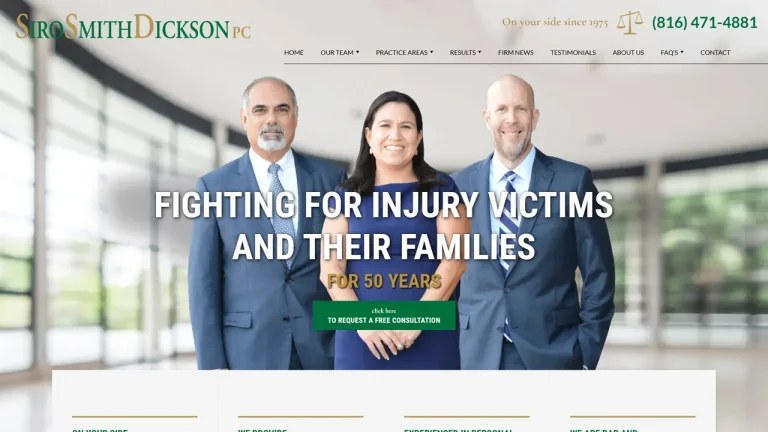
Siro Smith Dickson PC - Kansas City, MO

Thornberry Brown, LLC - Kansas City, MO
Law Office of R. Brent Hankins P.C. - Kansas City, MO
The Tourigny Law Firm LLC - Kansas City, MO
The Popham Law Firm - Kansas City, MO
Employee Rights Law Firm - Kansas City, MO
Fox Rothschild LLP - Kansas City, MO

G. Gray Law, LLC - Kansas City, MO
Protecting Employee Civil Rights Across Kansas City Workplaces
Experiencing adverse employment actions rooted in bias disrupts professional careers, harms mental wellbeing, and causes acute financial instability. Employees facing wrongful termination, unlawful demotion, or denied promotion in Kansas City possess clear legal remedies under state and federal statutes. Engaging seasoned employment counsel ensures your workplace grievance is systematically documented and presented through appropriate jurisdictional channels.
Workplace discrimination litigation originating in Kansas City is predominantly adjudicated in the 16th Judicial Circuit Court of Missouri in Jackson County, based at the Jackson County Courthouse in Downtown Kansas City on East 12th Street. Federal statutory actions proceed before the United States District Court for the Western District of Missouri at the Charles Evans Whittaker U.S. Courthouse on East 9th Street.
From corporate offices in the Country Club Plaza and Crown Center to industrial logistics hubs near KCI Airport, local litigators understand the distinct employment landscape of the metropolitan area. Skilled attorneys regularly manage dual filings through the Kansas City Area Office of the Equal Employment Opportunity Commission and the Missouri Commission on Human Rights, positioning claims for successful pre-trial mediation or circuit court trial.
Fee Structures and Expenses for Workplace Discrimination Claims
| Case Scenario | Fee Structure | Estimated Cost (USD) | Key Cost Determinants |
|---|---|---|---|
| Pre-Suit Severance & Separation Agreement Negotiation | Hourly or Partial Contingency | $300 - $550 per hour / 25% of enhancement | Executive status, existing employment contracts, non-compete release terms, and company exposure. |
| Dual-Agency Charge Filing (EEOC & MCHR) | Hybrid Retainer or Contingency | $1,500 - $3,500 retainer / 33.3% contingency | Complexity of employer position statement, witness declarations, and administrative rebuttal filings. |
| Circuit Court or Federal Discrimination Lawsuit | Contingency Fee (Litigated Action) | 33.3% - 40% of gross recovery | Extensive electronic discovery (e-discovery), corporate depositions, and defending dispositive summary judgment motions. |
| Jury Trial Verdict & Post-Trial Proceedings | Contingency Fee (Trial & Post-Trial) | 40% - 45% of recovery | Expert economic loss testimony, statistical hiring/firing analysis, courtroom exhibits, and jury fees. |
Critical Legal Deadlines & Statutes in Missouri
Pursuing an employment discrimination claim requires strict adherence to mandatory administrative deadlines. Under the Missouri Human Rights Act, codified at Mo. Rev. Stat. § 213.075, an employee must formally submit a verified complaint to the Missouri Commission on Human Rights within 180 days of the alleged discriminatory act. Missing this strict statutory window permanently bars relief under state law.
For federal statutory claims governed by Title VII of the Civil Rights Act, codified at 42 U.S. Code § 2000e-5, claimants in deferral jurisdictions have up to 300 days to submit a charge with the Equal Employment Opportunity Commission. Once administrative proceedings conclude, the issuance of a Notice of Right to Sue triggers an unforgiving 90-day window to file a formal civil lawsuit in either state or federal court.
Substantive state-level discrimination protections are governed by Mo. Rev. Stat. § 213.055, which prohibits discrimination based on race, color, religion, national origin, sex, ancestry, age, or disability. Under Mo. Rev. Stat. § 213.111, any lawsuit under the state act must be initiated within 90 days of the commission notice and no later than two years after the unlawful discriminatory practice occurred. Furthermore, statutory caps on non-economic and punitive damages apply based on employer workforce size.
Small Claims Limitations vs. Professional Employment Representation
The Small Claims Division of the Jackson County Circuit Court operates under a statutory jurisdictional limit of $5,000 pursuant to Mo. Rev. Stat. § 482.305. Small claims courts are designed solely for minor contract disputes and modest property claims. They possess no legal authority to issue equitable relief, order job reinstatement, mandate anti-bias corporate training, or adjudicate complex statutory claims under civil rights legislation.
Retaining an experienced employment attorney is indispensable for workplace discrimination matters. Corporate employers retain defense counsel to draft elaborate position statements asserting legitimate non-discriminatory reasons for adverse actions. An experienced plaintiff attorney utilizes formal discovery tools to unearth internal communications, cross-examine decision-makers, defeat summary judgment challenges, and maximize back pay, front pay, emotional distress damages, and statutory attorney fee awards.
Red Flags When Hiring a Workplace Discrimination Lawyer
- Promises of guaranteed multi-million-dollar outcomes: Steer clear of legal practitioners who guarantee specific settlements without thoroughly analyzing the employer's stated justification and documentary records.
- Unawareness of strict 180-day MCHR deadlines: Avoid firms that fail to recognize the tight 180-day state charge filing requirement under Missouri law compared to longer federal windows.
- Non-refundable upfront fees without litigation cost transparency: Exercise caution if an attorney demands substantial cash retainers while refusing to provide clear written guidelines on court costs and deposition expenses.
- Lack of federal court admission: Reject legal counsel who are not admitted to practice before the United States District Court for the Western District of Missouri, as many discrimination disputes are removed to federal jurisdiction.
Frequently Asked Questions
What is the filing deadline for workplace discrimination in Kansas City, MO?
Under Mo. Rev. Stat. § 213.075, you must file a formal complaint with the Missouri Commission on Human Rights within 180 days of the discriminatory action. If proceeding under federal law with the EEOC, the deadline extends to 300 days in Missouri.
What protected categories exist under the Missouri Human Rights Act?
Pursuant to Mo. Rev. Stat. § 213.055, employers with six or more employees are prohibited from discriminating against workers based on race, color, religion, national origin, sex, ancestry, age (between 40 and 70), or physical or mental disability.
Can an individual supervisor be personally sued for discrimination in Missouri?
Under amendments to Mo. Rev. Stat. § 213.010, individual managers and supervisors cannot be named as individual defendants in civil discrimination suits under the Missouri Human Rights Act; liability rests exclusively with the employer entity.
How do attorneys counter an employer pretext defense?
Counsel gathers comparative data showing similarly situated colleagues outside your protected group received lenient treatment, identifies shifting corporate explanations for termination, and analyzes positive performance reviews that contradict the employer's newly alleged performance deficiencies.
What damages can an employee recover in a Kansas City discrimination lawsuit?
Successful claimants can recover back pay (lost wages and benefits), front pay, compensatory damages for emotional distress, court costs, and statutory attorney fees under Mo. Rev. Stat. § 213.111, subject to statutory employer-size damage caps.