
Residential Real Estate Lawyers in Concord
Retaining skilled Concord residential real estate lawyers protects your property rights and financial interests under New Hampshire law. Dedicated local counsel resolves title defects, reviews purchase contracts, and negotiates closing disputes out of court to ensure a seamless transaction. Explore our verified directory below to schedule a consultation with trusted Merrimack County attorneys.
Kraus Law - Concord, NH

Annis & Zellers PLLC - Concord, NH

Weddleton Law Office GRANITE LAW - Concord, NH

J. Miller & Associates - Concord, NH

Olcott & Associates, P.C. - Concord, NH

Law Office of Mark R. Dunn - Concord, NH

Preti Flaherty Beliveau & Pachios LLP - Concord, NH
Chevalier Legal Services, PLLC - Concord, NH
Howard A Roever Law Office - Concord, NH
Sheridan Real Estate Law - Concord, NH

Hudkins Law & Title - Concord, NH

Tarbell & Brodich - Concord, NH

Bianco Professional Association - Concord, NH
Sulloway & Hollis PLLC - Concord, NH
Charles G. Glover, Attorney at Law - Concord, NH

Upton & Hatfield, LLP - Concord, NH
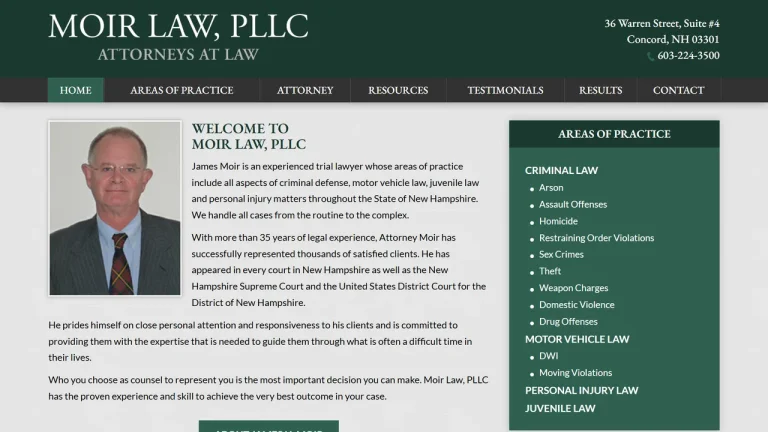
Moir Law PLLC - Concord, NH
Donahue, Tucker & Ciandella, PLLC - Concord, NH

Steiner Law Office, PLLC - Concord, NH

McGrath Law Firm - Concord, NH

McLane Middleton, Professional Association - Concord, NH

BCM Environmental & Land Law, PLLC - Concord, NH
Ransmeier & Spellman P.C. - Concord, NH

Safeguarding Residential Property Transactions in Concord
Purchasing or selling a home in Concord-whether an historic colonial in the West End, a single-family home in Penacook, or rural acreage bordering Bow-involves substantial capital and nuanced legal liabilities. In New Hampshire, the principle of caveat emptor historically applies to real property transactions, making rigorous legal review of titles, municipal liens, and purchase-and-sale agreements critical to preventing costly post-closing litigation.
Real estate disputes and conveyancing oversight in the Capital Region fall under the authority of the Merrimack County Registry of Deeds and the Merrimack County Superior Court on North Main Street. Whether resolving boundary line encroachments, unrecorded utility easements, or disputed earnest money escrow deposits, local legal counsel ensures transactions conform strictly to New Hampshire statutory recording requirements and local zoning ordinances.
Retaining a local Concord residential real estate attorney provides essential advocacy before you execute binding commitments. Experienced counsel identifies hidden title encumbrances, negotiates favorable inspection contingency waivers, and ensures compliance with statutory seller disclosure mandates, protecting buyers and sellers across the Merrimack Valley from prolonged disputes.
Typical Fee Structures for Concord Residential Real Estate Services
| Case Scenario | Fee Structure | Estimated Cost (USD) | Key Cost Determinants |
|---|---|---|---|
| Residential Purchase / Sale Closing Representation | Flat Legal Fee | $950 - $2,200 | Title search depth, municipal lien certification, and closing document preparation. |
| Purchase & Sale (P&S) Agreement Drafting / Review | Flat or Hourly Fee | $450 - $1,200 | Custom contingency riders, seller financing terms, and escrow holdback clauses. |
| Quiet Title Action / Boundary Line Dispute | Hourly Retainer | $3,500 - $9,500+ | Survey complexity, historical deed chain research at the Registry, and Superior Court filings. |
| Easement Negotiation or Zoning Variance Petition | Flat or Hourly Fee | $1,500 - $4,000 | Concord Planning Board hearings, abutters notice requirements, and municipal review fees. |
Critical Legal Deadlines & Statutes in New Hampshire
New Hampshire real estate laws mandate strict disclosure and procedural timelines. Under N.H. Rev. Stat. Ann. § 477:4-a, sellers of residential real property must provide detailed statutory disclosures regarding private water supply systems, sewage disposal systems, insulation, and the presence of radon, lead paint, or arsenic before executing a binding purchase and sale agreement.
Real property conveyance formalities require formal deed execution under N.H. Rev. Stat. Ann. § 477:1, which must be promptly recorded at the Merrimack County Registry of Deeds to secure priority over subsequent purchasers or judgment creditors. Additionally, the New Hampshire Real Estate Transfer Tax, codified under N.H. Rev. Stat. Ann. § 78-B:1, imposes a statutory transfer tax assessed against both buyer and seller due upon the recording of the deed.
For adverse possession or prescriptive easement claims, New Hampshire establishes a rigorous twenty-year statutory possession period under N.H. Rev. Stat. Ann. § 508:2. General breach of contract actions arising from failed purchase agreements must be initiated within the three-year statute of limitations set forth in N.H. Rev. Stat. Ann. § 508:4.
Small Claims Limitations vs. Retaining Real Estate Counsel
The 6th Circuit Court - District Division - Concord adjudicates small claims matters up to $10,000 under N.H. Rev. Stat. Ann. § 503:1. While small claims can resolve minor post-closing disputes such as unreturned earnest money deposits or small undisclosed property repairs below the statutory threshold, real property titles and boundary rights cannot be resolved in small claims.
Actions seeking specific performance, rescission of a purchase contract, boundary reformations, or quiet title decrees fall within the exclusive equity jurisdiction of the Merrimack County Superior Court. Real estate transactions represent the largest financial asset for most Concord families; hiring an attorney ensures that title defects, restrictive covenants, and complex municipal liens are remedied before closing, eliminating exposure to protracted courtroom litigation.
Red Flags to Avoid When Selecting a Concord Real Estate Attorney
- Attorneys or title agents who rely exclusively on preliminary title insurance commitments without examining the underlying deed chain at the Merrimack County Registry of Deeds.
- Real estate practitioners who use generic boilerplate purchase contracts that lack New Hampshire-specific radon, water test, and septic inspection contingencies.
- Closing agents who fail to provide a transparent, itemized closing disclosure detailing state transfer taxes, recording disbursements, and legal fees.
- Law firms that do not provide dedicated attorney representation at the physical closing or settlement table.
Frequently Asked Questions
What is the New Hampshire Real Estate Transfer Tax rate in Concord?
Under N.H. Rev. Stat. Ann. § 78-B:1, the statutory real estate transfer tax is $15.00 per $1,000 of property value, typically split equally between buyer and seller ($7.50 per $1,000 each) and collected at closing.
What disclosures are legally required when selling a home in Concord?
Pursuant to N.H. Rev. Stat. Ann. § 477:4-a, sellers must disclose information regarding the potable water system, sewage disposal system, insulation, and known presence of radon gas, lead-based paint, or arsenic.
Where are real estate deeds recorded for properties in Concord?
All property deeds, mortgages, easements, and liens for Concord properties are officially recorded with the Merrimack County Registry of Deeds.
Why is a title search necessary before buying property in Merrimack County?
A title search reveals unreleased mortgages, municipal tax liens, mechanics liens, probate claims, and conflicting boundary easements that could cloud your ownership or result in financial forfeiture.
What court handles residential real estate lawsuits in Concord?
Lawsuits involving real estate title defects, boundary disputes, specific performance, or contract breaches exceeding small claims limits are heard in the Merrimack County Superior Court on North Main Street.