
IRS Dispute Lawyers in New Hampshire
Consulting a qualified New Hampshire IRS dispute lawyer protects your financial livelihood against aggressive federal tax levies, wage garnishments, and unmanageable tax liens. Experienced tax attorneys resolve back taxes through Offers in Compromise, installment agreements, and audit appeals before federal authorities. Explore our statewide directory to connect with a verified federal tax professional today.

N H Pro Bono Tax Payer Project - Concord, NH
Devine Millimet: Jon Sparkman, Esq., CPA - Manchester, NH
McLane Middleton, Professional Association - Manchester, NH
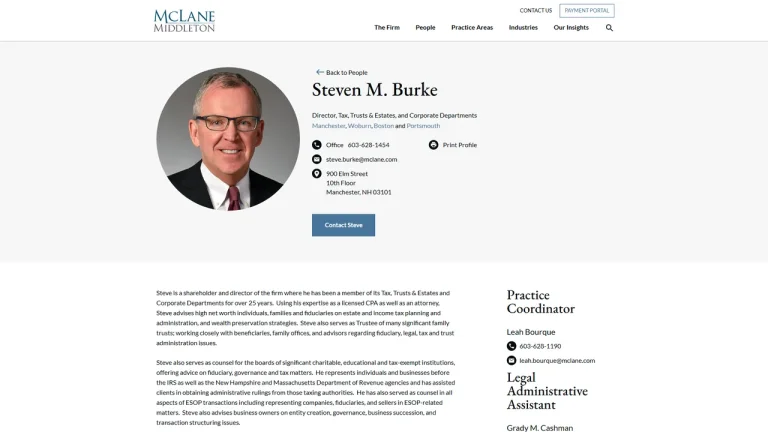
Steven M. Burke - McLane Middleton - Manchester, NH

Rath, Young and Pignatelli, P.C. - Concord, NH

Rath, Young and Pignatelli, P.C. - Manchester, NH
Donahue, Tucker & Ciandella, PLLC - Concord, NH
603 Legal Aid - Concord, NH
Federal Tax Controversy Jurisdiction in New Hampshire
Federal tax disputes in New Hampshire fall under the statutory jurisdiction of the Internal Revenue Service and the federal judiciary. Individuals and commercial enterprises facing federal tax liabilities across Manchester, Nashua, Concord, and the Seacoast must navigate specialized administrative and judicial processes to protect their assets.
Taxpayers experiencing enforcement actions, such as federal tax liens or bank levies, coordinate through local IRS offices or the Taxpayer Advocate Service. If an administrative resolution cannot be reached through the IRS Independent Office of Appeals, litigation proceeds to specialized federal courts.
Pre-payment tax controversies are petitioned to the United States Tax Court, while refund actions and civil tax litigation are heard in the U.S. District Court for the District of New Hampshire in Concord. Retaining an attorney admitted to practice before the federal court and the U.S. Tax Court ensures your procedural rights are vigorously asserted.
Common IRS Dispute Matters & Legal Fee Structures in New Hampshire
| Case Scenario | Fee Structure | Estimated Cost (USD) | Key Cost Determinants |
|---|---|---|---|
| Offer in Compromise (OIC) Negotiation | Flat Fee or Retainer | $2,500 - $6,500 | Asset disclosure complexity, doubt as to collectibility, business records |
| Collection Due Process (CDP) Hearing & Lien Defense | Hourly Retainer ($275 - $500/hr) | $2,000 - $5,500 | Notice of Intent to Levy timeline, proposed payment plans, asset protection |
| U.S. Tax Court Deficiency Petition | Hourly Retainer ($350 - $600/hr) | $5,000 - $20,000+ | Statutory 90-day filing rule, deduction substantiation, trial preparation |
| Payroll Tax & Trust Fund Recovery Penalty | Hourly Retainer | $3,500 - $12,000 | Responsible person status, willful failure evaluation, corporate bank records |
Critical Legal Deadlines & Statutes in New Hampshire
IRS tax controversy matters are bound by strict statutory deadlines defined in the Internal Revenue Code. Upon receiving a formal Statutory Notice of Deficiency (90-day letter), a taxpayer has precisely 90 days from the mailing date to file a petition with the United States Tax Court pursuant to 26 U.S. Code § 6213; this deadline cannot be extended by the court under any circumstances.
When the IRS issues a Final Notice of Intent to Levy, the taxpayer has 30 days to request a Collection Due Process hearing under 26 U.S. Code § 6330 using IRS Form 12153 to halt collection enforcement. The standard statute of limitations for the IRS to assess additional federal taxes is 3 years from the return filing date under 26 U.S. Code § 6501, while the statutory collection window is 10 years from the date of assessment pursuant to 26 U.S. Code § 6502. Formal tax settlement authority through an Offer in Compromise is governed by 26 U.S. Code § 7122, partial payment installment agreements proceed under 26 U.S. Code § 6159, and relief for misallocated joint tax debt is granted under Innocent Spouse Relief provisions in 26 U.S. Code § 6015.
Small Claims Limitations vs. Federal Tax Court Representation
New Hampshire Small Claims Courts, governed by N.H. Rev. Stat. Ann. § 503:1 with a jurisdictional ceiling of $10,000, have zero subject matter jurisdiction over the Internal Revenue Service or federal tax disputes. Under federal supremacy principles, state small claims courts cannot alter federal tax assessments, release federal tax liens, or stay IRS collection activities.
Resolving federal tax controversies requires interacting with specialized federal administrative divisions and courts. Navigating complex IRS automated collection systems, negotiating partial-payment agreements, or challenging trust fund recovery penalties against corporate officers demands licensed tax counsel. An experienced attorney protects your constitutional due process rights, prevents catastrophic bank garnishments, and submits legally compliant financial disclosures to federal revenue officers.
Red Flags to Watch for When Hiring a New Hampshire IRS Lawyer
- National tax relief call centers making unrealistic promises: Avoid out-of-state marketing operations that guarantee settlement for pennies on the dollar before reviewing your financial documentation.
- Missing the unyielding 90-day Tax Court deadline: If counsel fails to petition the Tax Court within 90 days of a deficiency notice, you lose pre-payment judicial review and must pay in full before seeking a refund.
- Demanding full upfront payment with no itemized billing: Legitimate tax practitioners provide transparent retainer agreements outlining hourly rates, scope of representation, and milestones.
- Attorneys not admitted before the U.S. Tax Court: If your dispute requires litigating an audit deficiency, your counsel must be admitted to practice before the United States Tax Court.
Frequently Asked Questions
What should I do if I receive an IRS Notice of Deficiency?
You have exactly 90 days from the notice date to file a petition with the United States Tax Court to contest the proposed tax without paying first. This deadline cannot be extended.
What is a Collection Due Process (CDP) hearing?
A CDP hearing is an administrative appeal under federal law that allows taxpayers who receive a levy or lien notice to challenge the collection action and propose alternatives like installment agreements.
How does an Offer in Compromise work?
An Offer in Compromise enables qualifying taxpayers to resolve their tax liability for less than the full amount owed based on doubt as to collectibility, doubt as to liability, or effective tax administration.
How long can the IRS collect back taxes in New Hampshire?
Under the Internal Revenue Code, the IRS generally has 10 years from the date of assessment to collect outstanding taxes, though certain events like filing bankruptcy or an OIC can toll this period.
Can an IRS lawyer stop a bank levy or wage garnishment?
Yes. By requesting a timely Collection Due Process hearing or demonstrating economic hardship, an attorney can often secure a release of wage garnishments and bank levies.