
Tax Lawyers in New Hampshire
Retaining an experienced New Hampshire tax lawyer ensures your business enterprise, property transactions, and estate transfers remain compliant with complex state revenue statutes. Dedicated tax counsel resolves audits and disputed assessments through structured administrative appeals with the Department of Revenue Administration. Browse our verified directory to schedule a consultation with an attorney in your area.

Devine Millimet | Attorneys at Law - Manchester, NH

McLane Middleton, Professional Association - Concord, NH
Gallagher, Callahan & Gartrell - Concord, NH

N H Pro Bono Tax Payer Project - Concord, NH
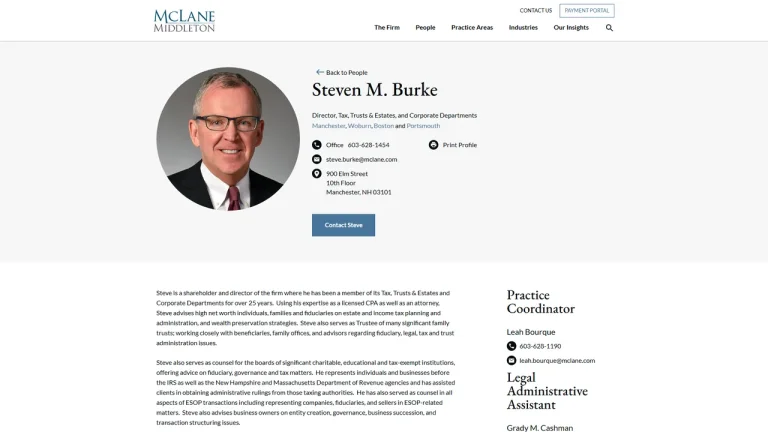
Steven M. Burke - McLane Middleton - Manchester, NH
Rath, Young and Pignatelli, P.C. - Concord, NH
Rath, Young and Pignatelli, P.C. - Manchester, NH
603 Legal Aid - Concord, NH

John M. Cunningham, Attorney at Law - Manchester, NH
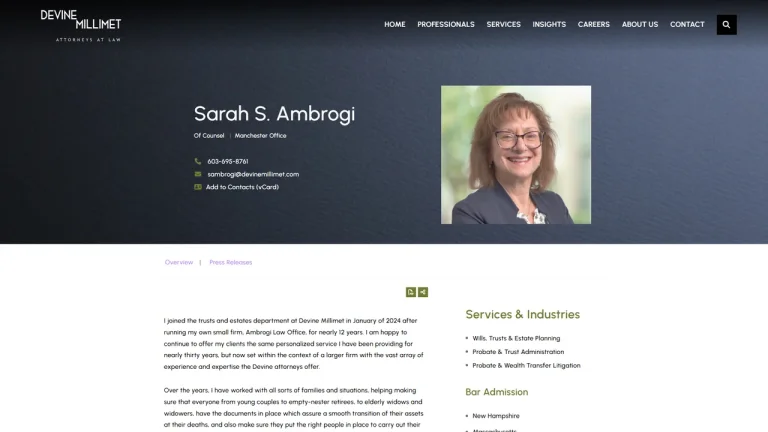
Sarah S. Ambrogi - Manchester, NH

Finch & Maloney PLLC - Manchester, NH
Sulloway & Hollis PLLC - Concord, NH

Ketel Law, PC - Manchester, NH

McLane Middleton, Professional Association - Manchester, NH
Devine Millimet: Jon Sparkman, Esq., CPA - Manchester, NH

Nixon Peabody LLP - Manchester, NH
Donahue, Tucker & Ciandella, PLLC - Concord, NH

Orr & Reno - Concord, NH

Hinman, Howard & Kattell, LLP - Manchester, NH
Devine Millimet: Jason Cole, Esq., CPA - Manchester, NH
New Hampshire Tax Laws & Administrative Revenue Jurisdiction
New Hampshire tax jurisprudence features a unique statutory structure characterized by the absence of a general state personal earned income tax and general sales tax. However, commercial entities and property owners face sophisticated levies administered by the New Hampshire Department of Revenue Administration located in Concord.
Corporate operations, limited liability companies, and partnerships are subject to the Business Profits Tax and the Business Enterprise Tax. Tax controversies often arise regarding multi-state apportionment, enterprise value tax bases, meals and rooms tax collections, and real estate transfer tax liabilities across commercial centers from Manchester and Nashua to Portsmouth and Concord.
Contested state tax assessments are appealed through formal administrative hearings before the Department of Revenue Administration, the state Board of Tax and Land Appeals, or county Superior Courts. Retaining counsel in good standing with the New Hampshire Bar Association ensures compliance with strict statutory appeal deadlines.
Common Tax Matters & Legal Fee Structures in New Hampshire
| Case Scenario | Fee Structure | Estimated Cost (USD) | Key Cost Determinants |
|---|---|---|---|
| Business Profits Tax (BPT) Audit Defense | Hourly Retainer ($300 - $550/hr) | $3,500 - $12,500 | Business entity structure, apportionment formula, nexus issues |
| Board of Tax and Land Appeals (BTLA) Petition | Staged Retainer / Hourly | $4,000 - $15,000 | Property appraisal evidence, statutory assessment challenges, discovery |
| Real Estate Transfer Tax & Entity Reorganization | Flat Fee or Hourly | $1,500 - $5,000 | Deed conveyance terms, corporate restructuring exemptions, property value |
| Meals and Rooms Tax Compliance & Penalty Abatement | Hourly Retainer | $2,500 - $8,000 | Audit period scope, point-of-sale record reconciliations, reasonable cause |
Critical Legal Deadlines & Statutes in New Hampshire
State tax controversies in New Hampshire are governed by strict procedural limitation periods under the Department of Revenue Administration code. Under N.H. Rev. Stat. Ann. § 21-J:29, the Department of Revenue Administration generally has 3 years from the date a return is filed to assess additional taxes, while taxpayers have 3 years from the return due date or 2 years from the date of payment to request a refund.
If the department issues a notice of assessment or denies a refund claim, the taxpayer must file a written request for an administrative reconsideration within 60 days under N.H. Rev. Stat. Ann. § 21-J:28-b. Appeals from a final department determination must be filed within 30 days with either the Board of Tax and Land Appeals pursuant to N.H. Rev. Stat. Ann. § 71-B:1 or the Superior Court under N.H. Rev. Stat. Ann. § 21-J:28-b. Corporate tax obligations are governed by the Business Profits Tax under N.H. Rev. Stat. Ann. § 77-A:1 and the Business Enterprise Tax under N.H. Rev. Stat. Ann. § 77-E:1, while meals and rooms tax compliance is codified in N.H. Rev. Stat. Ann. § 78-A:1.
Small Claims Court Limitations vs. Specialized Tax Counsel
Under N.H. Rev. Stat. Ann. § 503:1, New Hampshire Small Claims Courts, operating within the Circuit Court District Division, are subject to a jurisdictional limit of $10,000. Small claims courts have zero legal jurisdiction over state or federal tax assessments, Department of Revenue Administration determinations, or property abatement appeals.
State tax law requires navigating specialized administrative tribunals, including the Board of Tax and Land Appeals, and conducting statutory interpretation before county Superior Courts. Business enterprise taxation, multi-jurisdictional sales nexus, and corporate audits involve substantial assessments that easily exceed small claims ceilings. Retaining a dedicated tax attorney ensures proper preservation of appellate records, negotiation of penalty abatements based on reasonable cause, and structured administrative defense.
Red Flags to Watch for When Hiring a New Hampshire Tax Lawyer
- Unfamiliarity with New Hampshire business tax structure: Practitioners must understand the interplay between the Business Profits Tax and the Business Enterprise Tax, rather than assuming standard state income tax principles apply.
- Missing the 30-day BTLA appeal deadline: Failing to appeal an administrative final determination within 30 days permanently forfeits your right to judicial review.
- Guaranteed audit outcomes or zero-liability promises: Ethical attorneys licensed by the New Hampshire Bar Association cannot promise specific audit reductions before reviewing financial books and ledgers.
- Lack of state administrative hearing experience: Ensure counsel regularly handles disputes directly before the Department of Revenue Administration in Concord.
Frequently Asked Questions
Does New Hampshire have a personal income tax?
New Hampshire does not impose a general state personal income tax on earned wages or salaries, focusing its direct state taxation instead on business profits, business enterprise value, and specialized excise levies.
What is the difference between the Business Profits Tax and Business Enterprise Tax?
The Business Profits Tax is assessed on the net income of business organizations conducting business in the state, whereas the Business Enterprise Tax is levied on the enterprise value base, which includes compensation, interest, and dividends paid.
What is the deadline to appeal a tax assessment in New Hampshire?
Taxpayers have 60 days to request administrative reconsideration from the Department of Revenue Administration, followed by 30 days from a final determination to appeal to the Board of Tax and Land Appeals or Superior Court.
Can small claims court resolve a state tax dispute in New Hampshire?
No. New Hampshire Small Claims Courts lack subject matter jurisdiction over tax disputes; state revenue challenges must proceed through administrative channels and designated appellate venues.
How are legal fees structured for tax attorneys in New Hampshire?
Tax lawyers generally bill on an hourly basis with a retainer deposit, though transactional matters like corporate tax restructuring or entity formation may be handled on a flat-fee basis.