
Employment & Labor Lawyers in Albany
Retaining an experienced employment and labor lawyer in Albany safeguards your workplace rights under robust New York Labor Law and civil service protections. Skilled local counsel resolves wage violations, discrimination claims, and collective bargaining disputes through strategic negotiation, avoiding prolonged litigation. Explore our vetted Albany directory below to schedule an initial consultation with a reputable labor attorney.

Phillips Lytle LLP - Albany, NY - Albany, NY
DeGraff, Foy & Kunz, LLP - Albany, NY

Honeywell Law Firm, PLLC - Albany, NY

Manatt, Phelps & Phillips, LLP - Albany, NY
Brandon J. Broderick, Personal Injury Attorney at Law - Albany, NY

The Towne Law Firm, P.C. - Albany, NY
Boies Schiller Flexner LLP - Albany, NY
Goldberger & Kremer - Albany, NY

Robinson & Cole LLP - Albany, NY

Honeywell Law Firm, PLLC - Albany, NY
Cooper Erving & Savage LLP - Albany, NY
Whiteman Osterman & Hanna LLP - Albany, NY
Dowling Law, PLLC - Albany, NY

Harris Beach PLLC - Albany, NY
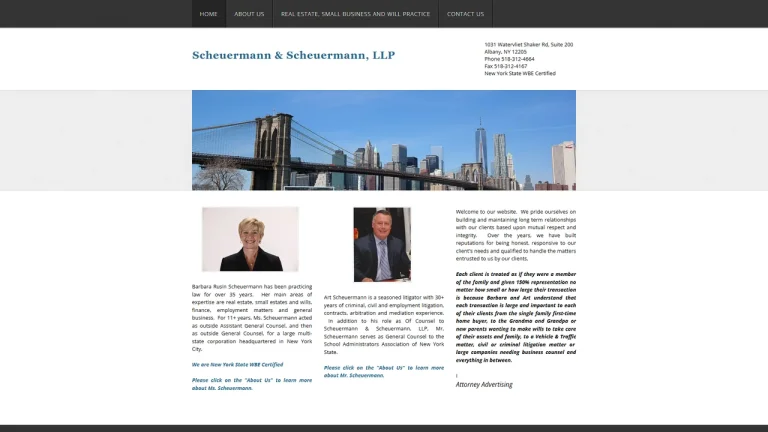
Scheuermann & Scheuermann, LLP - Albany, NY
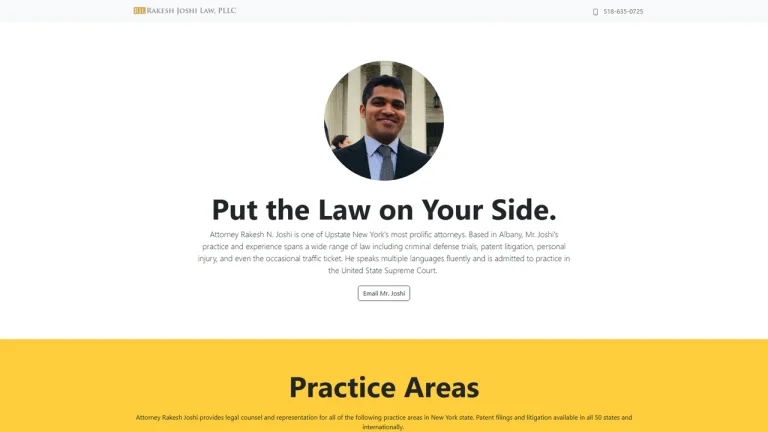
Rakesh Joshi Law, PLLC - Albany, NY
Poricanin Law - Albany, NY

Goldberg Segalla - Albany, NY
Nixon Peabody LLP - Albany, NY
Toporowski Law, PLLC - Albany, NY
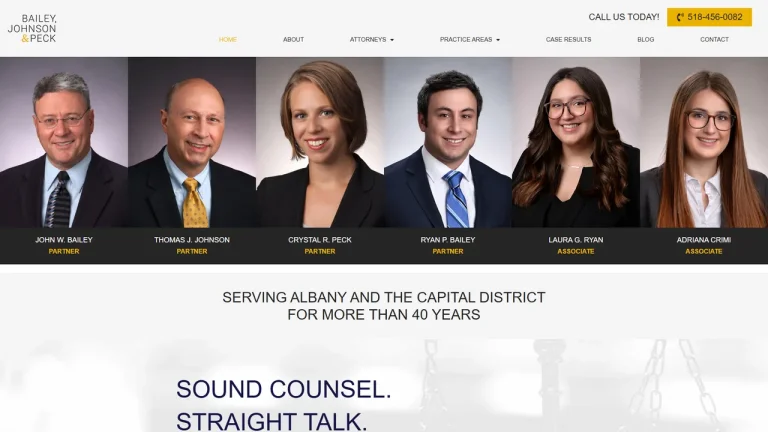
Bailey, Johnson & Peck P.C. - Albany, NY
Albany Personal Injury Attorney at Law, Brandon J. Broderick - Albany, NY

Navigating Public and Private Sector Employment Law in Albany
As New York's state capital, Albany possesses a unique employment landscape dominated by state government agencies, public authority administrations, major healthcare networks like Albany Medical Center and St. Peter's Health Partners, and the growing Tech Valley nano-technology corridor. Whether representing unionized civil servants or private tech professionals, employment disputes require navigating distinct state and federal regulatory frameworks.
Employment litigation in Albany proceeds primarily in the Albany County Supreme Court, Third Judicial District, located at the Albany County Courthouse on 16 Eagle Street, or the United States District Court for the Northern District of New York (NDNY) at the James T. Foley U.S. Courthouse on 445 Broadway. Public sector collective bargaining matters-governed by the Taylor Law-are adjudicated before the New York State Public Employment Relations Board (PERB).
Engaging a local Albany labor attorney ensures that administrative proceedings before the New York State Division of Human Rights (DHR) or the New York State Department of Labor (NYSDOL) are executed with precision. Local counsel moves swiftly to preserve employment records, represent tenured workers in Civil Service Law Section 75 hearings, and recover unpaid overtime or prevailing wages.
Legal Fee Structures for Employment & Labor Matters in Albany
| Case Scenario | Fee Structure | Estimated Cost (USD) | Key Cost Determinants |
|---|---|---|---|
| Severance Review & Executive Exit Negotiation | Flat Fee / Hourly | $750 - $2,500 | Employment contract terms, non-compete agreements, trade secret covenants. |
| NYS Division of Human Rights / EEOC Charge | Contingency / Hybrid | $1,500 - $4,000 ($0 Upfront Contingency) | Administrative charge drafting, fact-finding conferences, conciliation sessions. |
| Civil Service Disciplinary Defense (Section 75/76) | Hourly Retainer ($325 - $500/hr) | $3,500 - $10,000 | Hearing officer trial days, witness subpoenas, Article 78 appeal preparation. |
| Wage & Hour Litigation (NY Labor Law Article 6) | Contingency Fee | 33.33% of Recovery ($0 Upfront) | Auditing unpaid overtime, class action certifications, statutory liquidated damages. |
Critical Legal Deadlines & Statutes in New York
New York maintains some of the most comprehensive worker protection statutes in the country. Under the New York State Human Rights Law, codified at N.Y. Exec. Law § 296, workplace discrimination and sexual harassment are strictly prohibited. Pursuant to N.Y. Exec. Law § 297, employees have three years from the date of the discriminatory incident to file an administrative complaint with the New York State Division of Human Rights. Lawsuits filed directly in Albany County Supreme Court are subject to a three-year statute of limitations under N.Y. C.P.L.R. § 214.
Wage, tip, and overtime claims are prosecuted under Article 6 of the New York Labor Law. Under N.Y. Lab. Law § 198, employees have a six-year statute of limitations to recover unpaid wages, minimum wage differentials, and unlawful payroll deductions, with the potential to recover 100 percent liquidated damages and mandatory attorney fees.
Tenured public employees face specific disciplinary rules under N.Y. Civ. Serv. Law § 75, requiring formal written charges and an evidentiary hearing before termination or suspension. If an adverse decision is rendered, an appeal challenging the administrative determination through an Article 78 proceeding must be filed in the Albany County Supreme Court within four months under N.Y. C.P.L.R. § 217. Furthermore, tort or statutory claims against municipal employers require serving a formal Notice of Claim within ninety days pursuant to N.Y. Gen. Mun. Law § 50-e.
Albany City Court vs. Supreme Court & Federal Jurisdiction
The Albany City Court Civil Part (Small Claims) handles minor disputes limited to $5,000. While City Court can resolve small unpaid reimbursement matters, complex employment disputes cannot be adjudicated there. City Court lacks the authority to award equitable remedies, issue injunctions, or order employee reinstatement.
Employment discrimination, retaliation, and collective wage actions involve substantial economic damages-such as back pay, front pay, emotional distress, and statutory attorney fees-that easily exceed the $5,000 ceiling. These claims belong in the Albany County Supreme Court via the New York State Courts Electronic Filing (NYSCEF) portal or the Northern District of New York. Retaining an Albany employment lawyer ensures compliance with strict pleading standards and procedural deadlines.
Red Flags to Avoid When Selecting an Employment Lawyer
- Attorneys unfamiliar with public sector civil service rights under New York Civil Service Law Section 75 or collective bargaining rules under the Taylor Law.
- Law firms that fail to recognize the strict four-month statute of limitations for filing an Article 78 proceeding in Albany County Supreme Court.
- Practitioners demanding high upfront hourly fees for wage theft claims rather than utilizing statutory attorney-fee shifting under N.Y. Lab. Law § 198.
- Lawyers guaranteeing specific monetary outcomes before examining personnel files, collective bargaining agreements, or agency investigation reports.
Frequently Asked Questions
What protections do New York state employees have against termination in Albany?
Tenured civil service workers and competitive class employees are protected under N.Y. Civ. Serv. Law § 75. Employers cannot terminate or discipline protected workers without proving statutory incompetence or misconduct during a formal evidentiary hearing before an impartial hearing officer.
What is the statute of limitations for wage theft claims in New York?
Under N.Y. Lab. Law § 198, employees have six years from the date of the non-payment to file a civil claim for unpaid wages, unpaid overtime, or unlawful payroll deductions, with eligibility for 100 percent liquidated damages.
How does filing with the NYS Division of Human Rights differ from filing in court?
Filing an administrative complaint with the Division of Human Rights under N.Y. Exec. Law § 297 is an administrative remedy with no court filing fees. However, New York enforces an election of remedies rule: filing with DHR generally precludes bringing a subsequent state court action on the same legal grounds unless dismissed for administrative convenience.
What is an Article 78 proceeding in Albany County Supreme Court?
An Article 78 proceeding under N.Y. C.P.L.R. § 217 is a special court action used to challenge decisions of New York state and municipal agencies, hearing officers, or public employers. It must be commenced within four months of the final administrative decision.
Can an Albany employer retaliate against me for reporting illegal workplace conduct?
No. New York's whistleblower statute, codified at N.Y. Lab. Law § 740, prohibits private employers from retaliating against employees who disclose or threaten to disclose an activity, policy, or practice that the employee reasonably believes violates the law or creates a substantial danger to public health or safety.