
Citizenship Lawyers in New York City
Retaining an experienced citizenship lawyer in New York City guides you through naturalization and resolves complex criminal or residency complications. Seasoned legal counsel helps avoid application denials and shields your permanent resident status through meticulous pre-filing reviews. Explore our directory below to schedule an initial consultation with trusted New York citizenship attorneys.
Gafner Law Firm - NYC, New York

Pollack, Pollack, Isaac & DeCicco, LLP - NYC, New York
Daryanani Law Group PC - NYC, New York
Law Office of Elsie C. Vasquez Immigration Law - NYC, New York
AJAY K. ARORA, ATTORNEY-AT-LAW, P.C. - NYC, New York
Law Offices of Abeer Amin - NYC, New York

Spar & Bernstein Personal Injury Lawyers - NYC, New York

The Masliah Firm - NYC, New York
Calderon Law Office, P.C. - NYC, New York
Law Office of Christian Y. Alvarez, P.C. - NYC, New York
Barre Law - NYC, New York
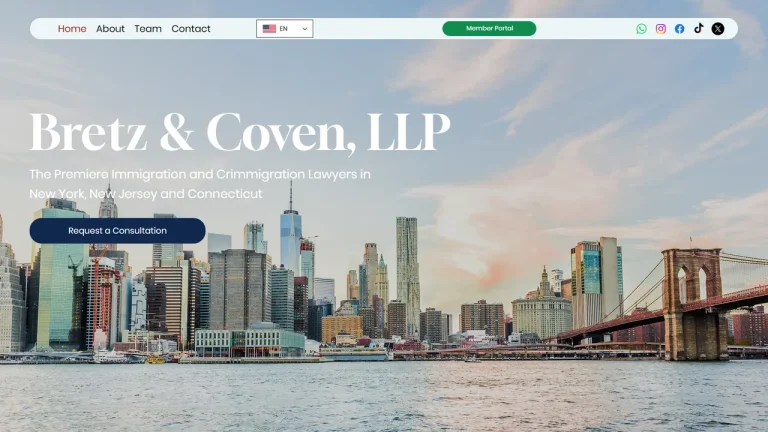
Bretz & Coven, LLP - NYC, New York
Bazargan Law, LLC - NYC, New York
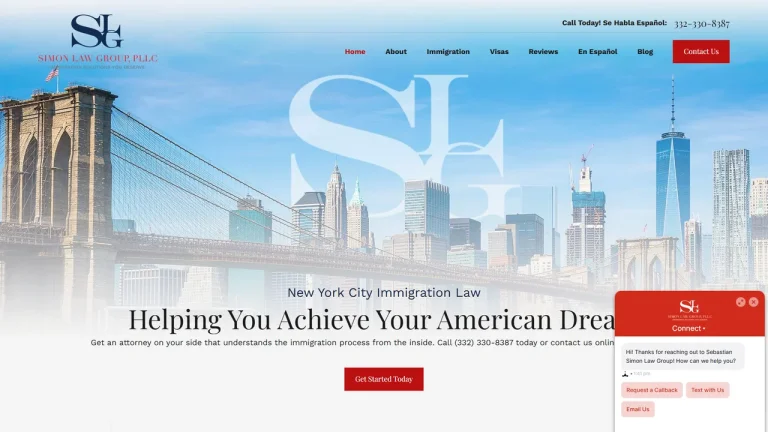
Sebastian Simon Law Group, PLLC - NYC, New York

Law Office of Courtney Davy, P.C. - NYC, New York
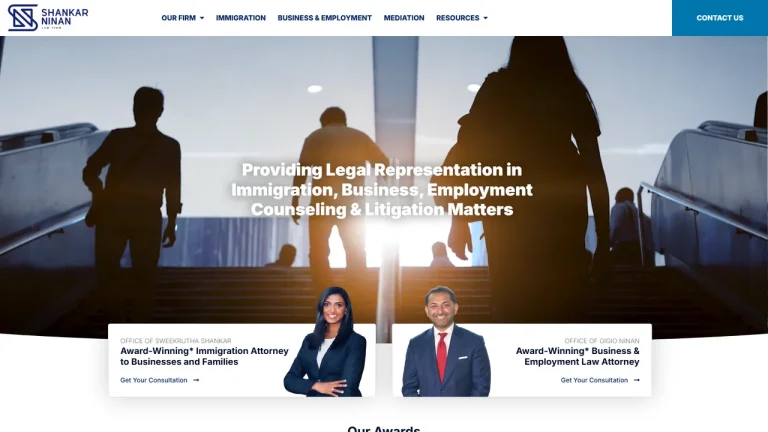
Shankar Ninan Law, P.C. - NYC, New York
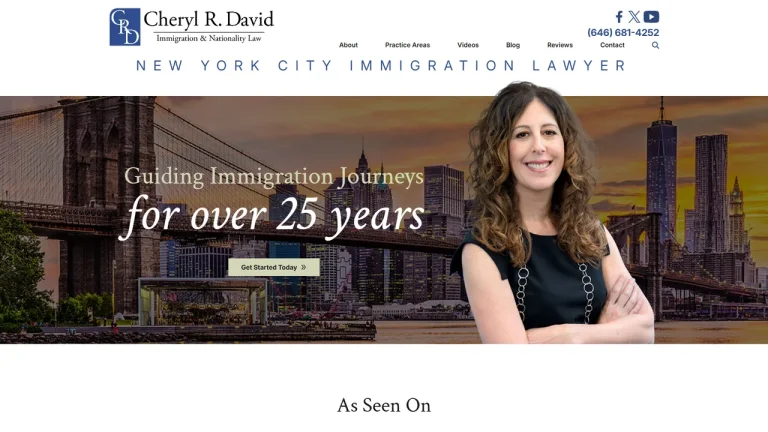
The Law Offices of Cheryl R. David - NYC, New York
RANA LAW FIRM PC - NYC, New York
John Nicelli & Associates - NYC, New York

Alexander J. Segal ESQ - NYC, New York
Law Office of Monika Ellacott - NYC, New York
The Law Offices of Prashanthi Reddy, PLLC - NYC, New York
Law Office of Jeongyun Jo - NYC, New York
Law Offices of Spar & Bernstein, P.C. - NYC, New York
Naturalization Jurisdiction & USCIS Field Offices in New York City
Applying for United States citizenship in New York City is an empowering legal milestone that requires meticulous compliance with federal naturalization laws. Lawful permanent residents throughout Manhattan, Brooklyn, Queens, the Bronx, and Staten Island must satisfy strict residency, physical presence, and good moral character standards before taking the oath of allegiance.
Naturalization applications (Form N-400) and citizenship certificate petitions (Form N-600) are adjudicated by U.S. Citizenship and Immigration Services (USCIS) across multiple regional facilities. In New York City, in-person citizenship interviews and civics examinations take place at the New York Field Office inside 26 Federal Plaza in lower Manhattan, the Brooklyn Field Office at 885 Flatbush Avenue, and the Queens Field Office at 27-35 Jackson Avenue in Long Island City.
Upon successful adjudication, formal administrative or judicial naturalization ceremonies are conducted across the city, including federal ceremonies administered by the U.S. District Court for the Southern District of New York (SDNY) and the Eastern District of New York (EDNY). Securing an attorney with local New York experience ensures that complicated travel absences, historic municipal citations, or prior immigration irregularities are addressed effectively before you sit across from a USCIS officer.
Legal Fee Structures for Citizenship & Naturalization Services
| Case Scenario | Fee Structure | Estimated Cost (USD) | Key Cost Determinants |
|---|---|---|---|
| Standard Naturalization Filing (Form N-400) | Flat Legal Fee | $1,200 to $2,500 | Straightforward continuous residence, clean tax compliance, USCIS interview preparation |
| N-400 with Past New York Criminal Dispositions | Flat / Staged Retainer | $2,500 to $5,000 | Securing certified court certificates of disposition, Good Moral Character legal brief drafting |
| Extended International Absence Rebuttal | Flat Legal Fee | $2,000 to $4,500 | Preserving continuity of residence, domestic lease/employment documentation, tax record analysis |
| Acquisition / Derivation of Citizenship (N-600) | Flat Legal Fee | $1,500 to $3,500 | Complex historical statutory interpretation, parental physical presence proofs, foreign vital records |
Critical Legal Deadlines & Statutes in New York
Naturalization is governed by explicit statutory timeframes established under the Immigration and Nationality Act. Under 8 U.S. Code § 1427(a), an applicant must have resided continuously in the United States as a lawful permanent resident for at least five years immediately preceding the filing of the application (or three years if married to and living with a U.S. citizen spouse pursuant to 8 U.S. Code § 1430(a)).
The physical presence rule requires an applicant to have been physically present in the United States for at least 30 months out of the five years (or 18 months out of three years) prior to filing. Regarding continuous residence, under 8 C.F.R. § 316.5(c)(1)(i), an absence from the United States of more than six months but less than one year creates a legal presumption that continuous residence has been broken, which must be overcome with robust evidence of ongoing domestic ties.
Applicants must also demonstrate Good Moral Character throughout the statutory period pursuant to 8 U.S. Code § 1101(f). If USCIS denies Form N-400, a request for an administrative hearing must be filed using Form N-336 within strictly 30 calendar days under 8 C.F.R. § 336.2. If USCIS fails to render a final adjudication within 120 days of the initial examination, the applicant is statutorily entitled to seek judicial determination in federal district court under 8 U.S. Code § 1447(b).
Filing N-400 Pro Se vs. Engaging Private Legal Counsel
Lawful permanent residents with uncomplicated immigration backgrounds-unbroken physical residence, prompt state and federal tax filings, and zero interactions with law enforcement-frequently choose to submit Form N-400 independently through the USCIS online portal.
However, applying for citizenship opens your entire immigration history to government re-examination. If you have past arrests in New York City (even dismissed violations, ACDs, or matters sealed under New York Criminal Procedure Law), extended trips abroad, or delinquent child support, filing pro se carries extreme risks. USCIS adjudicators can not only deny your citizenship petition but can also revoke permanent residency and initiate removal proceedings at 26 Federal Plaza. A qualified attorney analyzes arrest dispositions, prepares Good Moral Character memorandums, and accompanies you to the interview to protect your status.
Red Flags When Selecting NYC Naturalization Counsel
- Non-lawyer document preparers, travel agencies, or storefront "notarios" who charge fees to complete citizenship paperwork without legal accreditation.
- Attorneys who advise you to withhold past summonses, arrests, or sealed court records from USCIS, which can trigger permanent bars for misrepresentation.
- Law firms guaranteeing naturalization approval or promising expedited interview dates without legitimate medical or military exemptions.
- Practitioners not actively licensed with the New York State Unified Court System Office of Court Administration.
Frequently Asked Questions
Can I apply for citizenship if I have an arrest on my record in New York?
Yes, but you must disclose all arrests, citations, and convictions to USCIS, even if they were dismissed or sealed under New York law. You must provide a certified Certificate of Disposition from the court, and an attorney should evaluate whether the incident impacts your Good Moral Character.
What happens if I spent more than six months outside the country?
An absence of six months to one year creates a legal presumption that you disrupted your continuous residence. To succeed, you must present evidence such as New York employment records, ongoing residential leases, and local bank accounts proving you maintained your ties to the United States.
What is the 120-day rule for USCIS citizenship adjudications?
Under federal statute, if USCIS fails to make a decision within 120 days after your initial naturalization examination interview, you have the right to file a petition in federal district court (SDNY or EDNY) requesting a federal judge to decide or remand the application.
Are there exemptions available for the English and civics naturalization test?
Yes, exemptions exist based on age and duration of permanent residence (the 50/20, 55/15, and 65/20 rules). Furthermore, applicants with physical, developmental, or mental impairments can seek a complete medical waiver by submitting Form N-648 completed by a licensed physician.
Does unpaid tax debt prevent me from becoming a U.S. citizen in New York?
Owing back taxes can result in denial based on lack of Good Moral Character. However, if you have entered into a formal installment agreement with the IRS or New York State Department of Taxation and Finance and are making timely payments, you remain eligible for naturalization.