
Contract Lawyers in New York City
Executing enforceable commercial contracts in New York City requires precision legal drafting aligned with New York statutory codes and commercial precedent. Experienced contract lawyers assist businesses and individuals in negotiating favorable terms, mitigating liability, and resolving breach of contract disputes without expensive litigation. Explore our directory below to connect with leading New York City contract attorneys and schedule a comprehensive contract review.

Miller, Leiby & Associates, PC - NYC, New York

Law Office of Biana Borukhovich, PLLC - NYC, New York

Pawlik Law Group, P.C. - NYC, New York

IX Legal - NYC, New York
Zimmet Law Group P.C. - NYC, New York

Weidenbaum & Harari LLC - NYC, New York

Cohn Legal, PLLC - NYC, New York

Provenzano Law Firm PLLC - NYC, New York

Grimble & LoGuidice, LLC - NYC, New York

Romano Law - NYC, New York
Peter M. Agulnick, P.C. - NYC, New York
Lockamy & Associates, PC - NYC, New York
J Goldman Law - NYC, New York

Law Offices of Benjamin B. Neschis, P.C. - NYC, New York

TKA Law Firm PLLC - NYC, New York

Hodgson Russ LLP - NYC, New York
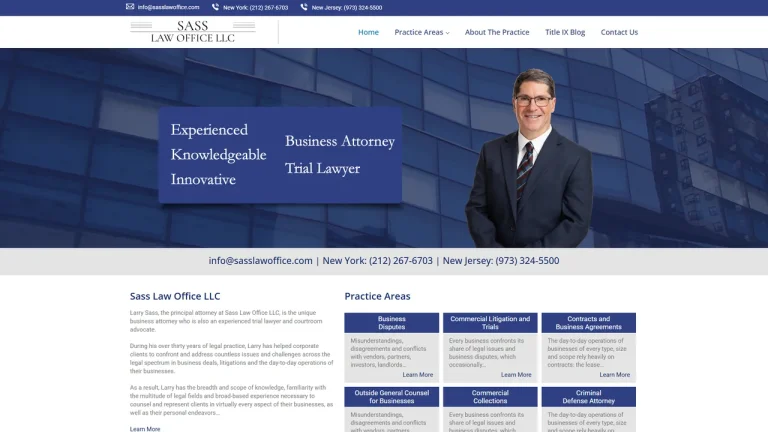
Sass Law Office LLC - NYC, New York

Mattei Law PLLC - NYC, New York
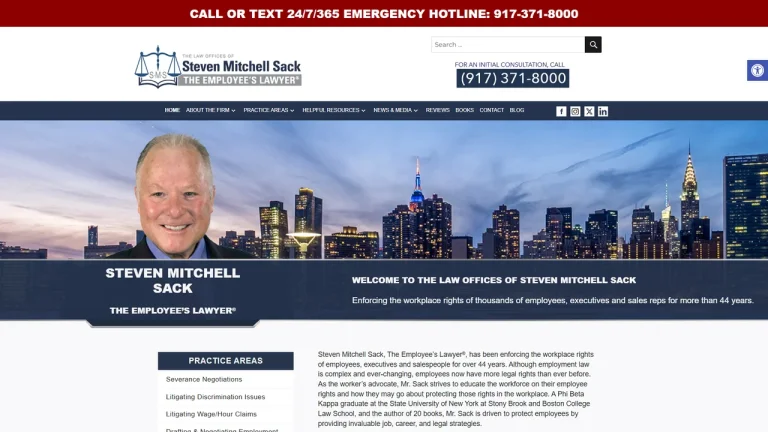
Steven Mitchell Sack, The Employee's Lawyer - NYC, New York

Boyer Law Firm, P.L. - New York - NYC, New York
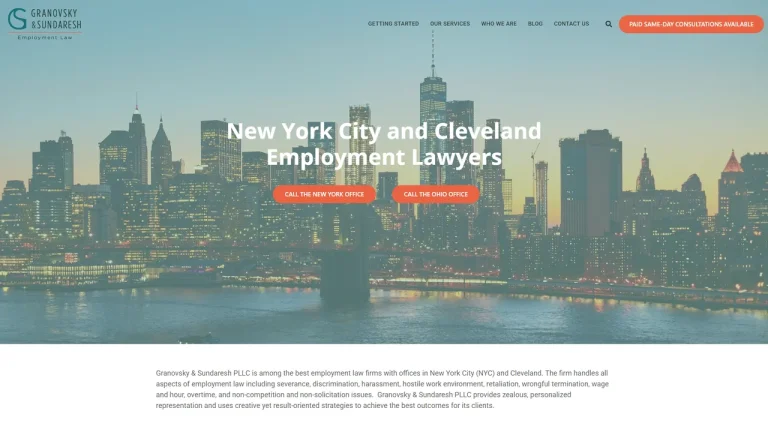
Granovsky & Sundaresh PLLC - NYC, New York
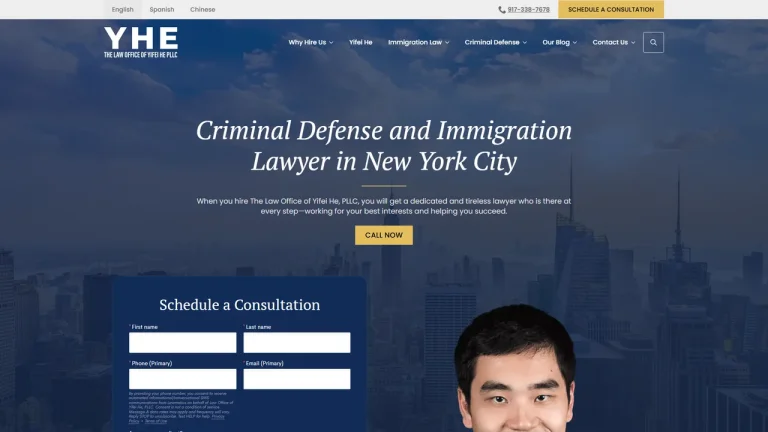
The Law Office of Yifei He PLLC - NYC, New York

Pryor Cashman LLP - NYC, New York

The New York City Commercial Contract Framework
New York serves as a preeminent commercial and financial hub, and New York substantive law is frequently selected as the governing law for commercial agreements worldwide. Within New York City, contract drafting, negotiation, and enforcement are governed by the New York General Obligations Law, the New York Uniform Commercial Code (UCC), and established New York appellate precedent. Commercial agreements range from master services agreements (MSAs) and vendor supply contracts to technology licenses, nondisclosure agreements, and executive employment covenants across Manhattan, Brooklyn, Queens, the Bronx, and Staten Island.
Litigation involving contractual disputes in New York City is categorized by monetary thresholds. Major commercial claims exceeding $500,000 in New York County (Manhattan) or $150,000 in Kings County (Brooklyn) are adjudicated in the Commercial Division of the New York State Supreme Court, situated at 60 Centre Street in Manhattan and 360 Adams Street in Brooklyn. Intermediate contract disputes involving claims up to $50,000 fall within the jurisdiction of the New York City Civil Court.
All commercial litigation dockets and court submissions across the five boroughs are processed electronically through the New York State Courts Electronic Filing (NYSCEF) portal. Retaining experienced New York City contract counsel ensures that agreements incorporate valid choice-of-law clauses, clear dispute resolution mechanisms, and enforceable risk-allocation provisions.
Contract Legal Scenarios, Fee Models, and Cost Estimates
| Case Scenario | Fee Structure | Estimated Cost (USD) | Key Cost Determinants |
|---|---|---|---|
| Commercial Contract Review & Redlining (Vendor/Service) | Flat Fee / Hourly ($400 - $750/hr) | $1,200 - $3,500 | Document page count, indemnification clauses, limitation of liability terms |
| Custom Master Services Agreement (MSA) Drafting | Flat Legal Package | $2,500 - $7,000 | Intellectual property rights transfer, statement of work templates, termination triggers |
| Executive Non-Compete / Employment Agreement Review | Flat Fee / Retainer | $1,500 - $4,500 | Restrictive covenant enforceability under NY law, severance terms, garden leave pay |
| Commercial Breach of Contract Litigation (Supreme Court) | Retainer + Hourly ($500 - $950/hr) | $20,000 - $75,000+ | Preliminary injunction motions, discovery volume, Commercial Division trial practice |
Critical Legal Deadlines & Statutes in New York
Contract drafting and enforcement in New York City are subject to strict statutory limitation periods. Under N.Y. C.P.L.R. § 213(2), an action for breach of contract must be commenced within six years from the date of the breach, regardless of when the non-breaching party discovered the violation. For contracts involving the sale of goods, the statute of limitations is limited to four years from the date of tender of delivery under N.Y. U.C.C. Law § 2-725.
Under the New York Statute of Frauds (N.Y. Gen. Oblig. Law § 5-701), agreements that cannot be performed within one year, promises to answer for the debt of another, and agreements involving real property transfers must be in writing and signed by the party to be charged. Furthermore, under N.Y. Gen. Oblig. Law § 5-1401, contracting parties may designate New York law to govern their transaction if the contract involves at least $250,000, regardless of whether the transaction bears a relationship to New York. For contracts involving at least $1,000,000, parties can stipulate to exclusive New York court jurisdiction under N.Y. Gen. Oblig. Law § 5-1402.
Small Claims Limits vs. Retaining Experienced Contract Counsel
In New York City, Small Claims Court is an informal division of the NYC Civil Court with a statutory recovery limit capped at $10,000 pursuant to N.Y. City Civ. Ct. Act § 1801. While individual sole proprietors or freelancers can pursue minor unpaid invoices or simple breach claims pro se in small claims, legal representation is mandatory for incorporated entities. Under N.Y. C.P.L.R. § 321(a), corporations and LLCs cannot represent themselves in New York courts and must appear through a licensed attorney.
For substantial commercial transactions, retaining an experienced contract attorney is vital. Unrepresented parties frequently sign contracts containing unconscionable indemnification clauses, ambiguous force majeure terms, or unenforceable liquidated damages provisions. Experienced commercial counsel structures agreements that limit liability exposure, protect proprietary business data, and ensure robust remedies are preserved in the event of default.
Red Flags When Hiring an NYC Contract Lawyer
When selecting legal counsel to draft, review, or litigate commercial contracts in New York City, clients should watch for several warning signs:
- Lawyers who utilize generic boilerplate templates without tailoring governing law, venue, and indemnification provisions to New York statutory standards.
- Attorneys who fail to execute a formal written engagement letter specifying hourly rates, retainer requirements, and billing practices as required by New York court rules.
- Firms unfamiliar with New York judicial standards governing the enforceability of restrictive covenants and employee non-compete agreements.
- Lack of active, verifiable licensing with the New York State Unified Court System Office of Court Administration.
Frequently Asked Questions
What is the statute of limitations for breach of contract in New York?
Under N.Y. C.P.L.R. § 213(2), the statute of limitations for breach of contract actions in New York is six years from the date of the breach. For contracts involving the sale of goods governed by the Uniform Commercial Code, the limitation period is four years pursuant to N.Y. U.C.C. Law § 2-725.
Are non-compete agreements enforceable under New York law?
Under New York common law, non-compete covenants are strictly scrutinized and enforced only if they are reasonable in time and geographic scope, necessary to protect a legitimate business interest (such as trade secrets or unique customer relationships), and not unreasonably burdensome to the employee.
What are the requirements for a New York choice-of-law clause?
Under N.Y. Gen. Oblig. Law § 5-1401, parties to a contract relating to any transaction of at least $250,000 may agree that New York law governs their rights and duties, even if the parties or transaction have no physical connection to the state of New York.
What is the difference between liquidated damages and an unenforceable penalty in NY?
In New York, liquidated damages provisions are enforceable only if actual damages from a breach are difficult to ascertain at the time of contract execution and the stipulated amount represents a reasonable pre-estimate of probable loss. If the amount is plainly disproportionate, New York courts will invalidate it as a penalty.
Can a corporation or LLC file a breach of contract lawsuit without an attorney in NYC?
No. Under N.Y. C.P.L.R. § 321(a), a corporation or limited liability company must be represented by a licensed New York attorney in all state court actions, including New York City Civil Court and Small Claims proceedings.