
Divorce Lawyers in New York City
Retaining an experienced New York City divorce lawyer protects your assets, parental rights, and financial future under New York Domestic Relations Law. Skilled matrimonial attorneys resolve high-net-worth property division, spousal maintenance, and child custody disputes through negotiation and mediation whenever possible. Explore our verified directory below to schedule a confidential consultation with a trusted New York City attorney.

Segal & Greenberg LLP - NYC, New York

Boris Kogan & Associates, P.C. - NYC, New York

Barre Law - NYC, New York

Pardalis and Nohavicka Lawyers - NYC, New York

Aronov Law NY, P.C. - NYC, New York

Chaim Steinberger, P.C. - NYC, New York

The Yerman Group - NYC, New York
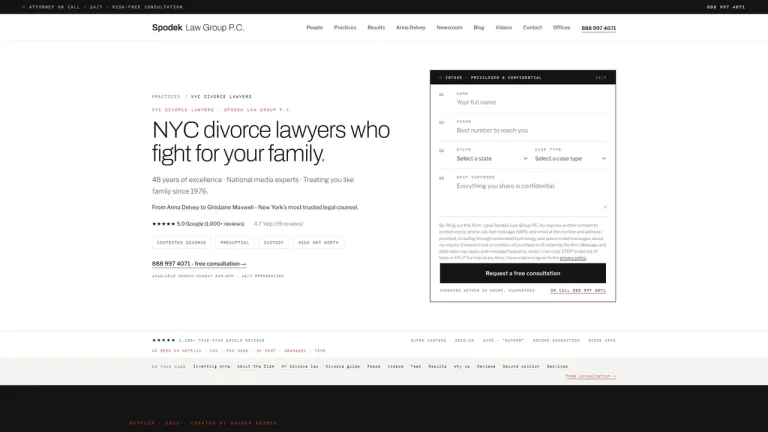
Spodek Law Group, NYC Divorce Division - NYC, New York

Law Office of Douglas M. Colbert - NYC, New York

Glenn H Shore PC - NYC, New York

The Law & Mediation Offices of Jacqueline Torchin, PLLC - NYC, New York
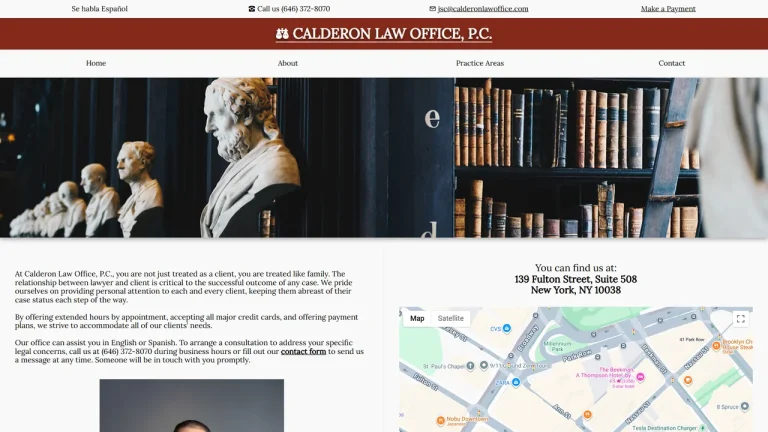
Calderon Law Office, P.C. - NYC, New York

The Law Office of Joseph Yau, PLLC - NYC, New York

McLaughlin & Stern LLP - NYC, New York

Spar & Bernstein Personal Injury Lawyers - NYC, New York
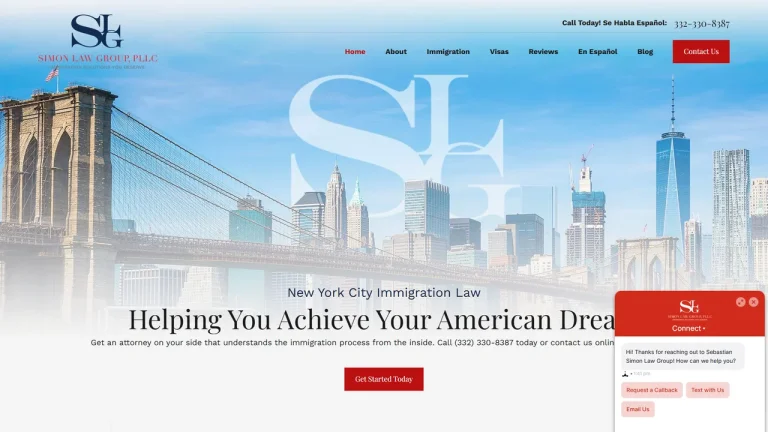
Sebastian Simon Law Group, PLLC - NYC, New York
The Law Office Of Joseph R. Daniels - NYC, New York
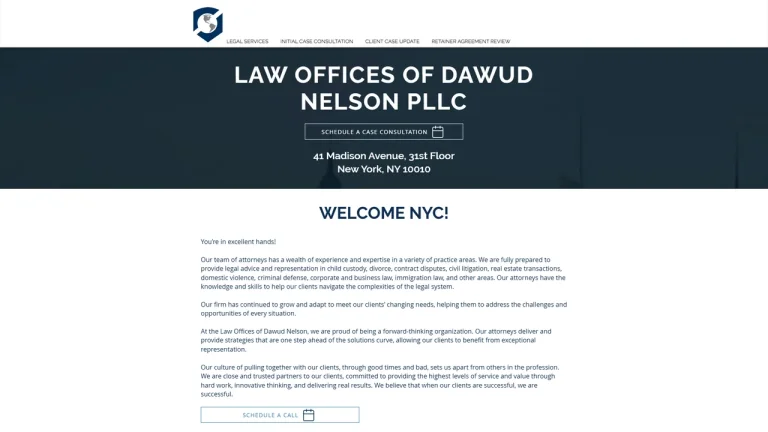
Law Offices of Dawud Nelson PLLC - NYC, New York

Labrada Dume & Associates - NYC, New York

Daniel A Singer Law Office - NYC, New York

Cohen Forman Barone, PC - NYC, New York

Roman & Associates, PLLC Attorneys at Law - NYC, New York
Curis Law, PLLC - NYC, New York
Matrimonial Jurisdiction and Court Structure Across New York City
Dissolving a marriage in New York City requires navigating the Matrimonial Parts of the New York State Supreme Court, which possesses exclusive subject-matter jurisdiction over divorce proceedings. Each of the city's five boroughs maintains its own Supreme Court matrimonial branch: the New York County Supreme Court at 60 Centre Street in Manhattan, Kings County Supreme Court at 360 Adams Street in Brooklyn, Queens County Supreme Court in Jamaica, Bronx County Supreme Court at 851 Grand Concourse, and Richmond County Supreme Court on Staten Island.
While Family Courts in each borough handle standalone child support or custody disputes between unmarried parents, a decree of absolute divorce, the equitable distribution of marital assets, and post-divorce maintenance must be adjudicated in Supreme Court. Matrimonial actions across New York City frequently involve intricate financial issues, including cooperative and condominium apartments, business valuations, private equity interests, deferred executive compensation, and separate property tracing.
Seasoned matrimonial attorneys understand the local practices of each borough's matrimonial justices, managing Preliminary Conferences, Compliance Conferences, and Net Worth Statement exchanges with precision to position cases for favorable settlements or trial verdicts.
Typical Fee Structures and Retainers for New York City Divorce Matters
| Case Scenario | Fee Structure | Estimated Cost (USD) | Key Cost Determinants |
|---|---|---|---|
| Uncontested Divorce (Agreed Terms / No Minor Children) | Flat Fee | $1,500 - $3,500 | Settlement agreement drafting, Request for Judicial Intervention (RJI) filing, court decree timing. |
| Contested Property Distribution & Real Estate Asset Split | Hourly Retainer | $7,500 - $25,000+ | NYC co-op/condo appraisals, business valuation experts, separate property forensic tracing. |
| Contested Child Custody & Parental Access Dispute | Hourly Retainer | $10,000 - $35,000+ | Attorney for the Child (AFC) involvement, forensic psychiatric evaluations, court hearing days. |
| Post-Judgment Maintenance Enforcement or Modification | Hourly Retainer | $3,500 - $10,000 | Substantial change in circumstances proof, willful non-payment motions, arrears calculation. |
Critical Legal Deadlines & Statutes in New York
Divorce litigation in New York is governed by the New York Domestic Relations Law. No-fault divorce is codified under N.Y. Dom. Rel. Law § 170, which requires sworn testimony that the marriage has broken down irretrievably for a period of at least six months, provided all ancillary financial and custody issues are resolved.
To establish subject-matter jurisdiction in a New York court, spouses must satisfy the strict residency requirements set forth in N.Y. Dom. Rel. Law § 230. Parties must prove that the marriage took place in New York, that they lived in the state as a married couple, or that either party has resided in the state continuously for one or two years prior to filing, depending on the statutory ground asserted.
Marital assets and debts are divided under New York's equitable distribution framework pursuant to N.Y. Dom. Rel. Law § 236. Equitable does not mean equal; judges evaluate statutory factors including marital duration, spousal earnings, direct and indirect economic contributions, and waste of marital assets. Child custody and guideline child support are governed by N.Y. Dom. Rel. Law § 240 and the Child Support Standards Act.
Upon the filing and service of a divorce summons, automatic statutory restraining orders take effect immediately under Domestic Relations Law section 236 Part B(2)(b), prohibiting both spouses from transferring, hiding, or liquidating marital bank accounts, real estate, or altering insurance coverage without court permission.
Self-Representation vs. Matrimonial Counsel in New York Supreme Court
Couples with short-term marriages, no shared children, and no substantial property can resolve their dissolution pro se using the New York State Unified Court System Uncontested Divorce packet. When both parties agree completely on all terms, self-representation minimizes filing costs.
However, when a case involves real property-such as a New York City cooperative apartment subject to co-op board rules, a condominium, retirement pensions, stock grants, or contested child custody-self-representation exposes parties to severe financial losses. Errors in drafting Qualified Domestic Relations Orders (QDROs) or poorly structured marital agreements can lead to permanent loss of pension rights or taxable equity. Retaining a dedicated matrimonial lawyer guarantees proper asset valuation and enforcement of equitable rights.
Red Flags When Hiring a New York City Divorce Lawyer
- Attorneys who prioritize aggressive litigation over mediation or collaborative resolution solely to inflate billable hours.
- Failure to provide the mandatory Statement of Client's Rights and Responsibilities as required by New York Court Rules (22 NYCRR Part 1400).
- Inexperience with New York City property dynamics, including co-op proprietary leases, capital improvement abatements, and business asset valuation.
- Ambiguous retainer agreements that fail to provide itemized billing statements at least once every 60 days as mandated by state rules.
Frequently Asked Questions
What are the residency requirements to file for divorce in New York City?
Under Domestic Relations Law section 230, you must meet one of several residency criteria, such as both spouses residing in New York at the time of filing, the marriage occurring in New York with one year of continuous residency, or continuous residency in New York for at least two years prior to filing.
How is property divided in a New York City divorce?
New York is an equitable distribution state, meaning marital assets and debts are divided fairly but not necessarily in equal 50/50 shares. Courts consider each spouse's contributions, earning capacity, and marital duration under Domestic Relations Law section 236.
What is the difference between New York Supreme Court and Family Court?
Only the New York State Supreme Court has jurisdiction to grant a judgment of divorce and divide marital property. Family Court handles matters such as child support, custody, paternity, and orders of protection, but cannot legally grant a divorce.
What are automatic orders in a New York divorce?
Automatic orders are statutory injunctions that become effective upon the service of a divorce summons. They legally bar both parties from transferring assets, closing bank accounts, accumulating extraordinary debt, or modifying insurance policies while the case is pending.
How is spousal maintenance (alimony) determined in New York?
Temporary and post-divorce maintenance are calculated using statutory formulas under Domestic Relations Law section 236 based on the parties' respective incomes, marital length, and existing child support obligations, subject to a statutory income cap.