
Drug Crime Defense Lawyers in New York City
Securing an experienced New York City drug crime defense lawyer safeguards your constitutional rights and future against aggressive narcotics prosecutions. Skilled defense counsel can often suppress illegally seized evidence, negotiate diversion alternatives, and resolve charges out of court to avoid incarceration. Explore our verified directory below to schedule an immediate consultation with top-rated defense attorneys across the five boroughs.
The Tsiring Law Firm, P.C. - NYC, New York
The Law Offices of Jarrett Adams - NYC, New York
Rubinstein & Corozzo LLP - NYC, New York
The Law Offices of Steven E. Lynch - NYC, New York

The Law Office of Daniel L. Bibb, P.C. - NYC, New York

Fasulo, Giordano & Di Maggio, LLP - NYC, New York
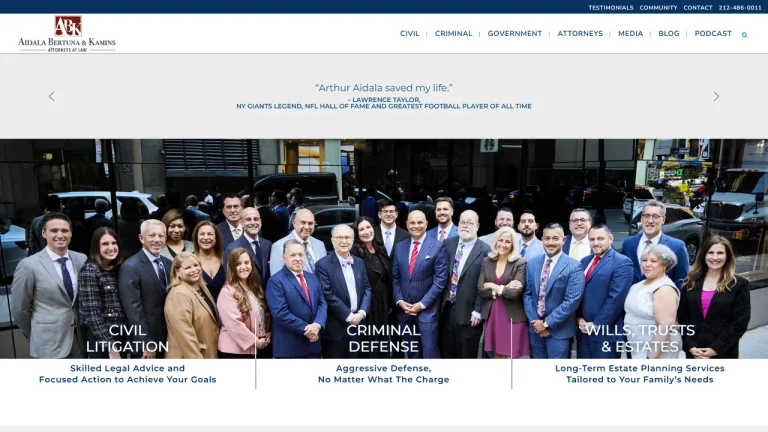
AIDALA, BERTUNA & KAMINS, PC - NYC, New York
Provenzano Law Firm PLLC - NYC, New York
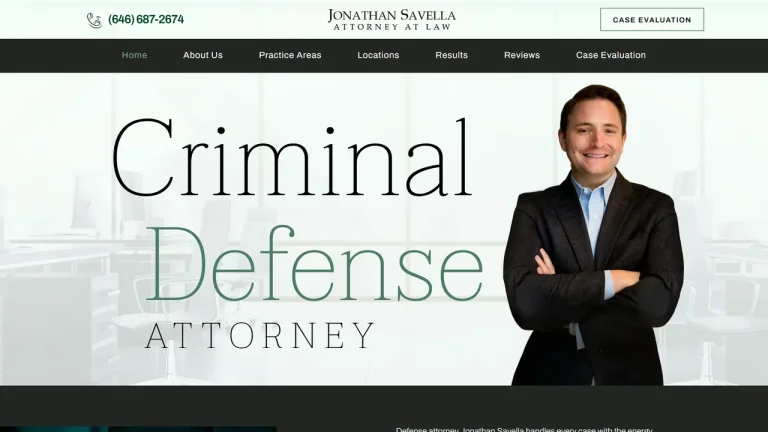
Law Office of Jonathan Savella - NYC, New York
Jonna Spilbor Law - NYC, New York

Law Offices of Joel S. Cohen - NYC, New York
Law Offices of Christopher Madiou - NYC, New York

Richard Southard Law - NYC, New York
Ross & Asmar, PLLC - NYC, New York
Calderon Law Office, P.C. - NYC, New York

Simone Bertollini, Esquire - NYC, New York
Jacobs & Hazan, PLLC - NYC, New York
Spodek Law Group - NYC, New York
Law Offices of Jason A. Steinberger, LLC - NYC, New York

Law Office of Aaron M. Goldsmith, PC - NYC, New York
San Pedro & Jankowitz Law - NYC, New York
Law Office of Manuel D. Gomez P.C - NYC, New York
The Portela Law Firm, P.C. - NYC, New York
Cody Warner P.C. - NYC, New York
Court Jurisdictions and Narcotics Prosecution in New York City
Drug crime prosecutions in New York City involve aggressive enforcement coordinated among municipal, county, and specialized state prosecutors. Depending on the borough and the scale of the arrest, cases are prosecuted either by the local county District Attorney or the specialized Office of the Special Narcotics Prosecutor for the City of New York (SNP), which is headquartered at 80 Centre Street in Lower Manhattan and holds citywide jurisdiction over major felony narcotics operations.
Misdemeanor drug offenses, such as misdemeanor possession initiated through Desk Appearance Tickets (DATs) or summary arrests, are processed in the New York City Criminal Court within each borough. Notable arraignment venues include 100 Centre Street in Manhattan, 120 Schermerhorn Street in Brooklyn, 125-01 Queens Boulevard in Kew Gardens, 215 East 161st Street in the Bronx, and 26 Central Avenue on Staten Island. When a grand jury hands down a felony indictment, proceedings transfer to the Supreme Court of the State of New York, Criminal Term.
New York City defense lawyers routinely interface with specialized judicial bodies, including Judicial Diversion Parts (Article 216) and municipal Drug Treatment Courts. These alternative sentencing parts allow eligible non-violent individuals to undergo court-supervised clinical rehabilitation in lieu of serving mandatory state prison sentences.
Legal Fee Structures for NYC Drug Crime Defense
| Case Scenario | Fee Structure | Estimated Cost (USD) | Key Cost Determinants |
|---|---|---|---|
| Misdemeanor Possession (CPCS 7th Degree) | Flat Fee | $2,500 - $6,000 | Desk Appearance Ticket status, prior criminal record, eligibility for Adjournment in Contemplation of Dismissal (ACD) |
| Felony Possession with Intent to Sell (CPCS 3rd) | Flat Fee or Retainer | $7,500 - $25,000 | Weight and packaging of substances, buy-and-bust operation vs. search warrant, bail arguments at arraignment |
| Major Trafficker / Wiretap Conspiracy | Hourly Retainer ($450 - $900/hr) | $25,000 - $100,000+ | Special Narcotics Prosecutor involvement, Title III eavesdropping recordings, multi-defendant severance motions |
| Suppression Hearings & Judicial Diversion | Flat Retainer + Hearing Fee | $5,000 - $18,000 | Legality of vehicular stop or pedestrian search, Mapp/Dunaway motion practice, clinical treatment evaluations |
Critical Legal Deadlines & Statutes in New York
Substantive drug offenses are codified in Article 220 of the New York Penal Law. Simple possession of controlled substances is prosecuted under N.Y. Penal Law § 220.03 (Criminal Possession of a Controlled Substance in the Seventh Degree, a Class A misdemeanor), while possession with intent to sell is charged as a Class B felony under N.Y. Penal Law § 220.16. Sale of controlled substances is governed under N.Y. Penal Law § 220.39.
Under New York procedural law, defendants held in custody on a felony complaint are protected by N.Y. C.P.L. § 180.80, which mandates release on their own recognizance unless the prosecution secures a grand jury indictment or commences a preliminary hearing within 120 hours of arrest (or 144 hours if a weekend or public holiday intervenes). Defendants also maintain an absolute statutory right to testify before the grand jury under N.Y. C.P.L. § 190.50, provided timely written notice is served before the indictment is voted.
New York speedy trial statute, codified under N.Y. C.P.L. § 30.30, imposes rigid prosecution readiness deadlines: ninety days for Class A misdemeanors and six months (182 days) for felony indictments. Eligible defendants charged with non-violent felony narcotics offenses can petition for court-mandated treatment under N.Y. C.P.L. § 216.05, leading to dismissed or reduced charges upon successful completion.
Arraignment Risks vs. Professional Criminal Defense Representation
Navigating a New York City drug arrest without specialized legal representation carries catastrophic personal and professional risks. While petty civil matters can be handled pro se, criminal courts afford zero margin for error. Arraignment is the critical initial phase where bail or release conditions are established under N.Y. C.P.L. § 510.10, and statements made directly by defendants can permanently compromise trial defenses.
While court-assigned public defenders provide vital services, their heavy caseloads across busy borough dockets often limit the time available for proactive pre-indictment investigation. Private criminal defense counsel can immediately intervene at 100 Centre Street or 120 Schermerhorn Street, preserve surveillance camera footage from nearby NYPD Argus poles or private storefronts, file formal Mapp and Dunaway suppression motions to challenge unconstitutional searches, and present mitigating dossiers to the District Attorney before grand jury presentations occur.
Red Flags When Selecting a New York Drug Defense Lawyer
- Lawyers guaranteeing dismissals or promising entrance into Judicial Diversion before reviewing the search warrant application or lab analysis.
- Attorneys who advise accepting an immediate guilty plea on the initial court appearance without examining the arresting officers search and seizure protocols.
- Firms demanding non-refundable cash retainers without executing an itemized retainer agreement detailing whether pretrial suppression hearings and trial days are covered.
- Attorneys who lack trial experience in the Supreme Court, Criminal Term, or who rarely appear before the Office of the Special Narcotics Prosecutor.
Frequently Asked Questions
What is the Office of the Special Narcotics Prosecutor in NYC?
The Office of the Special Narcotics Prosecutor (SNP) is a unique citywide prosecuting agency dedicated to investigating and prosecuting major narcotics distribution, illicit drug enterprises, and related felony offenses across all five boroughs of New York City.
Can a felony drug charge in New York City be dismissed through treatment?
Yes. Under Article 216 of the New York Criminal Procedure Law, eligible non-violent felony offenders whose substance abuse contributed to their offense may participate in a Judicial Diversion Program. Successful completion of court-mandated clinical treatment frequently results in dismissals or misdemeanor reductions.
What is a Mapp hearing in a New York drug prosecution?
A Mapp hearing is a specialized pretrial evidentiary hearing where the defense challenges the constitutionality of a police search and seizure. If the judge determines that NYPD officers lacked probable cause or violated Fourth Amendment protections, the recovered narcotics are suppressed and cannot be used at trial.
What happens at a Desk Appearance Ticket (DAT) arraignment for a drug charge?
At a DAT arraignment, the defendant is formally informed of the charges, an attorney enters a notice of appearance, and the court determines whether to grant an Adjournment in Contemplation of Dismissal (ACD), refer the matter to diversion, or schedule future pretrial motion dates.
What is the 180.80 deadline in New York criminal courts?
Under CPL 180.80, if a defendant is jailed on a felony complaint, the prosecution must obtain a grand jury indictment or commence a preliminary hearing within 120 hours of arrest (or 144 hours if a weekend occurs), otherwise the defendant must be released from jail on recognizance.