
Financial & IP Lawyers in New York City
Protecting commercial assets and intellectual property in New York City demands experienced counsel skilled in financial regulation and IP litigation. Top-tier New York attorneys safeguard patents, trademarks, financial transactions, and trade secrets through strategic negotiation and pre-trial enforcement. Explore our verified directory below to consult with leading financial and IP practitioners across New York City.

Alvin Brown & Associates - NYC, New York
Tsyngauz & Associates, P.C. - NYC, New York
Law Offices of Ronald C. Burke, Esq. - NYC, New York
Law Office of Michael Fineman, Esq - NYC, New York

LEAF LEGAL, PC - NYC, New York

Hodgson Russ LLP - NYC, New York
Paul, Weiss, Rifkind, Wharton & Garrison LLP - NYC, New York

Moritt Hock & Hamroff LLP - NYC, New York

DeHeng Chen LLC - NYC, New York
Frost Law - NYC, New York

TKA Law Firm PLLC - NYC, New York
BOAG LAW, PLLC - NYC, New York

J. David Tax Law - NYC, New York
Cohn Legal, PLLC - NYC, New York
The Law Offices of Jason Goldman PLLC - NYC, New York

Fisher Stone, P.C. - NYC, New York
The Law Office of Jeffrey L. Weinstein - NYC, New York
Pryor Cashman LLP - NYC, New York

Altman Schochet LLP - NYC, New York
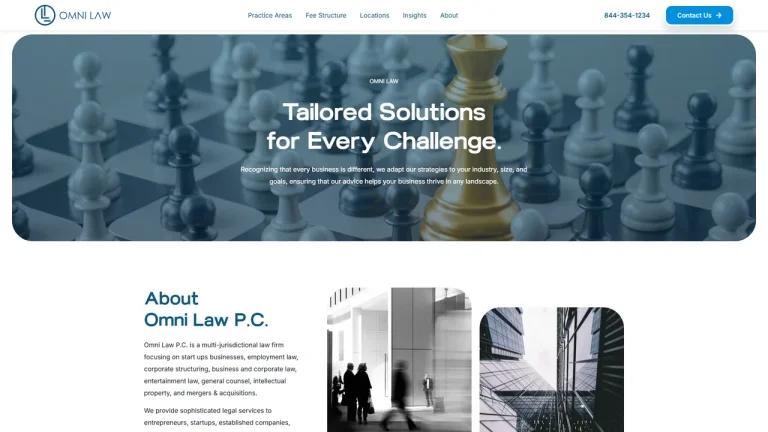
Omni Law P.C. - NYC, New York
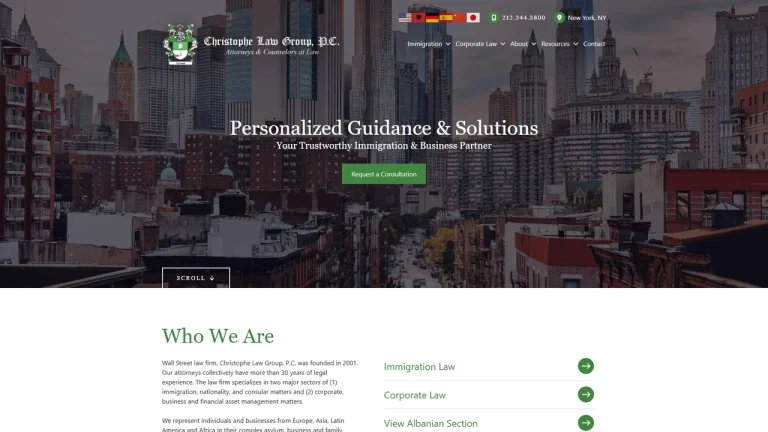
Christophe Law Group, P.C. - NYC, New York

Miller, Leiby & Associates, PC - NYC, New York
Richard Bryan Attorney PC - NYC, New York
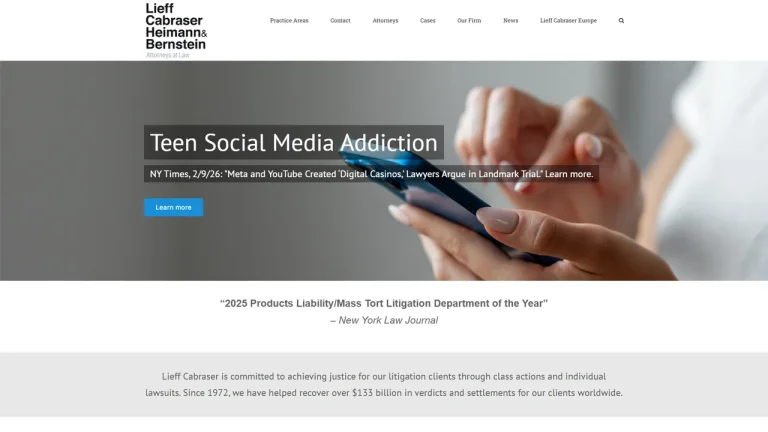
Lieff Cabraser Heimann & Bernstein, LLP - NYC, New York
The Global Center for Financial Regulation and Intellectual Property
New York City stands as the world financial capital and a preeminent hub for intellectual property, media, technology, and commercial innovation. From Wall Street investment firms and fintech accelerators in the Flatiron District to media powerhouses in Midtown and biotechnology labs in Manhattan and Brooklyn, commercial entities require sophisticated legal counsel to protect intangible assets and navigate stringent regulatory mandates.
High-stakes financial and commercial disputes are adjudicated in elite judicial forums. At the state level, substantial business controversies proceed within the Commercial Division of the New York State Supreme Court, situated at 60 Centre Street in New York County and 360 Adams Street in Kings County. The Commercial Division is staffed by specialized judges managing complex banking transactions, corporate governance, and contract disputes. Federal intellectual property actions-including trademark infringement under the Lanham Act, patent disputes, and copyright litigation-are heard in the U.S. District Court for the Southern District of New York (SDNY) at Foley Square or the Eastern District of New York (EDNY) in Brooklyn.
Financial compliance and regulatory enforcement involve powerful state and federal agencies operating in New York City. These include the New York State Department of Financial Services (DFS), which oversees banking and cryptocurrency licensing; the Securities and Exchange Commission (SEC) New York Regional Office; and the Financial Industry Regulatory Authority (FINRA). Experienced legal representation is vital for regulatory examinations, arbitrations, and high-stakes IP enforcement.
New York City Financial and IP Legal Engagements and Costs
| Case Scenario | Fee Structure | Estimated Cost (USD) | Key Cost Determinants |
|---|---|---|---|
| Trademark Clearance & USPTO Filing | Flat Fee per Class | $1,500 - $3,500 | Scope of multi-class search, USPTO office action responses, specimen preparation |
| Fintech Compliance & NY DFS BitLicense | Hourly Retainer ($600 - $1,150/hr) | $10,000 - $40,000+ | Anti-money laundering compliance, capital adequacy review, regulatory negotiations |
| Federal Trademark or Copyright Litigation | Hourly Retainer ($650 - $1,250/hr) | $25,000 - $120,000+ | Emergency preliminary injunctions, expert damages testimony, electronic discovery scope |
| IP Licensing & Commercial Tech Agreements | Flat Fee or Hourly | $3,500 - $12,500 | Royalty schedules, cross-border licensing terms, trade secret protections |
Critical Legal Deadlines & Statutes in New York
Financial and intellectual property disputes in New York are governed by rigorous state and federal statutory limitations. Under the federal Copyright Act, codified at 17 U.S. Code § 507, civil actions for copyright infringement must be initiated within three years after the claim accrued. For federal trademark claims under the Lanham Act, courts apply the analogous six-year fraud and contract limitations period set forth in N.Y. C.P.L.R. § 213.
Misappropriation of trade secrets under the federal Defend Trade Secrets Act is subject to a three-year statute of limitations running from the date the misappropriation is discovered, as mandated by 18 U.S. Code § 1836. Commercial contract actions and business fraud claims litigated in New York state courts must be commenced within six years under N.Y. C.P.L.R. § 213.
Broker-dealer customer disputes and investment arbitration through FINRA are governed by FINRA Rule 12206, which establishes an absolute six-year eligibility period from the event or occurrence giving rise to the claim. Within the New York State Unified Court System, cases entering the New York County Commercial Division must satisfy the $500,000 monetary threshold established under 22 NYCRR § 202.70.
Small Claims Limitations vs. Commercial Division & Federal Courts
The Small Claims Part of the New York City Civil Court is restricted to monetary disputes not exceeding $10,000. It lacks jurisdiction to issue preliminary injunctions, impound counterfeit goods, grant declaratory judgments, or adjudicate federal IP claims. Furthermore, under N.Y. C.P.L.R. § 321, corporations and limited liability companies in New York cannot appear pro se in state supreme or civil courts and must be represented by a licensed attorney.
Because intellectual property litigation typically demands swift equitable remedies-such as temporary restraining orders (TROs) to halt trademark dilution or seize counterfeit merchandise-proceedings must be filed in federal district court or the New York State Supreme Court. High-stakes financial controversies requiring extensive forensic accounting, specialized discovery, and multi-million-dollar damages belongs squarely in the Commercial Division or federal court, where experienced commercial advocates protect corporate capital and proprietary assets.
Red Flags When Retaining a New York City Financial or IP Lawyer
- Law firms offering cut-rate trademark registration packages that fail to conduct a comprehensive clearance search across state, federal, and common-law registries.
- Attorneys who lack admission to practice in the U.S. District Courts for the Southern or Eastern Districts of New York when handling federal trademark, patent, or copyright actions.
- Practitioners claiming guaranteed approval for specialized state financial charters or New York Department of Financial Services virtual currency licenses.
- Commercial litigation counsel who fail to provide clear, itemized monthly billing summaries detailing associate rates, partner billing, and expert witness expenses.
Frequently Asked Questions
What is the monetary threshold for the New York County Commercial Division?
Under statewide uniform court rules, a commercial case filed in New York County (Manhattan) must involve an amount in controversy of at least $500,000 to qualify for assignment to the specialized Commercial Division.
Where are federal trademark and copyright lawsuits litigated in New York City?
Federal IP lawsuits are litigated in the U.S. District Court for the Southern District of New York (SDNY) at Foley Square or the Eastern District of New York (EDNY) at Cadman Plaza in Brooklyn, depending on defendant residency and where infringement occurred.
What is the New York BitLicense and which businesses need one?
The BitLicense is a regulatory business credential issued by the New York State Department of Financial Services (DFS) under 23 NYCRR Part 200, required for any company conducting virtual currency business activities involving New York or New York residents.
Can a corporation represent itself without an attorney in New York courts?
No. Under New York Civil Practice Law and Rules, corporations, limited liability companies, and partnerships must appear through licensed legal counsel in New York State Supreme Court and federal courts.
What is the time limit to file a FINRA arbitration claim in New York?
Under FINRA Rule 12206, no claim is eligible for arbitration where six years have elapsed from the occurrence or event giving rise to the claim, making prompt legal evaluation critical for financial recovery.