
Prenuptial Agreement Lawyers in New York City
Executing a prenuptial agreement in New York City safeguards your separate assets, business interests, and financial future under New York Domestic Relations Law. Dedicated matrimonial attorneys negotiate enforceable agreements that minimize future litigation and ensure full financial transparency before marriage. Explore our curated directory below to find an experienced New York City prenuptial agreement lawyer.

Berner Law & Mediation Group - NYC, New York

Chaim Steinberger, P.C. - NYC, New York
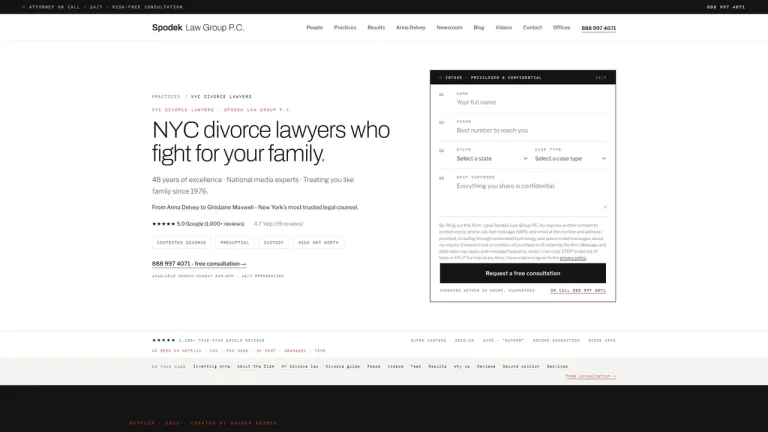
Spodek Law Group, NYC Divorce Division - NYC, New York

Boris Kogan & Associates, P.C. - NYC, New York

Amy Saltzman, P.C. - NYC, New York
Rower LLC - NYC, New York
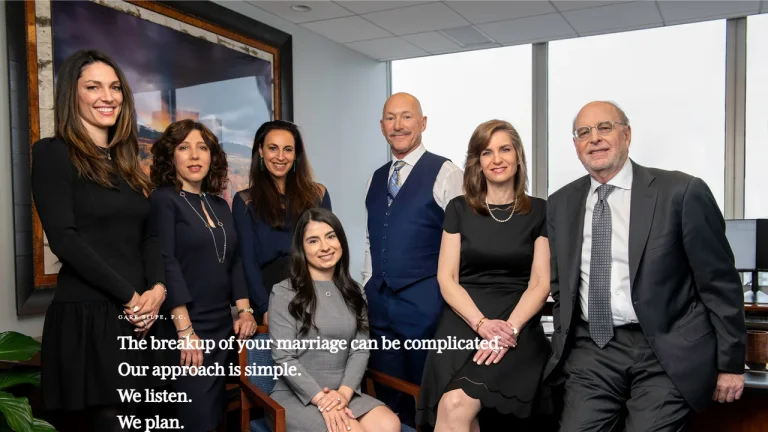
Garr Silpe, P.C. - NYC, New York
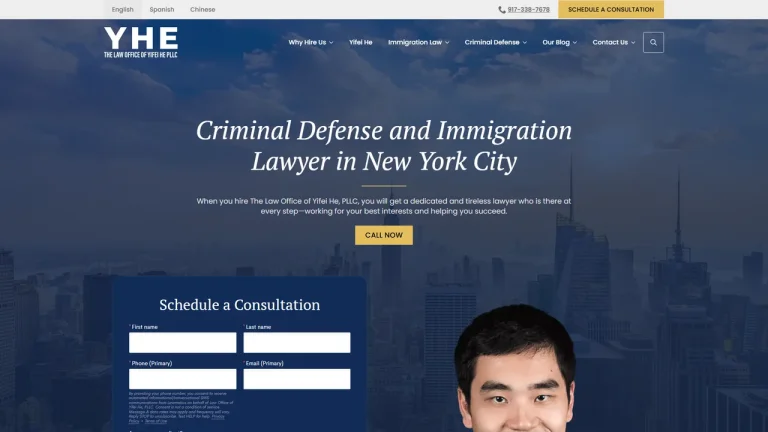
The Law Office of Yifei He PLLC - NYC, New York

Ortiz & Ortiz, LLP - NYC, New York
Barre Law - NYC, New York

The Levoritz Law Firm - NYC, New York

Zimmet Law Group P.C. - NYC, New York

Yazdi Law - NYC, New York

McLaughlin & Stern LLP - NYC, New York
Daniel A Singer Law Office - NYC, New York
Donohoe Talbert LLP - NYC, New York

Jonna Spilbor Law - NYC, New York

Martin E Friedlander PC - NYC, New York
Stephen Bilkis & Associates, PLLC - NYC, New York
Glenn H Shore PC - NYC, New York

Beti Beno Law Group P.C. - NYC, New York
Pryor Cashman LLP - NYC, New York

The Law Office of Joseph Yau, PLLC - NYC, New York

The Legal Framework for Prenuptial Agreements in New York City
Entering into a prenuptial agreement in New York City requires strict adherence to the formal statutory standards established by the New York State Legislature and enforced by the Matrimonial Division of the New York State Supreme Court. Whether handling marital contracts in Manhattan at 60 Centre Street or in the Supreme Courts of Brooklyn, Queens, the Bronx, or Staten Island, legal enforceability hinges on complete compliance with state execution formalities.
New York City represents one of the most commercially complex marital jurisdictions in the country. Couples frequently possess substantial pre-marital assets, including privately held partnership shares, hedge fund carry, intellectual property rights, family trust expectancies, and commercial real estate holdings. Without a valid prenuptial agreement, these interests become subject to statutory equitable distribution rules upon divorce, potentially entangling separate property appreciation into contentious court valuations.
To construct an enforceable prenuptial contract, each prospective spouse must engage independent legal counsel. New York courts closely scrutinize premarital agreements for fundamental procedural fairness, voluntary execution, absence of duress, and comprehensive disclosure of financial net worth. Experienced New York City matrimonial attorneys ensure that the contract withstands judicial challenge and protects individual financial independence.
Legal Fee Structures for Prenuptial Agreements in New York City
| Case Scenario | Fee Structure | Estimated Cost (USD) | Key Cost Determinants |
|---|---|---|---|
| Standard Prenuptial Drafting (Single Real Estate / Pre-Marital Savings) | Flat Fee per Party | $3,000 - $6,500 | Straightforward asset schedules, standard spousal maintenance waivers, cooperative negotiations. |
| High-Net-Worth Prenup (Corporate Equity, Hedge Funds, Trusts) | Hourly Retainer ($450 - $950/hr) | $8,000 - $25,000+ | Valuation of partnership equity, future appreciation clauses, complex trust structuring. |
| International / Multi-Jurisdictional Prenuptial Contract | Hourly Retainer ($500 - $1,000/hr) | $10,000 - $30,000+ | Cross-border asset location, choice of law provisions, coordination with foreign counsel. |
| Independent Counsel Review & Redrafting | Flat Fee or Hourly Retainer | $2,500 - $7,500 | Extent of modifications required, negotiation rounds with drafting attorney. |
Critical Legal Deadlines & Statutes in New York
The substantive validity of prenuptial agreements in New York is governed by N.Y. Dom. Rel. Law § 236(B)(3). The statute mandates that an agreement made before or during the marriage is valid and enforceable only if it is in writing, subscribed by both parties, and acknowledged in the manner required to entitle a deed to be recorded. The acknowledgment requirement is strictly enforced under N.Y. Real Prop. Law § 309-a; failure to include a contemporaneous, legally compliant notary acknowledgment renders the entire agreement void ab initio.
Parties may define separate property and waive rights to equitable distribution under N.Y. Dom. Rel. Law § 236(B)(1), as well as customize or waive statutory spousal maintenance guidelines under N.Y. Dom. Rel. Law § 236(B)(6). However, spousal maintenance waivers remain subject to judicial review for conscionability both at the time of signing and at the time of entry of final divorce judgment.
Timing is a critical factor in New York courts. Presenting a prenuptial agreement on the eve of the wedding creates grounds for a claim of duress or coercion. While there is no rigid statutory cutoff, agreements finalized several weeks or months in advance demonstrate procedural fairness. Challenges to a prenuptial agreement must generally be asserted within the three-year statute of limitations under N.Y. Dom. Rel. Law § 250 and N.Y. C.P.L.R. § 213(8), subject to statutory tolling provisions during the active marriage.
Online Templates vs. Independent Dual Legal Representation
Utilizing generic online templates or attempt-to-draft kits represents a severe legal risk under New York law. State courts enforce rigorous scrutiny regarding deed acknowledgment formalities, and standard form templates routinely lack the statutory acknowledgment wording mandated by the New York Court of Appeals. A single clerical defect in the notary jurat can lead to complete invalidation of the agreement during a contested divorce.
Furthermore, dual representation-where one attorney represents or advises both prospective spouses-is a fatal conflict of interest in New York matrimonial law. To ensure enforceability against future claims of unconscionability, fraud, or overreaching, each party must retain their own independent matrimonial counsel. Each attorney must review the complete financial disclosure, explain statutory rights waived under Domestic Relations Law, and negotiate terms reflecting the client individual priorities.
Red Flags When Retaining a New York City Prenuptial Lawyer
- Offering Dual Representation: Any law firm offering to represent both spouses or draft the agreement for both parties violates professional ethics rules and renders the contract vulnerable to judicial nullification.
- Incomplete Statements of Net Worth: Failing to attach detailed, verified financial disclosure schedules of all assets, debts, business holdings, and income sources invalidates the agreement.
- Last-Minute Execution: Finalizing and executing an agreement days or hours before the wedding ceremony exposes the document to subsequent claims of duress and undue pressure.
- Defective Notary Language: Ensure your attorney uses the exact New York statutory acknowledgment certificate rather than a generic out-of-state notary jurat.
Frequently Asked Questions
Can one attorney represent both parties for a prenuptial agreement in New York?
No. In New York, each party must have independent legal counsel. Dual representation creates an inherent conflict of interest and provides strong legal grounds for a court to set aside the prenuptial agreement as unfair or procedurally defective during divorce litigation.
What formal execution requirements are needed for a New York prenup?
Under Domestic Relations Law Section 236(B)(3), a prenuptial agreement must be in writing, signed by both parties, and formally acknowledged before a notary public using the specific acknowledgment language required for recording a real estate deed under Real Property Law Section 309-a.
Can a prenuptial agreement waive spousal support in New York?
Yes. Parties can modify or waive statutory spousal maintenance. However, under New York law, maintenance provisions must be fair and reasonable at the time the agreement is made and cannot be unconscionable at the time the final judgment of divorce is entered.
Can child custody and child support be determined in a prenuptial agreement?
No. New York courts do not enforce premarital provisions regarding child custody, visitation, or child support. Custody must always be determined according to the best interests of the child at the time of separation, and child support cannot fall below statutory guidelines.
How far in advance of the wedding should a prenuptial agreement be signed?
Best practice in New York is to finalize and sign the agreement at least 30 to 60 days prior to the wedding date. Signing too close to the ceremony invites claims that one party entered into the contract under emotional duress or coercive circumstances.