
Deportation Defense Lawyers in Ohio
Retaining an experienced Ohio deportation defense lawyer safeguards your constitutional rights before federal immigration courts and enforcement agencies. Knowledgeable legal counsel can contest removal charges, secure immigration bond, and pursue critical relief under federal statutory deadlines. Explore our verified directory below to schedule an immediate case review with trusted Ohio removal defense attorneys.

Oscar E. Rodriguez Attorney - Cleveland, OH

Attorney Anna Korneeva - Cincinnati, OH
Evans Law Office - Cincinnati, OH

David S. Bloomfield - Porter Wright - Columbus, OH

Morchak Law, LLC - Cleveland, OH
Spring Legal Abogados - Cincinnati, OH
Peter Le Law Offices, LLC - Cincinnati, OH

Dorman Law LLC - Columbus, OH

Zeidan and Associates LLC - Columbus, OH

Sandra Boogaard Immigration Law Office - Canton, OH

The Fleischer Law Firm LLC - Cincinnati, OH
Baibak Law LLC - Cincinnati, OH

Geygan and Geygan - Cincinnati, OH
Rodriguez Bell & DiFranco Law Office, LLC - Columbus, OH

VOC LEGAL - Akron, OH

Queen City Immigration Law - Cleveland, OH

Herman Legal Group, LLC - Cleveland, OH
The Hollis Law Firm - Cincinnati, OH
Skylex Immigration Lawyer - Cincinnati, OH
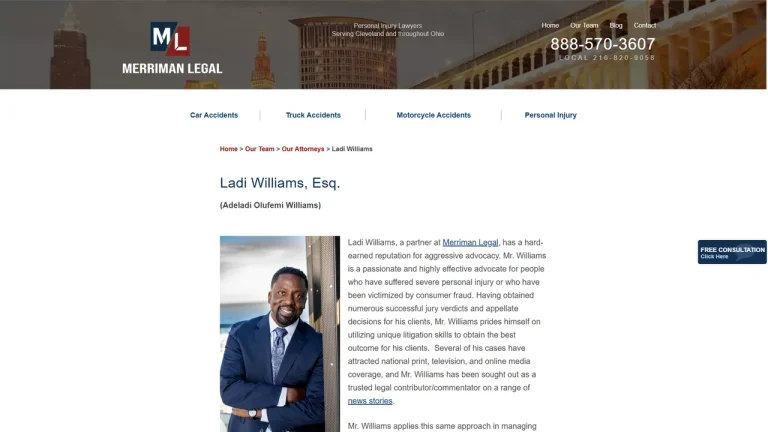
Ladi Williams, Esq. - Cleveland, OH

Law Office of Emily Feliz Garcia - Cincinnati, OH
Herman Legal Group, LLC - Dayton, OH
The Campos Law Firm, LLC - Cincinnati, OH
Latimore Esq. LLC - Cincinnati, OH
Navigating Removal Defense Across Ohio Jurisdictions
Facing deportation or removal proceedings is an extraordinarily high-stakes legal battle that requires immediate intervention by an attorney licensed to practice before the Executive Office for Immigration Review. Across the State of Ohio, all formal removal hearings are centralized through the Cleveland Immigration Court, situated at 801 West Superior Avenue in downtown Cleveland. This administrative tribunal exercises statewide jurisdiction over non-citizens residing throughout major metropolitan centers including Columbus, Cincinnati, Dayton, Toledo, and Akron.
Detained removal proceedings present additional jurisdictional complexities. Individuals taken into custody by U.S. Immigration and Customs Enforcement Enforcement and Removal Operations within Ohio are frequently held in county detention facilities with federal intergovernmental service agreements, such as the Butler County Jail in Hamilton or the Seneca County Jail in Tiffin. Navigating master calendar hearings, bond redetermination proceedings, and individual merits hearings demands deep familiarity with local prosecutorial discretion standards and evidentiary practices.
Appellate oversight for immigration decisions originating in Ohio falls under the jurisdiction of the Board of Immigration Appeals in Falls Church, Virginia, followed by federal judicial review before the U.S. Court of Appeals for the Sixth Circuit headquartered in Cincinnati. Attorneys handling deportation defense must maintain active standing with the Supreme Court of Ohio or another authorized state bar, ensuring strict adherence to professional ethics when presenting defenses such as asylum, cancellation of removal, or waivers of inadmissibility.
Ohio Removal Defense Fee Structures & Legal Costs
| Case Scenario | Fee Structure | Estimated Cost (USD) | Key Cost Determinants |
|---|---|---|---|
| Immigration Bond Hearing & Custody Redetermination | Flat Fee | $1,500 - $3,500 | Detention facility distance, prior criminal history analysis, and family community ties in Ohio |
| Defensive Asylum & Withholding of Removal | Staged Flat Fee | $4,500 - $9,500 | Country condition documentation, corroborating evidence volume, and individual merits hearing length |
| Non-LPR Cancellation of Removal (42B) | Flat or Hybrid Fee | $5,000 - $10,000 | Proof of 10-year physical presence, exceptional and extremely unusual hardship documentation for Ohio relatives |
| Board of Immigration Appeals (BIA) Review & Motions to Reopen | Flat Fee | $3,500 - $7,500 | Trial transcript review volume, legal brief complexity, and emergent stay of removal filings |
Critical Legal Deadlines & Statutes in Ohio
Removal proceedings operate under rigid federal statutory timetables where missing a deadline can result in an immediate order of removal entered in absentia. Individuals seeking defensive asylum must formally lodge their application within one year of arrival in the United States pursuant to 8 U.S. Code § 1158, unless extraordinary circumstances or changed country conditions are established under federal law.
The grounds for deportability and inadmissibility are strictly governed by federal immigration statutes, specifically 8 U.S. Code § 1227 for deportable non-citizens and 8 U.S. Code § 1182 for inadmissible foreign nationals. Formal removal proceedings are conducted in accordance with 8 U.S. Code § 1229a, which delineates the procedural rights of the respondent, including the right to examine evidence and cross-examine government witnesses.
If the Cleveland Immigration Court enters an adverse decision, an appeal must be filed with the Board of Immigration Appeals within 30 calendar days of the oral decision or mailing date under 8 C.F.R. § 1003.38. Motions to reopen a removal proceeding must generally be submitted within 90 days of the final administrative order pursuant to 8 C.F.R. § 1003.23, making rapid consultation with appellate immigration counsel critical.
Immigration Court Representation vs. Self-Representation Risks
Under 8 U.S. Code § 1229a, respondents in removal proceedings have the privilege of being represented by counsel of their choice, but strictly at no expense to the government. This creates a challenging environment for non-citizens attempting to navigate deportation proceedings without qualified legal counsel.
Unlike Ohio municipal or county court small claims divisions operating under Ohio Rev. Code § 1925.02, which feature a $6,000 monetary ceiling and simplified administrative procedures, federal immigration courts enforce complex rules of evidence and formal pleading requirements. Small claims courts have zero legal jurisdiction or power to resolve immigration disputes or stay removal orders.
Appearing pro se before the Cleveland Immigration Court exposes respondents to severe legal pitfalls, including inadvertently conceding deportability on the Notice to Appear, failing to properly establish statutory eligibility for relief, or missing mandatory biometric deadlines. Qualified Ohio deportation defense lawyers evaluate criminal dispositions under the Ohio Revised Code to determine whether state-level convictions constitute aggravated felonies or crimes involving moral turpitude, protecting respondents from avoidable deportation.
Red Flags When Selecting an Ohio Removal Defense Lawyer
- Beware of non-attorney notarios, immigration consultants, or petition preparers who cannot legally represent you before the Cleveland Immigration Court or sign formal legal briefs.
- Avoid practitioners who guarantee specific outcomes, such as a guaranteed work permit, approved asylum, or guaranteed cancellation of removal, which violates professional conduct rules.
- Steer clear of lawyers who quote unusually low upfront fees but fail to disclose substantial charges for individual merits hearings, travel to out-of-town detention centers, or appellate filings.
- Never hire counsel unable to verify an active law license in good standing with the Supreme Court of Ohio or another authorized state bar licensing agency.
Frequently Asked Questions
Where are immigration court hearings held for residents of Ohio?
Formal removal hearings for Ohio residents are conducted before the Cleveland Immigration Court, located in downtown Cleveland. Individuals held in immigration custody may have their hearings conducted via video teleconference from regional detention facilities like the Butler County Jail or Seneca County Jail.
Can an Ohio criminal conviction trigger deportation proceedings?
Yes. Convictions under the Ohio Revised Code for offenses categorized under federal law as crimes involving moral turpitude, controlled substance violations, or aggravated felonies can lead directly to the issuance of a Notice to Appear and the commencement of removal proceedings.
How does an immigration bond hearing work in Ohio?
A respondent detained by ICE can request an immigration bond redetermination hearing before an immigration judge at the Cleveland Immigration Court. The judge evaluates whether the individual poses a danger to the community or presents a flight risk before setting an appropriate bond amount.
What happens if I miss my immigration court hearing date?
Failing to appear at a scheduled master calendar or individual hearing typically results in the immigration judge issuing an in absentia order of removal, ordering deportation without you present. An attorney must immediately evaluate whether grounds exist to file a motion to reopen based on exceptional circumstances or lack of notice.
What is non-LPR cancellation of removal?
Non-LPR cancellation of removal is a defense available to certain undocumented individuals who have maintained continuous physical presence in the United States for at least 10 years, demonstrate good moral character, and prove that their removal would result in exceptional and extremely unusual hardship to a qualifying U.S. citizen or lawful permanent resident spouse, parent, or child.