
Workplace Discrimination Lawyers in Oklahoma
Retaining an experienced Oklahoma workplace discrimination lawyer safeguards your civil rights and holds unlawful employers accountable under state and federal law. Skilled employment attorneys frequently resolve complex workplace bias claims through pre-suit negotiation or administrative conciliation, avoiding prolonged courtroom disputes. Explore our directory below to schedule a case evaluation with trusted local advocates across Oklahoma.
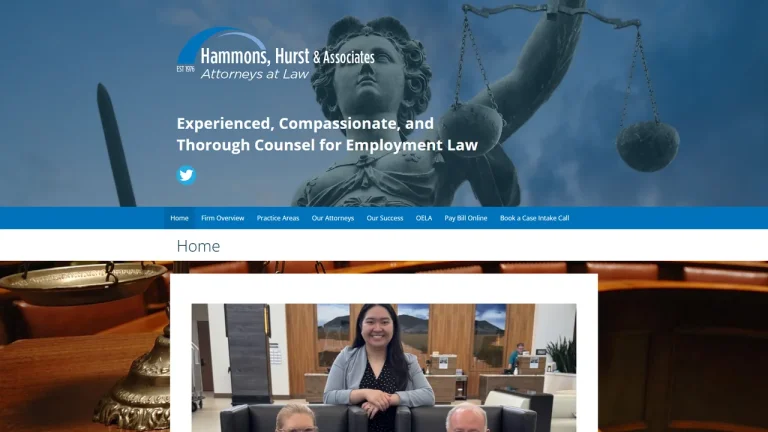
Hammons, Hurst & Associates - Oklahoma City, OK

Davis Business Law - Oklahoma City, OK
Patricia A. Podolec - Oklahoma City, OK

Jana B. Leonard - Oklahoma City, OK

Jeff Taylor PC - Oklahoma City, OK
Patricia A. Podolec, Attorney at Law Oklahoma City, OK

Shook & Johnson - Tulsa, OK

Eddy Law Firm - Oklahoma City, OK

Titus Hillis Reynolds Love - Tulsa, OK

Wagner Stuart PLLC - Tulsa, OK

Ogletree Deakins, Oklahoma City, OK

Mazaheri Law Firm - Oklahoma City, OK

Salmon Law Firm PLLC - Tulsa, OK
Jay K. Ramey, Attorney at Law - Tulsa, OK

Bussett Legal Group, PLLC Oklahoma City, OK
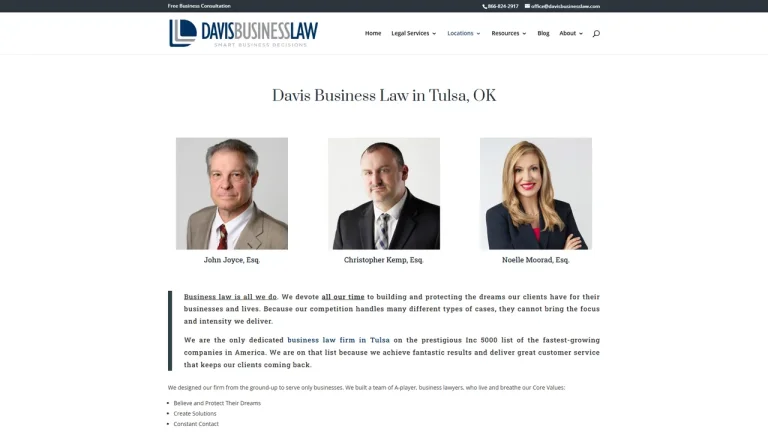
Davis Business Law - Tulsa, OK

Fellers Snider - Oklahoma City, OK
Justice First Legal, PLLC - Tulsa, OK
Erica Dorwart Law, PLLC - Tulsa, OK

Brandon J. Burton - Oklahoma City, OK

Center for Employment Law - Oklahoma City, OK

The Battle Law Firm - Oklahoma City, OK
Eller & Detrich - Tulsa, OK

Navigating Workplace Discrimination Protections in Oklahoma
Employees in Oklahoma are protected against adverse employment actions motivated by unlawful bias. Across major employment centers including Oklahoma City, Tulsa, Norman, Edmond, and Lawton, workers contribute to diverse sectors such as energy, aerospace, healthcare, manufacturing, and logistics. When hiring, promotions, disciplinary measures, or terminations are tainted by discriminatory animus, statutory legal mechanisms provide avenues for justice and financial redress.
Workplace discrimination claims in Oklahoma operate under a dual administrative framework. Complainants must exhaust administrative remedies through either the federal Equal Employment Opportunity Commission (EEOC) at its Oklahoma City Area Office or the Oklahoma Attorney General's Office of Civil Rights Enforcement (OCRE). These administrative agencies investigate charges, facilitate conciliation, and determine whether cause exists to issue statutory right-to-sue notices.
When conciliation cannot resolve a dispute, civil litigation is pursued in the appropriate judicial forum. State-level claims under the Oklahoma Anti-Discrimination Act are brought in Oklahoma District Courts, such as the Oklahoma County District Court or Tulsa County District Court. Concurrent federal claims are filed in the United States District Courts for the Western, Northern, or Eastern Districts of Oklahoma. Engaging an experienced Oklahoma workplace discrimination attorney ensures compliance with complex administrative rules and positions claimants for successful outcomes.
Oklahoma Workplace Discrimination Case Scenarios and Fee Structures
| Case Scenario | Fee Structure | Estimated Cost (USD) | Key Cost Determinants |
|---|---|---|---|
| Protected Class Discrimination (Race, Gender, Religion) | Contingency Fee (33.3% - 40%) | $0 Upfront / % of Recovery | Direct versus circumstantial evidence, employer headcount under statutory caps, comparator employee documentation |
| Disability Discrimination & Failure to Accommodate | Contingency / Hybrid | $0 Upfront / % of Recovery | Interactive process paper trail, medical necessity records, feasibility of reasonable workplace modifications |
| Age Discrimination in Corporate Downsizing | Contingency Fee (33.3% - 40%) | $0 Upfront / % of Recovery | Statistical disparate impact analysis, replacement worker age differential, pretextual reduction-in-force rationales |
| Retaliation Following Internal Bias Complaints | Contingency Fee (33.3% - 40%) | $0 Upfront / % of Recovery | Temporal proximity between reporting and termination, performance review consistency, supervisor documentation |
Critical Legal Deadlines & Statutes in Oklahoma Discrimination Claims
Employment discrimination claims in Oklahoma are anchored in the Oklahoma Anti-Discrimination Act codified under 25 Okla. Stat. § 1101 and 25 Okla. Stat. § 1302. The state statute renders it unlawful for an employer to fail or refuse to hire, discharge, or otherwise discriminate against any individual regarding compensation, terms, conditions, or privileges of employment because of race, color, religion, sex, national origin, age, disability, or genetic information.
Strict administrative prerequisites control these claims. Under 25 Okla. Stat. § 1350, an aggrieved individual must file a formal charge of discrimination with the Office of Civil Rights Enforcement within 180 days of the alleged unlawful act. Alternatively, filing with the EEOC preserves federal claims if submitted within 300 days of the discriminatory conduct as provided under 42 U.S. Code § 2000e-5. Failure to file an administrative complaint within these narrow statutory periods permanently bars the worker from asserting legal claims.
Once the administrative agency concludes its review and issues a Notice of Right to Sue, another strict deadline takes effect. Under 25 Okla. Stat. § 1350(I), a claimant must initiate civil litigation in Oklahoma District Court within 90 days of receiving the notice. Parallel federal statutes, including the Americans with Disabilities Act under 42 U.S. Code § 12112 and the Age Discrimination in Employment Act under 29 U.S. Code § 621, impose an identical 90-day limitation window following EEOC authorization.
Small Claims Limitations vs. District Court Representation in Oklahoma
The Small Claims Division of the Oklahoma District Court system is restricted to monetary claims not exceeding $10,000 pursuant to 12 Okla. Stat. § 1751. Small claims courts have zero subject-matter jurisdiction to adjudicate statutory workplace discrimination actions, award back pay or front pay, or grant injunctive orders such as workplace reinstatement or policy overhauls.
Workplace discrimination claims must be litigated in the formal civil docket of the Oklahoma District Court or United States District Court. Corporate defense teams deploy significant legal resources to seek summary judgment. Attempting to pursue administrative or court proceedings without legal counsel puts workers at a major disadvantage. Qualified employment attorneys handle claims on contingency, finance expert testimony and discovery costs, and invoke statutory fee-shifting provisions that require non-compliant employers to pay attorney fees upon a favorable outcome.
Red Flags & Consumer Protection in Oklahoma Employment Practice
- Attorneys demanding high upfront hourly retainers to assess standard discrimination claims that should be evaluated under contingency fee agreements.
- Practitioners unfamiliar with the strict 180-day OCRE exhaustion requirement who allow administrative filing deadlines to lapse.
- Firms lacking federal trial experience in the Western, Northern, or Eastern Districts of Oklahoma, where most corporate discrimination cases are litigated.
- Advisors suggesting employees abruptly resign before documenting adverse treatment, which jeopardizes legal claims for constructive discharge.
Frequently Asked Questions
What is the deadline to file a discrimination complaint in Oklahoma?
To preserve state claims under the Oklahoma Anti-Discrimination Act, a charge must be filed with the Office of Civil Rights Enforcement (OCRE) within 180 days of the discriminatory incident. For federal claims with the EEOC, the filing deadline is extended to 300 days because Oklahoma is a deferral state with its own enforcement agency.
Can an employer retaliate against an employee for reporting discrimination?
Both Oklahoma and federal laws strictly prohibit retaliation against employees who oppose discriminatory practices, file administrative charges, or participate in workplace bias investigations. Adverse actions such as termination, demotion, pay cuts, or reassignment taken in response to protected reporting can give rise to independent retaliation claims.
What damages are recoverable in an Oklahoma discrimination lawsuit?
Victims of workplace discrimination may recover economic damages including back pay with interest, front pay, lost benefits, compensatory damages for emotional distress, and reasonable attorney fees. Punitive damages may also be awarded in cases where the employer acted with malice or reckless indifference to protected civil rights.
What is the difference between filing with the OCRE and the EEOC in Oklahoma?
The OCRE enforces the Oklahoma Anti-Discrimination Act under state law, while the EEOC enforces federal statutes such as Title VII, the ADA, and the ADEA. Because the agencies maintain a work-sharing agreement, dual-filing allows a single administrative submission to preserve rights under both state and federal frameworks simultaneously.
What is the interactive process required for disability accommodations?
Under Oklahoma and federal disability statutes, once an employee requests a reasonable accommodation for a recognized disability, the employer is legally obligated to engage in an open, good-faith dialogue called the interactive process. Failing to participate or rejecting accommodations without demonstrating undue operational hardship violates statutory mandates.