
Debt Relief Lawyers in Pittsburgh
Retaining an experienced debt relief attorney in Pittsburgh provides powerful defenses against aggressive collection agencies and predatory creditor lawsuits. Dedicated counsel can negotiate favorable settlements and enforce strict Pennsylvania debtor protection statutes to safeguard your income and property. Explore our verified attorney directory below to protect your financial rights.

Starks Law, PC - Pittsburgh, PA

Bryan P. Keenan & Associates, PC - Pittsburgh, PA

Defense Tax Group - Pittsburgh, PA

Defense Tax Partners - Tax Attorney, IRS Tax Relief & Audit Defense, Free Consultation - Pittsburgh, PA
Delta Law Group, LLC - Pittsburgh, PA
Grenen & Birsic, P.C. - Pittsburgh, PA

Buchanan Ingersoll & Rooney PC - Pittsburgh, PA
McGrath McCall, P.C. - Pittsburgh, PA
Robleto Kuruce, PLLC - Pittsburgh, PA
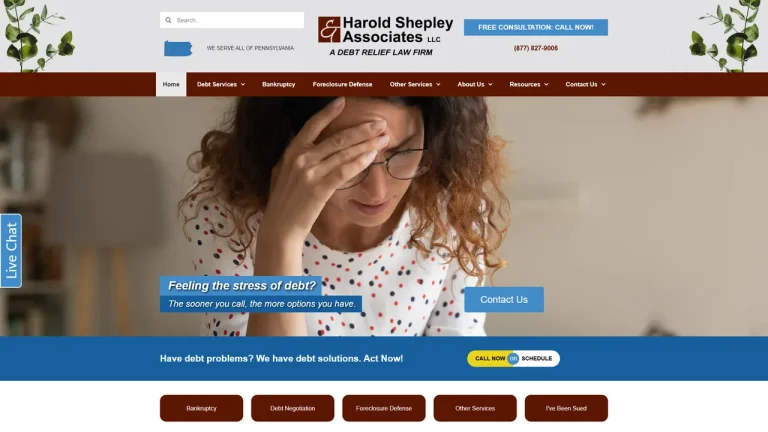
Harold Shepley & Associates, LLC - Pittsburgh, PA
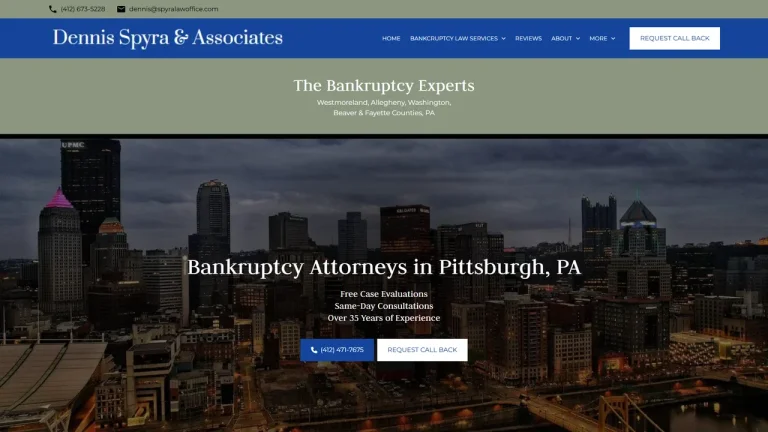
Dennis Spyra & Associates - Pittsburgh, PA
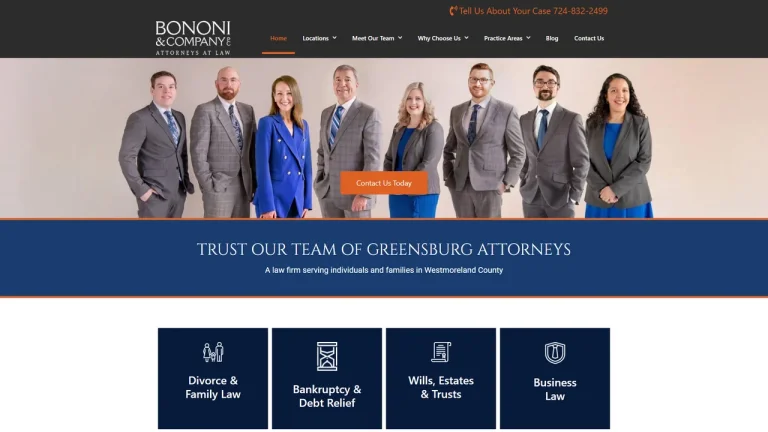
Bononi & Company, P.C. - Pittsburgh, PA

Defense Tax Partners - Tax Attorney, Tax Relief Settlement Service, Free Consultation - Pittsburgh, PA

Weltman, Weinberg & Reis Co., LPA - Pittsburgh - Pittsburgh, PA

Law Office of Emily Gomez LLC - Pittsburgh, PA

J.P. Ward & Associates - Pittsburgh, PA

Papernick & Gefsky - Pittsburgh, PA

Colaizzi Law Group - Pittsburgh, PA
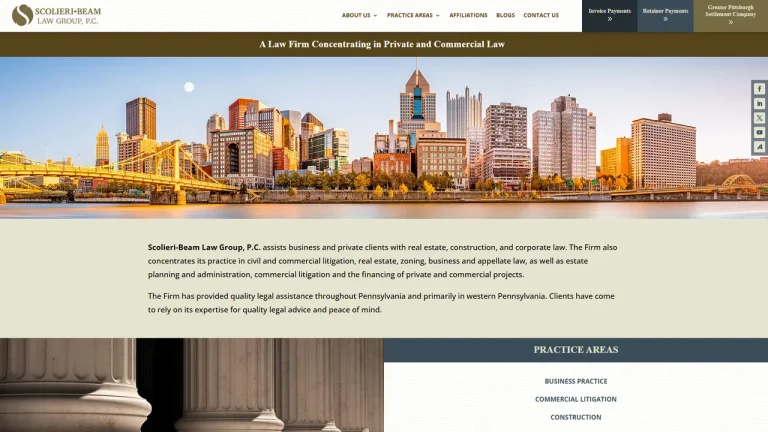
Scolieri-Beam Law Group, P.C. - Pittsburgh, PA

Defense Tax Partners - Pittsburgh, PA
The Cooney Law Offices - Pittsburgh, PA
Neighborhood Legal Services - Pittsburgh, PA
Steidl & Steinberg, P.C. - Pittsburgh, PA

Debt Defense and Creditor Negotiation in Pittsburgh
Consumer debt litigation in Pittsburgh is administered through a structured two-tier judicial framework within Allegheny County. Claims involving amounts up to $12,000 originate in local Magisterial District Courts situated across municipal divisions such as Downtown Pittsburgh, the South Side, Bloomfield, Lawrenceville, and outer suburban sectors. When balances exceed that jurisdictional threshold, claims proceed directly to the Allegheny County Court of Common Pleas, located inside the City-County Building along Grant Street.
National debt buyers and collection firms frequently purchase charged-off credit portfolios and initiate volume lawsuits against local residents. Many of these complaints lack requisite documentation, missing foundational contracts, account statements, and valid chain-of-title assignments required under local procedural rules. Without vigorous defense, collectors routinely secure default judgments that lead to frozen bank balances and property liens.
Working with an established Pittsburgh debt relief attorney shifts the dynamic of creditor negotiations. Counsel challenges defective evidence before Magisterial District Judges, files preliminary objections in Common Pleas arbitration proceedings, and leverages statutory violations to negotiate substantial principal balance write-downs or comprehensive case dismissals.
Cost Overview for Pittsburgh Debt Relief and Defense
| Case Scenario | Fee Structure | Estimated Cost (USD) | Key Cost Determinants |
|---|---|---|---|
| Magisterial District Court Lawsuit Defense | Flat Fee | $750 - $1,800 | Claim value, debt buyer documentation defects, hearing attendance across Allegheny County |
| Common Pleas Arbitration Defense | Flat Fee / Retainer | $1,800 - $4,200 | Formal discovery motions, preliminary objections, appearance before compulsory arbitration panel |
| Out-of-Court Debt Settlement Negotiation | Percentage of Savings / Flat Fee | $1,000 - $3,200 | Total balance, single vs. multiple creditor accounts, availability of lump-sum settlement capital |
| FDCPA / FCEUA Unlawful Collection Defense | Fee-Shifting / Contingency | $0 Out-of-Pocket | Demonstrated statutory violations, collector call logs, statutory damages up to $1,000 |
Critical Legal Deadlines & Statutes in Pennsylvania
Pennsylvania provides robust statutory debtor protections that govern collection practices. Under 42 Pa. C.S. § 5525(a), an enforceable four-year statute of limitations applies to actions upon a contract, including credit card debts and revolving loan agreements. If four years have elapsed since the date of default without payment, the claim is legally time-barred. However, making even a nominal payment can inadvertently reset this four-year limitations window, reviving stale legal liability.
Pennsylvania remains one of the most protective jurisdictions in the nation regarding wage security. Pursuant to 42 Pa. C.S. § 8127, wage garnishment for consumer debts-such as credit cards, personal loans, and medical balances-is strictly prohibited, restricting garnishment solely to narrow categories including child support, back taxes, and student loans. Consumer communications are regulated under the Pennsylvania Fair Credit Extension Uniformity Act via 73 P.S. § 2270.4, alongside the federal Fair Debt Collection Practices Act codified in 15 U.S. Code § 1692. If a Magisterial District Court enters an adverse judgment, a notice of appeal must be filed within 30 days under Pa. R. Civ. P. M.D.J. 1002 to transfer the proceeding to the Court of Common Pleas.
Magisterial District Court Self-Representation vs. Legal Counsel
Magisterial District Courts in Pittsburgh adjudicate consumer claims up to $12,000 under 42 Pa. C.S. § 1515. Debt collection agencies rely heavily on defendants failing to appear, which grants them an unearned default judgment. Once entered, the creditor can index this judgment downtown at the Allegheny County Department of Court Records, establishing a formal lien against any residential real estate owned by the consumer in the county.
While defendants may legally represent themselves at magistrate hearings, debt collection attorneys routinely leverage procedural informalities to enter unauthenticated electronic records into evidence. A licensed debt relief attorney requires collection entities to strictly adhere to the Pennsylvania Rules of Evidence, object to inadmissible business record affidavits, and force dismissals when lenders fail to produce valid chain-of-custody documentation proving ownership of the debt.
Red Flags When Selecting Pittsburgh Debt Relief Services
- Beware of out-of-state telemarketing debt settlement companies that instruct you to stop paying creditors while charging substantial upfront administrative fees.
- Avoid non-lawyer operations that falsely threaten you with wage garnishment; consumer wage garnishment is prohibited under 42 Pa. C.S. § 8127.
- Reject services that guarantee specific settlement percentages without examining the identity of your creditors, contract terms, or account age.
- Refuse representation from agencies that lack Pennsylvania-licensed attorneys authorized to enter appearances in the Allegheny County Court of Common Pleas.
Frequently Asked Questions
Can a debt collector garnish my wages in Pittsburgh, Pennsylvania?
No. Under Pennsylvania law, creditors are strictly barred from garnishing wages for standard consumer debts, including credit cards, auto deficiency balances, and medical bills. Garnishment is restricted to family child support, domestic alimony, delinquent taxes, and federal student loans.
What is the statute of limitations for debt lawsuits in Pennsylvania?
The statute of limitations for consumer credit accounts and written contracts in Pennsylvania is four years from the date of the last payment or default. Once this period expires, a collector cannot legally maintain a civil lawsuit against you, provided you do not reset the timeline by making a new payment.
What happens if I am served with an Allegheny County Magisterial District Court notice?
You must notify the Magisterial District Court of your intention to defend the lawsuit before the date of the hearing. Failing to respond or appear results in an automatic default judgment, which the creditor can record as a lien against your real estate in Allegheny County.
How does hiring an attorney differ from using an out-of-state debt settlement company?
A licensed attorney can file formal appearances, defend you inside Allegheny County courtrooms, assert evidentiary defenses, and stop lawsuits. Non-attorney settlement companies cannot provide legal counsel, represent you in court, or prevent creditors from taking default judgments against you.
Can a debt collector place a lien on my house in Pittsburgh?
Yes. If a collector secures a civil judgment against you at the Magisterial District Court or Court of Common Pleas, they can index that judgment with the Allegheny County Department of Court Records, creating a direct lien against your home that must be satisfied before selling or refinancing.