
Debt Relief Lawyers in Memphis
Connecting with experienced Memphis debt relief lawyers stops creditor harassment and protects your assets under federal bankruptcy and state exemption laws. Skilled legal counsel evaluates Chapter 7 liquidations, Chapter 13 repayment plans, and private debt settlements to halt Shelby County wage garnishments and home foreclosures. Explore our verified directory below to schedule a confidential debt evaluation with trusted local attorneys.

JD Gentry Law Office, PLLC - Memphis, TN
Memphis Area Legal Services, Inc. - Memphis, TN

The Arnold Law Firm - Memphis, TN

Aaron S. Ayers Law Firm - Memphis, TN
Arthur Ray Law Offices - Memphis, TN
Juliet Hill Akines - Attorney at Law - Memphis, TN
Songstad Law Firm - Randall Songstad - Memphis, TN
Fiveash Earnest E - Memphis, TN
Crislip Philip - Memphis, TN

Peppel and Palazzolo, P.C. - Memphis, TN
Payne Law Firm - Memphis, TN
Luxman Law Firm - Memphis, TN
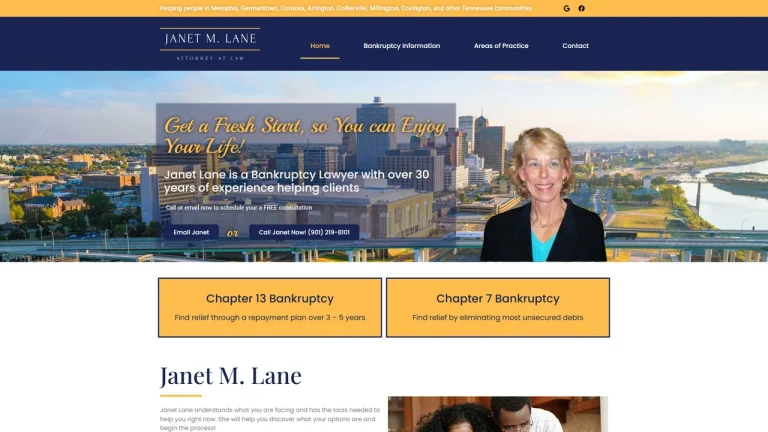
Janet M. Lane - Memphis TN - Bankruptcy Attorney at Law - Memphis, TN
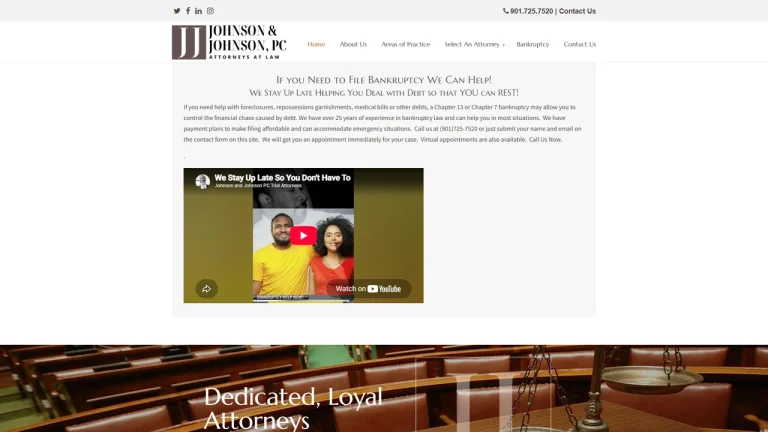
Johnson and Johnson, PC - Memphis, TN

Internal Tax Resolution of Tennessee - Memphis, TN

Schuerman Smith & Associates PLLC - Memphis, TN
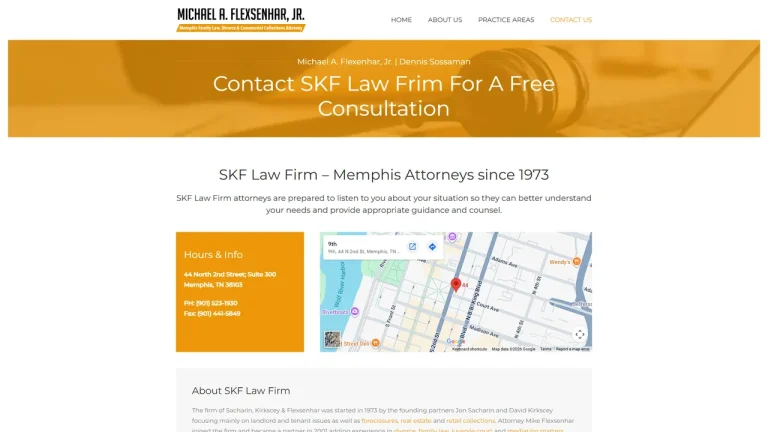
Saccharin, Kirkscey and Flexsenhar, Attorneys At Law - Memphis, TN

Wages & Benham Attorneys - Memphis, TN

Jimmy E. McElroy & Associates - Memphis, TN

Darrell Castle & Associates - Memphis, TN

Shapiro & Kirsch, LLP - Memphis, TN

Memphis Low Cost Bankruptcy Center - Memphis, TN
Theresa H Patterson PC - Memphis, TN

Navigating Debt Relief in Memphis and Shelby County
Burdensome debt from unexpected medical emergencies, high-interest consumer loans, vehicle repossessions, or mortgage default places intense strain on individuals and families throughout Memphis. From Downtown and Midtown to Whitehaven, Frayser, Raleigh, and Cordova, residents confronting collection calls, bank seizures, or impending home auctions require strategic debt relief solutions tailored to Tennessee and federal law.
Debt collection lawsuits and creditor garnishments in Memphis are primarily initiated in the Shelby County General Sessions Court at 140 Adams Avenue. When informal workouts fail, formal legal relief shifts to federal court. Bankruptcy petitions and emergency stay protections fall under the exclusive jurisdiction of the United States Bankruptcy Court for the Western District of Tennessee, located at One Memphis Place on Jefferson Avenue in downtown Memphis.
A Memphis debt relief attorney provides essential advocacy by assessing whether Chapter 7 liquidation, Chapter 13 reorganization, or out-of-court restructuring is the most effective approach. Experienced counsel applies Tennessee statutory exemptions to protect home equity, vehicles, and wages while halting aggressive collection activities.
Debt Relief Legal Fees and Representation Costs
| Case Scenario | Fee Structure | Estimated Cost (USD) | Key Cost Determinants |
|---|---|---|---|
| Chapter 7 Consumer Debt Liquidation | Flat Legal Fee | $1,200 - $2,500 | Means test analysis, creditor count, state exemption scheduling |
| Chapter 13 Debt Reorganization Plan | Court-Approved Flat Fee (Plan-Funded) | $3,500 - $4,500 | Arrearage repayment structure, vehicle cramdowns, plan confirmation hearings |
| Out-of-Court Creditor Settlement & Negotiation | Hourly or Percentage Fee | $1,500 - $4,000 or 15% - 25% of enrolled debt | Total debt balance, single vs. multiple creditors, settlement ratio |
| Emergency Stay to Stop Foreclosure or Sheriff Sale | Flat Expedited Fee | $1,500 - $3,200 | Imminent auction date, skeleton petition drafting, emergency stay filings |
Critical Legal Deadlines & Statutes in Tennessee
Filing a federal bankruptcy petition immediately invokes the automatic stay under 11 U.S.C. § 362, which legally prohibits creditors from continuing phone calls, civil lawsuits, bank levies, or foreclosure auctions in Shelby County. To qualify for Chapter 7 liquidation, debtors must satisfy the median income means test established under 11 U.S.C. § 707(b), which evaluates average household earnings over the six months prior to filing.
Tennessee is an opt-out state under 11 U.S.C. § 522(b)(2), meaning filers must use Tennessee statutory property exemptions rather than federal exemptions. Debtors can shield equity in their primary residence through the Tennessee homestead exemption codified in Tenn. Code Ann. § 26-2-301, retain up to $10,000 in aggregate personal property under Tenn. Code Ann. § 26-2-103, and limit wage garnishments under Tenn. Code Ann. § 26-2-106. Debtors must also complete credit counseling within 180 days prior to filing pursuant to 11 U.S.C. § 109(h) and finish a debtor education course prior to final discharge under 11 U.S.C. § 727(a)(11). Discharged debts are permanently shielded by a statutory injunction under 11 U.S.C. § 524.
Shelby County General Sessions vs. Federal Debt Relief Representation
The Shelby County General Sessions Court resolves civil debt lawsuits up to $25,000 pursuant to Tenn. Code Ann. § 16-15-501. When debt collection agencies sue in General Sessions Court, unrepresented debtors often face default judgments that trigger 25% wage garnishments under state law. While a debtor can contest an improper debt collection claim pro se in General Sessions, a favorable judgment in state court does not eliminate the debt obligation itself.
Only federal bankruptcy court or legally binding settlement agreements can discharge debts permanently. Attempting pro se bankruptcy in the Western District of Tennessee risks case dismissal or unintentional loss of non-exempt property. Retaining an experienced Memphis debt relief lawyer ensures all assets are shielded under Tennessee exemption laws, bankruptcy filings are executed accurately, and creditors are held to legal discharge terms.
Red Flags When Hiring a Memphis Debt Relief Lawyer
- Out-of-state telemarketing debt settlement firms claiming to eliminate debt without bankruptcy, which often leads to General Sessions lawsuits.
- Law firms failing to itemize bankruptcy court filing fees ($338 for Chapter 7, $313 for Chapter 13) separately from legal representation costs.
- Advising clients to conceal cash, transfer vehicle titles, or deed real property to family members, which constitutes fraudulent transfer under 11 U.S.C. § 548.
- Guaranteeing specific settlement percentages before examining creditor contracts and interest rates.
Frequently Asked Questions
How does filing bankruptcy stop wage garnishments in Shelby County?
Filing a bankruptcy petition activates the automatic stay under 11 U.S.C. § 362, which immediately halts all pending wage garnishments, bank account freezes, and creditor lawsuits pending in Shelby County courts.
What is the difference between Chapter 7 and Chapter 13 debt relief in Memphis?
Chapter 7 liquidates eligible unsecured debts like credit cards and medical bills within four to six months for qualifying individuals. Chapter 13 establishes a three- to five-year repayment plan to catch up on missed mortgage or vehicle payments while keeping assets.
Can I protect my home and vehicle when seeking debt relief in Tennessee?
Yes. By utilizing the Tennessee homestead exemption under Tenn. Code Ann. § 26-2-301 and personal property exemptions under Tenn. Code Ann. § 26-2-103, most debtors can protect equity in their home, vehicles, and personal possessions.
Where are bankruptcy hearings held for Memphis residents?
Bankruptcy cases are heard at the United States Bankruptcy Court for the Western District of Tennessee, located at One Memphis Place, 200 Jefferson Avenue, Suite 415, Memphis, TN 38103.
How does out-of-court debt settlement compare to bankruptcy?
Out-of-court debt settlement involves negotiating lump-sum payoffs with individual creditors without court supervision. While it avoids bankruptcy filings, it does not provide the immediate legal protection of an automatic stay against collection lawsuits.