
Wrongful Termination Lawyers in Memphis
Retaining an experienced Memphis wrongful termination lawyer protects your rights when fired in violation of Tennessee or federal employment statutes. Seasoned local counsel evaluates employer misconduct, secures vital personnel records, and pursues severance or financial recovery through out-of-court negotiations. Explore our verified directory below to schedule an initial consultation with a trusted Shelby County advocate.
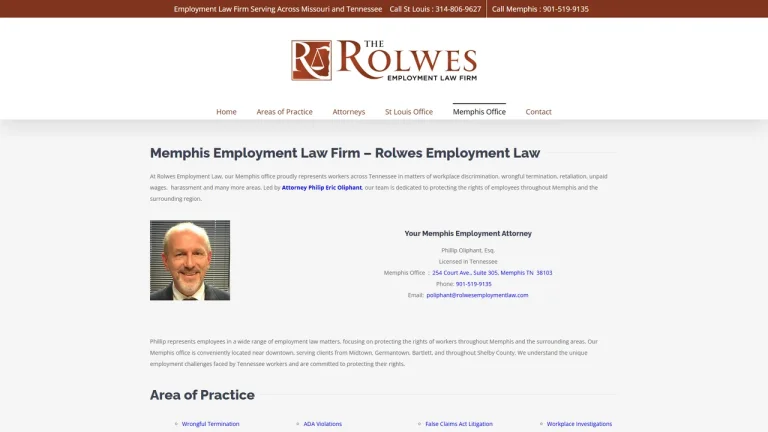
Philip Oliphant, Esq. - Memphis, TN

The Tansey Law Firm - Memphis, TN

Littler Mendelson P.C. - Memphis, TN

Steve Wilson Firm - Memphis, TN

The Crone Law Firm, PLC - Memphis, TN

The Rolwes Employment Law Firm - Memphis, TN
Holland and Associates PC - Memphis, TN
Law Offices of Cary Schwimmer - Memphis, TN

Your Company's Employment Lawyer (The Crone Law Firm) - Memphis, TN

Johnson & Bennett, PLLC - Memphis, TN
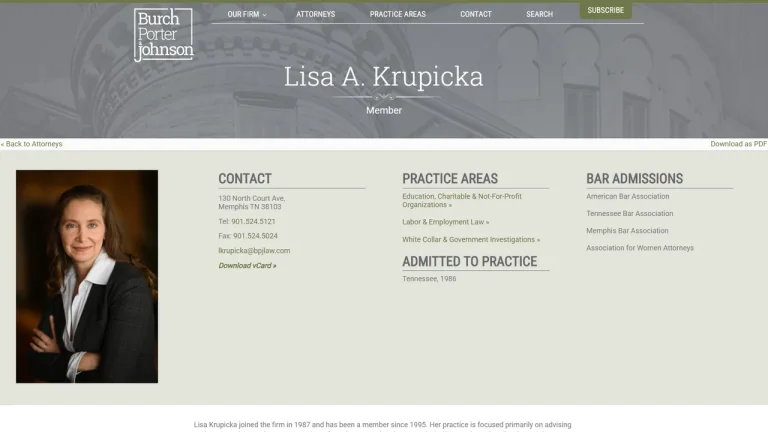
Lisa A. Krupicka - Memphis, TN

Allen Law Firm, PLLC - Memphis, TN
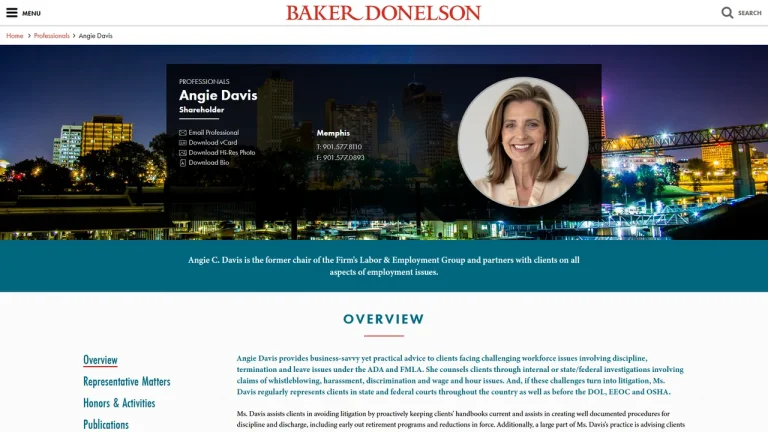
Angie C. Davis - Attorney at Law - Memphis, TN

Donati Law, PLLC Memphis - Memphis, TN

Hamilton Entertainment and Employment Law, LLC - Memphis, TN
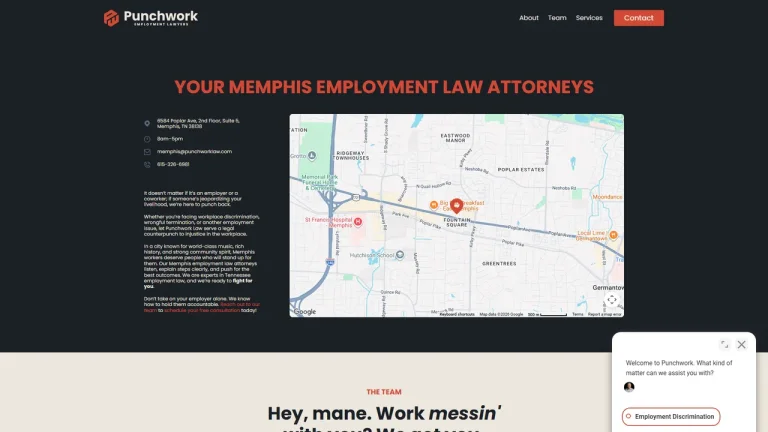
Navigating Wrongful Termination Claims in Memphis, Tennessee
While Tennessee operates under an employment-at-will doctrine, significant statutory exceptions protect employees from retaliatory and unlawful discharge. In Memphis, major employment sectors-spanning global logistics hubs like the FedEx World Hub, regional distribution complexes along Lamar Avenue and Holmes Road, and premier medical systems including Methodist Le Bonheur and Baptist Memorial-must strictly comply with state and federal labor laws.
Unlawful terminations frequently involve retaliation against employees who refuse to participate in illegal conduct or who report safety violations. Formal wrongful termination lawsuits in Memphis are filed in the Thirtieth Judicial District of Tennessee at the Shelby County Courthouse on Adams Avenue in downtown Memphis, or in the U.S. District Court for the Western District of Tennessee on North Main Street.
Retaining an established Memphis employment lawyer ensures that workplace emails, termination paperwork, and internal complaint timelines are preserved before corporate employers alter documentation.
Typical Fee Structures and Wrongful Termination Case Scenarios in Memphis
| Case Scenario | Fee Structure | Estimated Cost (USD) | Key Cost Determinants |
|---|---|---|---|
| Whistleblower Retaliation (Tennessee Public Protection Act) | Contingency Fee + Fee-Shifting | 33.3% to 40% of recovery ($0 upfront) | Documentation of illegal corporate activity, proof of refusal to participate, sole cause evidence |
| Workers' Compensation Retaliatory Discharge | Contingency Fee | 33.3% of settlement ($0 upfront) | Proximity between injury report and firing, employer stated reason vs pretext, supervisor testimony |
| Executive Severance & Contract Breach Negotiation | Hourly or Flat Review Fee | $1,500 - $4,500 | Employment contract clauses, non-compete terms, equity vesting schedules, dispute release language |
| Federal Statutory Termination Trial (Title VII / FMLA) | Contingency / Hourly Retainer | 33.3% to 40% of recovery or $250 - $450/hr | EEOC right-to-sue status, depositions of human resources directors, federal jury trial duration |
Critical Legal Deadlines & Statutes in Tennessee
Whistleblower claims under the Tennessee Public Protection Act (TPPA), codified at Tenn. Code Ann. § 50-1-304, must be filed within one year from the date of discharge under Tenn. Code Ann. § 28-3-104(a)(1)(A). The TPPA requires proving that the refusal to participate in or remain silent about illegal activities was the sole cause of termination.
Common-law retaliatory discharge claims-such as being fired for filing a workers' compensation claim under Tenn. Code Ann. § 50-6-101-must also be filed within one year pursuant to Tenn. Code Ann. § 28-3-104(a)(1)(A), requiring proof that the claim was a substantial factor in the dismissal.
If the termination involves federal discrimination or retaliation under Title VII of the Civil Rights Act of 1964 (42 U.S. Code § 2000e-3(a)) or the Americans with Disabilities Act (42 U.S. Code § 12203), an administrative charge must be filed with the Equal Employment Opportunity Commission (EEOC) within 300 days of the termination under 42 U.S. Code § 2000e-5(e)(1).
Upon receiving a Right to Sue letter from the EEOC, a plaintiff has strictly ninety days to file a federal civil complaint under 42 U.S. Code § 2000e-5(f)(1). Breach of written employment contract actions carry a six-year limitation under Tenn. Code Ann. § 28-3-109(a)(3).
General Sessions Limitations vs. Circuit and Federal Court in Memphis
In Shelby County, the General Sessions Court handles civil disputes where monetary claims do not exceed $25,000 under Tenn. Code Ann. § 16-15-501. An employee seeking an isolated final paycheck or unpaid accrued vacation pay might resolve their claim pro se in General Sessions.
However, substantive wrongful termination claims involve complex issues of pretext, lost front and back pay, emotional distress, and statutory attorney fees. These actions belong exclusively in the Shelby County Circuit Court or federal court. Pro se plaintiffs face severe disadvantages against corporate human resources departments and defense litigation firms. Retaining a dedicated Memphis wrongful termination lawyer ensures access to formal discovery, deposition subpoenas, and experienced trial representation.
Red Flags to Watch for When Hiring a Memphis Wrongful Termination Lawyer
- Demanding Large Upfront Hourly Retainers for Clear Retaliation Cases: Strong statutory whistleblower and retaliation claims are typically handled on a contingency basis where fees come from the recovery or fee-shifting awards.
- Promising Immediate Settlements Without Reviewing Employment Files: Legitimate employment lawyers never promise outcomes before analyzing separation notices, performance reviews, and personnel policies.
- Lack of Practice Experience in the Western District of Tennessee: Wrongful termination cases often move to federal court; your attorney must be admitted and actively litigating in the federal court on Main Street.
- Ignoring Crucial 90-Day EEOC Deadlines: Missing the strict 90-day window under 42 U.S. Code § 2000e-5(f)(1) permanently destroys federal discrimination and retaliation claims.
Frequently Asked Questions
What is the deadline to file a wrongful termination claim in Memphis?
Under Tenn. Code Ann. § 28-3-104(a)(1)(A), state whistleblower and retaliatory discharge lawsuits must be filed within one year of discharge. Claims under federal law require an EEOC charge within 300 days pursuant to 42 U.S. Code § 2000e-5(e)(1).
Can I be fired for reporting illegal activity at work in Tennessee?
No. The Tennessee Public Protection Act under Tenn. Code Ann. § 50-1-304 makes it illegal for an employer to terminate you solely for refusing to participate in or report illegal activities.
Can my employer fire me for filing a workers' compensation claim in Memphis?
No. Firing an employee for exercising their statutory rights under Tenn. Code Ann. § 50-6-101 constitutes actionable retaliatory discharge under Tennessee common law.
Where are wrongful termination lawsuits filed in Memphis?
Lawsuits are filed in the Shelby County Circuit Court on Adams Avenue or in the U.S. District Court for the Western District of Tennessee on North Main Street.
What compensation can I recover in a Memphis wrongful termination suit?
Victims can recover past lost wages (back pay), future lost earnings (front pay), compensation for emotional distress, and attorney fees under statutory fee-shifting rules.