
Estate Planning Lawyers in Austin
Retaining an experienced estate planning lawyer in Austin protects your family legacy, business interests, and healthcare choices under Texas statutory law. Tailored estate planning helps individuals and couples avoid burdensome court-supervised guardianships and tax exposure through structured wills, trusts, and powers of attorney. Review our verified directory below to consult an experienced Travis County estate planning attorney.

Cirkiel Law Group PC - Austin, TX

Thompson Tiemann Attorneys - Austin, TX

The Daves Law Firm - Austin, TX

Law Office of Keith Hajovsky - Austin, TX

The Kelly Legal Group PLLC - Austin, TX

Law Office of Vinh M. Tran, P.C. - Austin, TX

Texas RioGrande Legal Aid - Austin, TX

Smith & Bledsoe Family Law - Austin, TX
Willi Law Firm, P.C. - Austin, TX

StoneMyers Law PLLC - Austin, TX

Hardie Alcozer - Austin, TX

The Haney Law Firm - Austin, TX
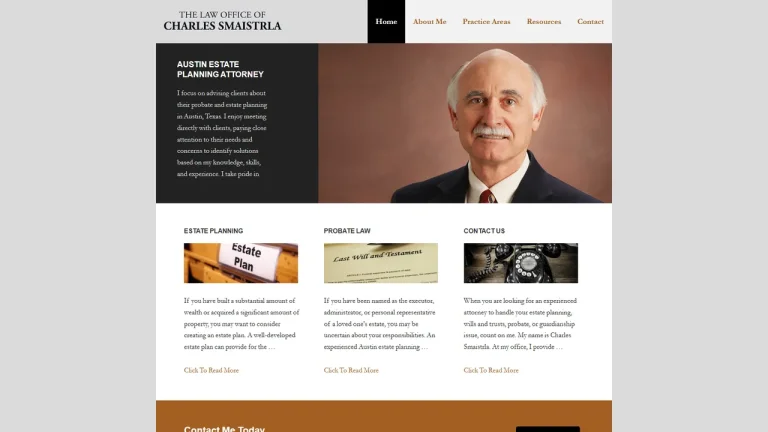
Law Office of Charles Smaistrla - Austin, TX
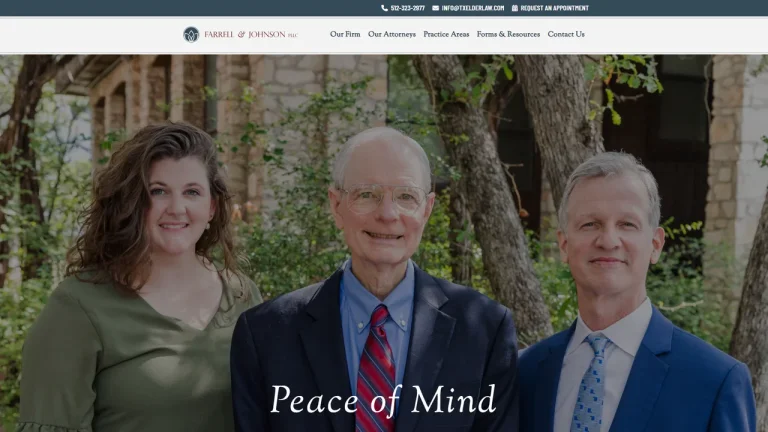
Farrell and Johnson PLLC - Austin, TX

Nielsen Law - Austin, TX

Austin Probate Attorneys, Kreig LLC - Austin, TX
Baker Law Group, PLLC - Austin, TX

Walberg Patterson Law PLLC - Austin, TX
Jason S. English Law, PLLC - Austin, TX

Law Office of Kimberly Nash P.C. - Austin, TX
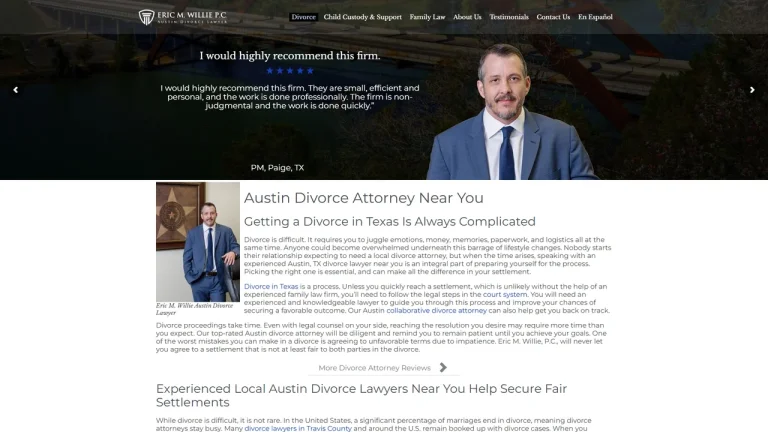
Eric M. Willie, P.C. Austin Family & Divorce Lawyer - Austin, TX

Massingill Attorneys and Counselors at Law - Austin, TX
Drake Law PLLC - Austin, TX

Safeguarding Generational Wealth in Austin and Central Texas
Estate planning in Austin requires careful synchronization of personal legacy goals with the Texas Estates Code. As a thriving center of technology, medicine, and entrepreneurship, Austin encompasses a broad spectrum of wealth profiles, from tech startup founders with stock options and digital assets to established families with real estate holdings across Westlake Hills, Tarrytown, Barton Creek, Circle C Ranch, and Mueller. Crafting comprehensive testamentary documents ensures these assets transfer smoothly while protecting against unexpected incapacity.
Estate administration and protective proceedings are overseen by Travis County Probate Court No. 1 and Travis County Probate Court No. 2, located at the Travis County Civil and Family Courts Facility at 1700 Guadalupe Street in Downtown Austin. Establishing proactive estate planning documents-including statutory durable powers of attorney and medical directives-protects individuals from court-supervised adult guardianship proceedings under Title 3 of the Texas Estates Code.
Retaining local estate planning counsel ensures that unique Texas community property statutes are addressed. Under Texas law, assets acquired during marriage are presumed to be community property, requiring strategic division and characterization to protect family assets. An experienced Austin estate attorney drafts custom wills, trusts, and advance directives that prevent family disputes and reduce administrative burdens for surviving loved ones.
Typical Estate Planning Scenarios and Fee Structures in Austin
| Case Scenario | Fee Structure | Estimated Cost (USD) | Key Cost Determinants |
|---|---|---|---|
| Core Will & Incapacity Planning Package | Flat Fee | $1,200 - $2,800 | Last Will drafting, Statutory Durable POA, Medical POA, Directive to Physicians |
| Comprehensive Trust & Estate Portfolio | Flat Fee | $3,000 - $6,500 | Revocable living trust, pour-over will, Travis County deed transfers, asset funding instructions |
| High-Net-Worth / Tech Founder Estate Strategy | Flat Fee or Hourly | $6,000 - $18,000+ ($375 - $650/hr) | Family limited partnerships, equity compensation succession, irrevocable trusts |
| Contested Adult Guardianship Proceeding | Hourly Rate with Retainer | $350 - $550/hr ($4,000 - $10,000 retainer) | Physician medical certificates, Attorney ad Litem coordination, Travis County court hearings |
Critical Legal Deadlines & Statutes in Texas
Wills executed in Texas must strictly conform to statutory formalities set forth in Tex. Estates Code § 251.051. A valid attested will must be in writing, signed by the testator, and attested by at least two credible witnesses aged 14 or older who subscribe their names in the testator's presence. Incorporating a self-proving affidavit pursuant to Tex. Estates Code § 251.104 allows the will to be admitted to probate without requiring the testimony of subscribing witnesses.
Planning for incapacity involves critical statutory designations under the Durable Power of Attorney Act, codified at Tex. Estates Code § 751.002 and utilizing the statutory durable power of attorney form in Tex. Estates Code § 752.051. Medical decision-making authority is governed by the Texas Advance Directives Act, including Directives to Physicians under Tex. Health & Safety Code § 166.033 and Medical Powers of Attorney under Tex. Health & Safety Code § 166.164.
Following death, Texas enforces a four-year statute of limitations under Tex. Estates Code § 256.003 to submit a will for probate. Failing to offer a will for probate within four years limits estate administration to muniment of title or default intestate succession rules. In community property marriages, property characterization is governed by Tex. Fam. Code § 3.002, which classifies assets acquired during marriage as community property unless proven otherwise.
DIY Online Forms vs. Strategic Legal Counsel
Many individuals in Austin attempt to prepare estate documents using automated internet software. While self-drafted documents may seem cost-effective initially, generic forms frequently omit Texas-specific statutory language, fail to properly authorize independent administration, or omit self-proving affidavits. These errors can trigger expensive probate disputes and evidentiary hearings in Travis County Probate Court No. 1 or No. 2.
Without executed durable financial and medical powers of attorney, sudden incapacity forces family members into contested adult guardianship litigation under Tex. Estates Code § 1101.001. Guardianship proceedings require court-appointed attorneys ad litem, recurring fiduciary bonds, and annual financial accountings. Engaging an experienced Austin estate planning lawyer ensures that non-probate beneficiary designations, retirement accounts, and trusts work harmoniously to protect your estate from unnecessary judicial intervention.
Red Flags When Selecting an Austin Estate Planning Lawyer
- Ignoring Tech Equity and Non-Probate Assets: Tech employees frequently hold restricted stock units (RSUs), stock options, and digital assets. An attorney who fails to integrate equity compensation plans and beneficiary designations leaves the estate exposed.
- Failing to Record Real Property Deeds: A revocable living trust is ineffective if deeds are not recorded. Ensure your attorney coordinates deed drafting and recording with the Travis County Clerk.
- Omitting Self-Proving Affidavits: A will executed without a self-proving affidavit under Tex. Estates Code § 251.104 requires locating original witnesses years later, causing substantial probate delays.
- Lack of Upfront Pricing: Choose an attorney who provides a clear, written engagement agreement detailing flat-rate package fees or hourly rates without hidden administrative charges.
Frequently Asked Questions
What documents are essential in a Texas estate plan?
A standard Texas estate plan includes a Last Will and Testament, a Statutory Durable Power of Attorney under Tex. Estates Code § 752.051, a Medical Power of Attorney under Tex. Health & Safety Code § 166.164, a Directive to Physicians, and optional living trusts.
What makes a will self-proved in Travis County?
Under Tex. Estates Code § 251.104, a will is self-proved when an official statutory affidavit is signed by the testator and two subscribing witnesses in the presence of a notary public, eliminating the need for witness testimony at probate hearings.
How does Texas community property law affect estate distribution?
Under Tex. Fam. Code § 3.002, property acquired during marriage is presumed community property, owned equally by both spouses. A deceased spouse can only dispose of their 50 percent share of community assets through their will.
How does a durable power of attorney avoid court guardianship?
Under Tex. Estates Code § 751.002, a valid statutory durable power of attorney authorizes your appointed agent to manage financial affairs immediately upon incapacity, eliminating the need for loved ones to petition for a guardianship.
Does Texas impose a state inheritance or estate tax?
No. Texas does not impose a state estate tax or inheritance tax on testamentary transfers. Estates are subject only to federal estate tax thresholds and federal filing requirements.