
Divorce & Family Law Lawyers in Vermont
Resolving family legal disputes in Vermont requires compassionate and strategic guidance to protect parental bonds and marital assets. Seasoned Vermont family law attorneys prioritize mediation and negotiated parenting plans, avoiding protracted courtroom disputes while safeguarding your long-term stability. Explore our directory below to consult with trusted family and divorce lawyers across Vermont today.

Vermont Defender General - Montpelier, VT

Legal Services Vermont - Burlington, VT

Desautels & Micciche - Burlington, VT

Langrock Mediation Center PLLC - Burlington, VT

Green Mountain Family Law - Montpelier, VT
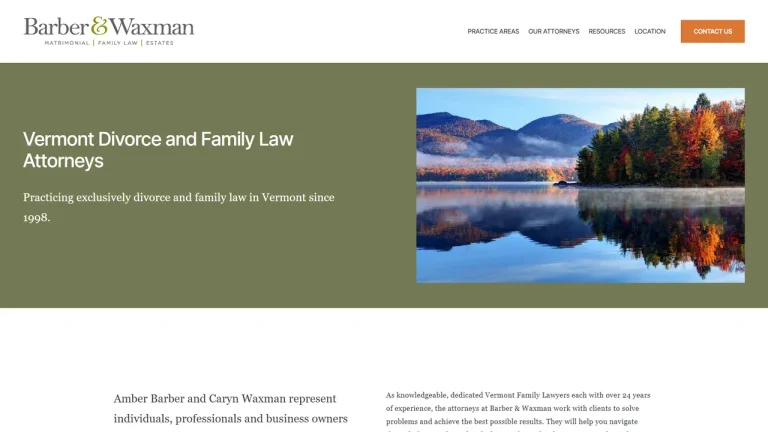
Barber & Waxman - Burlington, VT

Langrock Sperry & Wool LLP - Burlington, VT

McVeigh Skiff Attorneys At Law - Burlington, VT
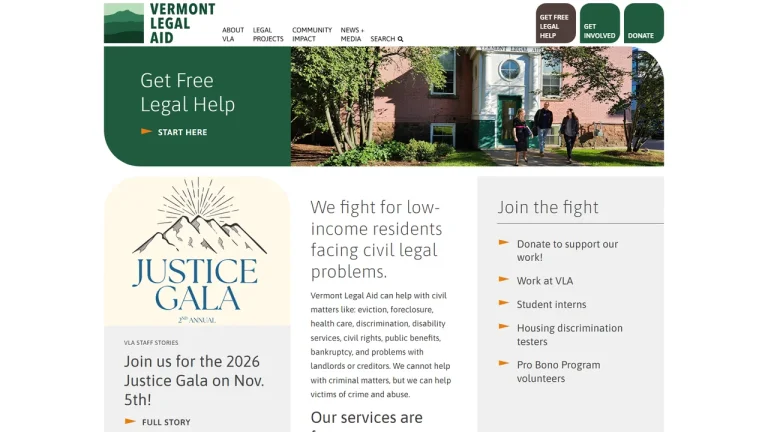
Vermont Legal Aid - Montpelier, VT

Gravel & Shea PC - Burlington, VT
McCormick, Fitzpatrick, Kasper & Burchard, P.C. - Burlington, VT

Lynn, Lynn, Blackman & Toohey, P.C. - Burlington, VT

Kenneth L. Geduldig, Attorney at Law - Burlington, VT

Paul Jarvis Law - Burlington, VT
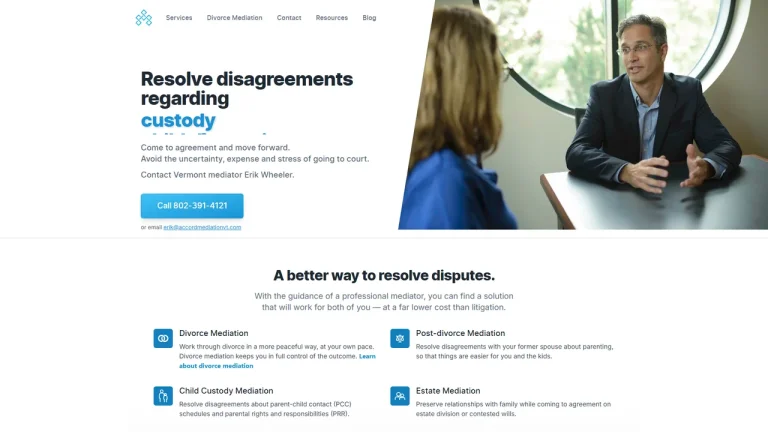
Accord Mediation - Burlington, VT

Dinse, Knapp & McAndrew, P.C. - Burlington, VT

Kaplan and Kaplan - Burlington, VT
Law Offices of Lindsey M Huddle - Burlington, VT

Blythe & Taylor - Montpelier, VT

Blodgett Watts Volk & Sussman - Burlington, VT

Monaghan Safar PLLC - Burlington, VT
Law Offices of Michael J. Straub, Esq. - Burlington, VT
Hoff Curtis - Burlington, VT
Navigating Family Law Across Vermont Superior Courts
Domestic legal matters in Vermont are adjudicated in the Vermont Superior Court, Family Division, which operates in each of the state's 14 counties. Whether filing in Chittenden County at the Burlington courthouse, Washington County in Montpelier, or Rutland County, understanding family court procedures is vital. Retaining an attorney admitted to the Vermont Bar Association ensures your case complies with statewide judicial rules.
Vermont is an all-property equitable distribution state. Under state statutes, the court has the authority to divide all assets and debts held by either or both spouses, regardless of when or how they were acquired. Skilled family counsel assists in appraising real estate, valuing small businesses or family farms, and properly inventorying retirement funds to ensure an equitable property distribution.
When children are involved, Vermont law replaces traditional custody terminology with Parental Rights and Responsibilities (PR&R), encompassing legal decision-making and physical care. Experienced Vermont family law attorneys actively assist clients in drafting collaborative parenting plans, participating in mandatory case management conferences, and pursuing domestic mediation to resolve conflicts amicably.
Family Law Legal Fee Frameworks & Retainer Structures in Vermont
| Case Scenario | Fee Structure | Estimated Cost (USD) | Key Cost Determinants |
|---|---|---|---|
| Uncontested Divorce (Stipulated Agreement) | Flat Fee or Modest Retainer | $1,500 - $3,500 | Completeness of separation agreement, presence of minor children, waiver of final hearing. |
| Contested Divorce with Property Division | Hourly Rate ($250 - $425/hr) | $4,500 - $12,500 | Real property appraisals, pension division orders, disputed spousal maintenance requests. |
| High-Conflict Parental Rights & Responsibilities | Hourly Retainer ($300 - $475/hr) | $10,000 - $30,000+ | Independent forensic evaluations, guardian ad litem participation, multi-day evidentiary hearings. |
| Post-Decree Child Support or Custody Modification | Hourly Retainer ($250 - $400/hr) | $2,500 - $6,500 | Proof of real and substantial change of circumstances, income recalculations, mediation compliance. |
Critical Legal Deadlines & Statutes in Vermont
Specific statutory rules dictate divorce jurisdiction and timelines in Vermont. Under 15 V.S.A. § 592, either spouse must have resided in Vermont for at least six consecutive months before filing a divorce complaint, and at least one spouse must have resided in the state for one full continuous year preceding the final decree hearing.
For a no-fault divorce based on living separate and apart, 15 V.S.A. § 551 requires the spouses to have lived separately for at least six consecutive months, with the court finding no reasonable probability of reconciliation. Property distribution is governed by 15 V.S.A. § 751, requiring judges to equitably divide all property owned by either party based on statutory criteria including age, health, estate value, and marital contributions.
Child custody matters are evaluated under 15 V.S.A. § 665, requiring parental rights and responsibilities to be ordered based strictly on the best interests of the child. Following the issuance of a divorce decree, 15 V.S.A. § 554 provides a mandatory 90-day nisi period during which the decree is conditional, unless both parties stipulate to waive or shorten this timeframe.
Small Claims Limits vs. Professional Representation
Vermont Superior Court small claims proceedings have a maximum monetary limit of $10,000 under 12 V.S.A. § 5531. However, small claims courts are entirely devoid of jurisdiction over family law disputes, legal separations, parental rights allocations, or divorce settlements. All family cases must be filed in the Family Division of the Superior Court.
While self-represented litigants can utilize standard forms from the Vermont Judiciary for non-contested divorces with no assets, doing so in complex cases creates grave legal vulnerabilities. Errors made in defining pension division through Qualified Domestic Relations Orders (QDROs) or drafting parenting schedules can lead to irreversible financial harm. Retaining a dedicated Vermont family attorney ensures compliance with child support calculations and protects your long-term parental rights.
Red Flags & Hiring Safeguards for Family Law Matters
Select your Vermont family law counsel carefully by checking for these potential warning signs:
- Guarantees of Sole Parental Custody: Vermont judges evaluate parental rights under the multi-factor best interest test of 15 V.S.A. § 665; any attorney promising exclusive parental rights without reviewing case facts is behaving unethically.
- Inflating Conflict to Increase Billing: Watch out for attorneys who discourage reasonable compromise or mediation sessions, as unnecessary contested motions deplete marital savings.
- Overlooking the All-Property Rule: In Vermont, separate premarital property or inherited assets can be included in the equitable estate under 15 V.S.A. § 751; your attorney must be skilled at tracing and protecting specific property interests.
- Unclear Retainer Agreement Billing: Demand clear, itemized monthly billing statements that specify attorney hourly rates, paralegal costs, and document preparation charges.
Frequently Asked Questions
How long must I reside in Vermont before filing for divorce?
Under 15 V.S.A. § 592, either spouse must reside in Vermont for at least six months before filing, and at least one party must maintain continuous residence for one full year prior to the final hearing.
What is the required separation period for a no-fault divorce in Vermont?
Under 15 V.S.A. § 551, spouses must live separate and apart for at least six continuous months without reconciliation before a no-fault decree can be granted.
How is property divided in a Vermont divorce?
Vermont follows the all-property equitable distribution system under 15 V.S.A. § 751, allowing the court to divide all assets owned by either party fairly based on statutory criteria rather than an automatic equal split.
What is the 90-day nisi waiting period in Vermont?
Pursuant to 15 V.S.A. § 554, a final divorce order remains conditional for 90 days before becoming absolute, although spouses who file an uncontested stipulation may jointly request that this period be waived.
How are parental rights and responsibilities allocated in Vermont?
Under 15 V.S.A. § 665, courts evaluate the best interests of the child, assessing each parent's ability to provide love, developmental support, and stability when awarding legal and physical responsibilities.