
Workers' Compensation Lawyers in Vermont
Retaining a workers' compensation lawyer in Vermont ensures your medical and wage benefits are protected under state statutes. Dedicated legal counsel resolves disputed claims through administrative hearings and settlement negotiation. Explore our verified directory below to connect with an established Vermont workers' comp attorney.

Biggam Fox Skinner LLP - Burlington, VT
McCormick, Fitzpatrick, Kasper & Burchard, P.C. - Burlington, VT
Brady / Donahue - Burlington, VT
McVeigh Skiff Attorneys At Law - Burlington, VT

Shoup Evers & Green - Burlington, VT

Main Street Law LLP - Montpelier, VT
Biggam Fox Skinner LLP - Montpelier, VT

Langrock Sperry & Wool LLP - Burlington, VT
Clark, Werner & Flynn, P.C. - Burlington, VT

Cooley, Cooley & Foxx - Burlington, VT
Morgan & Morgan - Burlington, VT
Bookchin & Durrell, PC - Montpelier, VT
Mcveigh Skiff - Burlington, VT
Sylvester Law Firm - Burlington, VT
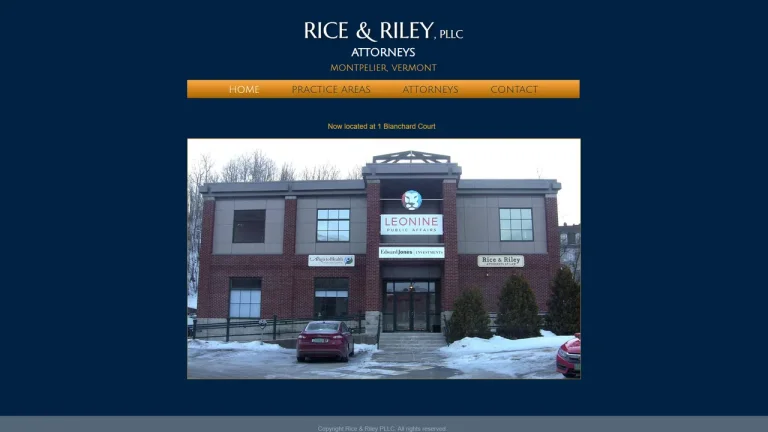
Rice & Riley - Montpelier, VT

Lisman Leckerling PC - Burlington, VT
Theriault & Joslin, P.C. - Montpelier, VT

Dickson Law Office, PLLC - Burlington, VT

Harding Mazzotti, LLP - Burlington, VT
Navigating the Vermont Workers' Compensation System and Administrative Appeals
Workplace injuries in Vermont-whether occurring in manufacturing facilities in Essex and Rutland, healthcare institutions in Burlington, forestry and construction projects across rural counties, or hospitality resorts in Stowe-are governed by the Vermont Workers' Compensation Act under 21 V.S.A. § 601. This statutory framework provides no-fault benefits, covering necessary medical treatments, temporary disability income, permanent impairment awards, and vocational rehabilitation services.
Unlike civil personal injury claims, workers' compensation disputes are processed administratively through the Vermont Department of Labor, Workers' Compensation Division, located in Montpelier. When insurance carriers refuse surgical authorization, dispute wage calculations, or challenge injury causation, claims proceed through informal dispute conferences before Department specialists, leading to formal evidentiary hearings before administrative law judges pursuant to 21 V.S.A. § 663.
Securing legal representation from an attorney admitted to the Vermont Bar Association is essential when dealing with independent medical examinations and benefit terminations. If the Commissioner of Labor's formal award is challenged, counsel advocates for the injured worker in a de novo jury trial before the Vermont Superior Court under 21 V.S.A. § 670 or on legal questions before the Vermont Supreme Court under 21 V.S.A. § 672.
Legal Fee Structures for Vermont Workers' Compensation Claims
| Case Scenario | Fee Structure | Estimated Cost (USD) | Key Cost Determinants |
|---|---|---|---|
| Initial Claim Filing & Temporary Disability Processing | Contingency / Regulated | Statutorily Capped at 20% of Award | Timely employer notice, treating medical records, and average weekly wage calculations. |
| Medical Benefit Denial & Causality Dispute | Fee-Shifting / Regulated | No Upfront Fee Under 21 V.S.A. § 678 | Independent medical exam rebuttal, medical specialist reports, and insurer denial filings. |
| Formal Evidentiary Hearing Before VDOL Commissioner | Fee-Shifting / Contingency | Statutory 20% or Carrier-Paid Fees | Administrative hearing length, medical witness depositions, and legal cross-examination. |
| Third-Party Worksite Negligence Action | Contingency Fee | 33.3% of third-party recovery | General contractor negligence, defective equipment evidence, and statutory lien resolution. |
Critical Legal Deadlines & Statutes in Vermont
Navigating a workplace injury claim in Vermont requires strict adherence to administrative notice and filing windows. Under 21 V.S.A. § 656, an injured worker must give written notice of the injury to the employer as soon as practicable after its occurrence. A formal claim for compensation must be submitted within six months after the date of injury pursuant to 21 V.S.A. § 660.
When an insurance carrier issues a formal denial of benefits, the worker must submit a formal application for a hearing to the Vermont Department of Labor to protect their claim. Following a formal decision by the Commissioner of Labor, either party wishing to appeal for a trial by jury on questions of fact to the Vermont Superior Court must file within 30 days under 21 V.S.A. § 670. Appeals on legal questions to the Vermont Supreme Court under 21 V.S.A. § 672 are likewise subject to a strict 30-day window. Under 21 V.S.A. § 678, when an employee prevails in a contested claim, the Commissioner or court has authority to order the employer and carrier to pay reasonable attorney fees and costs directly.
Administrative Agency Relief vs. Third-Party Civil Litigation
Under 21 V.S.A. § 622, the Vermont Workers' Compensation Act serves as the exclusive remedy against an employer for work-related injuries, barring direct tort lawsuits in civil court or Small Claims Court under 12 V.S.A. § 5531. However, when a job site injury is caused by the negligence of a third party-such as an outside delivery driver, a separate subcontractor, or a defective machinery manufacturer-injured workers can pursue civil remedies outside the workers' compensation system.
Under 21 V.S.A. § 624, the injured worker is permitted to receive workers' compensation benefits while simultaneously bringing a third-party personal injury lawsuit in the Vermont Superior Court, Civil Division. This third-party action enables the worker to recover non-economic damages, such as physical pain and suffering, which are not recoverable through workers' compensation. Skilled legal counsel ensures that insurance subrogation liens are accurately calculated and negotiated to maximize the injured worker's total net financial recovery.
Red Flags When Selecting a Vermont Workers' Comp Attorney
- Demanding upfront retainers or out-of-pocket legal payments; attorney fees in Vermont workers' compensation are statutorily regulated and subject to approval under 21 V.S.A. § 678.
- Lack of courtroom experience before the Vermont Department of Labor in Montpelier or the Vermont Superior Court.
- Failing to examine potential third-party personal injury claims under 21 V.S.A. § 624 when outside equipment or subcontractors were involved.
- Pressuring an injured worker to accept a quick lump-sum agreement before achieving a Medical End Result and obtaining a formal impairment rating.
Frequently Asked Questions
How long do I have to report an on-the-job injury in Vermont?
Under 21 V.S.A. § 656, you must notify your employer in writing as soon as practicable, and a formal claim for benefits must be submitted within six months under 21 V.S.A. § 660.
Who pays my legal fees in a contested Vermont workers' compensation claim?
Under 21 V.S.A. § 678, when an injured worker prevails in a contested claim, the Commissioner of Labor or the court may order the employer or insurer to pay the worker's reasonable attorney fees and litigation costs.
What is a Medical End Result in Vermont workers' compensation?
A Medical End Result means that an injury has stabilized and no further functional improvement is reasonably expected with continued treatment. Reaching this milestone ends temporary disability and triggers an evaluation for permanent partial disability.
Can an employer fire me for filing a workers' compensation claim in Vermont?
No. Under 21 V.S.A. § 710, it is unlawful for an employer in Vermont to discharge, discipline, or discriminate against an employee for asserting a workers' compensation claim.
Can I sue someone other than my employer for a workplace accident?
Yes. Under 21 V.S.A. § 624, you can pursue a third-party civil lawsuit in Superior Court against negligent individuals or entities other than your employer, allowing you to seek damages for pain and suffering.