
Accident & Injury Lawyers in Washington
Retaining an accident and injury lawyer in Washington protects your rights under state comparative fault laws. Dedicated attorneys resolve complex insurance claims through structured negotiation, avoiding prolonged litigation. Explore our verified directory below to schedule a case review with a trusted Washington injury attorney.
Law Offices of Blake Fulton Quackenbush - Vancouver, WA
Legal Resolutions - Tacoma, WA
Ron Meyers & Associates PLLC - Olympia, WA
Washington State Attorneys, PLLC - Seattle, WA
Craig Swapp & Associates - Spokane, WA

Law Office of Erin Bradley McAleer - Vancouver, WA

Morgan Hill PC - Olympia, WA

Popa Law - Bellevue, WA

Emerald City Law Group Inc. - Seattle, WA

Advantage Legal Group - Bellevue, WA
Paukert & Troppmann PLLC - Spokane, WA

Kram & Wooster, P.S. - Tacoma, WA

Campiche Andrews, PLLC - Seattle, WA
Elk & Elk Co., Ltd. - Seattle - Seattle, WA
Brett McCandlis Brown & Conner PLLC - Vancouver, WA

Brumley Law Firm - Kent, WA
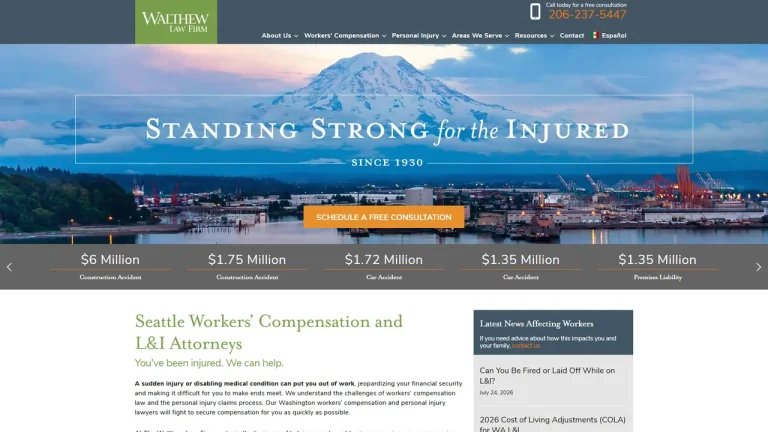
Walthew Law Firm - Seattle, WA

Tha Win - Seattle, WA
Northwest Consumer Law Center - Seattle, WA

Law Offices of Reed Yurchak - Bellevue, WA

Bolan Law Group, PS - Tacoma, WA
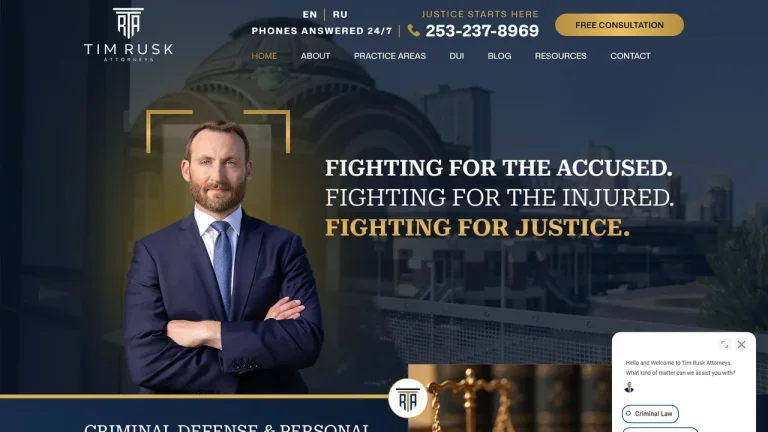
Tim Rusk Attorneys - Tacoma, WA
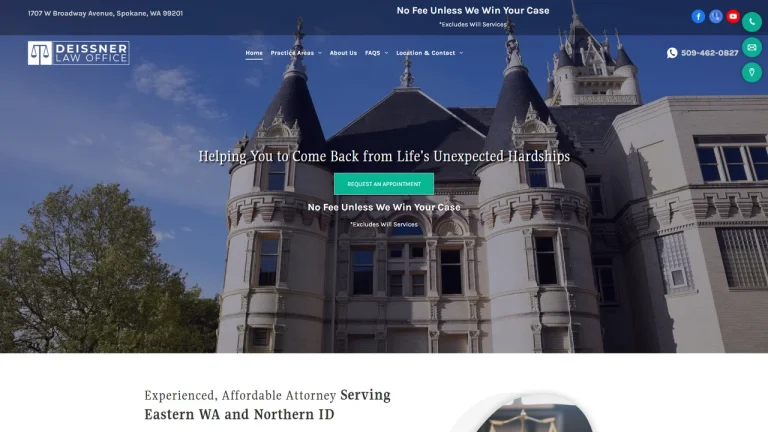
Deissner Law Office - Spokane, WA

Navigating Accident and Injury Claims Across Washington Courts
Accidental injuries across Washington State-from multi-vehicle collisions on Interstate 5 in Seattle and Tacoma to commercial trucking accidents on Interstate 90 across Snoqualmie Pass and agricultural incidents in Spokane and Yakima-demand immediate legal command of state liability statutes. Washington operates under a pure comparative fault system, providing broad avenues for financial recovery for victims injured by negligent motorists, commercial entities, or municipal agencies.
When settlement negotiations stall, civil complaints are adjudicated in the Washington Superior Courts, which maintain general trial jurisdiction across the state's 39 counties. Major injury lawsuits are litigated in regional courthouses, including the King County Superior Court in Seattle and Kent, the Pierce County Superior Court in Tacoma, and the Snohomish County Superior Court in Everett, or in federal courts such as the U.S. District Court for the Western or Eastern District of Washington.
Retaining an attorney admitted to the Washington State Bar Association ensures your recovery accounts for all past and future damages. Dedicated advocates coordinate mandatory personal injury protection reimbursements, manage electronic filings through King County ECR Online and county Odyssey portals, and protect against premature settlement releases.
Legal Fee Structures for Washington Personal Injury Claims
| Case Scenario | Fee Structure | Estimated Cost (USD) | Key Cost Determinants |
|---|---|---|---|
| Direct Insurance Settlement & Uncontested Motor Vehicle Claim | Contingency Fee | No Upfront Cost (33.3% of recovery) | Clear police traffic reports, prompt medical stabilization, and policy limit availability. |
| Disputed Liability & Comparative Fault Negotiations | Contingency Fee | 33.3% to 35% of gross recovery | Reconstruction of crash dynamics, disputing shared fault under RCW 4.22.005, and multiple insurer negotiations. |
| Superior Court Trial & Expert Witness Depositions | Contingency Fee | 35% to 40% of awarded damages | Deposition transcripts, biomechanical engineers, life-care planners, and trial exhibits. |
| Government Entity Tort Claim & Municipal Collision | Contingency Fee | 33.3% to 40% of recovery | Mandatory administrative notice under RCW 4.96.020, sovereign immunity limits, and transit authority investigations. |
Critical Legal Deadlines & Statutes in Washington
Under RCW 4.16.080(2), the statute of limitations for personal injury lawsuits in Washington is three years from the date of the injury. If an injury results in death, the personal representative must file a wrongful death action within three years under RCW 4.16.080(2) and RCW 4.20.010.
Claims against governmental bodies require strict administrative compliance. Under RCW 4.92.100 for state agencies and RCW 4.96.020 for local government entities, a formal written claim for damages must be presented to the designated risk management officer. The claimant must wait a mandatory 60 days after filing the notice before initiating a lawsuit in Superior Court, during which the statute of limitations is tolled. Under RCW 4.22.005, Washington follows a pure comparative fault standard, meaning an injured claimant can recover damages even if they are largely at fault, with their award reduced proportionally. Furthermore, under RCW 4.22.070, joint and several liability is substantially abolished in favor of proportionate liability, unless the plaintiff is fault-free or defendants acted in concert. Insurers must also offer Personal Injury Protection under RCW 48.22.085.
Small Claims Court Limits vs. Superior Court Injury Advocacy
In Washington, the Small Claims Department of the District Court operates under RCW 12.40.010, which limits claims brought by a natural person to $10,000 ($5,000 for corporations). Furthermore, under RCW 12.40.080, attorneys are prohibited from appearing in small claims trials without express consent from the judge.
While resolving minor vehicle repair costs below $10,000 in Small Claims Court is straightforward, physical injuries should not be handled in this informal forum. Physical trauma from car crashes or premises accidents-such as herniated discs, torn ligaments, and traumatic head injuries-regularly requires diagnostic MRIs, surgeries, and physical therapy that exceed $10,000 within weeks. In Small Claims Court, unrepresented claimants cannot subpoena electronic telemetry, conduct expert depositions, or resolve health insurer subrogation liens. Retaining an attorney in the Washington Superior Court or District Court (which handles civil claims up to $100,000 under RCW 3.66.020) ensures that medical providers, PIP carriers under RCW 48.22.085, and third-party insurers are properly managed to protect your net financial recovery.
Red Flags When Hiring a Washington Personal Injury Lawyer
- Rushing to settle before you reach maximum medical improvement, leaving you personally responsible for future surgeries or chronic care.
- Unfamiliarity with the mandatory 60-day administrative waiting period required when suing Washington state or municipal agencies under RCW 4.96.020.
- Failing to explain how proportionate liability under RCW 4.22.070 impacts recovery when multiple drivers or entities share blame.
- Charging upfront administrative fees or out-of-pocket litigation expenses rather than operating on a clear contingency-fee contract.
Frequently Asked Questions
How long do I have to file an accident lawsuit in Washington?
Under RCW 4.16.080(2), you have three years from the date of the injury to file a lawsuit in Washington civil court.
Can I recover damages if I was partially at fault for the crash in Washington?
Yes. Under RCW 4.22.005, Washington applies pure comparative fault. You can recover damages even if you were 90 percent responsible, though your financial recovery will be reduced by your percentage of fault.
What is the notice requirement for suing a city or county in Washington?
Under RCW 4.96.020, you must file a formal written Notice of Claim with the local government agency and wait a mandatory 60 days before you can initiate a lawsuit in court.
What is Personal Injury Protection (PIP) in Washington?
Under RCW 48.22.085, auto insurers must offer PIP coverage, which pays for immediate medical expenses and lost wages regardless of who caused the collision.
How are accident attorney fees paid in Washington?
Personal injury attorneys in Washington represent clients on a contingency-fee basis. You pay no upfront retainers, and legal fees are collected solely as an agreed percentage of the final settlement or trial verdict.