
Business & Real Estate Lawyers in Washington
Navigating commercial contracts and property transactions in Washington requires experienced legal counsel to ensure regulatory compliance and asset protection. Dedicated business and real estate lawyers resolve disputes through proactive negotiation and mediation, avoiding costly courtroom battles while safeguarding statutory filing deadlines. Explore our verified directory below to schedule a consultation with an accomplished Washington business and real estate attorney today.

Law Offices of Blake Fulton Quackenbush - Vancouver, WA

WaLaw Realty LLC - Seattle, WA
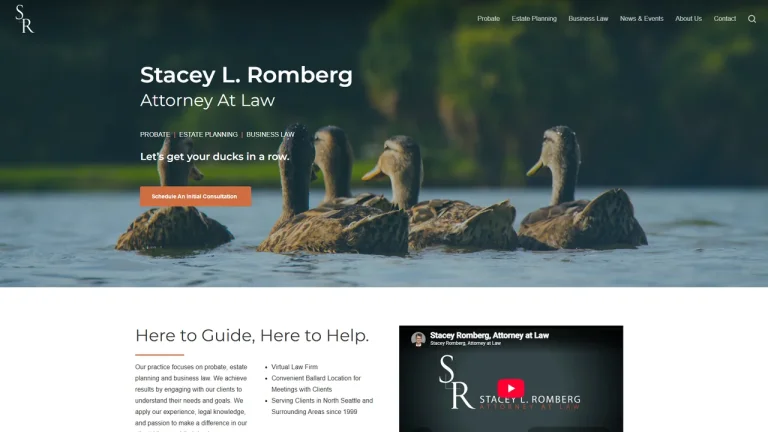
Stacey Romberg, Attorney at Law - Seattle, WA

The Law Offices of Jenny Ling, PLLC - Seattle, WA
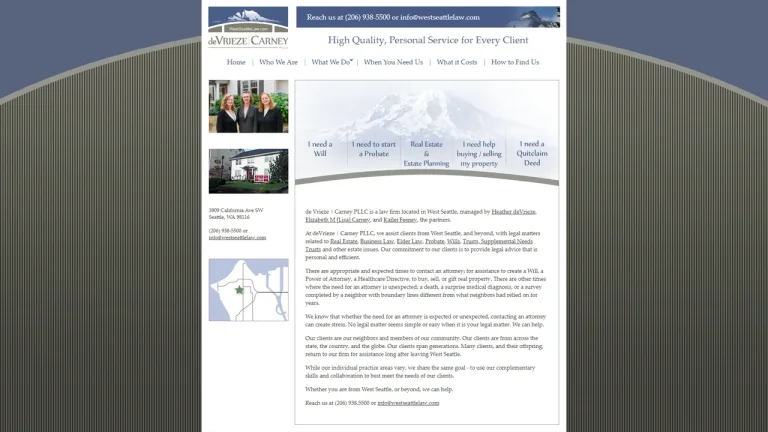
de Vrieze | Carney PLLC - Seattle, WA

Conway Law, PLLC - Vancouver, WA

Bill Montecucco - Vancouver, WA

Cascadia Intellectual Property - Seattle, WA

Bold Patents Law Firm - Tacoma, WA

Washington Legal Services PLLC - Everett, WA

Gobel Law Office - Spokane, WA
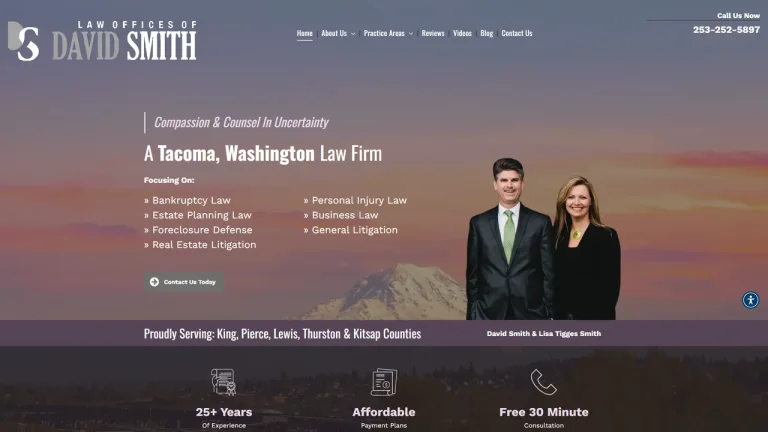
Law Offices Of David Smith - Tacoma, WA

Lana Kurilova Rich PLLC - Bellevue, WA
Baxter Law International PLLC - Bellevue, WA

The Gray Law Firm P.S. - Tacoma, WA

Etter, McMahon, Lamberson, Van Wert & Oreskovich, P.C. - Spokane, WA

Brettin Law Office - Seattle, WA

The Apex Law Group PLLC - Seattle, WA

Sullivan Law Firm, LLC - Seattle, WA
Carney Badley Spellman - Seattle, WA

Colvin + Hallett Law - Seattle, WA

Wilmot Law, PLLC - Tacoma, WA

Peterson Law, PLLC - Bellevue, WA

Structuring Enterprises & Property Transactions Across Washington
From tech enterprise development in King County (Seattle and Bellevue) and maritime logistics along Puget Sound in Pierce County (Tacoma) to commercial developments in Spokane, Clark County (Vancouver), and Snohomish County (Everett), Washington's commercial environment is fast-paced and governed by distinct statutory requirements. Business owners and real estate investors must navigate strict corporate governance frameworks, complex environmental zoning, and community property real estate rules.
Commercial legal disputes and real property actions in Washington fall under the original jurisdiction of the Washington Superior Courts, which maintain dedicated civil trial departments in each of the state's 39 counties. Appellate oversight is distributed across the three divisions of the Washington Court of Appeals in Seattle, Tacoma, and Spokane, with final state judicial review resting with the Washington Supreme Court in Olympia. Entity filings, commercial recording, and annual reports are centrally administered through the Office of the Washington Secretary of State.
Engaging an experienced Washington business and real estate attorney ensures your investments are protected through every phase of growth. Skilled counsel drafts customized operating agreements under state corporate statutes, performs exhaustive commercial title reviews, resolves commercial lease disputes, and insulates personal wealth from operational business liabilities.
Typical Fee Structures & Costs for Washington Business & Real Estate Counsel
Legal fees for business transactions and real property legal representation across Washington depend on entity complexity, transaction value, and the degree of litigation required. Below is an overview of standard legal fee benchmarks.
| Case Scenario | Fee Structure | Estimated Cost (USD) | Key Cost Determinants |
|---|---|---|---|
| LLC Formation, Operating Agreements & Corporate Structuring | Flat Fee or Hourly ($325 - $550/hr) | $1,500 - $4,500 | Multi-member governance complexity, customized buy-sell provisions, and capital contribution schedules. |
| Commercial Property Purchase & Sale Representation | Flat Fee or Hourly ($350 - $600/hr) | $3,000 - $8,500 | Environmental due diligence, commercial title endorsements, survey reviews, and zoning compliance. |
| Commercial Lease Drafting, Review & Negotiation | Hourly Retainer ($300 - $525/hr) | $1,800 - $5,000 | Triple-net (NNN) terms, personal guaranty clauses, tenant improvement allowances, and assignment rights. |
| Superior Court Business Litigation & Real Estate Disputes | Hourly Retainer ($375 - $650/hr) | $10,000 - $35,000+ | Deposition volume, forensic accounting audits, temporary restraining orders, and trial duration. |
Critical Legal Deadlines & Statutes in Washington
Parties engaged in corporate management or real estate transactions in Washington must adhere strictly to statutory timelines, notice requirements, and disclosure rules established by state law.
Under RCW 4.16.040, civil lawsuits for breach of a written contract, lease, or promissory note must be commenced within six years. Conversely, actions based on oral contracts, liability on unwritten accounts, or relief grounded in fraud are subject to a three-year limitation period pursuant to RCW 4.16.080. Corporate entity governance and limited liability protections are regulated by the Washington Limited Liability Company Act under RCW 25.15.018.
In real property transactions, sellers of residential real estate must deliver a statutory disclosure statement pursuant to RCW 64.06.020 (commonly known as Form 17), providing buyers with a strict three-business-day window to rescind the purchase agreement after delivery. Because Washington is a community property state, conveyances or encumbrances of community real estate require the execution of both spouses pursuant to RCW 26.16.030. Furthermore, construction defect claims against builders or developers are barred after six years from substantial completion under Washington's statute of repose codified at RCW 4.16.310.
Small Claims Limits vs. Superior Court Real Estate & Commercial Litigation
Under RCW 12.40.010, the Small Claims Department of Washington District Courts has a jurisdictional ceiling of $10,000 for lawsuits brought by natural persons, and $5,000 for cases initiated by corporate entities or commercial businesses. Moreover, under RCW 12.40.080, attorneys are generally prohibited from participating in small claims hearings without prior permission from the judge.
Small claims courts are strictly restricted to monetary awards and possess zero equitable jurisdiction. A small claims judge cannot issue an injunction, grant a decree of quiet title, order specific performance of a real estate purchase contract, or resolve an intra-company shareholder freeze-out. Attempting to resolve title clouds or commercial lease disputes in small claims court is legally improper.
Under RCW 2.08.010, the Washington Superior Courts hold original and exclusive jurisdiction over all proceedings involving the title to or possession of real property, equitable remedies, and major commercial breach-of-contract disputes. Engaging qualified legal counsel allows business owners to access formal pre-trial discovery, conduct depositions, and pursue deeds of trust foreclosures under RCW 61.24.030 in the proper judicial venue.
Red Flags When Hiring a Washington Business & Real Estate Attorney
Structuring commercial assets and real estate holdings requires thorough due diligence. Protect your investments by vetting prospective legal counsel against these common red flags:
- Utilizing generic boilerplate operating agreements: Off-the-shelf business templates often fail to address Washington's default LLC statutory rules under RCW 25.15.018 and fail to integrate community property protections under RCW 26.16.030, exposing member equity to unexpected spousal claims.
- Dual representation without written conflict waivers: An attorney who offers to represent both buyer and seller in a real estate closing or multiple partners in an LLC formation without executing written conflict-of-interest waivers risks violating Washington State Bar Association professional conduct standards.
- Overlooking Form 17 statutory disclosure rules: Failing to guide buyers and sellers through the mandatory disclosure procedures of RCW 64.06.020 can trigger unexpected contract rescissions or post-closing misrepresentation lawsuits.
- Inadequate title and environmental due diligence: Commercial property counsel must verify environmental history, tribal land overlay easements where applicable, and title exceptions rather than simply relying on standard municipal recording summaries.
Frequently Asked Questions
Does Washington require both spouses to sign a real estate purchase or sale agreement?
Yes. Under Washington's community property laws codified at RCW 26.16.030, both spouses must join in executing any deed, lease for more than one year, or encumbrance affecting community real property.
What is the statute of limitations for breach of contract in Washington?
Under RCW 4.16.040, a lawsuit for breach of a written contract must be filed within six years. If the agreement was oral, the statutory deadline is three years pursuant to RCW 4.16.080.
What is the Form 17 disclosure in Washington real estate sales?
Form 17 is the mandatory seller disclosure statement governed by RCW 64.06.020. Sellers must deliver it to buyers, who then have three business days to review disclosures and rescind the purchase agreement without penalty if desired.
Can a corporation or LLC represent itself in Washington courts?
No. Under Washington court rules, corporations, LLCs, and formal legal entities cannot appear pro se in District or Superior Court and must be represented by an attorney licensed with the Washington State Bar Association.
Where are real estate title lawsuits litigated in Washington?
Under RCW 2.08.010, Washington Superior Courts hold exclusive jurisdiction over actions involving the title to or possession of real property, meaning quiet title, partition, and boundary line disputes cannot be decided in District Court.