
Debt Relief Lawyers in Washington
Overwhelmed by debt in Washington? Retaining an experienced debt relief attorney protects your earnings from wage garnishment and halts abusive collection calls. A qualified Washington debt relief lawyer negotiates lump-sum reductions, defends collection lawsuits, and ensures debt collectors comply with strict state consumer laws. Explore our directory below to connect with verified debt defense counsel in your area.
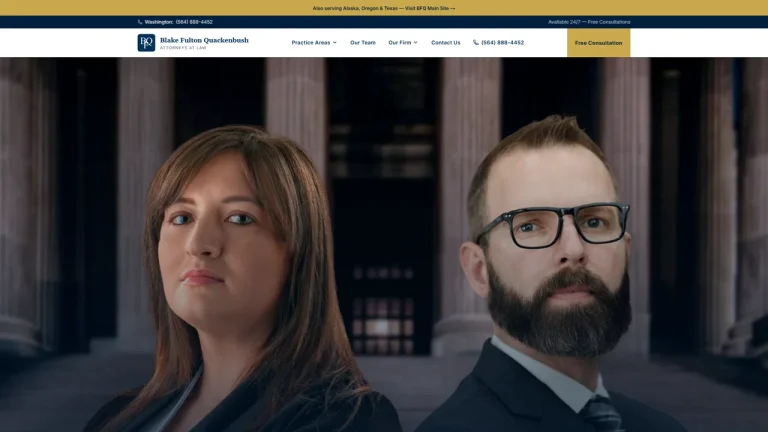
Law Offices of Blake Fulton Quackenbush - Vancouver, WA

The Law Office of Joshua L. Turnham, PLLC - Seattle, WA

Hanis Irvine Prothero, PLLC - Kent, WA

Lauber Law Group - Everett, WA
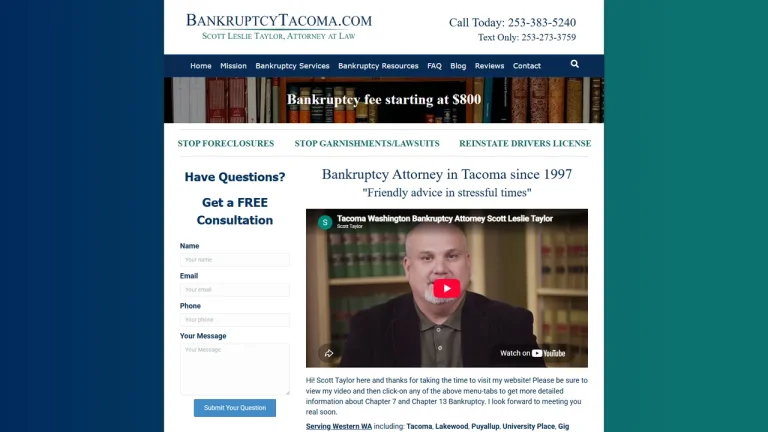
Scott L. Taylor Attorney - Tacoma, WA

Mulvaney Law Offices, PLLC - Bellevue, WA

Accelerated Tax Solutions, Inc - Seattle, WA

Insight Law - Seattle, WA
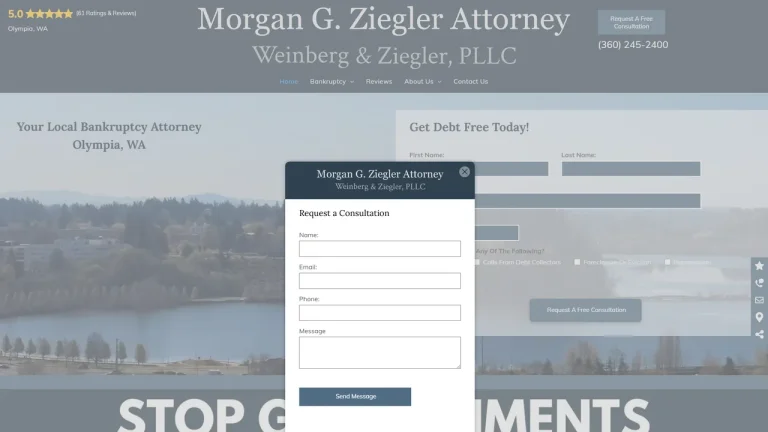
Weinberg & Ziegler PLLC - Olympia, WA
Snohomish County Legal Services - Everett, WA

Partners Tax Relief - Vancouver, WA

Defense Tax Partners - Bellevue, WA
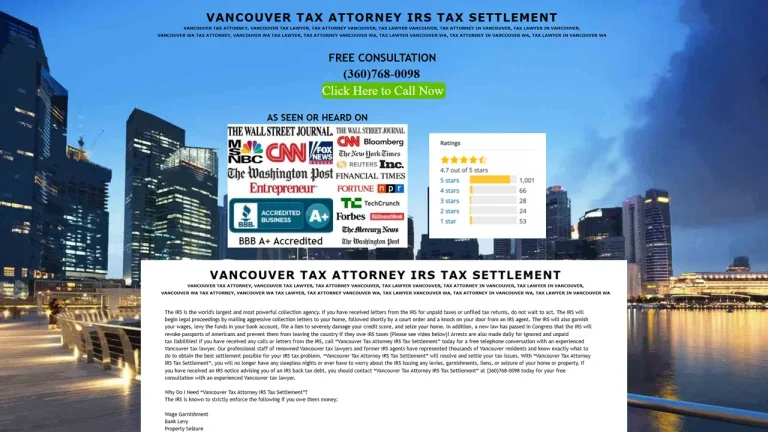
Vancouver Tax Attorney IRS Tax Settlement - Vancouver, WA
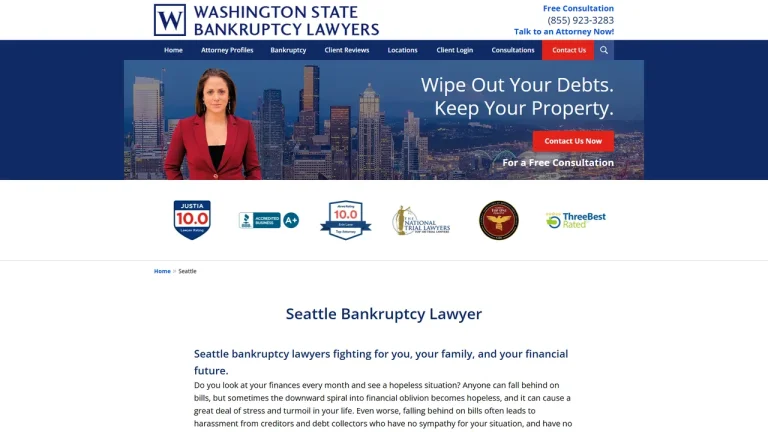
Washington State Bankruptcy Lawyers - Seattle, WA

LAKE LAW, PLLC - Seattle, WA

Washington State Attorneys, PLLC - Everett, WA
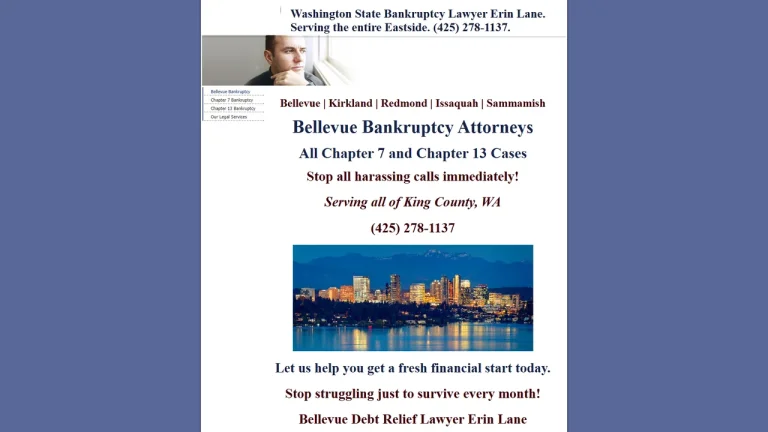
Bellevue Bankruptcy Legal Services - Bellevue, WA
Northwest Consumer Law Center - Seattle, WA
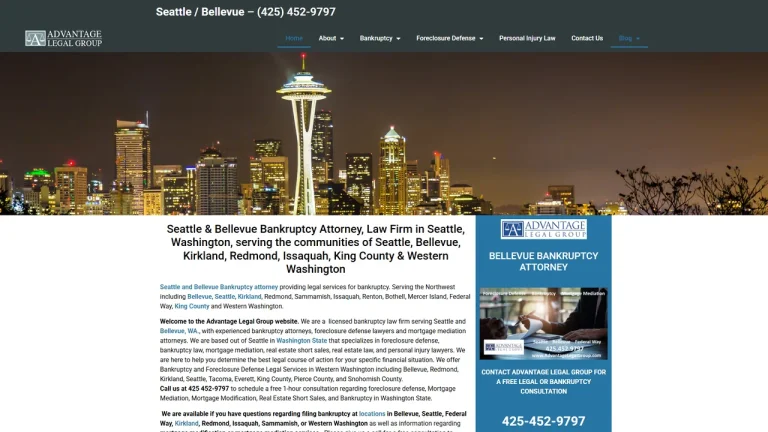
Advantage Legal Group - Bellevue, WA
Robert V. Boeshaar, Tax Attorney - Seattle, WA
Jennie Patton Attorney at Law - Olympia, WA
Square One Law, PLLC - Everett, WA

Northwest Debt Relief Law Firm - Vancouver, WA
Debt Defense and Consumer Protection Across Washington
Consumer debt disputes, credit card collection actions, and creditor judgments across Washington are litigated within the state court system. Lawsuits filed by third-party collection agencies and debt buyers originate in county District Courts or Superior Courts, including King County District Court in Seattle, Pierce County District Court in Tacoma, and Spokane County District Court.
Washington maintains robust consumer debt protection laws under the Washington Collection Agency Act and the Washington Consumer Protection Act. Creditors seeking post-judgment wage garnishments or bank account levies must strictly follow statutory pre-garnishment notices and provide state-mandated exemption claim forms.
Retaining a debt relief attorney licensed through the Washington State Bar Association (WSBA) shifts leverage back to consumers. An experienced debt lawyer investigates whether debt collection agencies hold active state collection licenses, challenges lack of standing on assigned debt accounts, and negotiates formal settlement agreements that eliminate excessive collection fees and interest.
Legal Fee Frameworks for Washington Debt Relief Services
| Case Scenario | Fee Structure | Estimated Cost (USD) | Key Cost Determinants |
|---|---|---|---|
| District Court Debt Collection Defense | Flat Retainer | $1,200 - $3,000 | Original creditor vs. debt buyer, chain of title documentation, answer and discovery filings. |
| Out-of-Court Debt Settlement Negotiation | Contingency (% of Savings) or Flat | $1,500 - $4,500 | Total outstanding unsecured debt volume, single creditor vs. multi-card portfolios, lump-sum settlement availability. |
| Wage Garnishment Quash & Exemption Claim | Flat Fee | $800 - $2,000 | Number of active writs of garnishment, income calculation under Washington minimum wage thresholds. |
| Consumer Protection Act (CPA) Lawsuit Against Collector | Contingency / Statutory Fee Shifting | $0 Upfront (Attorney fees recovered from violator) | Proof of illegal harassment, unlicensed collection agency operations, statutory damage recovery. |
Critical Legal Deadlines & Statutes in Washington
Consumer debt actions in Washington are subject to strict statutory deadlines. Under RCW 4.16.040, the statute of limitations on written contracts and credit card debts is 6 years from the date of the last payment or default. For oral debts, RCW 4.16.080 imposes a 3-year limitations window. Initiating legal action or attempting to collect on time-barred debt violates consumer laws.
Unlawful collection practices are prohibited under the Washington Collection Agency Act codified at RCW 19.16.250, with violations constituting per se unfair trade practices under RCW 19.86.020. When a debtor receives a writ of garnishment, Washington wage protection laws under RCW 6.27.150 automatically exempt the greater of 80 percent of disposable earnings or 35 times the state minimum wage for consumer debt. Borrowers must file an Exemption Claim within 28 days of service of the garnishment writ to preserve protected funds.
Small Claims Limits vs. Debt Relief Representation in Washington
Pursuant to RCW 12.40.010, small claims actions in Washington District Courts are capped at $10,000 for natural persons and $5,000 for corporate entities. While small claims courts provide an informal arena for unrepresented individuals to settle minor payment disagreements, commercial collection agencies and debt buyers routinely file actions in the regular civil docket of the District Court or Superior Court to secure enforceable default judgments.
Navigating debt collection lawsuits pro se frequently leads to procedural default judgments, resulting in 10-year renewable judgment liens and immediate garnishments. Debt defense attorneys utilize formal discovery to compel debt buyers to prove chain of custody, verify account ledger accuracy, and uncover statutory collection violations. Engaging legal counsel allows consumers to settle claims for a fraction of the face value or achieve outright case dismissals.
Red Flags When Hiring a Washington Debt Relief Lawyer
- Out-of-state debt settlement companies that require upfront fees before resolving debts, in direct violation of Washington debt adjusting statutes.
- Advising consumers to cease all communication with creditors without filing formal notices of legal representation.
- Guaranteed settlement percentages prior to examining specific creditor policies and documentation.
- Firms lacking licensed Washington State Bar Association attorneys capable of filing an appearance in your county District Court to stop default judgments.
Frequently Asked Questions
What is the statute of limitations on credit card debt in Washington?
Under Washington state law, the statute of limitations for written contracts and credit card accounts is 6 years from the date of breach or the most recent payment. Once this period expires, creditors cannot legally sue to collect the debt.
How much of my wages can be garnished for consumer debt in Washington?
Washington law protects a substantial portion of earnings. Creditors collecting consumer debts can garnish only up to 20 percent of disposable earnings, or the amount by which weekly earnings exceed 35 times the state minimum wage, whichever calculation leaves more money in the worker's paycheck.
Can a collection agency sue me in Washington if they are unlicensed?
No. Under the Washington Collection Agency Act, third-party debt collectors must hold an active state collection agency license. Filing a lawsuit without proper licensure is an actionable violation that can lead to case dismissal and statutory damages.
What is the difference between a debt settlement company and a debt defense attorney?
A debt settlement company cannot represent you in court, give legal advice, or stop a lawsuit. A licensed Washington debt defense attorney can file court answers, raise legal defenses, prevent default judgments, and hold abusive collectors liable under consumer protection statutes.
How do I confirm my debt defense attorney is licensed in Washington?
You can check the attorney's credentials and verify their active status without disciplinary sanctions by utilizing the legal directory provided by the Washington State Bar Association.