
Divorce & Family Law Lawyers in Washington
Retaining a divorce and family law lawyer in Washington protects your parental rights and community assets. Dedicated counsel resolves marital disputes through mediation and collaborative negotiation, avoiding hostile courtroom battles. Explore our directory below to schedule a confidential consultation with a trusted Washington attorney.

Law Offices of Blake Fulton Quackenbush - Vancouver, WA
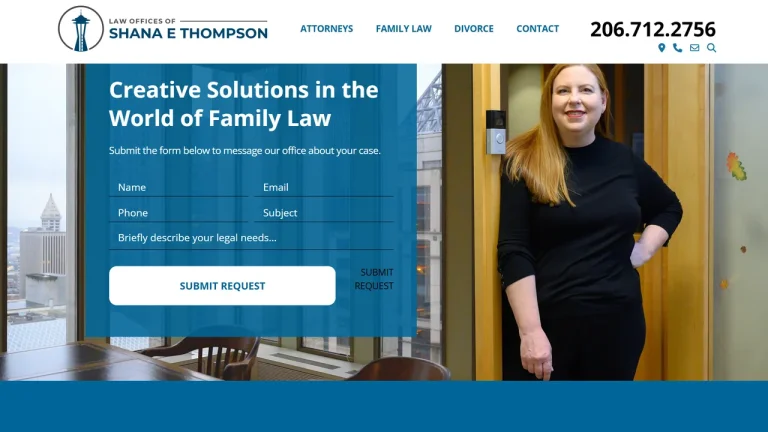
Law Offices of Shana E. Thompson - Seattle, WA

Hanis Irvine Prothero, PLLC - Kent, WA

Divorce Lawyers for Men - Kent, WA

Griffen Law Office, Inc. - Everett, WA
McKinley Irvin - Tacoma, WA
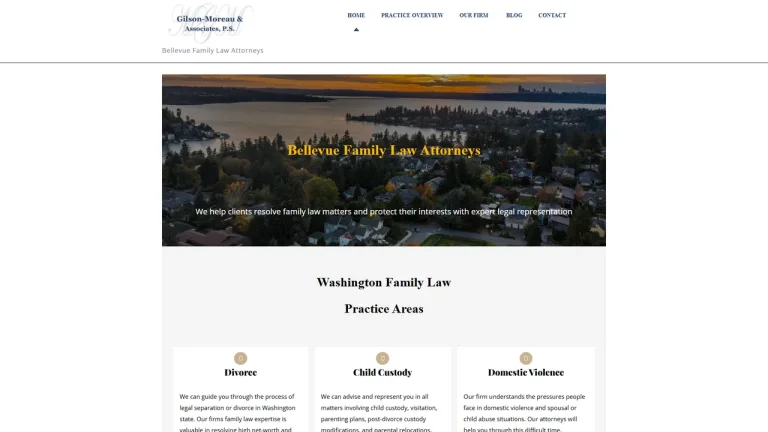
Gilson-Moreau & Associates, P.S. - Bellevue, WA

Malone Legal PLLC - Bellevue, WA

Law Office of Michelle Geri Farris - Seattle, WA

Envision Family Law - Everett, WA
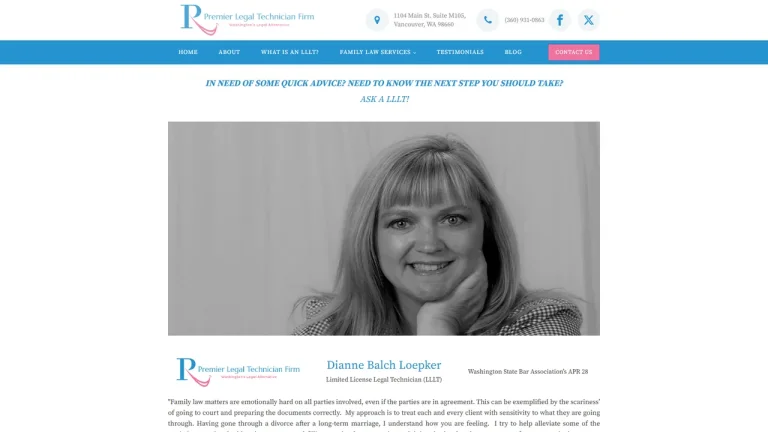
Premier Legal Technician Firm - Vancouver, WA

Hemmat Law Group - Seattle, WA

FIRST Legal Clinic - Everett, WA
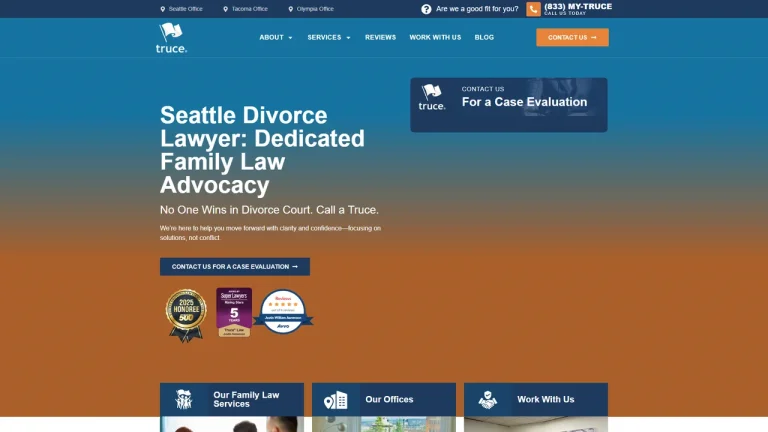
Truce Law, PLLC - Olympia, WA
Law Office of Erik P. Kaeding - Kent, WA
The Guys Lawyer Family and Divorce - Spokane, WA

Hale Law Enterprises - Seattle, WA

Levy Divorce Law - Bellevue, WA

Milios Defense - Seattle, WA

Divorce Litigation Partners - Seattle, WA

McKinley Irvin - Vancouver, WA

Law Office of Erin Bradley McAleer - Vancouver, WA
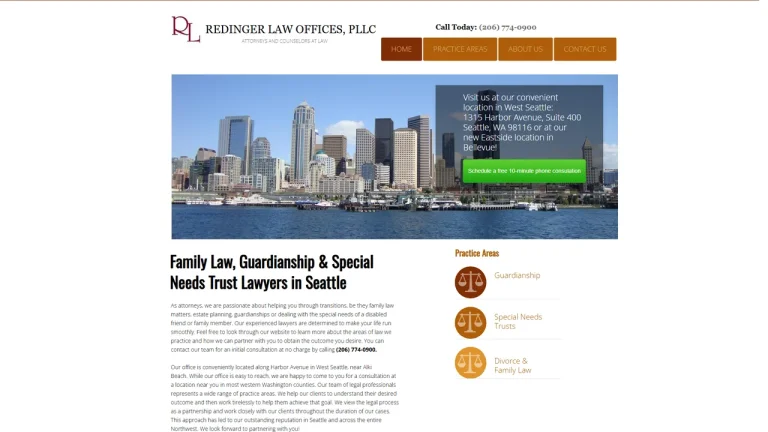
Redinger Law Offices PLLC - Seattle, WA

Navigating Family Law and Marital Dissolution Across Washington
Dissolving a marriage or restructuring family responsibilities in Washington State involves navigating distinct statutory requirements governing community property division, child support schedules, and comprehensive parenting plans. From urban households in Seattle, Bellevue, and Tacoma to growing communities in Vancouver, Spokane, and Everett, domestic relations cases are governed under Chapter 26.09 of the Revised Code of Washington.
Washington is a pure no-fault divorce state, requiring only an allegation that the marriage is irretrievably broken pursuant to RCW 26.09.030. Family law matters are heard exclusively in the Washington Superior Courts, which maintain dedicated Family Law Divisions in jurisdictions such as King County Superior Court, Pierce County Superior Court, and Snohomish County Superior Court.
Retaining an attorney admitted to the Washington State Bar Association provides critical protection in high-stakes property divisions and parenting plan disputes. Experienced family lawyers coordinate private mediation, trace complex separate versus community assets under RCW 26.16.030, manage electronic filings through county court portals, and draft enforceable domestic relations orders that protect your family's future.
Legal Fee Structures for Washington Divorce and Family Law Representation
| Case Scenario | Fee Structure | Estimated Cost (USD) | Key Cost Determinants |
|---|---|---|---|
| Uncontested Dissolution & Agreed Parenting Plan | Flat Fee / Low Retainer | $1,500 - $4,000 | Completeness of mutual agreement, waiver of formal discovery, and statutory 90-day waiting period compliance. |
| Mediated Marital Settlement & Moderate Asset Division | Hourly ($300 - $550/hr) | $5,000 - $15,000 | Professional mediator sessions, residential schedule negotiations, and child support calculations. |
| Contested Parenting Plan & Guardian ad Litem Evaluation | Hourly ($350 - $600/hr) | $15,000 - $40,000 | Guardian ad Litem investigations, parenting evaluations, and temporary orders hearings. |
| High-Net-Worth Community Property & Business Valuation Litigation | Hourly ($450 - $750/hr) | $35,000 - $100,000+ | Forensic accounting for corporate holdings, stock option vesting audits, and multi-day Superior Court trials. |
Critical Legal Deadlines & Statutes in Washington
Under RCW 26.09.030, Washington enforces a mandatory 90-day cooling-off period. No decree of dissolution can be entered until at least 90 days have elapsed from the date the petition was filed and served upon the other spouse, even if both parties are in complete agreement on all terms.
Under RCW 26.16.030, all property acquired during marriage by either spouse is presumed to be community property. In a dissolution, RCW 26.09.080 directs the court to make a just and equitable distribution of all property and liabilities-both community and separate-after considering the nature and extent of the assets, the duration of the marriage, and each party's economic circumstances. Washington does not award custody to a primary parent; instead, RCW 26.09.181 mandates the submission of a detailed permanent Parenting Plan outlining decision-making authority and residential schedules guided by the child's best interests under RCW 26.09.002. Child support is calculated using mandatory state economic tables under RCW 26.19, while spousal maintenance is evaluated under RCW 26.09.090 based on financial need, earning capacity, and marital duration.
Small Claims Limitations vs. Superior Court Family Law Representation
In Washington, the Small Claims Department of District Court operates under RCW 12.40.010 with a jurisdictional limit of $10,000 for individuals, and attorneys are generally barred from hearings under RCW 12.40.080. However, small claims courts possess zero legal authority to decide family law disputes.
Small claims courts cannot dissolve a marriage, enter parenting plans, order child support modifications, or equitably divide real estate or pension accounts. All domestic relations matters fall under the exclusive subject-matter jurisdiction of the Washington Superior Courts. Attempting a do-it-yourself dissolution using standard state forms often leads to irreversible financial harm, such as failing to divide unvested equity compensation, forfeiting Qualified Domestic Relations Orders for retirement plans, or drafting ambiguous residential schedules that invite future court contempt proceedings. Retaining a family law attorney ensures all community assets are properly valued, spousal maintenance is accurately modeled, and parenting provisions withstand judicial scrutiny.
Red Flags When Selecting a Washington Family Law Attorney
- Attorneys who encourage unnecessary conflict or aggressive motions that needlessly churn billable hours rather than pursuing constructive mediation.
- Inexperience in tracing separate vs. community property under RCW 26.16.030 in complex estates involving real estate equity or equity compensation.
- Quoting misleading flat fees that omit court filing fees, mediation costs, or mandatory Guardian ad Litem fees.
- Failure to understand local county Superior Court family law rules, which impose strict deadlines for confirmation of issues and mandatory financial disclosures.
Frequently Asked Questions
What is the mandatory waiting period for a divorce in Washington?
Under RCW 26.09.030, Washington imposes a mandatory 90-day waiting period from the date the petition is filed and served before the court can finalize a decree of dissolution.
How is property divided in a Washington divorce?
Washington is a community property state under RCW 26.16.030. Under RCW 26.09.080, the court divides all community and separate property in a manner that is just and equitable, which does not necessarily mean a strict 50/50 split.
Does Washington award child custody?
Washington law does not use the term custody. Instead, under RCW 26.09.181, courts establish a Parenting Plan that designates residential schedules and decision-making authority based on the child's best interests under RCW 26.09.002.
How is spousal maintenance calculated in Washington?
There is no fixed formula. Under RCW 26.09.090, the court awards maintenance based on factors including the receiving spouse's financial need, the paying spouse's ability to pay, the duration of the marriage, and the standard of living established during the marriage.
Do I have to live in Washington for a certain period before filing for divorce?
Under RCW 26.09.030, there is no mandatory prior residency duration; you or your spouse only need to be a resident of Washington on the day the petition is filed.