
Violent Crime Defense Lawyers in Seattle
Facing violent crime allegations in Seattle? Retain an accomplished criminal defense attorney to assert your constitutional rights and build a strategic defense. Skilled legal representation is essential for challenging witness statements, investigating self-defense claims, and mitigating severe statutory sentencing enhancements in King County courts. Explore our verified Seattle defense directory below to speak directly with an aggressive advocate.

Antone Weber Law Office - Seattle, WA
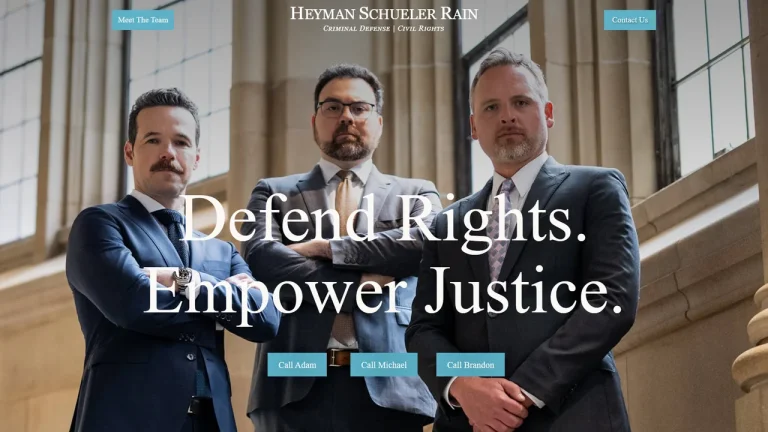
Heyman Schueler Rain - Seattle, WA

The Offices of Morgan Fletcher Benfield, PLLC - Seattle, WA

Pacific Point Defense - Seattle, WA

Zuanich Law, PLLC - Seattle, WA

Black & Askerov, PLLC - Seattle, WA

Federal Public Defender - Seattle, WA
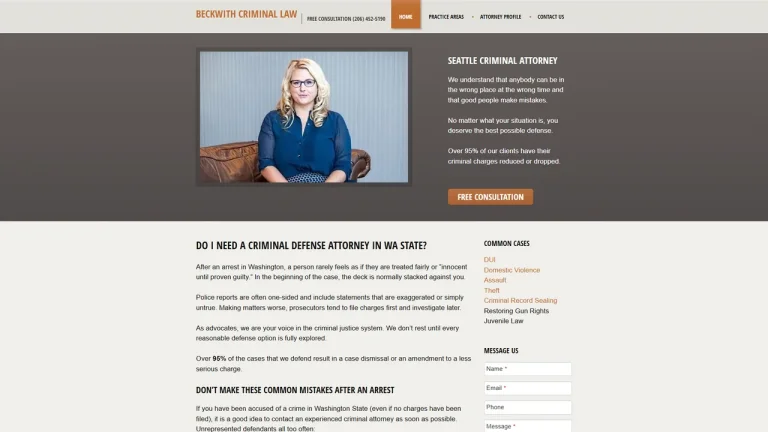
Beckwith Criminal Law - Seattle, WA

Community Law Firm, PLLC - Seattle, WA

Bradley Johnson Lawyers - Seattle, WA

The Law Offices of Kevin Trombold, PLLC - Seattle, WA
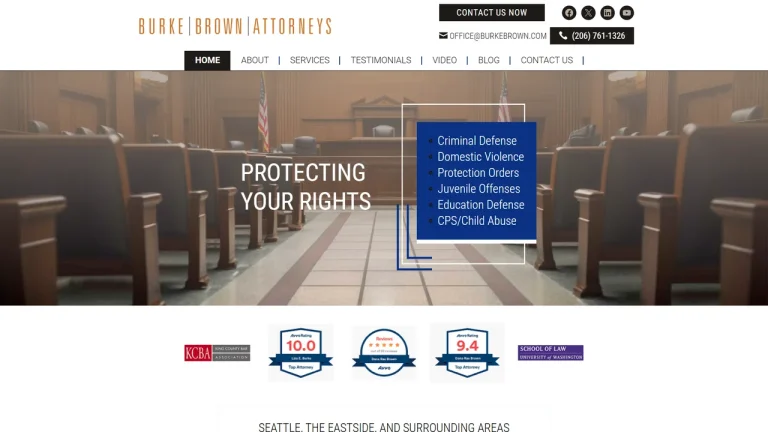
Burke Brown Attorneys PLLC - Seattle, WA

Law Office of Jennifer Horwitz - Seattle, WA

Law Office of Shira J. Stefanik - Seattle, WA

Community Legal Solutions, PLLC - Seattle, WA

Puget Law Group - Seattle, WA

Hale Law Enterprises - Seattle, WA

Blair & Kim, PLLC - Seattle, WA

Sheed Law Offices, PLLC - Seattle, WA
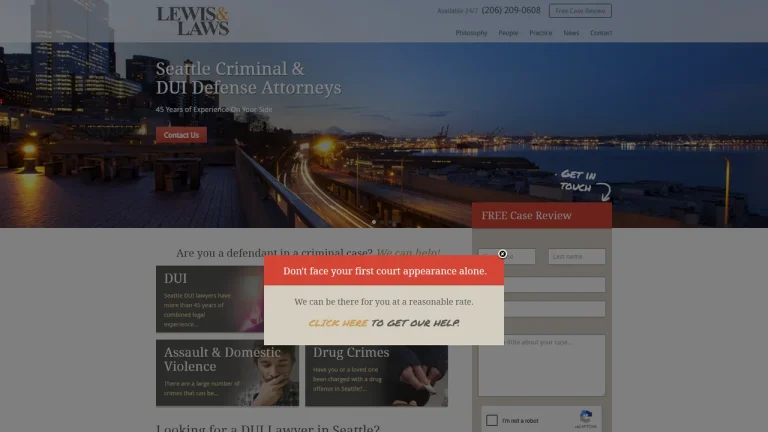
Lewis & Laws, PLLC - Seattle, WA
Law Office Of Amy Muth, PLLC - Seattle, WA
King County Department of Public Defense - Seattle, WA

Pfau Cochran Vertetis Amala PLLC - Seattle, WA
Violent Crime Defense Jurisdictions in Seattle and King County
Facing a violent crime accusation in Seattle places an individual in immediate peril of severe statutory penalties, high bail, and restrictive no-contact orders. Following an arrest by the Seattle Police Department in areas like SoDo, Capitol Hill, Queen Anne, or South Seattle, defendants are booked into the King County Correctional Facility on 5th Avenue in Downtown Seattle for initial appearance proceedings.
While misdemeanor domestic violence matters and Fourth Degree Assault charges may proceed through the Seattle Municipal Court, all felony violent crimes fall under the jurisdiction of the King County Superior Court. Cases are heard either at the King County Courthouse on 3rd Avenue in Seattle or the Maleng Regional Justice Center in Kent, where deputy prosecutors aggressively litigate Class A, B, and C violent felonies.
Retaining a seasoned local defense attorney is critical when navigating King County's legal system. A local practitioner understands how to deploy private investigators, challenge emergency dispatch audio records, depose state witnesses, and present clear statutory justification defenses before Seattle judges and juries.
Estimated Seattle Violent Crime Defense Costs & Retainers
| Case Scenario | Fee Structure | Estimated Cost (USD) | Key Cost Determinants |
|---|---|---|---|
| Misdemeanor Assault / Domestic Violence | Flat Fee or Retainer | $3,500 - $7,500 | Domestic violence designations, no-contact order modification hearings, witness statement discrepancies, and pretrial settlement. |
| Felony Assault (Second or Third Degree) | Retainer / Tiered Flat Fee | $7,500 - $18,000 | Alleged deadly weapon involvement, extent of physical harm, medical record reviews, and evidentiary depositions. |
| First-Degree Assault / Robbery / Homicide | Retainer / Hourly ($400 - $750/hr) | $20,000 - $55,000+ | Firearm enhancement allegations, forensic crime scene analysis, ballistic reconstruction, and extended multi-week jury trial. |
| Appellate & Post-Conviction Review | Retainer / Flat Fee | $10,000 - $25,000 | Trial record evaluation, King County transcript review, and appellate brief filings before the Court of Appeals Division I. |
Critical Legal Deadlines & Statutes in Washington
Washington law establishes strict statutory boundaries for criminal offenses. Under Wash. Rev. Code § 9A.04.080, homicide charges carry no statute of limitations, permitting prosecution at any time. For major Class A felonies like Assault in the First Degree under Wash. Rev. Code § 9A.36.011 or Robbery in the First Degree under Wash. Rev. Code § 9A.56.200, statutes outline stringent filing windows, while general felony offenses must be filed within 3 years, and gross misdemeanors such as Assault in the Fourth Degree under Wash. Rev. Code § 9A.36.041 within 2 years under Wash. Rev. Code § 9A.04.080.
Speedy trial rules codified under Wash. CrR 3.3 require trial within 60 days of arraignment for individuals in custody, or 90 days for those out on bond. Mandatory arrest requirements govern domestic violence allegations under Wash. Rev. Code § 10.99.030. Washington law recognizes no duty to retreat when individuals are in a place where they have a lawful right to be, establishing clear self-defense protections. Furthermore, under Wash. Rev. Code § 9A.16.110, an individual acquitted of a violent crime on the grounds of justifiable self-defense has a statutory right to seek full reimbursement from the State of Washington for all legal defense fees and costs incurred. Mandatory firearm enhancements under Wash. Rev. Code § 9.94A.533 impose non-suspendable consecutive prison terms that cannot be mitigated by standard judicial discretion.
Pro Se Defense Hazards vs. Professional Felony Representation
While individuals may navigate civil monetary disputes under $10,000 pro se in the King County District Court Small Claims Division, representing oneself in a violent felony case carries severe, irreversible risks. The complex evidentiary rules governing Superior Court proceedings make self-representation an overwhelming liability.
A knowledgeable criminal defense attorney asserts statutory defense defenses, conducts crucial pretrial hearings under Wash. CrR 3.5 to challenge unconstitutional statements, and files motions under Wash. CrR 3.6 to suppress unlawful physical evidence. Your attorney scrutinizes eyewitness credibility and cross-examines state medical experts to build a persuasive defense before a jury.
Red Flags When Hiring a Seattle Violent Crime Defense Lawyer
- Promises of Quick Acquittals Without Independent Investigation: Be skeptical of counsel who fails to retain independent investigators to inspect crime scenes, interview witnesses, and examine surveillance video.
- Unfamiliarity with Statutory Self-Defense Fee Reimbursement: A competent attorney must know how to properly invoke self-defense and petition for attorney fee recovery under state law upon acquittal.
- Inadequate Courtroom Trial Record in King County: Violent felony charges regularly advance toward trial; your advocate must possess demonstrated trial experience before King County Superior Court juries.
- Reluctance to Challenge No-Contact Orders: Dedicated defense attorneys immediately address and seek modifications for overly burdensome protection orders that separate you from your family or home.
Frequently Asked Questions
Does Washington recognize a duty to retreat in self-defense cases?
No. Washington law adheres to the principle that a person who is in a place where they have a legal right to be has no duty to retreat before employing reasonable force to defend themselves against perceived unlawful force.
Can an alleged victim drop domestic violence assault charges in Seattle?
No. In Washington, criminal charges are filed and prosecuted by the city or county prosecutor on behalf of the state, not the reporting party. A prosecutor can continue the case even if the complainant requests a dismissal.
What distinguishes Assault in the First Degree from Second Degree in Washington?
Assault in the First Degree involves an intent to inflict great bodily harm with a firearm or deadly weapon, whereas Assault in the Second Degree involves reckless infliction of substantial bodily harm or assault with a deadly weapon without the specific intent required for First Degree.
How do firearm enhancements affect violent crime sentencing in King County?
Statutory firearm enhancements add mandatory, consecutive prison terms-ranging from 18 months up to 5 years per enhancement-that must be served entirely in prison without good-time credit or early release eligibility.
Can I get my legal fees reimbursed if acquitted of a violent crime in Seattle?
Yes. Under state law, if a defendant is found not guilty by reason of justifiable self-defense, the jury determines whether the defense was justified, entitling the acquitted defendant to reimbursement of reasonable attorney fees and litigation costs from the state.