
Truck Accident Lawyers in Washington
Commercial truck collisions in Washington demand immediate investigation and aggressive advocacy. Proven truck accident lawyers protect your rights against motor carriers, preserve critical black-box electronic data, and navigate federal trucking regulations. Explore our verified statewide directory below to connect with top-rated Washington semi-truck and commercial vehicle accident attorneys.
Law Offices of Blake Fulton Quackenbush - Vancouver, WA

Barden & Barden - Spokane, WA

Bridger Law Group - Spokane, WA

Deno Millikan Law Firm, PLLC - Everett, WA

Fielding Law Group - Kent, WA
Fielding Law Group - Olympia, WA

Russell & Hill - Injury & Accident Attorneys - Everett, WA
The Jones Firm - Bellevue, WA

Henderson Law Group, PLLC - Olympia, WA
The Ye Law Firm Injury Lawyers - Bellevue, WA
National Injury Help - Bellevue, WA
Craig Swapp & Associates - Tacoma, WA
GLP Personal Injury Attorneys - Spokane, WA

Car Law Doug - Bellevue, WA
Craig Swapp & Associates - Seattle, WA
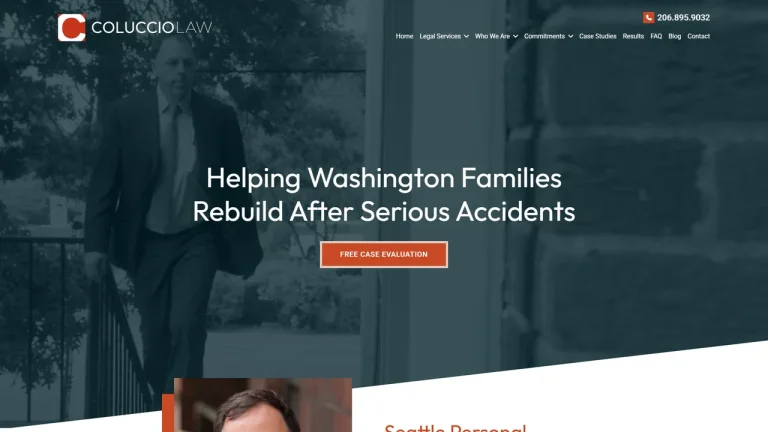
Coluccio Law - Seattle, WA

The Washington Law Team - Everett, WA
Alpine Law Group - Seattle, WA
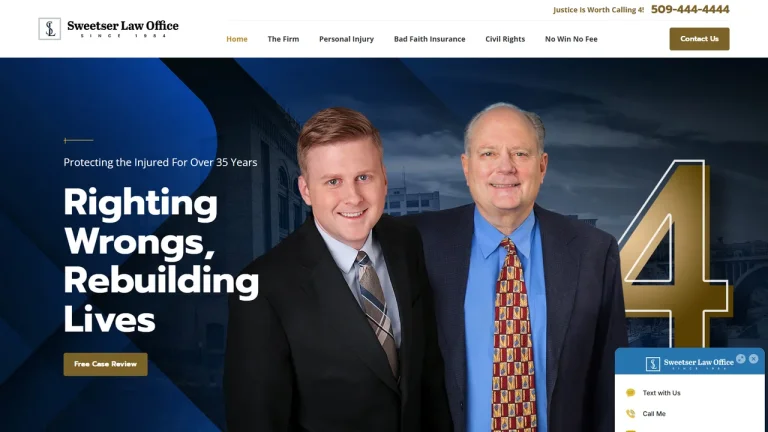
Sweetser Law Office - Spokane, WA
BGN Attorneys - Kent, WA
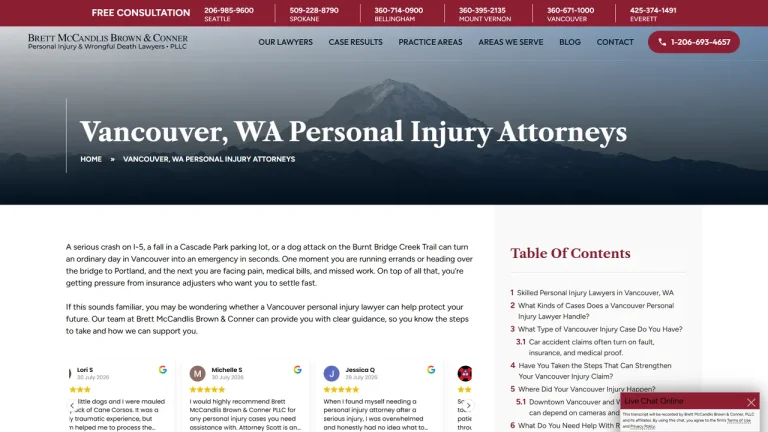
Brett McCandlis Brown & Conner PLLC - Vancouver, WA
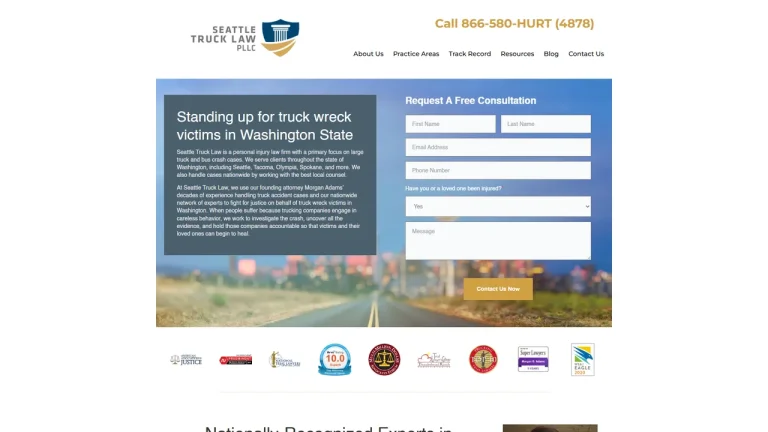
Seattle Truck Law, PLLC - Seattle, WA
Walthew Law Firm - Seattle, WA
Commercial Freight Litigation Across Washington Courts and Highways
Washington State serves as a premier commercial transportation hub in the Pacific Northwest. Massive freight volumes move continuously from the Ports of Seattle and Tacoma along critical transport arteries, including Interstate 5, Interstate 90 across Snoqualmie Pass, and US Highway 395 in Eastern Washington. When passenger vehicles collide with 80,000-pound commercial tractor-trailers, the physical devastation is catastrophic, giving rise to complex multi-party litigation.
Commercial vehicle accident lawsuits are litigated in Washington Superior Courts (such as King, Pierce, Snohomish, and Spokane counties) or removed to federal court in the United States District Court for the Western District of Washington (Seattle and Tacoma) or the Eastern District of Washington (Spokane). These claims are governed by a complex intersection of Washington tort law and the Federal Motor Carrier Safety Regulations (FMCSR) codified in Title 49 of the Code of Federal Regulations. The Washington State Patrol Commercial Vehicle Division enforces these federal motor carrier standards statewide under RCW 46.32.010.
Unlike standard auto accidents, semi-truck litigation involves multiple potentially liable entities, including the commercial driver, motor carrier, freight broker, logistics company, and third-party maintenance contractors. Proving negligence requires detailed review of driver qualification files, maintenance manifests, and electronic control modules. Working with an attorney licensed through the Washington State Bar Association who understands commercial vehicle regulations ensures that motor carriers and their corporate insurers are held legally accountable.
Fee Schedules and Case Expenses for Washington Commercial Truck Claims
| Case Scenario | Fee Structure | Estimated Cost (USD) | Key Cost Determinants |
|---|---|---|---|
| Driver Fatigue / Hours-of-Service (HOS) Violation | Contingency Fee (33.3% - 40%) | No Upfront Cost ($0) | Electronic Logging Device (ELD) downloads under 49 C.F.R. § 395, GPS tracking, and cell phone records. |
| Improper Maintenance & Mechanical Brake Failure | Contingency Fee (33.3% - 40%) | No Upfront Cost ($0) | Pre-trip inspection logbook audits, WSP mechanical inspection reports, and commercial brake specialist testimony. |
| Negligent Hiring & Motor Carrier Vicarious Liability | Contingency Fee (33.3% - 40%) | No Upfront Cost ($0) | FMCSA safety scores, driver background vetting records, drug testing protocols, and corporate depositions. |
| Overweight / Improperly Secured Cargo Rollover | Contingency Fee (33.3% - 40%) | No Upfront Cost ($0) | Port bill of lading audits, loading dock video analysis under 49 C.F.R. § 393, and accident reconstruction simulations. |
Critical Legal Deadlines & Statutes in Washington
Time is a decisive factor in commercial trucking claims. Under RCW 4.16.080(2), injured plaintiffs have three years from the date of the collision to file a personal injury or wrongful death lawsuit in court. However, waiting to pursue a claim presents severe evidential hazards. Under 49 C.F.R. § 395.8, interstate motor carriers are only legally required to retain driver hours-of-service records and electronic logging data for six months. Without prompt formal legal intervention, critical telemetry data can be permanently erased.
Washington's liability rules play an essential role in trucking cases. Under RCW 4.22.005, Washington applies pure comparative fault, meaning an injured driver can recover damages reduced by their fault percentage. In addition, while several liability is the default rule in Washington under RCW 4.22.070, joint and several liability applies if the defendants were acting in concert or if the claimant was entirely free of fault. If poorly maintained state or municipal highways contributed to the truck crash, formal tort claim notices must be filed within 60 days under RCW 4.92.100.
Small Claims Limitations vs. Commercial Trucking Litigation
The Small Claims Division of Washington District Courts maintains a statutory cap of $10,000 under RCW 12.40.010. Given that collisions involving heavy semi-trucks frequently cause permanent disability, catastrophic brain injury, or wrongful death, damages regularly reach multi-million-dollar policy limits. Small claims courts have zero legal mechanisms to handle extensive federal trucking discovery, expert witness depositions, or corporate subpoenas.
Commercial motor carriers and their defense insurers deploy rapid-response teams of adjusters and defense lawyers to the crash scene within hours to protect company assets. Proceeding without experienced legal representation places victims at an overwhelming disadvantage. A qualified truck accident attorney issues immediate formal spoliation letters, impounds the commercial tractor and trailer for certified mechanical inspections, downloads Electronic Control Module (ECM) black-box event data, and builds a comprehensive trial case in Superior Court.
Red Flags When Hiring a Washington Truck Accident Attorney
- Treating a Semi-Truck Crash Like an Ordinary Car Accident: Truck litigation requires deep familiarity with Title 49 FMCSR regulations; an attorney who fails to audit driver qualification files misses vital negligence grounds.
- Delaying the Issuance of Formal Spoliation Letters: If counsel does not immediately demand the preservation of ECM black-box data and ELD logs, critical speed, braking, and steering telemetry may be routinely overwritten.
- Lack of Litigation Resources: Commercial trucking litigation requires tens of thousands of dollars in advanced costs for accident reconstructionists, human factor experts, and commercial fleet specialists.
- Absence of Superior Court Trial Experience: Many trucking claims require aggressive litigation through jury trial; avoid attorneys who exclusively negotiate quick administrative settlements.
Frequently Asked Questions
What makes commercial truck accidents different from car accidents in Washington?
Truck accidents involve massive commercial vehicle weights, severe injuries, complex corporate liability involving multiple defendants (carrier, broker, loader), and strict federal safety regulations under Title 49 of the Code of Federal Regulations enforced statewide under RCW 46.32.010.
How quickly must black-box data be preserved after a truck crash in Washington?
Immediately. Under federal regulations (49 C.F.R. § 395.8), carriers are only required to preserve driver log records for six months, and ECM event data can be overwritten with vehicle use. Counsel must send a formal spoliation letter immediately following the crash.
What is the statute of limitations for a fatal truck accident in Washington?
Under RCW 4.16.080(2), a wrongful death claim arising from a commercial truck collision must be filed within three years from the date of the victim's death by the personal representative of the estate.
Who can be held liable in a Washington commercial trucking accident?
Depending on the case, liability may extend beyond the truck driver to include the motor carrier employer under vicarious liability doctrines, third-party maintenance depots, cargo-loading contractors, and freight brokerage firms.
Does Washington allow punitive damages in truck accident lawsuits?
As a general rule, Washington State does not allow punitive damages in personal injury or wrongful death actions unless expressly authorized by a specific statute. However, plaintiffs can seek comprehensive compensatory economic and non-economic damages.