
Wills, Estate Planning & Probate Lawyers in Vancouver
Retaining an experienced Vancouver estate planning and probate attorney protects family assets, avoids probate disputes, and ensures statutory compliance. Knowledgeable counsel guides Clark County families through revocable living trusts, non-intervention probate, and Washington estate tax mitigation strategies. Review our verified Vancouver directory below to schedule an estate planning consultation with a trusted local attorney.

Law Offices of Blake Fulton Quackenbush - Vancouver, WA

Gunn MacKenzie PLLC - Vancouver, WA

SKH Family Law & Estate Planning - Vancouver, WA

McKean Smith LLC - Vancouver, WA

Landerholm, P.S. - Vancouver, WA

Three Rivers Law Center - Vancouver, WA

Vancouver Wills & Trusts - Vancouver, WA

Andrews Terry Jeffers LLP - Vancouver, WA
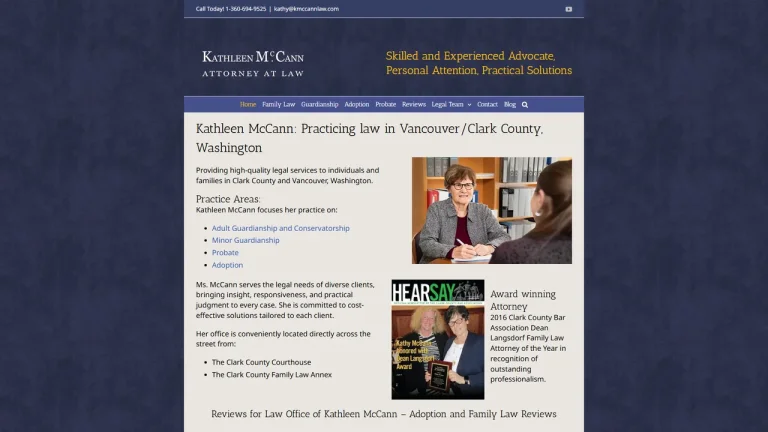
Law Office of Kathleen McCann, P.S. - Vancouver, WA

Kurtz & Paradis, PLLC - Vancouver, WA
John Lutgens, Attorney at Law - Vancouver, WA

NW Legacy Law, P.S. - Vancouver, WA

Pacific Cascade Legal - Vancouver, WA

Beckie Pettis - Vancouver, WA

Joshua J. Bean, PLLC - Vancouver, WA

Navigate Law Group - Vancouver, WA

Law Office of Jon M. Fritzler - Vancouver, WA

Greenen & Greenen Law Firm - Vancouver, WA

Law Office of Joshua Pops P.L.L.C. - Vancouver, WA

SBLG, PLLC - Vancouver, WA

Conway Law, PLLC - Vancouver, WA

Good Law Clinic - Vancouver, WA

Brian H. Wolfe, P.C. Attorney At Law - Vancouver, WA

Estate Planning and Probate Practice in Clark County
Protecting your legacy and administering a decedent's estate in Vancouver requires adherence to Washington Title 11 probate codes and local Clark County court procedures. Whether establishing a comprehensive trust for assets in Felida and Salmon Creek or administering probate for estate properties in Cascade Park and Camas, proactive legal structuring shields families from prolonged judicial oversight and statutory defaults.
Estate administration and probate litigation in Vancouver fall under the jurisdiction of the Clark County Superior Court Probate Department, located at 1200 Franklin Street. Local court commissioners review ex parte probate petitions, issue Letters Testamentary, and oversee trust administration filings. Filings are submitted electronically through the Clark County Superior Court Clerk's office and docketed pursuant to local civil rules.
Retaining a Vancouver estate planning and probate attorney ensures your testamentary documents properly account for Washington community property laws and the state's independent estate tax. Experienced counsel assists personal representatives with statutory creditor notifications, title transfers, and closing declarations, streamlining estate transitions.
Vancouver Estate Planning and Probate Legal Fee Benchmarks
Estate planning attorneys in Vancouver typically offer structured flat fees for standard will and trust packages, while probate administration and contested estate matters are billed hourly ($275 to $500 per hour) or through hybrid retainers. The table below outlines prevailing cost benchmarks across Clark County practices.
| Case Scenario | Fee Structure | Estimated Cost (USD) | Key Cost Determinants |
|---|---|---|---|
| Basic Will & Healthcare Directive Package | Flat Fee | $1,000 - $2,200 | Last will and testament, financial power of attorney, advance healthcare directive, and statutory property status declarations. |
| Revocable Living Trust & Pour-Over Will Package | Flat Fee | $2,600 - $5,500 | Trust drafting, quitclaim deed conveyance for Clark County real estate, pour-over wills, and beneficiary designation reviews. |
| Uncontested Non-Intervention Probate | Hourly Retainer ($300 - $450/hr) | $3,000 - $6,500 | Court petition, Letters Testamentary issuance, creditor publication under RCW 11.40.020, inventory drafting, and final declaration of completion. |
| Contested Estate & TEDRA Litigation | Hourly Retainer ($350 - $550/hr) | $8,500 - $25,000+ | Will contests alleging lack of capacity, fiduciary accounting challenges, TEDRA mediation, and Clark County Superior Court trial. |
Critical Legal Deadlines & Statutes in Washington
Washington probate practice operates within rigid statutory limitation periods. Pursuant to RCW 11.20.010, any person having the custody of a decedent's will must file it with the Clark County Superior Court clerk within thirty days after receiving notice of the testator's death, regardless of whether formal probate is initiated.
To bar stale debts, a personal representative must publish a statutory notice to creditors under RCW 11.40.020. Creditors have four months from first publication or thirty days from receipt of actual written notice (whichever is later) to submit formal claims against the estate under RCW 11.40.051. Failure to publish notice exposes the estate to creditor claims for up to twenty-four months after death pursuant to RCW 11.40.011. For estates valued at $100,000 or less without real property, successors may utilize a Small Estate Affidavit under RCW 11.62.010 once forty days have elapsed from the date of death.
In addition, Washington enforces an independent state estate tax under RCW 83.100.040 with a statutory exclusion threshold of $2,193,000. Returns and required tax payments must be remitted to the Washington Department of Revenue within nine months of the decedent's death. Fiduciary and testamentary disputes are resolved under the Trust and Estate Dispute Resolution Act (TEDRA) codified at RCW 11.96A.080, which imposes strict mediation procedures and statutory filing windows.
Small Claims Limitations vs. Clark County Superior Court Representation
The Clark County District Court Small Claims Division resolves minor monetary disputes up to $10,000 under RCW 12.40.010, and attorneys are barred from participating in hearings under RCW 12.40.080 except upon special permission. Small claims court is designed solely for small debts or minor damages and possesses zero authority to rule on estate administrations, interpret trusts, or oversee personal representatives.
All formal probate matters, requests for non-intervention powers under RCW 11.68.010, and testamentary challenges must be filed in the Clark County Superior Court. Attempting probate administration without legal counsel frequently leads to rejected filings, personal fiduciary exposure for unpaid estate debts, and unmarketable real estate titles. Retaining a Vancouver probate lawyer ensures compliance with Washington Title 11 statutes, secures non-intervention authority, and protects beneficiaries from prolonged disputes.
Red Flags When Selecting a Vancouver Estate Planning & Probate Lawyer
- Demanding Percentage-Based Probate Fees: Washington law mandates that legal fees in probate must be reasonable under RCW 11.68.100; avoid attorneys who charge a mandatory percentage of the gross estate rather than hourly or structured flat fees.
- Overlooking the Washington State Estate Tax: Standard online forms frequently fail to account for Washington's separate estate tax threshold under RCW 83.100.040, exposing estates to unexpected state tax liabilities.
- Failing to Publish Proper Notice to Creditors: Personal representatives who omit formal publication under RCW 11.40.020 leave the estate exposed to potential creditor claims for twenty-four months instead of four months.
- Neglecting Trust Funding Coordination: Drafting a revocable living trust without executing and recording deeds with the Clark County Auditor leaves Vancouver real estate subject to formal probate, undermining the plan.
Frequently Asked Questions
Is probate required for all estates in Vancouver?
No. Probate is not necessary if assets are held in a fully funded revocable living trust, transferred to a surviving spouse via a recorded Community Property Agreement under RCW 26.16.120, or if personal property totals $100,000 or less and qualifies for a Small Estate Affidavit under RCW 11.62.010. However, titled real property solely in the decedent's name usually requires probate.
What is non-intervention probate in Washington?
Non-intervention probate, codified in RCW 11.68.010, allows a personal representative to administer and close an estate without routine court hearings or approvals for asset sales and creditor payments, significantly reducing legal costs in Clark County Superior Court.
How long do creditors have to submit claims against an estate in Clark County?
If the personal representative publishes a statutory notice to creditors under RCW 11.40.020, creditors have four months from the date of first publication (or 30 days from direct written notice) to submit claims under RCW 11.40.051. Without publication, claims remain valid for twenty-four months.
Does Washington State levy an estate tax on Vancouver estates?
Yes. Washington enforces a standalone state estate tax under RCW 83.100.040 with a statutory exclusion threshold of $2,193,000. Estates valued above this amount are subject to graduated tax rates between 10% and 20%, requiring filings within nine months of death.
What is a TEDRA dispute under Washington law?
The Trust and Estate Dispute Resolution Act (RCW 11.96A.010) provides specialized judicial and nonjudicial dispute resolution procedures for contested wills, trusts, and fiduciary accountings, emphasizing binding nonjudicial settlement agreements and mediation before trial.