
Immigration Lawyers in Wisconsin
Securing legal residency, visas, or citizenship in Wisconsin requires strategic legal counsel experienced in navigating complex federal immigration procedures. Knowledgeable attorneys protect families from deportation, expedite consular filings, and represent clients during official interviews and removal hearings. Explore our directory below to connect with qualified Wisconsin immigration lawyers ready to advocate for your legal future.
Littler Mendelson P.C. - Milwaukee, WI

Lotfi Legal LLC - Immigration Services - Madison, WI
Francis Law Center - Madison, WI

Castro and Gutierrez Law Office - Madison, WI

Renning, Lewis & Lacy, s.c. - Green Bay, WI
O'Flaherty Law of Kenosha - WI

Henry Law Offices - Kenosha, WI
Pittman & Pittman Law Offices - La Crosse, WI

S. Lee & Associates, LLC - Madison, WI
Erich C. Straub Immigration - Milwaukee, WI
Community Immigration Law Center - Madison, WI
Jasti, Zehawi and Johnson, LLC - Madison, WI
One Law Group S.C. (formerly M.C. Law Group LLC) - Green Bay, WI
Grzeca Law Group, S.C. - Milwaukee, WI

Jair Alvarez Attorney at Law - Madison, WI
Fenton Law Office | Criminal Defense Attorney - Milwaukee, WI
Tapia Immigration Law - Madison, WI

Rouf Law - Oshkosh, WI
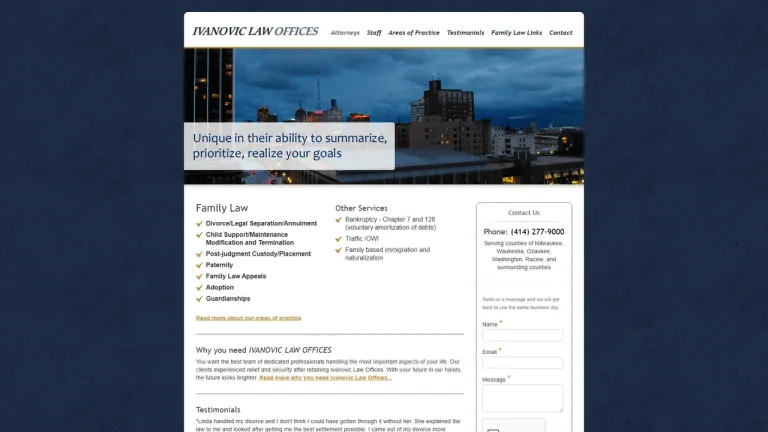
Ivanovic Law Offices - Milwaukee, WI
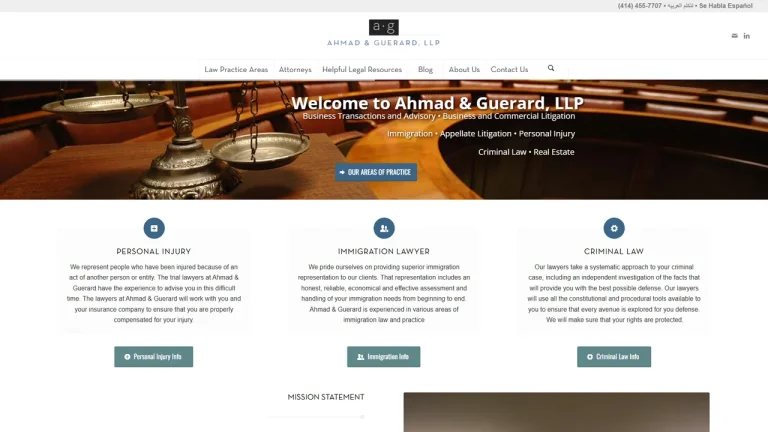
Ahmad & Guerard, LLP - Milwaukee, WI
Law Offices of Stephanie M. Gwyn, LLC - Kenosha, WI
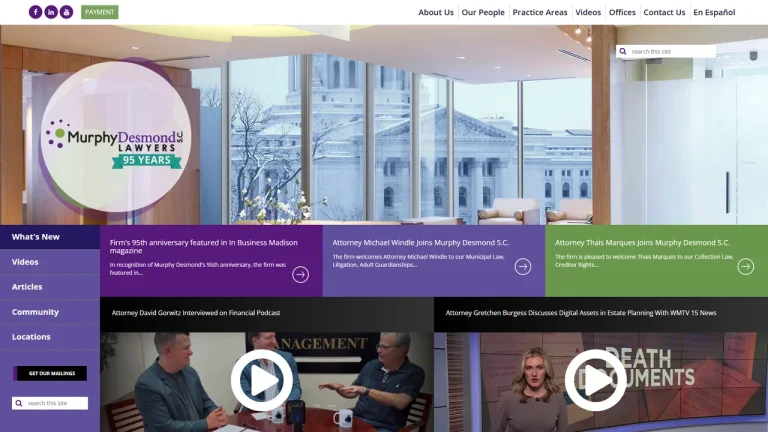
Murphy Desmond S.C. - Madison, WI
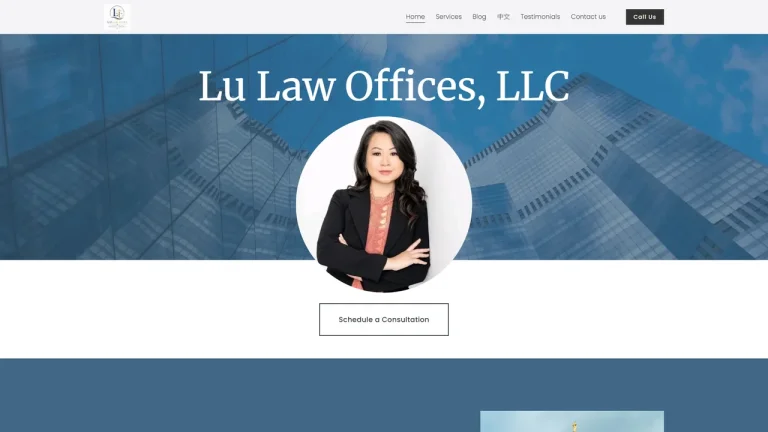
Lu Law Office, LLC - Madison, WI
Navigating Immigration Proceedings Across Wisconsin
Immigration law is governed primarily by federal statutes under Title 8 of the United States Code, yet individuals and businesses residing in Wisconsin interact with distinct regional agencies. In-person adjustment of status interviews, naturalization examinations, and biometrics processing take place through the USCIS Milwaukee Field Office, serving communities across the state from Green Bay and the Fox Cities to Madison and Kenosha.
For individuals placed in removal proceedings, hearings are conducted under the jurisdiction of the Executive Office for Immigration Review (EOIR), frequently scheduled through regional immigration courtrooms or the Chicago Immigration Court serving Wisconsin respondents. Individuals in federal custody often face bond hearings while detained at regional facilities such as the Dodge County Detention Facility in Juneau.
Wisconsin state courts also intersect directly with immigration matters. Obtaining state predicate orders for Special Immigrant Juvenile Status (SIJS) requires petitions in Wisconsin Circuit Courts under juvenile jurisdiction, while non-citizens with prior criminal convictions often require post-conviction relief in circuit courts to avoid mandatory deportation.
Estimated Legal Costs for Wisconsin Immigration Matters
| Case Scenario | Fee Structure | Estimated Cost (USD) | Key Cost Determinants |
|---|---|---|---|
| Family-Based Adjustment of Status (Form I-130 / Form I-485) | Flat Legal Fee | $2,500 - $6,000 | Lawful entry documentation, public charge evaluation, USCIS filing fees, interview preparation. |
| Naturalization & Citizenship (Form N-400) | Flat Legal Fee | $1,200 - $3,500 | Continuous physical presence records, tax history, CCAP criminal background record review. |
| Removal Defense & Bond Hearings (EOIR Court) | Retainer + Hourly ($250 - $450/hr) | $5,000 - $15,000+ | Detention location, asylum or cancellation of removal eligibility, country conditions evidence, expert testimony. |
| Employment-Based Visas & Sponsorships (H-1B, L-1, PERM) | Flat Corporate Fee | $3,500 - $9,500 | Prevailing wage determinations, Department of Labor audits, corporate compliance documentation. |
Critical Legal Deadlines & Statutes in Wisconsin
Federal immigration law imposes strict statutory deadlines where an untimely filing can result in an order of removal. Under 8 U.S. Code § 1158, applications for affirmative or defensive asylum must be filed within 1 year of arrival in the United States, unless extraordinary circumstances or changed country conditions can be established.
If an adverse removal order is issued by an immigration judge, an appeal must be received by the Board of Immigration Appeals (BIA) within 30 calendar days under 8 C.F.R. § 1003.38. This deadline is strictly enforced and cannot be extended.
State court deadlines also affect immigration relief. Predicate findings of dependency or parental abandonment for Special Immigrant Juvenile Status must be granted by a Wisconsin Circuit Court under Wis. Stat. § 48.9795 before the child reaches the age of majority. Furthermore, non-citizens seeking to vacate an unconstitutional guilty plea that carries deportation consequences must file for post-conviction relief under Wis. Stat. § 974.06 and Wis. Stat. § 971.08.
Direct Application Filing vs. Professional Immigration Representation
While routine administrative tasks like filing an address update (Form AR-11) or simple card renewal (Form I-90) can be executed directly by applicants, immigration law contains intricate statutory traps that state small claims courts under Wis. Stat. § 799.01 have no authority to resolve.
Submitting an unrepresented petition with contradictory dates, misclassified municipal court citations from CCAP, or incorrect tax documentation can result in a denial, forfeiture of filing fees, or issuance of a Notice to Appear (NTA) placing the applicant into removal proceedings.
A licensed immigration attorney analyzes immigration histories, prepares clients for challenging USCIS interviews at the Milwaukee Field Office, files waiver petitions, and presents structured legal defenses before immigration judges to protect lawful status.
Red Flags: Avoiding Notario Fraud & Incompetent Representation
- Deceptive Notario services: In the United States, a notary public is not licensed to provide legal advice. In Wisconsin, only attorneys admitted to the State Bar of Wisconsin or accredited representatives recognized by the Department of Justice can provide immigration legal services.
- Guaranteed approvals or fast-tracked processing: Legitimate legal practitioners cannot guarantee case outcomes or expedited processing times controlled entirely by federal agencies.
- Withholding copies of official filings: Never work with an individual who refuses to provide full copies of forms, evidence, and filing receipts submitted to USCIS or the immigration court.
- Ignoring criminal history impacts: An attorney must evaluate any past Wisconsin citations or criminal charges on CCAP, as even minor municipal forfeitures can impact admissibility and naturalization.
Frequently Asked Questions
Where are immigration interviews conducted for Wisconsin residents?
Most adjustment of status and naturalization interviews for Wisconsin residents take place at the USCIS Milwaukee Field Office, located in Milwaukee, Wisconsin.
Can a criminal charge in Wisconsin affect my immigration status?
Yes, criminal convictions, and in some cases even civil municipal forfeitures or diversion agreements, can trigger grounds of inadmissibility or deportability under federal immigration law. Consult an attorney before entering any plea in a Wisconsin court.
What is the difference between a notary public and an immigration lawyer in Wisconsin?
A notary public in Wisconsin is authorized only to witness signatures and certify documents. They cannot provide legal counsel, select legal forms, or represent clients in immigration court. Only a licensed attorney or DOJ-accredited representative can legally represent you.
How do I locate an individual detained by immigration authorities in Wisconsin?
Detained individuals can be searched through the ICE Online Detainee Locator System using their Alien Registration Number (A-Number) and country of birth. In Wisconsin, detainees are frequently housed at facilities such as the Dodge County Detention Facility.
Can undocumented immigrants obtain Special Immigrant Juvenile Status (SIJS) in Wisconsin?
Yes, qualifying children who have been abused, neglected, or abandoned can seek predicate orders in a Wisconsin Circuit Court under Wis. Stat. § 48.9795 before petitioning USCIS for SIJS classification.