
State & Local Courts in Connecticut
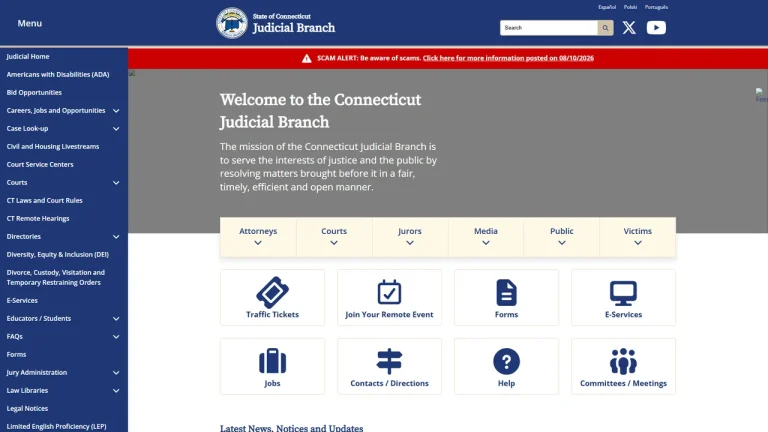
Locate Connecticut state and local court resources, judicial district courthouses, e-filing procedures, and jurisdiction guides across the Constitution State. The Connecticut Judicial Branch administers general trial jurisdiction through 13 Judicial Districts, regional appellate courts, and specialized probate districts. Explore our directory below to access verified clerk offices, small claims dockets, and local court administration contacts.

The Connecticut Judicial Branch & Local Court Jurisdiction
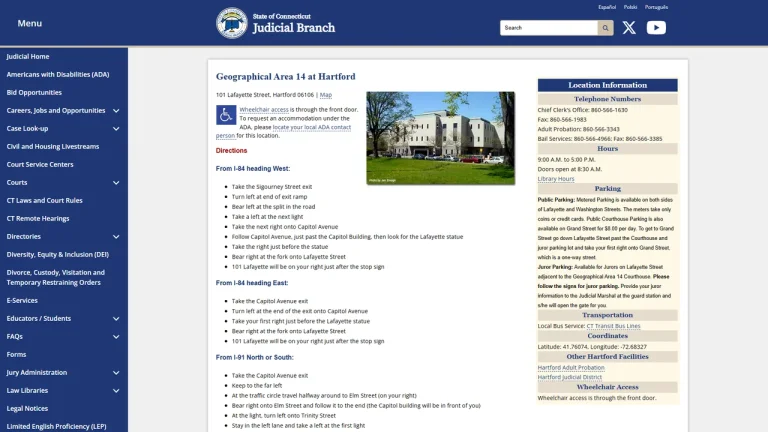
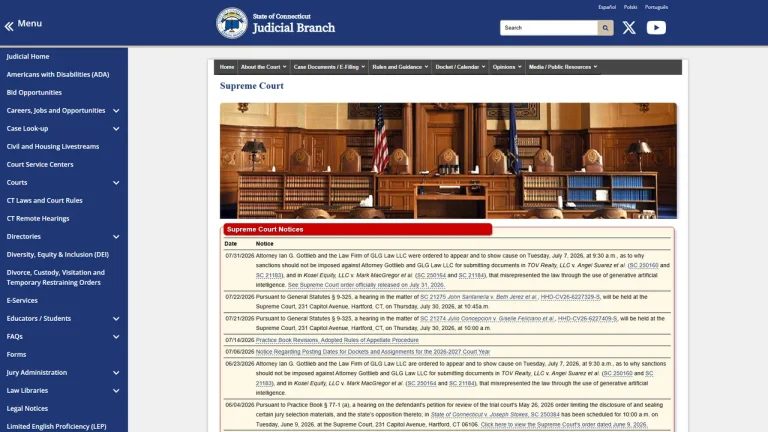
The Connecticut court system operates as a unified state judicial branch established under Article V of the Constitution of Connecticut. Unlike states with independent municipal or county court systems, Connecticut eliminated county government in 1960, centralizing trial administration into the Connecticut Superior Court under the governance of the Chief Court Administrator and the Supreme Court of Connecticut.
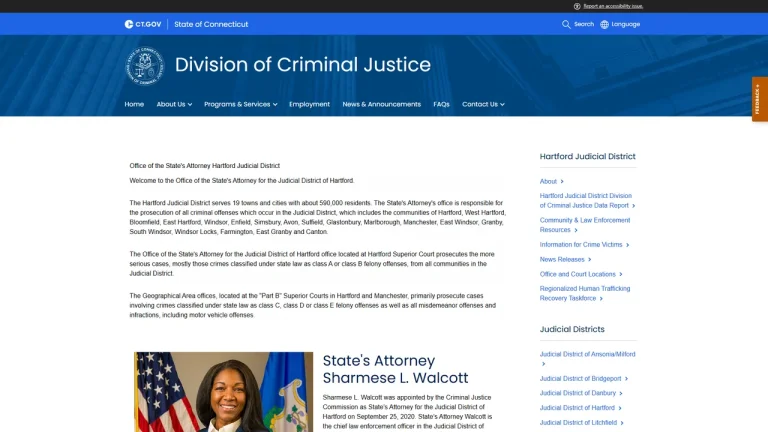
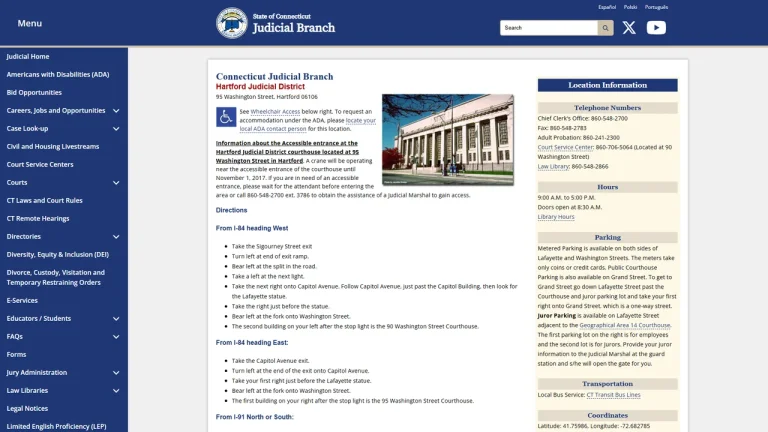
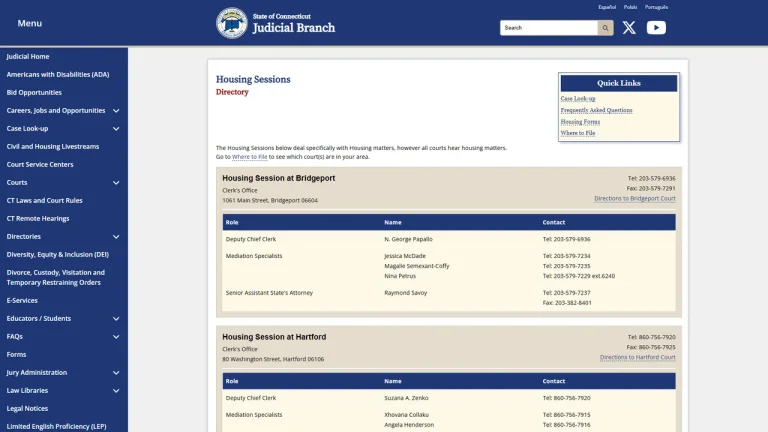
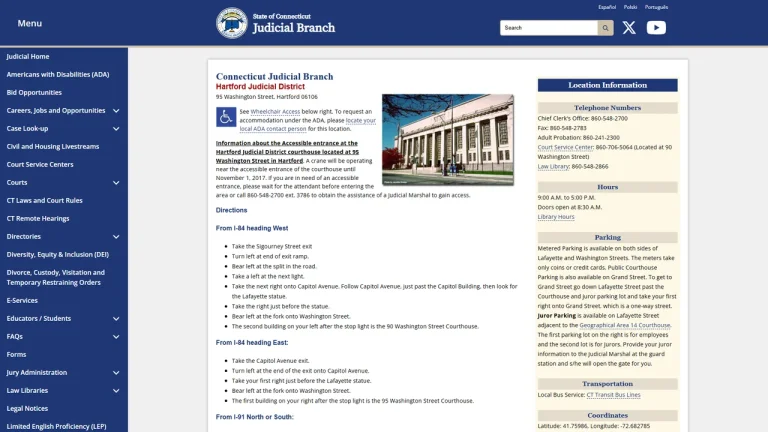
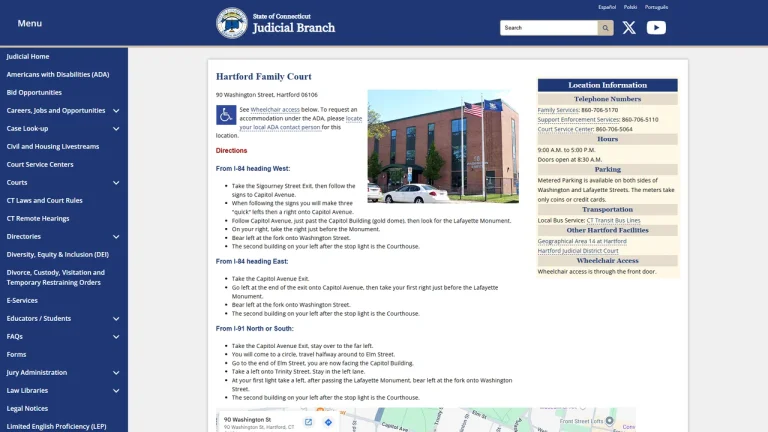
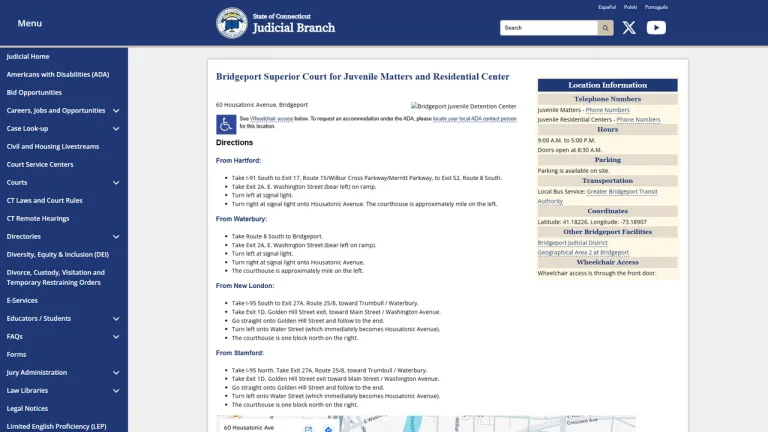
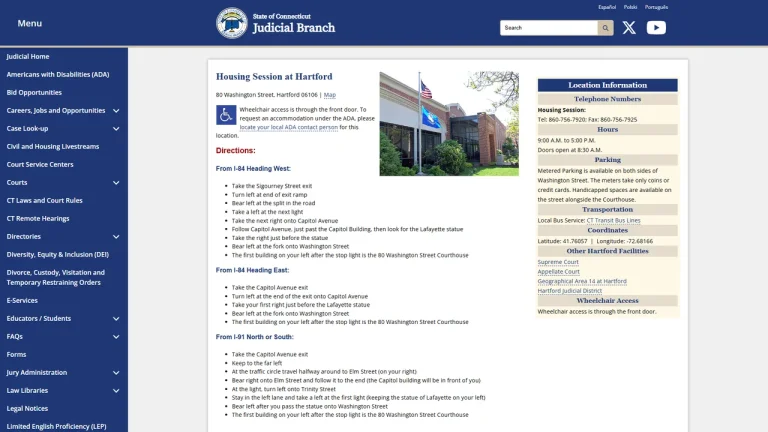
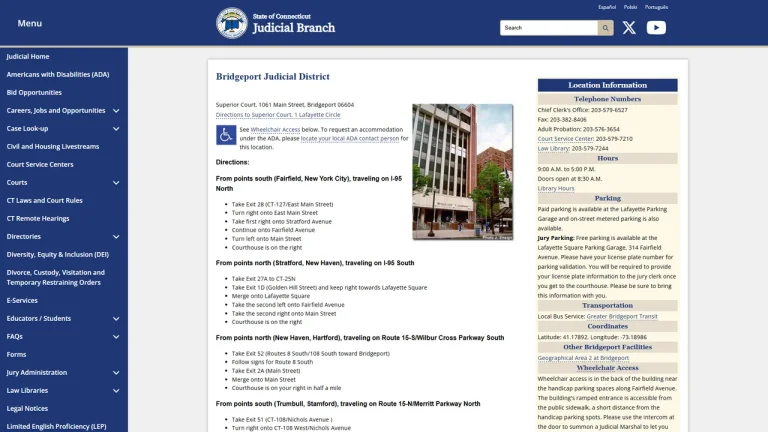
The Superior Court serves as the sole trial court of general jurisdiction, organized geographically across 13 Judicial Districts, including Hartford, New Haven, Fairfield at Bridgeport, Stamford-Norwalk, Waterbury, and New London. Within each Judicial District, courts are partitioned into functional divisions: Civil, Criminal, Family, and Housing, alongside dedicated Geographical Area (G.A.) courts addressing misdemeanor offenses, motor vehicle violations, and preliminary felony arraignments pursuant to Conn. Gen. Stat. § 51-164t.
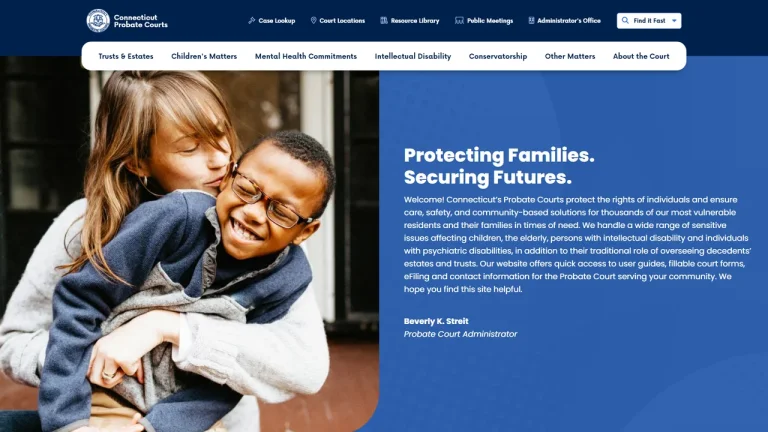
In parallel, the Connecticut Probate Court system encompasses 54 local probate districts. Governed by elected probate judges and coordinated through the Connecticut Probate Assembly, these localized courts oversee the administration of decedents' estates, conservatorships, adult guardianships, and testamentary trusts under Conn. Gen. Stat. § 45a-98.
Connecticut Court Services, Statutory Fees & Processing Timelines
| Service / Matter | Required Documents / Prerequisites | Statutory Fee (USD) | Processing Timeline |
|---|---|---|---|
| Superior Court Civil Filing | Writ, summons, complaint form JD-CV-1, return of service | $360 statutory entry fee | Docketed upon filing; returned on designated Return Date |
| Small Claims Writ & Notice | Small claims writ form JD-CV-40, claim limited to $5,000 | $95 entry fee | Notice sent by clerk within 7-14 days; answer due in 30 days |
| Appellate Court Appeal | Appeal form JD-SC-28, certified trial court docket, fee certificate | $250 appellate filing fee | Docketing within 1-2 business days of electronic transmission |
| Probate Estate Administration | Petition PC-200, certified death certificate, original will if applicable | $150 minimum base fee plus statutory estate percentage | Initial hearing scheduled within 3 to 5 weeks |
Critical Legal Deadlines & Connecticut Statutory Limits
Procedural rights in Connecticut state courts depend on strict statutory deadlines established by the General Statutes of Connecticut and the rules codified in the Connecticut Practice Book:
- Statute of Limitations for Personal Injury: Lawsuits seeking damages for injuries caused by negligence must be brought within two years from the date of injury under Conn. Gen. Stat. § 52-584.
- General Tort Statute of Limitations: General actions founded upon torts not specified under other statutes must be commenced within three years under Conn. Gen. Stat. § 52-577.
- Contract Claims Limitation: Breach of written contract actions must be brought within six years under Conn. Gen. Stat. § 52-576, whereas oral contract actions must be filed within three years under Conn. Gen. Stat. § 52-581.
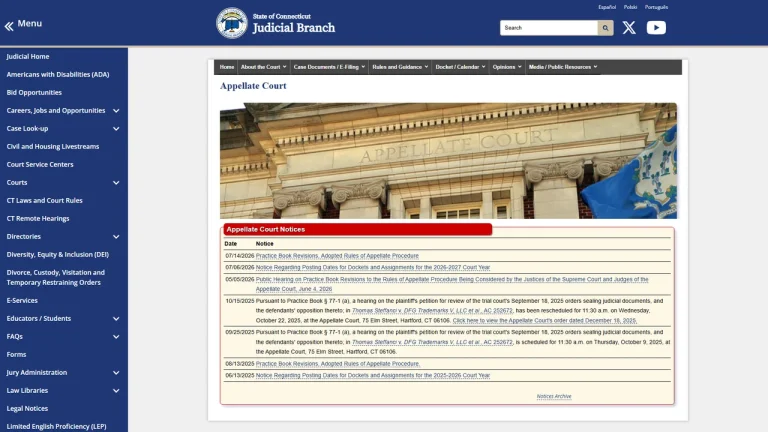
- Appellate Filing Window: An appeal to the Connecticut Appellate Court must be filed within 20 days of the issuance of notice of the final judgment or decision under Conn. Practice Book § 63-1.
- Municipal Notice Requirements: Claims against municipalities for injuries caused by defective roads or sidewalks require written notice within 90 days of the incident under Conn. Gen. Stat. § 13a-149.
Direct Court Self-Help vs. Professional Representation
The Connecticut Judicial Branch maintains Court Service Centers and Public Information Desks across major Judicial District courthouses to support self-represented parties. Self-help users can access standard JD-form templates, computer workstations, free statutory brochures, and notary verification. In the Small Claims Session, where recovery is capped at $5,000 under Conn. Gen. Stat. § 51-15, informal procedures allow self-represented claimants and business entities to pursue debt collection or property disputes without legal counsel.
However, court clerks and Court Service Center employees are strictly prohibited from providing legal advice or drafting substantive pleadings. For complex civil litigation, criminal felony defense, contested divorce dissolutions, custody disputes, and formal probate litigation, navigating the evidentiary mandates of the Connecticut Code of Evidence and the Connecticut Practice Book demands the strategic guidance of a licensed attorney admitted to the Connecticut Bar.
Red Flags & Judicial Directory Precautions
When accessing state and probate court resources across Connecticut, users should protect themselves from predatory practices and bureaucratic misdirection:
- Deceptive Form Sales: Commercial portals charging recurring fees for official Connecticut Judicial Branch forms (forms beginning with 'JD-CV', 'JD-FM', or 'JD-CR'), which are always freely downloadable from the state judicial portal.
- Imposter Marshal Services: Unauthorized process service companies claiming official authority under the Connecticut State Marshal Commission. Subpoenas and writs of summons must be served by state marshals officially appointed under Conn. Gen. Stat. § 6-38b.
- Bail Bond Surcharges: Unlicensed bail agents charging fees above the mandatory statutory maximums established by the Connecticut Department of Insurance.
- Misleading Probate Clerks: Non-attorney online document preparers misinterpreting probate court requirements, leading to contested hearings or rejection of testamentary filings.
Frequently Asked Questions
What is the monetary limit for Small Claims Court in Connecticut?
The statutory monetary ceiling for small claims actions in the Connecticut Superior Court is $5,000 under Conn. Gen. Stat. § 51-15, except in cases concerning security deposit refunds which may have specific statutory exceptions.
How does Connecticut organize its trial courts without county governments?
Following the abolition of county governments in 1960, Connecticut organized its unified Superior Court system into 13 Judicial Districts and multiple Geographical Area (G.A.) court locations administered directly by the state judicial branch.
How can I check the status of a pending court case in Connecticut?
Public case status and docket details can be searched on the Connecticut Judicial Branch official website through the Civil/Family Case Look-up, Criminal/Motor Vehicle Conviction Look-up, or the Appellate Case Information portals.
What matters are handled by Connecticut Probate Courts?
Connecticut Probate Courts exercise jurisdiction over decedent estates, trusts, adoptions, conservatorships for incapacitated adults, guardianships for minors and intellectually disabled individuals, and name change petitions under Conn. Gen. Stat. § 45a-98.
Can non-attorneys file court documents electronically in Connecticut?
Yes, self-represented parties may register for the Connecticut Judicial Branch E-Services system to electronically file court documents, view sealed notifications, and receive electronic case updates in civil, family, and small claims matters.